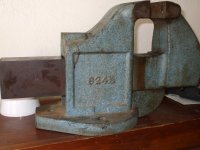
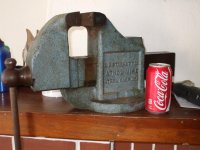
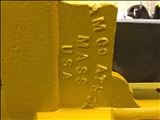
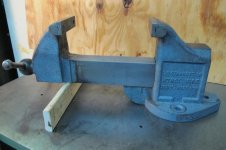
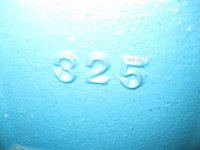
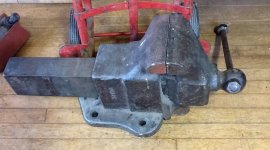
Larry, if you got that vise for $150-ish, in that condition, just needing a bit of cleaning and oiling, you did well. (yes, some of the folks here got heavy vises at estate or garage sales for free, or $10, whatever, primarily for hauling them away from people who didn't want or need such a tool........but thats 'luck', not 'fair market')
That model of vise is 'mil-spec', some number of them would have been bought by the government, and the last list price from Starretts was........well, I can't remember, but they were a rather seriously expensive item.
You've gotten yourself a very high quality vise, by the way.
The production of that late pattern vise line was contracted out to a well-known specialist foundry, by the Starrett Co.........it wouldn't be polite to mention his name, as a privacy issue, but I was told about this by the man in charge of the facility where your vise was built.......he said that they were a bit cautious, as the Starrett dwgs called for rather thin section in some areas, so they used a very high quality, high-strength malleable iron for the castings. You'll notice the relatively thin section in the front jaw, and the 'horn' area which supports the front jaw.
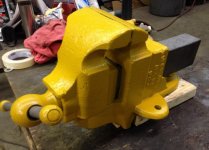
Note that the area behind the back jaw appears to be meant for use as an anvil surface......it should not be used as one.
Its true enough that that surface could be used for, say, very light rivetting of small sheet metal parts or similar......but using it so sets a bad example for shop helpers, who will eventually try to use the vise as an anvil, and crack the casting at that point. On the few I've ever refinished, I'd have my helper round over that surface into a nice radius, which would be painted along with the rest of the casting.
cheers
Carla