How can I add a second zone in a forced hot air system? I only have one thermostat now upstairs and would like to add another thermostat downstairs?? The ducts are set-up perfectly for this, I think. I have two, one duct for upstairs and one for downstairs. What would be the easiest way?? Thanks.

You are using an out of date browser. It may not display this or other websites correctly.
You should upgrade or use an alternative browser.
You should upgrade or use an alternative browser.
2nd zone in a forced hot air system??
- Thread starter DonnyT
- Start date
Ken Greene
Well-known member
If the ductwork is truly setup properly you need a Zone control damper for both ducts and the controller for those dampers also another thermostat for the "new" zone.
pseudorealityx
Well-known member
Thanks Ken. Can I install just the motors on the existing manual dampers??
Depends on what type of damper you have.
Interesting question. Do the thermostats themselves somehow control the opening and closing of dampers . . . or some other "smart box" or does the furnace have the brains?
I'd like to do the same setup with my basement . . . have damper to limit temps down there, and have my furnace/AC worry about upstairs instead.
I'm looking at re-doing ductwork anyway (house built in 50's), so maybe I should plan for appropriate dampers and dual thermostats.
I'd like to do the same setup with my basement . . . have damper to limit temps down there, and have my furnace/AC worry about upstairs instead.
I'm looking at re-doing ductwork anyway (house built in 50's), so maybe I should plan for appropriate dampers and dual thermostats.
Interesting question. Do the thermostats themselves somehow control the opening and closing of dampers . . . or some other "smart box" or does the furnace have the brains?
I'd like to do the same setup with my basement . . . have damper to limit temps down there, and have my furnace/AC worry about upstairs instead.
I'm looking at re-doing ductwork anyway (house built in 50's), so maybe I should plan for appropriate dampers and dual thermostats.
I believe we need a Zone Controller as well. My damper "driveshafts" protrude out, so I could get (I think) replacement damper motors on them.
Ohmthis
Well-known member
Yes the zone dampers need a controller. The wiring from the t-stats and zone dampers go to the zone panel, then wiring goes to the furnace. Usually you will need a larger transformer to have the required amperage to run the dampers, the one installed in the furnace doesn't usually have the nuts to do it. I have this setup in my house and love it. Its not hard to do and Honeywell (that's what I used) can help with any questions you may have. Good Luck!!!
Charles (in GA)
Well-known member
You really need a complete system if you want to zone a central forced air system. My system has (had) a Honeywell Temp-A-Trol system which consists of the main thermostat and one upstairs and one downstairs in the master bedroom. The house was not suited to using a zone system (log house with a 3/4 upstairs and open from loft to great room) and after discussions with Temp-A-Trol, I removed the thermostats (leaving the main one) and locked the dampers in the full open position. The relay board is still installed because I did not want to bother to remove it and rewire the thermostat directly to the central unit. I run a ceiling fan in the great room 24/7/365 except when I am in there (rarely) and turn it off as the full blast of the fan is annoying.
The upstairs bedroom area could really stand a mini-split, but since I don't use that room normally, I don't care if it gets a little too warm in the summer. I have a 5000 btu window unit I throw in the window if guest are staying up there.
With a single compressor system you will find the unit chasing the cold thermostat (in the summer) or the warm thermostat (in the winter) and the rest of the house will become uncomfortable.
Charles
The upstairs bedroom area could really stand a mini-split, but since I don't use that room normally, I don't care if it gets a little too warm in the summer. I have a 5000 btu window unit I throw in the window if guest are staying up there.
With a single compressor system you will find the unit chasing the cold thermostat (in the summer) or the warm thermostat (in the winter) and the rest of the house will become uncomfortable.
Charles
Last edited:
Coopduc
Well-known member
Maybe this is cheating, but my house has 2furnaces and 2 a/c units. One pair for the first floor and one pair for the 2nd floor. And of course 2thermostats. I have to believe this is the simplest way to get 2 zones, maybe not the cheapest.
Maybe this is cheating, but my house has 2furnaces and 2 a/c units. One pair for the first floor and one pair for the 2nd floor. And of course 2thermostats. I have to believe this is the simplest way to get 2 zones, maybe not the cheapest.
I have same setup and I am happy with.House is heated evenly.Also gas and electric bill are down.
You really need a complete system if you want to zone a central forced air system. My system has (had) a Honeywell Temp-A-Trol system which consists of the main thermostat and one upstairs and one downstairs in the master bedroom. The house was not suited to using a zone system (log house with a 3/4 upstairs and open from loft to great room) and after discussions with Temp-A-Trol, I removed the thermostats (leaving the main one) and locked the dampers in the full open position. The relay board is still installed because I did not want to bother to remove it and rewire the thermostat directly to the central unit. I run a ceiling fan in the great room 24/7/365 except when I am in there (rarely) and turn it off as the full blast of the fan is annoying.
The upstairs bedroom area could really stand a mini-split, but since I don't use that room normally, I don't care if it gets a little too warm in the summer. I have a 5000 btu window unit I throw in the window if guest are staying up there.
With a single compressor system you will find the unit chasing the cold thermostat (in the summer) or the warm thermostat (in the winter) and the rest of the house will become uncomfortable.
Charles
Thanks Charles for the input. I'm trying to keep it simple. I looked at a friends set-up who has the same identical house as me. Two main ducts, one for upstairs, and one for downstairs. He has one damper motor on each. One thermostat up and one down. He is controlling the two levels using this set-up. When downstairs calls for heat and upstairs is good, the damper closes for upstairs and the downstairs damper opens when heat comes on.
pseudorealityx
Well-known member
Maybe this is cheating, but my house has 2furnaces and 2 a/c units. One pair for the first floor and one pair for the 2nd floor. And of course 2thermostats. I have to believe this is the simplest way to get 2 zones, maybe not the cheapest.
It is the easiest. But it's only relatively recently that homes are being built like that.
pseudorealityx
Well-known member
Thanks Charles for the input. I'm trying to keep it simple. I looked at a friends set-up who has the same identical house as me. Two main ducts, one for upstairs, and one for downstairs. He has one damper motor on each. One thermostat up and one down. He is controlling the two levels using this set-up. When downstairs calls for heat and upstairs is good, the damper closes for upstairs and the downstairs damper opens when heat comes on.
If you restrict the airflow too much, you can freeze up the coil during the summer. There's a happy medium of still allowing some air through both ducts, but just moving the majority through one, depending on season.
Also, because you're essentially increasing the static pressure through the duct that's getting additional airflow, air leaks you have in said duct will just leak 'more'.
If you restrict the airflow too much, you can freeze up the coil during the summer. There's a happy medium of still allowing some air through both ducts, but just moving the majority through one, depending on season.
Also, because you're essentially increasing the static pressure through the duct that's getting additional airflow, air leaks you have in said duct will just leak 'more'.
I have not had any problems in the summer. I manually close the downstairs damper all summer with the AC on. Only the upstairs is cooled through the ducts.
pseudorealityx
Well-known member
I have not had any problems in the summer. I manually close the downstairs damper all summer with the AC on. Only the upstairs is cooled through the ducts.
That's good.
But it 'could' also be because you're leaking air through the lower floor duct work, without it getting to the diffusers. If you put a damper right at the transition, and it's locked down hard, you won't get the 'benefit' of that leaking air, and you'll reduce the air down to the point of freezing.
I'm not saying it WILL happen, just something to look for if you do this and you end up with issues. It could be as easy as giving the lower floor 'some' air.
One other idea that my HVAC guy mentioned I could try is having a damper on big Return duct work in basement (where currently there is no return air).
Thus, the single thermostat system (ie conventional NG furnace / electric AC) could be drawing in the cool basement air during summer to "cool for free" the upstairs (ie with basement Return air damper in open position). Then in winter, would shut the Return damper in basement and just straight heat the upstairs, AND close any Supply dampers I can in basement, to minimize heating the basement. The basement Return damper setup would be simple manual damper. Part that I'd like to "automate" is damper closing and opening on the Supply side.
This might work for me since basement is barely used, and old ductwork from 50's is severly undersized with 2 small Return air ducts upstairs (both at floor level . . . which is improper).
The overall trick is getting the whole house to "breathe" properly through all the ducting, along with properly sized furnace/AC. For me, I'm against tall odds since ductwork is all cobbled up.
Thus, the single thermostat system (ie conventional NG furnace / electric AC) could be drawing in the cool basement air during summer to "cool for free" the upstairs (ie with basement Return air damper in open position). Then in winter, would shut the Return damper in basement and just straight heat the upstairs, AND close any Supply dampers I can in basement, to minimize heating the basement. The basement Return damper setup would be simple manual damper. Part that I'd like to "automate" is damper closing and opening on the Supply side.
This might work for me since basement is barely used, and old ductwork from 50's is severly undersized with 2 small Return air ducts upstairs (both at floor level . . . which is improper).
The overall trick is getting the whole house to "breathe" properly through all the ducting, along with properly sized furnace/AC. For me, I'm against tall odds since ductwork is all cobbled up.
Ohmthis
Well-known member
If you restrict the airflow too much, you can freeze up the coil during the summer. There's a happy medium of still allowing some air through both ducts, but just moving the majority through one, depending on season.
Also, because you're essentially increasing the static pressure through the duct that's getting additional airflow, air leaks you have in said duct will just leak 'more'.
Not true at all. A zone system designed correctly will have a bypass damper between the duct work before the zones and sends the unused air back to the return. Pressure will never be too much if designed correctly. And the system still gets the correct amount of air across the A-coil. I have been living with a zone system and it is awesome, No area is too cold or too hot. No coils freezing, no noise, and no bitching wife or kids.
Also, because you're essentially increasing the static pressure through the duct that's getting additional airflow, air leaks you have in said duct will just leak 'more'.
Not true at all. A zone system designed correctly will have a bypass damper between the duct work before the zones and sends the unused air back to the return. Pressure will never be too much if designed correctly. And the system still gets the correct amount of air across the A-coil. I have been living with a zone system and it is awesome, No area is too cold or too hot. No coils freezing, no noise, and no bitching wife or kids.
pseudorealityx
Well-known member
If you restrict the airflow too much, you can freeze up the coil during the summer. There's a happy medium of still allowing some air through both ducts, but just moving the majority through one, depending on season.
Also, because you're essentially increasing the static pressure through the duct that's getting additional airflow, air leaks you have in said duct will just leak 'more'.
Not true at all. A zone system designed correctly will have a bypass damper between the duct work before the zones and sends the unused air back to the return. Pressure will never be too much if designed correctly. And the system still gets the correct amount of air across the A-coil. I have been living with a zone system and it is awesome, No area is too cold or too hot. No coils freezing, no noise, and no bitching wife or kids.
Except we aren't talking about a zoned system designed correctly. We're talking about retrofitting an existing duct system. If you read the OP's posts, he's not adding a bypass. 95% of folks don't have bypasses either, we just adjust the diffusers at the wall, and basically choke down the airflow.
If you build a zoned system from the ground up these days, I would do a variable speed fan coil unit instead of a bypass system. It's a smaller package, slows the air down over the coil to pull out more humidity, and saves energy in the process. Matched with a digital scroll compressor, and you've got the best system.
Ohmthis
Well-known member
Except we aren't talking about a zoned system designed correctly. We're talking about retrofitting an existing duct system. If you read the OP's posts, he's not adding a bypass. 95% of folks don't have bypasses either, we just adjust the diffusers at the wall, and basically choke down the airflow.
If you build a zoned system from the ground up these days, I would do a variable speed fan coil unit instead of a bypass system. It's a smaller package, slows the air down over the coil to pull out more humidity, and saves energy in the process. Matched with a digital scroll compressor, and you've got the best system.
I agree with your comments, except that it can be done and work very well in a retrofit situation IF designed and installed properly. IF the OP gets the system correctly designed (not that hard to do for MOST qualified companies) then it will work with no headaches.
I know he's asking in a DIY way, but I answered in a professional "Designed correctly" way. We both agree that without seeing and spending time with the system that we both can't give great advice. I'm a glass half full kinda guy who thinks it can be done correctly with a good design, not trying to step on anyone's toes!!!
jonesmechanical
Well-known member
Get me a few things.
1. Size of dampers or ductwork to each zone
2. furnace model number
3. A/C model number
I would consider my self a zoning contractor. On average we install 2-3 zone systems per week. Mostly on our own designs from scratch on custom homes, and even smaller homes people want it because most homes here in Utah have finished habitable basements.
There has been some good input here. No need to really over think it too much. Yes, it is ideal for a zone system to be designed from the ground up, and taking advantage of variable speed and multi stage equipment has really helped with designing homes around zoning with no compromises, but on a simple setup with only 2 zones, its not hard to get things to work right.
I can get you just about any size of dampers (round or rectangular) for between $50-100 each, and a zone panel is only $130 or so. Even the cheapest Belimo actuators are north of $75, and mounting them, if your damper wasn't designed for it could be trouble. The Lennox dampers (made by Aprilaire for Lennox) have a handy and simple bypass setting that allows for damper to only close partially if static resistance gets out of range (your ear will tell you that), and also a great indicator to tell you damper position. Part of my garage thread went into the HVAC design for it, showed the dampers. I even zoned my return air so when I condition my office to 72 degrees, it isn't pulling return air from the garage air (45 degrees) which would render it very inefficient/ineffective. Even with a open loft design in my office, I can maintain a 25-30 difference upstairs from down stairs. Cooling the upstairs office, I can maintain 75 degrees upstairs, and 83-85 in the shop below. I didn't expect that result with a open loft/stairwell, but it actually does that perfectly. Zoning the return air is key for that application. Normally you would never have a large difference between zones.
I prefer the Lennox product, because of how their Harmony III zoning panel can control their variable speed blower products, that and it is incredible simple. On the budget end, they have a simple zone panel 2 or 3 zone that monitors discharge temperature, and keeps the unit from over heating or freezing over (cycles it to off). Depending on where you live, I can even setup a PO for you at the local Lennox warehouse, and you can pick it up and just pay against my account.
I do love the Carrier/Bryant Infinity/Evolution, but it is really complex, extremely expensive, and at isn't nearly as tunable as the Lennox Harmony III.
I would love to help out anyone here on the forum. Feel free to call me at 801-310-8170. Greg.
1. Size of dampers or ductwork to each zone
2. furnace model number
3. A/C model number
I would consider my self a zoning contractor. On average we install 2-3 zone systems per week. Mostly on our own designs from scratch on custom homes, and even smaller homes people want it because most homes here in Utah have finished habitable basements.
There has been some good input here. No need to really over think it too much. Yes, it is ideal for a zone system to be designed from the ground up, and taking advantage of variable speed and multi stage equipment has really helped with designing homes around zoning with no compromises, but on a simple setup with only 2 zones, its not hard to get things to work right.
I can get you just about any size of dampers (round or rectangular) for between $50-100 each, and a zone panel is only $130 or so. Even the cheapest Belimo actuators are north of $75, and mounting them, if your damper wasn't designed for it could be trouble. The Lennox dampers (made by Aprilaire for Lennox) have a handy and simple bypass setting that allows for damper to only close partially if static resistance gets out of range (your ear will tell you that), and also a great indicator to tell you damper position. Part of my garage thread went into the HVAC design for it, showed the dampers. I even zoned my return air so when I condition my office to 72 degrees, it isn't pulling return air from the garage air (45 degrees) which would render it very inefficient/ineffective. Even with a open loft design in my office, I can maintain a 25-30 difference upstairs from down stairs. Cooling the upstairs office, I can maintain 75 degrees upstairs, and 83-85 in the shop below. I didn't expect that result with a open loft/stairwell, but it actually does that perfectly. Zoning the return air is key for that application. Normally you would never have a large difference between zones.
I prefer the Lennox product, because of how their Harmony III zoning panel can control their variable speed blower products, that and it is incredible simple. On the budget end, they have a simple zone panel 2 or 3 zone that monitors discharge temperature, and keeps the unit from over heating or freezing over (cycles it to off). Depending on where you live, I can even setup a PO for you at the local Lennox warehouse, and you can pick it up and just pay against my account.
I do love the Carrier/Bryant Infinity/Evolution, but it is really complex, extremely expensive, and at isn't nearly as tunable as the Lennox Harmony III.
I would love to help out anyone here on the forum. Feel free to call me at 801-310-8170. Greg.
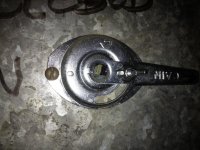
Ducts (locking quadrants) above condensor/furnace are (up=9x20, dn=9x14 rectangular)
A/C= Trane XB 10 #2TTB0042A1000AA (3.5 ton I was told??)
Luxaire furnace # LD16N120A
The shafts are 1/4 inch on the locking quadrants. (only protrude 1/2 inch)
A/C= Trane XB 10 #2TTB0042A1000AA (3.5 ton I was told??)
Luxaire furnace # LD16N120A
The shafts are 1/4 inch on the locking quadrants. (only protrude 1/2 inch)
jonesmechanical
Well-known member
Can you take some pictures of the locking quadrants? with only 1/2" of protrusion, it could be difficult. Also, the duct is an odd size. Being rectangular in shape, there should be a nice flat space you can secure the non drive side of an actuator to. Take some pictures and post them, or send to [email protected]. I think welding a bit of a 1/2" extension to the damper would solve the short shaft problem.


jonesmechanical
Well-known member
These are the dampers I would recommend:
https://www.google.com/shopping/pro...a=X&ei=jJ4KUf_MGOXGiwLGr4HgDg&ved=0CFYQ8gIwAA
This is the zone panel I would recommend:
http://www.westsidewholesale.com/ai...3_a_7c826449&gclid=CJfJjf2Ek7UCFa5AMgodCkYAvg
The only other things you will need is a bit of thermostat wire (18 gauge). Dampers will require 3 wire, and then the zone panel will require a about 5 wires to connect from the furnace/ac to the zone panel, 2 wires for the plenum sensor, 3 wires each for the dampers, 2 wires for the power supply, and then 4-5 wires each for the thermostats depending on your style of thermostat.
Other than the above actuators, and dampers, all you will need is a 24V transformer to run the damper side of the zone panel. I would recommend a 75VA 24 volt transformer, preferable one that has a 3amp or so breaker.
I like this one:
http://www.amazon.com/dp/B00A9XJDBU/?tag=atomicindus08-20
The wiring schematic that comes with the aprilaire zone panel is very complete. It will walk you through the installation. The only thing with the actuators is that they require you to hookup to all 3 terminals (N/O-normally open, N/C normally closed, and C-common), where as the aprilaire/lennox dampers are spring open power closed. The aprilaire panel will handle both 2 and 3 wire dampers.
Nice thing about the belimo dampers, is that they have a 95 degree rotation range, and you can limit it as much as you want, so you can limit how far it opens or how far it closes, or both to get balancing just right for each zone.
We would charge $1500-2000 for this. DIY and you will know how to service it and save yourself a bunch of money. Worst case, you wire something backwards and you will blow the fuse on the furnace board, trip the fuse/breaker on the transformer, or pop the fuse on the zone panel. Being your try at it, I would have a few extra fuses on hand (aprilaire zone board comes with 2 extra fuses) for the furnace board. Having a breaker on the additional transformer is really nice for this.
If your additional thermostat is hard to wire, Honeywell makes some great wireless thermostats model YTH6320R1001, which can also be setup to view and control on any smart device with their internet gateway setup and free smart phone/computer app.
Good luck, post your self installation, and let us know how it works.
Greg.
https://www.google.com/shopping/pro...a=X&ei=jJ4KUf_MGOXGiwLGr4HgDg&ved=0CFYQ8gIwAA
This is the zone panel I would recommend:
http://www.westsidewholesale.com/ai...3_a_7c826449&gclid=CJfJjf2Ek7UCFa5AMgodCkYAvg
The only other things you will need is a bit of thermostat wire (18 gauge). Dampers will require 3 wire, and then the zone panel will require a about 5 wires to connect from the furnace/ac to the zone panel, 2 wires for the plenum sensor, 3 wires each for the dampers, 2 wires for the power supply, and then 4-5 wires each for the thermostats depending on your style of thermostat.
Other than the above actuators, and dampers, all you will need is a 24V transformer to run the damper side of the zone panel. I would recommend a 75VA 24 volt transformer, preferable one that has a 3amp or so breaker.
I like this one:
http://www.amazon.com/dp/B00A9XJDBU/?tag=atomicindus08-20
The wiring schematic that comes with the aprilaire zone panel is very complete. It will walk you through the installation. The only thing with the actuators is that they require you to hookup to all 3 terminals (N/O-normally open, N/C normally closed, and C-common), where as the aprilaire/lennox dampers are spring open power closed. The aprilaire panel will handle both 2 and 3 wire dampers.
Nice thing about the belimo dampers, is that they have a 95 degree rotation range, and you can limit it as much as you want, so you can limit how far it opens or how far it closes, or both to get balancing just right for each zone.
We would charge $1500-2000 for this. DIY and you will know how to service it and save yourself a bunch of money. Worst case, you wire something backwards and you will blow the fuse on the furnace board, trip the fuse/breaker on the transformer, or pop the fuse on the zone panel. Being your try at it, I would have a few extra fuses on hand (aprilaire zone board comes with 2 extra fuses) for the furnace board. Having a breaker on the additional transformer is really nice for this.
If your additional thermostat is hard to wire, Honeywell makes some great wireless thermostats model YTH6320R1001, which can also be setup to view and control on any smart device with their internet gateway setup and free smart phone/computer app.
Good luck, post your self installation, and let us know how it works.
Greg.
jonesmechanical
Well-known member
Also, it looks like you have 1/2" of shaft sticking out of your manual damper levers. What you will want to do, is remove that handle assembly, screw a new cover of sheetmetal with a hole just big enough that the damper shaft is carried by it. At that point, you will have much more shaft coming out of the side of the duct that the belimo actuator will attach to, potentially having to extend it.
If you could find a square/round bushing, or even a brass bushing that carried the shaft nicely and then fit tightly to the new sheetmetal cover (use a unibit/step cutting drill bit, if you don't have one, harbor freight has them for cheap).
Installing the belimo actuator is very simple one you realize how it installs. It basically grasps the damper shaft with the U/V bolt, and then there is a small foot that keeps the actuator from rotating, but allows it to float a bit so that it doesn't bind if the shaft is slightly off center or bent.
If you could find a square/round bushing, or even a brass bushing that carried the shaft nicely and then fit tightly to the new sheetmetal cover (use a unibit/step cutting drill bit, if you don't have one, harbor freight has them for cheap).
Installing the belimo actuator is very simple one you realize how it installs. It basically grasps the damper shaft with the U/V bolt, and then there is a small foot that keeps the actuator from rotating, but allows it to float a bit so that it doesn't bind if the shaft is slightly off center or bent.
Ohmthis
Well-known member
Greg, thanks for your professional input. I have only used the honeywell dampers and zone panels. Do you prefer the lennox much better than honeywell? I may try one to see my own opinion. We don't usually put in zone systems, either the house is smaller or large enough to warrant 2 systems. Thanks again for the help, it's always good to see a very friendly, helpful forum.
Greg, thanks for your professional input. I have only used the honeywell dampers and zone panels. Do you prefer the lennox much better than honeywell? I may try one to see my own opinion. We don't usually put in zone systems, either the house is smaller or large enough to warrant 2 systems. Thanks again for the help, it's always good to see a very friendly, helpful forum.
Wow you aint kidding. Greg a BIG THANK YOU!!!!!
jonesmechanical
Well-known member
OMG thank you. Funny thing is I was just looking at the Aprilaire 6202 on that same web site!!! LOL You have ESP... LOL?? Great info THANKS!! I'm going to look into it now.
Awesome. I wish my new found ESP gift translated into communicating with my wife
 .
.
jonesmechanical
Well-known member
Greg, thanks for your professional input. I have only used the honeywell dampers and zone panels. Do you prefer the lennox much better than honeywell? I may try one to see my own opinion. We don't usually put in zone systems, either the house is smaller or large enough to warrant 2 systems. Thanks again for the help, it's always good to see a very friendly, helpful forum.
I have used a ton of the redlink wireless zoning on retrofit. The issue I have with their dampers is not of quality, but that the actuators are bulky and much more complicated than the aprilaire's dampers. When aprilaire/lennox came out with their new dampers with the external position indicator it really helped me do mostly aprilaire dampers when they have the sizes we need. Also, aprilaire has a slick retrofit 6" damper that is inexpensive (less than $30 wholesale) and has a very low actuator profile and simple, simple installation. We do tons of retrofitting on existing basement system that use rectangular main plenum (below the ceiling joists) with lateral runs in 6" (which is 99% of our market). A typical installation requires 20+ individual retrofit dampers, and then you group the dampers into zones.
From there, we used the variable speed Lennox Furnaces, that allow for adjustable air flow to each zone. Each zone can be adjusted in 10% increments starting at 25% of total air flow up to 100% of air flow. Example: on a 3 ton/1200 cfm furnace blower (Lennox Only does this), minimum air flow is about 300 cfm. Air flow can be adjust in 10% increments for EACH zone.
With the advent of Lennox's modulating furnaces, it's a perfect match. The tricky end is the Air conditioning. Currently, the nicest A/C unit Lennox makes is only a 2 stage, and only cuts to a 2/3 capacity on first stage, so it will cycle the a/c. BUT.......Lennox is coming out with a full modulating A/C unit, and that will allow for the A/C unit to slow down matching indoor air flow.
At the end of the day, we use a combination of 3 or 4 different brands of zoning depending on the actual circumstances. In this case here on this forum, the best option is to just spend a bit of money on actuators.
On really high end installations, where no bypass is wanted by the client, and being quiet is key, we use a really nice 99.99% sealing damper with external actuators. My cost on that type of damper setup is almost triple, and its much more complicated to install.
jonesmechanical
Well-known member
Greg, thanks for your professional input. I have only used the honeywell dampers and zone panels. Do you prefer the lennox much better than honeywell? I may try one to see my own opinion. We don't usually put in zone systems, either the house is smaller or large enough to warrant 2 systems. Thanks again for the help, it's always good to see a very friendly, helpful forum.
I used to be a Lennox hater as a Trane Dealer for 12 years. My local Trane distribution fell apart, I wandered to several brands, and Landed with Lennox. The thing about Lennox, is that they are the largest purchaser of Aprilaire Products (rebranding with their name on it). My pricing of their dampers (identical to the Aprilaire units) was almost 1/2 what I was paying at the local 3rd party vendors selling the A/A units.
Even on small homes, zoning is something that customers respond to, and they want it, even if they don't know to ask for it. You are leaving tons of money on the table if you don't offer it. The zoning concept also leads directly into a discussion about variable speed furnaces, and multi stage equipment. All of these things only make for a happy client. Lower utilities, more comfort. And......IF THEY DON'T TAKE THE OPTION, THEY KNOW IF THEY CALL YOU BACK, AND THINGS AREN'T PERFECTLY COMFORTABLE, THEY KNOW IN PART WHY. THEY COULD HAVE DONE THINGS DIFFERENTLY, THEN KNEW THERE WAS A BETTER OPTION, AND THEY OPTED NOT TO. BETTER TO OFFER IT AND THEY SAY NO, THAN TO HAVE A CLIENT ASK FOR IT AFTER THE FACT.
Lennox is the only Furnace manufacturer in the nation that does not sell its products through a 3rd party vendor. THEIR ONLY CLIENT IS ME, THE HVAC CONTRACTOR. It creates an amazing support system for service, warranty, and marketing.
Just recently, my salesman comp'd me $12,000 worth of equipment to a high end custom home builder that was shopping for a new HVAC contractor. This builder is building his own home, and does lots of massive homes. It sealed the deal, we have his loyalty as long as we earn his trust on the installation/warranty end. There isn't another manufacturer that would do something like that. My home is only 5 years old, and when I left Trane, Lennox gave me 3 complete systems for my home.
I can't say they do that for anyone. I'm not one to ask for such things. When I do ask for help, they always over deliver. some of that may be my salesman, but I think it is their corporate culture to do such things.
Most importantly, be familiar with what you install, and install it correctly. Thats where 99% of HVAC problems exist. Bad/improper installations.
jonesmechanical
Well-known member
Greg, does the 6202 come with a plenum sensor? Thanks again.
Yes. 99.99% sure. Its been a while since we have used one of those boards, The Lennox Equivalent has one.
We generally didn't use the plenum sensor because when we design the systems each zone has enough air flow to keep the discharge temperatures happy and within spec. Installing them in a retrofit situation is important. Sensor placement is key, you don't want the sensor reading unmixed air of the coil, as it could shut off the A/C condenser sooner or later than it should. The last thing you want is a A/C unit that turns off and on in 5 minute intervals.
jonesmechanical
Well-known member
Greg I can't thank ya enough! Oh Boy did I open up a can of worms! I'm now looking into the Lennox SLP98V!!!!
I'm headed to the National dealers meeting in Vegas this month, and I think they are unveiling a 25 S.E.E.R. Modulating A/C unit. I have been to their manufacturing facilities in Texas, and met for a few hours with the new product development engineers, and they literally have mad house of crazy science experiments going. Those guys have a good time, and have produced some amazing products.
Let me know if you want one. I can have it on will call for you Locally. That combined with the Harmony III system is an amazing setup. I would be happy to get you my cost on that unit. The damper you are using we have used would be completely compatible. Email me at [email protected] and if you are ready for a new HVAC setup, I can hook you up. With Lennox, since they are nation wide, we have done jobs all over the place, and we never have to ship equipment because we can just pick it up at one of their local locations.