To avoid these ads, REGISTER NOW!

Show off your sheet metal fab projects

TerryH

Well-known member
Joined
Dec 8, 2012
Messages
2,248
Location
Springdale, AR
I should not even be allowed to read this thread. There are some incredibly talented guys posting some incredible work here. Amazing.
 
To avoid these ads, REGISTER NOW!

machine_punk

Well-known member
Joined
May 14, 2011
Messages
2,540
Location
Napa Valley, California
What is the point of dimple dying something like what ZT built??just astetics?

I at work I build calf milk pasteurizers and when I build the tanks it's rolles sheet metal and I have to weld the seam and a cap on one end, and the holes all get pulled out like dimple dies do but for us it's so we can weld ferrals on cleanly since it all gets purge welded. So that's the only reason I see those used....


There are several reasons.

- appearance. It looks cool. It has a very industrial look. Installing dash gauges at the end of a flanged hole on the surface of the dash is uber cool.

- as you mention, giving you a place to weld sheet metal parts with other geometry to a flat panel (welding a sheet metal cylinder to a flat part), without having a very difficult welding joint. It gives you a piece to measure from.

- It can put traction on a piece. If you've ever seen those portable airstrip metal panels that 4x4 drivers weld to their vehicles, they have lightening holes with flanges going one way, and smaller holes, with flanges going up, to provide traction on the top surface of the panel, so airplanes can land and not skid like they are on ice.

Not the least of these reasons: STIFFNESS. There are several ways to put stiffness into a sheet metal panel. Here is a diagram I created of several ways to add stiffness to thin, sheetmetal parts...
View media item 22347
The 'flanged lightening hole' in my diagram above serves 2 purposes. It 'lightens' the panel, by removing material, then 'stiffens' the panel, when you flange, or 'bend' the edges of that hole.

The flanged lightening hole is a truly elegant solution...you actually take material away from the panel, then create stiffness with having to attach anything else. No fasteners. No other parts. Of course, this falls short when you need to keep things 'in' your project. A full-width tool drawer in a custom tool box could be made incredibly light and stiff, with flanged lightening holes, but it's pretty tough to store stuff in a drawer with a bunch of holes in the bottom, which is why they usually weld a hat-channel shape to the bottom of tool box drawers.

Kev
 
Last edited:

zmaxmotorsports

Well-known member
Joined
Jan 11, 2013
Messages
11,948
Location
South of omaha
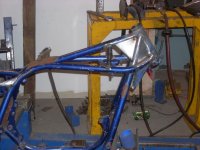
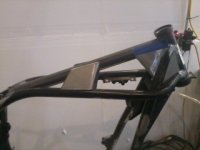
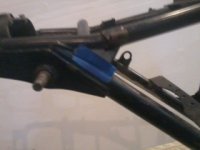
Well I dont have access to any of my sheetmetal fab pictures till I get back this week but heres a couple shots of one of my never ending projects I work on when Im bored,its due to be dusted off again when I get back!:beer:
Theres a picture of it thrown together after the first quickie build with an 1197 motor in it.
The rest of the shots are the current slow moving build with the frame being straightened/raked 3 degrees to hold it down and the bracing job from hell to go with the 1385 turbo /nitrous motor thats going in it this time.
Yeah its a street bike!:bounce:
 

Attachments

  • z1-1e4b66ce988f67379b161c9cf3422868.jpg
    z1-1e4b66ce988f67379b161c9cf3422868.jpg
    38.6 KB · Views: 99
  • dscn4697.jpg
    dscn4697.jpg
    101.1 KB · Views: 80
  • dscn4695.jpg
    dscn4695.jpg
    98.9 KB · Views: 83
  • dscn4693.jpg
    dscn4693.jpg
    90.8 KB · Views: 84
  • dscn4656.jpg
    dscn4656.jpg
    95.3 KB · Views: 95
  • dscn4654.jpg
    dscn4654.jpg
    95 KB · Views: 85
  • dscn4652.jpg
    dscn4652.jpg
    105.2 KB · Views: 83

joeswamp

Well-known member
Joined
Jul 25, 2007
Messages
2,418
Location
Massachusetts
Picture099-1.jpg

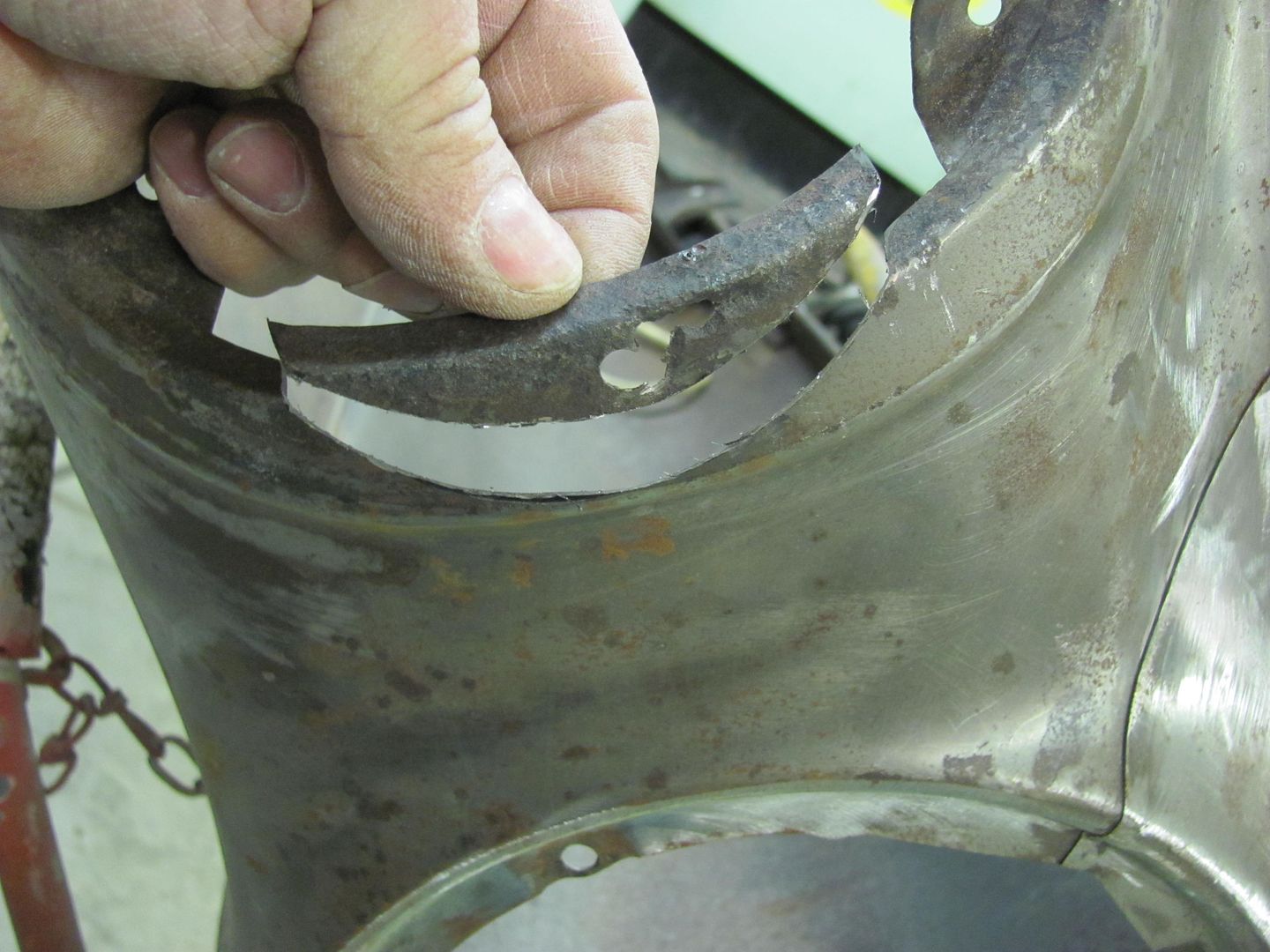
Thanks so much for posting this -- it seems like such a simple repair of a small piece but there's quite a bit to it, and your repair is perfect. I have two quick questions:

- Dumb question, but how did you cut the piece out of the fender so cleanly? Dremel tool?

- How would you have made this piece if you didn't have a tipping wheel? What other ways could it be done?
 

MP&C

Well-known member
Joined
Oct 21, 2009
Messages
4,396
Location
Leonardtown, MD
Used a .035 x 3" cutoff wheel to cut it out, then a 1.5 dia drum sander to clean up the opening on the fender. If not using the tipping wheel, two opposing cresent wrenches could have easily accomplished the task of bending.
 

joeswamp

Well-known member
Joined
Jul 25, 2007
Messages
2,418
Location
Massachusetts
Used a .035 x 3" cutoff wheel to cut it out, then a 1.5 dia drum sander to clean up the opening on the fender. If not using the tipping wheel, two opposing cresent wrenches could have easily accomplished the task of bending.

Thanks -- the piece looked too small to me to be able to use a normal cutoff wheel, but I guess not.

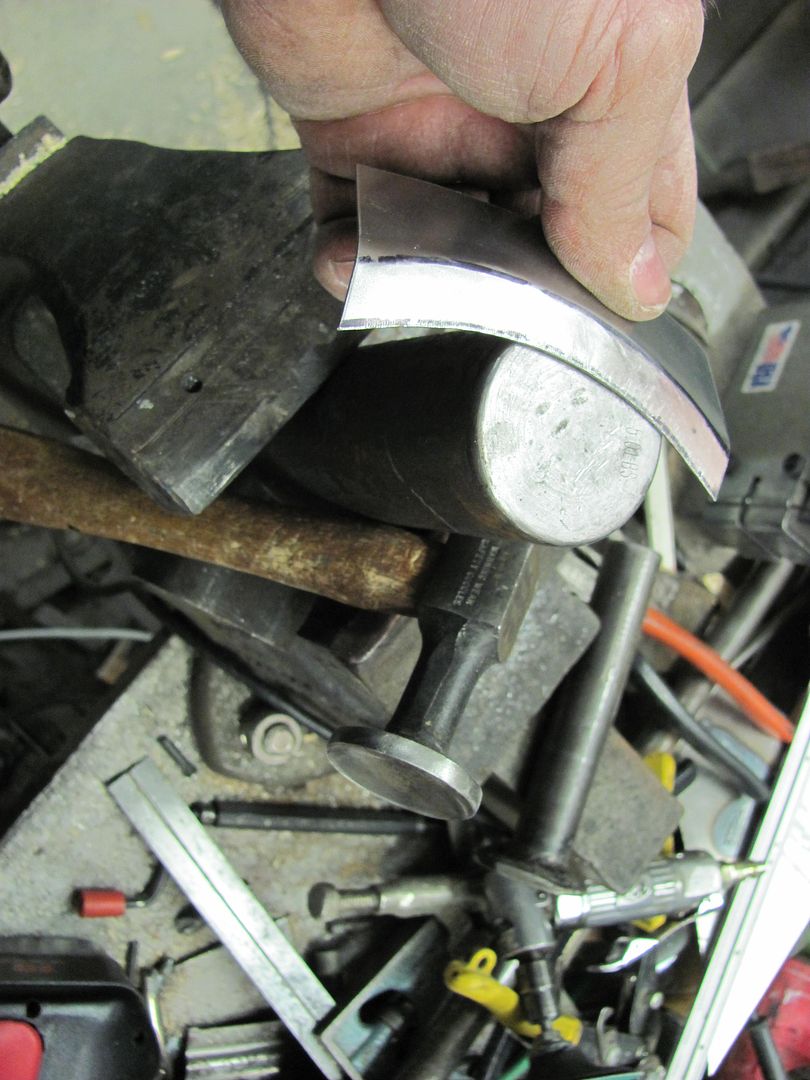
What's interesting about this piece is that you're bending a flange on curved sheet. When I've attempted that in the past, the piece tends to straighten or the flange part bunches up. Would have taken me several tries to get this piece looking anything close to right.
 

MP&C

Well-known member
Joined
Oct 21, 2009
Messages
4,396
Location
Leonardtown, MD
What's interesting about this piece is that you're bending a flange on curved sheet. When I've attempted that in the past, the piece tends to straighten or the flange part bunches up. Would have taken me several tries to get this piece looking anything close to right.

Looking at this pic again, had the bend line been straight across it would have forced the rolled radius more flat. With a curved bend line, it tended to not be as much of an issue..

Picture114-1.jpg
 
Last edited:

Kevin54

MEMBER EMERITUS
Joined
Jan 12, 2005
Messages
29,341
Location
Urbana, Ohio
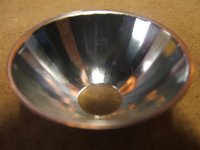
Nothing along the lines of the multi talented on here and what's shown, but here's a couple of reflectors that were made for aircraft lighting. I don't have a lot of things showing what I used to do at work. :sad:
 

Attachments

  • DSCF4840.jpg
    DSCF4840.jpg
    148.7 KB · Views: 140
  • DSCF4843.jpg
    DSCF4843.jpg
    148 KB · Views: 133
  • DSCF4844.jpg
    DSCF4844.jpg
    141.8 KB · Views: 133
OP
J

Jim Stabe

Well-known member
Joined
Feb 18, 2009
Messages
801
Location
San Diego, Ca
Nothing along the lines of the multi talented on here and what's shown, but here's a couple of reflectors that were made for aircraft lighting. I don't have a lot of things showing what I used to do at work. :sad:

ow about some detail on how you did it? Nice work
 

MP&C

Well-known member
Joined
Oct 21, 2009
Messages
4,396
Location
Leonardtown, MD
Kevin, is that plated copper? I'm with Jim, fess up on some forming details!

Jim, haven't made it back out your way again, been travelling the other direction (UK), but have you made it to the hood forming yet?
 

NASTYZEN

Well-known member
Joined
Jun 11, 2010
Messages
2,823
Location
St-Colomban,Que. Canada
Nothing along the lines of the multi talented on here and what's shown, but here's a couple of reflectors that were made for aircraft lighting. I don't have a lot of things showing what I used to do at work. :sad:

Those are stamping or formed, Am I right? How would you machine tooling for something like that conventionally?? With a rotary table?
Must be nightmarish to machine.:Twitch:
 

geologist

Well-known member
Joined
Dec 14, 2011
Messages
5,326
Any Buckeyes / Wildcats out there that would care to mentor a wannabe metal masher? I'd be more than happy to drop you some beer or scratch. I've got nothing around me that offers anywhere near this level of knowledge in metal forming.
 

bsaint

Well-known member
Joined
Apr 26, 2010
Messages
5,109
Location
Manchester, CT
What is the point of dimple dying something like what ZT built??just astetics?

I at work I build calf milk pasteurizers and when I build the tanks it's rolles sheet metal and I have to weld the seam and a cap on one end, and the holes all get pulled out like dimple dies do but for us it's so we can weld ferrals on cleanly since it all gets purge welded. So that's the only reason I see those used....

I believe its for strength. Think about if your snow shovel didn't have a rolled form in it. It would just be a flimsy piece of aluminum
 

pacecar

Well-known member
Joined
May 2, 2012
Messages
236
Location
bryan, tx
i think the dimpling serves several purposes


adds rigidity stiffness

reduces weight

aesthetically pleasing

could also be functional ie someone mentioned using it in a dash panel for gauges, maybe it could allow for clearance issues or for allowing access like a pass through for wires or a hose
 

crewchief888

Well-known member
Joined
Dec 3, 2009
Messages
13,736
Location
NW indiana
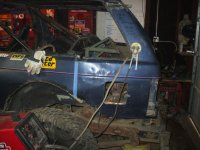
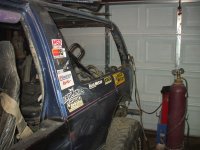
in the process of narrowing my s-10 blazer trail truck 9-10 inches in the rear

:beer:
 

Attachments

  • 010.jpg
    010.jpg
    139.8 KB · Views: 57
  • 008.jpg
    008.jpg
    143.4 KB · Views: 60
  • 009.jpg
    009.jpg
    144.2 KB · Views: 55

Grazz256

Active member
Joined
Jul 23, 2011
Messages
42
i think the dimpling serves several purposes


adds rigidity stiffness

reduces weight

aesthetically pleasing

could also be functional ie someone mentioned using it in a dash panel for gauges, maybe it could allow for clearance issues or for allowing access like a pass through for wires or a hose

Dimple dies do two wonderful things for the rigidity of the part.
a) cold working the metal changes the grainstructure adding internal stresses that result in a stiffer part overal. This is the same reason cold rolled steel is "stronger" then hot rolled.
b) by dimpling the metal you are adding a depth dimension to the part (can't think of the proper term...) which is going to limit its flex in that direction. For example if you have a piece of sheet metal you can flex it quiet easilly. Now fold one edge of that sheet and try to flex it.

Similar effects can be done by running beads but you obviously don't get the weight reduction.
 

Kevin54

MEMBER EMERITUS
Joined
Jan 12, 2005
Messages
29,341
Location
Urbana, Ohio
ow about some detail on how you did it? Nice work

Kevin, is that plated copper? I'm with Jim, fess up on some forming details!

Jim, haven't made it back out your way again, been travelling the other direction (UK), but have you made it to the hood forming yet?

Those are stamping or formed, Am I right? How would you machine tooling for something like that conventionally?? With a rotary table?
Must be nightmarish to machine.:Twitch:

Sorry guys, I didn't mean to not answer anyone, but this is the first I been back to this thread.

The parts are aluminum and they are either chem-polished or hand polished. The part are formed and not stamped.

Nasty......You're close. The form tooling isn't made on a rotary table but they are made on an indexer. There are 40 facets around (one facet every 9 degrees) Actually it's easier to sketch something than to try to explain it as I have a hard time explaining things, but here goes.

We put a plug of a certain diameter in the indexer. To simplify things, the plug has a 1" shank to chuck up in the collet and the plug itself well say is 2" in diameter. Then the mill is programmed to mill around the side of the plug going point to point. If you stand the reflector on edge you can understand what I mean. Then after the end mill gets to the nose of the plug, the indexer rotates 9 degrees and the plug is cut again. It does this 40 times.

To form the reflector, it takes two thick chunks of aluminum that is squared up to the same size. The bottom piece of aluminum will have a bore that is the largest size of the reflector, the top block of aluminum is bored out the same size as the aluminum form plug. In the bottom block, a recess is cut to the blank size, maybe 3 1/2" in diameter at the thickness of the aluminum sheet plus a couple of thousandths clearance. You put the aluminum blank in the pocket in the bottom block, the top block (doweled for alignment) is bolted to the bottom block. There is a rubber plug also in the bottom block. Once you start shoving the form plug down the rubber forms it around the form plug. Once you're at a certain depth, you unbolt the two blocks then relieve the pressure and you now have a formed part.

It sounds difficult, but it's really simple once you have made one or two. I've probably made a few hundred different types of reflectors over the years.

Now as far as coming up with the design of the reflector, that is something I know nothing about. The engineers use different formulas to come up with the coordinates that are needed. One wouldn't think it was that big of deal, but when it comes to aircraft, there are specs that need to be adhered to. For instance, the logo light on the stabilizer wing at the rear of a plane......it has to shine up to the vertical tail and light up the name that is painted on it. The light has to be within a certain pattern and not too large or not too small but needs to be centered on the logo itself. Just to make a reflector that fits within a certain scale may take 5 or 6 different prototypes to get right. If you're lucky, you may be able to modify the initial form tooling you made. If it's a drastic change, then what you have done is scrapped and new form tooling is made.

Once everything is done and approved, then usually we make hard tooling out of tool steel for longevity. It's really interesting if you are the type of person that likes to do metalworking and machining.

I've taught a few people that became toolmakers. But when they first started, they may have known how to run a drill press but came into the business saying "how hard can it be, all you make are lights"? It's really amazing what all it takes to make a light for a plane. Most everything that we make was made in house. From the small contacts, to the housings the contacts went into, to the complete light wired and working. And what made it more interesting was my wife. I met her at the shop and she did the assemblies and wirings of the prototypes. She loves to wire things as that was her passion when it came to shop. She got to wire up Power Supplies for the planes, Aural Warning Units, and at one time, her voice was used on the Aural Warning Units. Not bragging because she is my wife, but when it came to wiring anything, the engineers always went to her because she was the best. When she was done wiring hundreds of wires into something, it was a work of art.

Although we are both retired and out of the shop, other than the ******** that the company created, we both miss the work. A few years back, it used to be a family type of atmosphere and everyone knew everyone or was related somehow. When it was crunch time, everyone pulled together to get the product out. For instance, we had to have 5 lights made by a Monday morning to ship. My boss asked my wife and I to come in and finish the parts. I had to make the parts, they had to be plated, then assembled. My boss said that if we needed anything to just let him know and he'd help out in anyway he could. I started machining the parts, then I had to go to plating and start plating them. I didn't have a clue what to do, but the boss found the manual for black anodizing. After I got them anodized they went to the wife to be assembled. we pulled it off and the lights shipped first thing Monday morning and was shipped to England to go on a plane for Margaret Thatcher. I thought that was some pretty cool stuff. :rocker:

I also had the privilege to machine the refueling lights for the F-117 Stealth. I was picked because they couldn't trust anyone else to get them done in time. Just things like that made working all worthwhile :thumbup:
 

Kevin54

MEMBER EMERITUS
Joined
Jan 12, 2005
Messages
29,341
Location
Urbana, Ohio
MP&C....I went back and looked at the pics. I can see where you thought it might be copper. It was the reflection of the rope lighting I have above my desk in the garage.
 
To avoid these ads, REGISTER NOW!

zmaxmotorsports

Well-known member
Joined
Jan 11, 2013
Messages
11,948
Location
South of omaha
Heres todays simple project,Ill try and break out the welder tomorrow and actually get some things attached.
 

Attachments

  • Photo1106.jpg
    Photo1106.jpg
    19.4 KB · Views: 108
  • Photo1107.jpg
    Photo1107.jpg
    26.3 KB · Views: 94
  • Photo1108.jpg
    Photo1108.jpg
    17.9 KB · Views: 91
  • Photo1109.jpg
    Photo1109.jpg
    21.3 KB · Views: 81
  • Photo1110.jpg
    Photo1110.jpg
    21.6 KB · Views: 71

Tucko

Well-known member
Joined
Jul 28, 2012
Messages
1,650
Location
Whittier, Ca
Here's some sheet metal work. Tapered column covers and soffit/entryway at Disneyland.
 

Attachments

  • scan0004.jpg
    scan0004.jpg
    137.8 KB · Views: 134

Tucko

Well-known member
Joined
Jul 28, 2012
Messages
1,650
Location
Whittier, Ca
Tapered aluminum downspouts at a sewage treatment plant outside of San Diego. They tapered from 36" Diameter to 6" at the bottom. They were about 40 feet tall, and made in 8 pieces, welded together.
 

Attachments

  • scan0003.jpg
    scan0003.jpg
    102.7 KB · Views: 130

Kevin54

MEMBER EMERITUS
Joined
Jan 12, 2005
Messages
29,341
Location
Urbana, Ohio
State of the art manufacturing facility!:lol_hitti

There's been tons and tons of sheetmetal formed with those high tech tools over the years :lol:


Tapered aluminum downspouts at a sewage treatment plant outside of San Diego. They tapered from 36" Diameter to 6" at the bottom. They were about 40 feet tall, and made in 8 pieces, welded together.

I can understand them being downspouts, but is this pic before gutters or is just the large diameter catching water. :dunno:
 

Kevin54

MEMBER EMERITUS
Joined
Jan 12, 2005
Messages
29,341
Location
Urbana, Ohio
Here is another part that I made. The outside company that was making it decided they didn't need our work anymore. It doesn't look like much, but no one knew how to make it. What it is, is a 1" O.D. aluminum tube that had to be bent or formed to something like 25 degrees. It was not allowed to have any kinks in it nor was it allowed to be flattened out in the forming process. When I first tried it, I made up a jig with rollers that fit the tube. One end had to be clamped then a roller would come around and roll the tube. It flattened the tube in the bend. So second try was fill it with water, freeze it, then try rolling it. It would crush the ice. Third try was to weld a cap on it, fill it with water, screw a cap on the other end, then roll it. It would still crush the ice.

I though for a while and figured, why not try to basically extrude it. I took two blocks of aluminum and cut the tube form into the blocks. Half in one block and half in the other block, then added some dowels for alignment. A little bit of grease, clamp both halves together, drop the tube into the top hole and shove it down with an arbor press. The tube formed and was within .005 all through the formation of the bend. And with minimal scrap. I left maybe .500 on the short end to fit into the mill fixture for trimming to the correct angle. And on a side note, the mill fixture used was the same one I made maybe 25 years ago. It makes one feel good that a piece of tooling lasted that long. BTW.....the aluminum tube gets knurled on the long end after forming and trimming and eventually welded to a searchlight that goes into helicopters.

dscf1235o.jpg


Here is one other part made that no one knew how to machine. This piece was a little ***** to do and everything as far as dimensions absolutely had to be within .005 everywhere. Not only is it machined on top but also underneath. Every facet is a compound angle. And what is interesting and also embarrassing, not for me but for others, are the people that call theirself a Toolmaker and absolutely do not know how to figure a compound angle. Then you get in a discussion with them and find out they been making parts wrong for a long while.

dscf4856s.jpg
 

Kevin54

MEMBER EMERITUS
Joined
Jan 12, 2005
Messages
29,341
Location
Urbana, Ohio
Another part that's not sheetmetal but is a machined reflector. The one behind it is polished sheetmetal and is a reflector or a half of a reflector assembly for a strobe light

dscf1268g.jpg


This is just another style of reflector made from sheetmetal

dscf1244k.jpg
 
Last edited:

Tucko

Well-known member
Joined
Jul 28, 2012
Messages
1,650
Location
Whittier, Ca
There's been tons and tons of sheetmetal formed with those high tech tools over the years :lol:


I can understand them being downspouts, but is this pic before gutters or is just the large diameter catching water. :dunno:

It was a flat roof. The scuppers and overflows are hidden. These were functional, but also decorative downspouts.
 

Kevin54

MEMBER EMERITUS
Joined
Jan 12, 2005
Messages
29,341
Location
Urbana, Ohio
It was a flat roof. The scuppers and overflows are hidden. These were functional, but also decorative downspouts.

I can see it now when looking at the pics since you said that. I see where it is coming in on the R.H. downspout.

So how long were the rollers to form them? Did you use powered or stomp shears to cut the material or cut them by hand? Nice job though to say the least. :thumbup:
 

Tucko

Well-known member
Joined
Jul 28, 2012
Messages
1,650
Location
Whittier, Ca
I can see it now when looking at the pics since you said that. I see where it is coming in on the R.H. downspout.

So how long were the rollers to form them? Did you use powered or stomp shears to cut the material or cut them by hand? Nice job though to say the least. :thumbup:

The blanks were sheared with a power shear, then the sections were laid out. I didn't use rollers, but a 12 foot press brake. They had to be lightly tapped every 1/8" of an inch until the radius was formed up. I had to use blueprint paper for shims under parts of the bottom die, because any imperfection in the dies would be multiplied greatly upon repeated hits. With a tapered radius, this was quite a challenge. All edges and ends had to line up perfectly for welding. I think we were using .063 or .090 Aluminum. Lots of pretty fancy work on that job, and it went to a **** treatment plant hidden in the hills. Go Figure....
 

NASTYZEN

Well-known member
Joined
Jun 11, 2010
Messages
2,823
Location
St-Colomban,Que. Canada
Here is another part that I made. The outside company that was making it decided they didn't need our work anymore. It doesn't look like much, but no one knew how to make it. What it is, is a 1" O.D. aluminum tube that had to be bent or formed to something like 25 degrees. It was not allowed to have any kinks in it nor was it allowed to be flattened out in the forming process. When I first tried it, I made up a jig with rollers that fit the tube. One end had to be clamped then a roller would come around and roll the tube. It flattened the tube in the bend. So second try was fill it with water, freeze it, then try rolling it. It would crush the ice. Third try was to weld a cap on it, fill it with water, screw a cap on the other end, then roll it. It would still crush the ice.

I though for a while and figured, why not try to basically extrude it. I took two blocks of aluminum and cut the tube form into the blocks. Half in one block and half in the other block, then added some dowels for alignment. A little bit of grease, clamp both halves together, drop the tube into the top hole and shove it down with an arbor press. The tube formed and was within .005 all through the formation of the bend. And with minimal scrap. I left maybe .500 on the short end to fit into the mill fixture for trimming to the correct angle. And on a side note, the mill fixture used was the same one I made maybe 25 years ago. It makes one feel good that a piece of tooling lasted that long. BTW.....the aluminum tube gets knurled on the long end after forming and trimming and eventually welded to a searchlight that goes into helicopters.

dscf1235o.jpg


Here is one other part made that no one knew how to machine. This piece was a little ***** to do and everything as far as dimensions absolutely had to be within .005 everywhere. Not only is it machined on top but also underneath. Every facet is a compound angle. And what is interesting and also embarrassing, not for me but for others, are the people that call theirself a Toolmaker and absolutely do not know how to figure a compound angle. Then you get in a discussion with them and find out they been making parts wrong for a long while.

dscf4856s.jpg

So Kevin, I'll take you up on that offer you made about hanging out at my place. I could show you fabrication and You could teach me some tool n die stuff. :)
 

ilovevocs

Well-known member
Joined
Jun 26, 2009
Messages
1,966
Location
Toledo, Ohio
I can understand them being downspouts, but is this pic before gutters or is just the large diameter catching water. :dunno:

If you look at the top left corner of the image you can see a small through wall scupper extending from the structure to the down. I'm assuming their is a parapet wall and the the structure drains to the corners and out of the scupper into the downs.
 

NASTYZEN

Well-known member
Joined
Jun 11, 2010
Messages
2,823
Location
St-Colomban,Que. Canada
Check out what my 16 year old made for his high school project.
I showed him the basics by bashing out a part with a hammer and anvil. One part only, and he entirely made this by himself.
The flower and stem are all Alu. hot glued together.
He spent hours on it.
Sure makes his Daddy proud!:thumbup:

dscn1933q.jpg


I've made flowers before but they were no where near as nice as his.

dscn1935u.jpg
 

bluebolt

Well-known member
Joined
Dec 28, 2008
Messages
5,434
Location
Benton LA
Check out what my 16 year old made for his high school project.
I showed him the basics by bashing out a part with a hammer and anvil. One part only, and he entirely made this by himself.
The flower and stem are all Alu. hot glued together.
He spent hours on it.
Sure makes his Daddy proud!:thumbup:

dscn1933q.jpg


I've made flowers before but they were no where near as nice as his.

dscn1935u.jpg

Now that's cool! Where's the build thread LOL.
 
To avoid these ads, REGISTER NOW!
Top Bottom