To avoid these ads, REGISTER NOW!

Polystyrene Formwork

7th Kahuna

Well-known member
Joined
Aug 4, 2012
Messages
1,704
Location
Los Angeles, CA
My dad is beginning the planning for a new shop building. Initially it will be 24' x 24' and later expanded to 24' x 36'. He is also seriously considering adding a second floor at that time and will build the initial structure with that in mind.

Presently we are considering the material for the walls. Because of concerns over security, we have largely excluded a stick built structure and are leaning toward either concrete masonry (CMU) or polystyrene formwork.
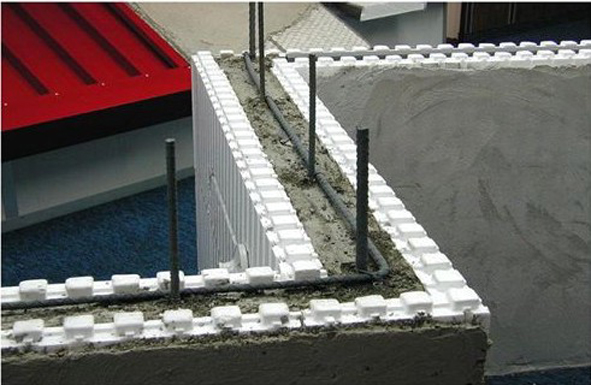
ICF-Bausteinen.jpg

Polystyrene Formwork with Stucco Finish

CMU is pretty straight forward but I haven't done enough of it to really want to take the project on myself. Polystyrene looks like it would be easier for my father and I to do but I have never seen it installed outside of a handful of YouTube videos.

Does anyone here have experience with it? What do you think?

Is it as easy to install as it looks?

How does it compare, cost wise, to CMU?

Do any of the manufacturers provide engineering (ready made or site specific) for their product?

The project will be in Los Angeles County.

Thanks all. Answers to any of these questions is appreciated.
 
To avoid these ads, REGISTER NOW!

wssix99

Well-known member
Joined
Mar 2, 2011
Messages
5,161
Location
Chicago, IL
My wife is about to break ground on an ICF house (Insulated Concrete Form) for us this spring and she has built almost 20 of them here in Chicago in the past. There is a learning curve and the more complex the structure, the more help will be required.

The forms and concrete are easy. The required rebar makes it a lot more complicated and challenging. (If you need larger sizes of rebar, custom bends, etc. it becomes less of a do-it-yourself project.)

The big payoff is in energy efficiency or insect proofing. If you are looking for it to be an easier way to construct something, it won't be.

My dad is beginning the planning for a new shop building. Initially it will be 24' x 24' and later expanded to 24' x 36'. He is also seriously considering adding a second floor at that time and will build the initial structure with that in mind.

Adding a second floor will be challenging and may require an engineer's help. The floors are tied together with rebar (you'd need to epoxy in some later on for a second floor) and you'll need to make sure the first floor and reinforcing is built for that higher future load.


Is it as easy to install as it looks?

No. :) The walls are easy. Corners are harder and the windows will drive you crazy. The biggest thing to contend with are blow-outs. (The concrete can blow through the forms, window bucks, etc.) So, picking a quality form provider and knowing how to support the walls properly is key. (While the concrete is being poured, you'll need to buy/rent or construct a bracing system to stabilize the walls until they initially cure.


How does it compare, cost wise, to CMU?

That's going to vary by one part of the country to another, but ICF should be more expensive - but its much stronger and energy efficient.


Do any of the manufacturers provide engineering (ready made or site specific) for their product?

Some are better than others! AMVIC and Logix are two companies with extensive engineering and design guides.
 
OP
7

7th Kahuna

Well-known member
Joined
Aug 4, 2012
Messages
1,704
Location
Los Angeles, CA
Stewart, thanks for the link.

wssix99, Thank you so much for the first hand insights and the names of the two companies.

Some are better than others! AMVIC and Logix are two companies with extensive engineering and design guides.

The job could be easier than perhaps I suggested. The upstairs would be wood framed rather than an extension of the ICF. (The city requires different setbacks for portions of the upstairs.) That 'should' make tying the two together easier, though this being earthquake country, who knows.

Thanks again. If anyone else has experience with these systems I would appreciate hearing about it.
 

Milton Shaw

Well-known member
Joined
Feb 11, 2011
Messages
4,841
Watch out for damaged forms and don't use them as they are the ones that eventually blow out and really make a mess. I would still reinforce the lower part of the forms with plywood and bracing to keep the forms in place until the concrete sets up. Most of the pours would require a pump truck which will at $1500 or so to the cost of pouring, depending on location etc.
 

wssix99

Well-known member
Joined
Mar 2, 2011
Messages
5,161
Location
Chicago, IL
If you have time for your project, you may want to jog over to the International Builder's Show in Vegas. (The next one is in early Feb. 2014.) All the ICF manufacturers are there with their forms, tools, etc. and can get in to the details.
 
To avoid these ads, REGISTER NOW!
OP
7

7th Kahuna

Well-known member
Joined
Aug 4, 2012
Messages
1,704
Location
Los Angeles, CA
Watch out for damaged forms and don't use them as they are the ones that eventually blow out and really make a mess. I would still reinforce the lower part of the forms with plywood and bracing to keep the forms in place until the concrete sets up. Most of the pours would require a pump truck which will at $1500 or so to the cost of pouring, depending on location etc.

Had a wood form start to blow out once years ago. No fun. Do you make use of the 'official' bracing equipment, or do you just brace yours with lumber?

If you have time for your project, you may want to jog over to the International Builder's Show in Vegas. (The next one is in early Feb. 2014.) All the ICF manufacturers are there with their forms, tools, etc. and can get in to the details.

Good idea. I'm not sure he will want to wait that long though. I will have to see if there are any other shows around. We used to go to the 'BIG' industry show in Los Angeles when I was a teen. Haven't been to one in years.
 

jumpingryan

Well-known member
Joined
Jan 17, 2009
Messages
89
Location
Ontario, Canada
My neighbours bungalow is insulated concrete form, from basement to roof. He also has a poured garage floor with a room underneath the garage made out of ICF formed flooring.

ICF's give great insulating value (in most cases up to R40). They don't need any extra insulation, although people now are willing to put in as much insulation as they can afford.

They are popular on higher end builds in my area (Canada), and are becoming very common for renovations that require foundations to tie into old work because of their simplicity and acceptance. It is most common to see basements of ICF, and then transition to wood framing once they are out of the hole. The insulation of choice is then becoming closed cell spray foam (no vapour barrier required).

The manufactured of the ICF will likely give you guidelines for use. Compare them to your local codes and talk with your building inspector about what he expects. As a general rule, going over-code won't get a stop work order put on the building, but under-code will.

ICF's offer options for exterior finishing including stucco and brick, but I haven't heard of anyone putting cheaper finishes such as siding on them. You do have to protect the foam, as it is flammable, and not highly UV resistant. The one disadvantage is it is alot harder to add in windows and doors to a building as compared to wood framed.

For inside finishing, quite a few companies offer ICF with pre-studded interior walls.... pretty much a plastic strip along a formed stud for attaching drywall. The "stud" is pierced with a hot knife/punch or drill depending on the manufacturer to run plumbing and wiring.

You mentioned you wanted concrete for security, I would maybe do up to the first floor, and then move onto standard wood framing for the 2nd story floor and walls. Budget for the 2nd story to be closed cell spray foam 2X6 construction to keep with the high end insulation efficiency of the first floor, but standard insulation and vapour barrier will also do just fine.

Good luck in your build and I am sure we will all say we look forward to pictures!

R
 
OP
7

7th Kahuna

Well-known member
Joined
Aug 4, 2012
Messages
1,704
Location
Los Angeles, CA
You mentioned you wanted concrete for security, I would maybe do up to the first floor, and then move onto standard wood framing for the 2nd story floor and walls. Budget for the 2nd story to be closed cell spray foam 2X6 construction to keep with the high end insulation efficiency of the first floor, but standard insulation and vapour barrier will also do just fine.

Good luck in your build and I am sure we will all say we look forward to pictures!

R

Yeah, security is the primary issue, otherwise we would just use conventional framing. Though the insulation value of the foam will be nice during the summers, it really isn't the point at all. We are looking at both ICF and CMU. I recognize that the ICF will be more expensive than CMU but since we would be more likely to install the ICF ourselves, the cost might balance out. I have no idea.

I haven't installed CMU in 25 years and only 25' of 8 foot wall back then. I was still a kid and had the help of a couple guys who knew better what they were doing. The polystyrene panels look so much easier.

And yes, there will be pictures. I have been watching so many of your projects come together, it will be nice to share a couple of my own.
 

OldNeons

Well-known member
Joined
Dec 27, 2011
Messages
462
Location
Midwest
If you don't care about insulation and want fast and easy, how about tilt up precast concrete panels? ICF are great for temperature and sound insulation, but are very costly in materials and labor if you are not benefitting from their efficiency savings. I would venture to guess you could get installed CMUs for same cost of materials only with ICFs when foam blocks, concrete, rebar, bracing/walkway purchase or rental and pump truck fee are factored in. That is not counting your time and the big learning curve. I love ICF construction, and am considering it for my shop (I have a friend who builds with them and has experience and equipment), but my main reason for wanting it is savings on climate control as I have cold winters and hot summers. Good luck!
 

72Anthony

Well-known member
Joined
May 22, 2010
Messages
296
Location
Houston, TX
What exactly is the security concern, is it just in a high crime neighborhood?

Most burglars are going to attack the doors and windows. Also seeing a lot of commercial break-ins using the roof. It's also common to use a stolen pickup to smash into a storefront or door: in this case the strength of your walls will be of little concern if your have a normal door.

I'm sure the seismic requirements for wood frame construction will require a thicker layer of plywood/OSB with tight nailing pattern to prevent racking during an earthquake.

Are you worried about someone cutting through your walls with a sawz-all?

Unless you fill the CMU with concrete it will be just as vulnerable to breaching via sledge hammer as a wood frame.

Security is accomplished in layers: perimeter protection (fence and gate), lighting, cameras with motion detection, hardening of doors and windows, alarm on doors, windows, motion detection with cell backup, and insurance.

Search garage security as there are some good threads here.

Regards,
Anthony
 
Last edited:
To avoid these ads, REGISTER NOW!
Top Bottom