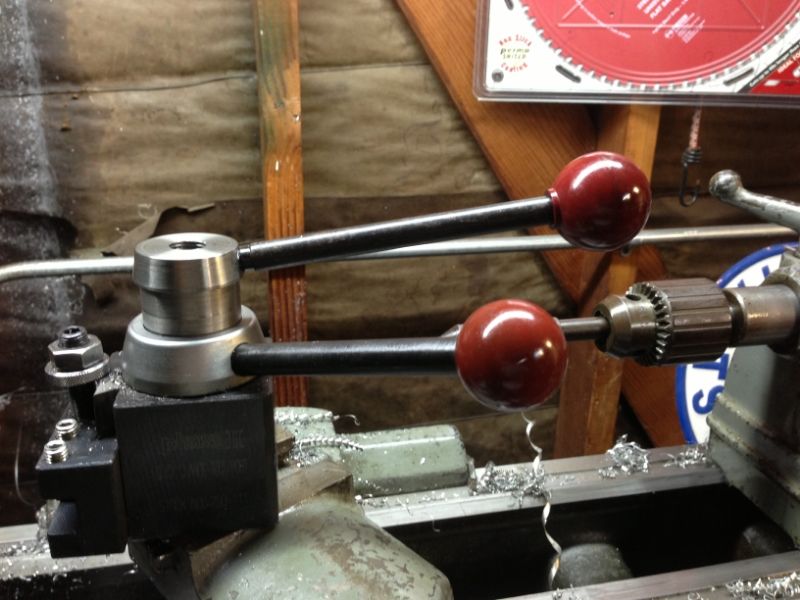
I am sure Kevin can give you some valuable input, but if you don't mind me chiming in, I will give you some things to consider. When you take a cut of say .010, the tool bit is cutting while being pushed away from the lathe centerline. Since the tool bit is being moved along during this pressure phase, some burnishing of the surface is being done, due to the fact that the rigidity of the lathe toolpost is always trying to return to it's set position. Burnishing gives a somewhat smooth finish. When you then take a pass of just a few thousandths, the toolpost pressure applied by the cutting is less, letting the toolpost and cutting tool surge in a variable motion, therefore resulting in a finish similar to that of a vinyl music record. This is why a slightly radiused point on the cutting tool gives a smoother finish. Try this experiment. Turn a rod about 2" length or so. At end of the cut, stop the lathe, then crank the carriage back to the starting point. See the scribe mark created on the material? Now move the carriage back to the end of the cut. Rotate the stock by hand to a fresh surface on the turned part. Again crank the carriage back to the starting point, but this time, tug slighty on the toolpost with one hand while cranking the carriage with the other. Notice now how there is no scribed line on the part? This is due to flex in the machine. It is also the reason that the more rigid a machine tool is, the better. I hope all this makes sense to you.