I' m way out on a limbe here and I didn't wire the damn thing in becasue I hate three way circuits and slaves and such but;
If I recall correctly, the insteon/x10 slave for a three way, that really needs wired as the master is setup with that neutral in it. It can't be that simple becasue x-10 was fighting fl lights for years...could it?
The X10 and Insteon systems are two
ENTIRELY different things. Please stop conflating the two; you're just sowing more confusion.
The old X10 wall switch (WS467) did not connect to or use the neutral, even if one was present in the box. It derived power to operate its internal circuitry through a clever, but ultimately unreliable, rectification scheme. This (along with the cheap-*** construction) is the primary reason they were always so damn flaky. The "slave" switch included in the WS4777 "3-Way Kit" was a simple momentary-contact SPST switch, which, when tied into the "real" switch via the traveller wires, duplicated the function of the WS467's main button.
By comparison, the Insteon wall-switch dimmers (such as the model 2477D
http://www.smarthome.com/2477D/SwitchLinc-INSTEON-Remote-Control-Dimmer-Dual-Band-White/p.aspx) & etc.
DO use (and require) a Neutral connection:
Any "slave" switches used to make "3-way" circuits aren't really "switches" at all, in the conventional sense of that term; nor do they need connect (even indirectly) to the load. They are used only to place commands on the power line, which the "real" switch then "hears" and acts upon. Hence, they are part of that "circuit" only in a virtual sense, through software addressing. See the "Box 2" diagram below:
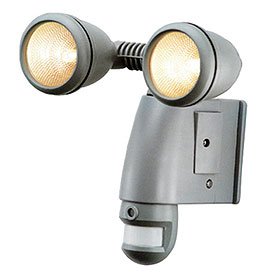
It looks like the device I bought previously, states " if lights flash, light from the lamps may be turning the light control on and off, reposition lights".. right! This was a failure waiting to happen. Obviously two devices are going to be required, where the photo cell is seeing outside and the motion sensor is inside.
Perhaps with that device. But the Insteon sensor I pointed you at should not be subject to this problem. It has built-in timers & logic to prevent this problem. If the "night-only" mode is active, it will not send an "ON" command if the ambient light is above the set point; but (at least AFAIK) it won't force an "OFF" command.
That said, I can imagine one possible failure mode: It
MAY fail to continue issuing "ON" commands (and stop resetting its time-out value each time) in response to ongoing motion in the area, once it senses a too-high light level. If so, then once it times out from the initial turn-on, the lights would go off, and you'd need to re-trigger the sensor (via more motion, now in the dark) to get them to go back on. HOWEVER, I consider this a very large stretch. First, as I said, the unit contains at least some logic aimed at preventing this. Second, both the "Dawn/Dusk" point and the time-out values are VERY adjustable; so a workable combination of settings should be obtainable in most situations. Finally, you can also put it in "ON-Only" mode, so it will NEVER time out; but of course you'd then need to turn the lights off with a press of the wall switch when you're done for the night. Bottom Line: Don't worry about it. You might need to finesse the mounting location of the sensor to get just the right combination of daylight-sensitivity and motion-sensitivity; but I strongly suspect it WILL work well once that is done.