Dave455
Well-known member
Well folks!
Been on the forum for a while now! Enjoyed the chat and got some useful advice! (Cost me a bit too, but there you go!)
I reckon now's the time to try and give something back!
Reading the various threads it's apparent that there are some tools that I use regularly that others do not!
So, I thought I'd start a thread where hopefully folks will contribute details of any useful tools they've discovered, or maybe used for years, but others may not!
I'll kick off with a few examples of my own!
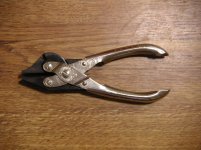
1) Parallel Action Pliers
These are made in the U.K. by Maun, and have been for decades, but the design is definitely of U.S. origins. The first pairs made it to the U.K. in the 1930's and were marked "Bernards Patent". Not sure who the original manufacturer was, but they were, and still are, seriously useful!
Anything with parallel sides that you want to hold is gripped better with this style of plier. If you want to manipulate a part there's much less chance of it slipping, and there is no better tool for removing or inserting roll pins!
Many sizes and styles are available, including cutters, but the ones shown are most useful!
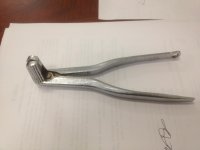
2) The Ratchet Unit
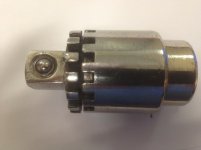
These were very popular once, less so now there are so many varieties of ratchet handle, but they still offer many advantages!
They are of much heavier construction (thicker ratchet and pawl) than the mechanism of a similar size ratchet handle, so can generally be used safely with a breaker bar! If you have a couple of breaker bars you have two different lengths of ratchet!
More usefully, you can use them between an extension and a sliding T to make a ratcheting T. My most commonly used combination around the workshop!
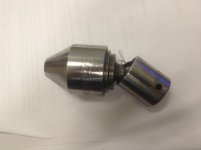
3) The Q Max Cutter
Don't know what these are generally known as in the U.S. , but I know Greenlee make something similar.
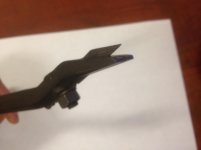
They were originally developed in the U.K. for radio work where neat holes needed to be punched without power tools. You drill a pilot hole where you would like the large hole centered, assemble the punch either side and just wind in the cap screw! The clever design of the tool punches the centre out of the hole progressively, leaving a perfect hole with no sharp edges!
A great tool, inexpensive to buy, and available in all manner of shapes and sizes!
4) The Surgical Scalpel
We all do a lot of cutting and trimming, and the most useful tool I've found for this is the surgical scalpel. Cheap to buy, with blades that hold a good edge, nothing from the "craft knife" makers comes close!
I use the regular size handles all the time in carpentry for trimming up a freshly sawn edge! In metalwork I use the larger "Swann Major" (the name given by it's British maker, but I'm sure there is a U.S, equivalent) all the time for marking out, and even for de burring!
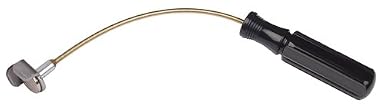
5) The Screw Starter
Very common in the aviation sector, but rarely used elsewhere, and I don't know why not!
If you are unfamiliar with these, they clamp into the head of a screw that's difficult to reach! Even if you can only get your fingertips to a screwhole, you can get the screw started safely without any risk of dropping it! As you wind it in, the screw starter automatically disengages!
Been on the forum for a while now! Enjoyed the chat and got some useful advice! (Cost me a bit too, but there you go!)
I reckon now's the time to try and give something back!
Reading the various threads it's apparent that there are some tools that I use regularly that others do not!
So, I thought I'd start a thread where hopefully folks will contribute details of any useful tools they've discovered, or maybe used for years, but others may not!
I'll kick off with a few examples of my own!
1) Parallel Action Pliers
These are made in the U.K. by Maun, and have been for decades, but the design is definitely of U.S. origins. The first pairs made it to the U.K. in the 1930's and were marked "Bernards Patent". Not sure who the original manufacturer was, but they were, and still are, seriously useful!
Anything with parallel sides that you want to hold is gripped better with this style of plier. If you want to manipulate a part there's much less chance of it slipping, and there is no better tool for removing or inserting roll pins!
Many sizes and styles are available, including cutters, but the ones shown are most useful!
2) The Ratchet Unit
These were very popular once, less so now there are so many varieties of ratchet handle, but they still offer many advantages!
They are of much heavier construction (thicker ratchet and pawl) than the mechanism of a similar size ratchet handle, so can generally be used safely with a breaker bar! If you have a couple of breaker bars you have two different lengths of ratchet!
More usefully, you can use them between an extension and a sliding T to make a ratcheting T. My most commonly used combination around the workshop!
3) The Q Max Cutter
Don't know what these are generally known as in the U.S. , but I know Greenlee make something similar.
They were originally developed in the U.K. for radio work where neat holes needed to be punched without power tools. You drill a pilot hole where you would like the large hole centered, assemble the punch either side and just wind in the cap screw! The clever design of the tool punches the centre out of the hole progressively, leaving a perfect hole with no sharp edges!
A great tool, inexpensive to buy, and available in all manner of shapes and sizes!
4) The Surgical Scalpel
We all do a lot of cutting and trimming, and the most useful tool I've found for this is the surgical scalpel. Cheap to buy, with blades that hold a good edge, nothing from the "craft knife" makers comes close!
I use the regular size handles all the time in carpentry for trimming up a freshly sawn edge! In metalwork I use the larger "Swann Major" (the name given by it's British maker, but I'm sure there is a U.S, equivalent) all the time for marking out, and even for de burring!
5) The Screw Starter
Very common in the aviation sector, but rarely used elsewhere, and I don't know why not!
If you are unfamiliar with these, they clamp into the head of a screw that's difficult to reach! Even if you can only get your fingertips to a screwhole, you can get the screw started safely without any risk of dropping it! As you wind it in, the screw starter automatically disengages!