porschedude996TT
Well-known member
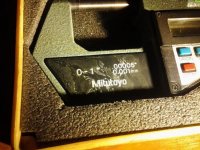
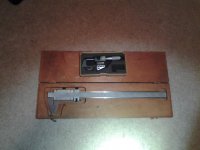
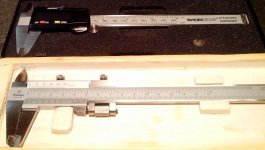
I don't think this subject has been posted. I will take some pictures when I get home and post them here.


Oh, boy, finally something I can contribute to!
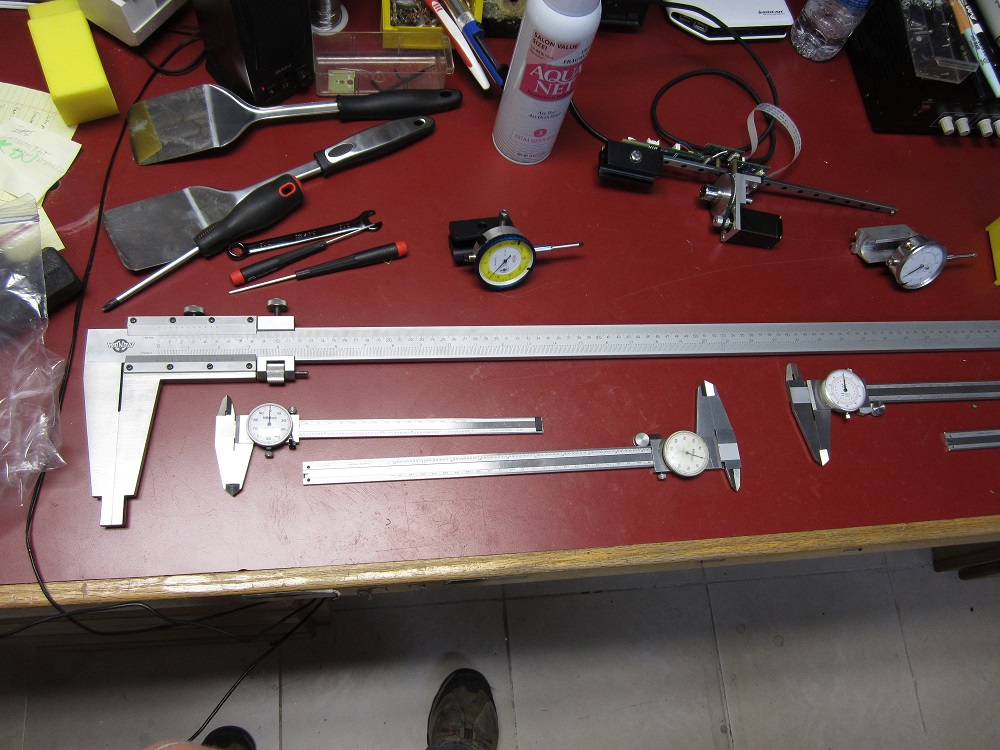
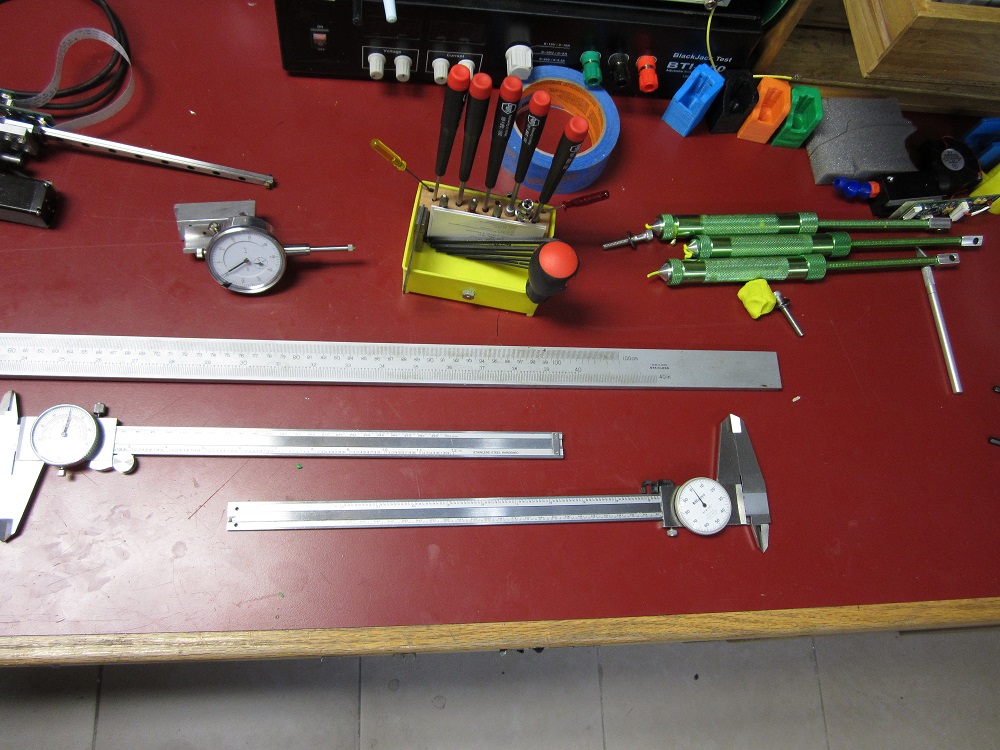
They're all the boss's, not mine. And there are more lying around somewhere.
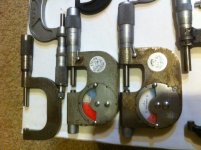
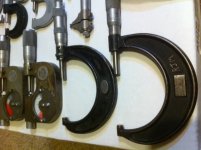
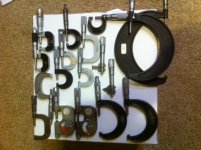
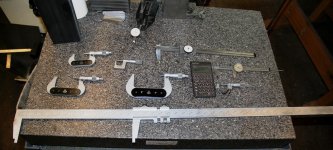
The big guys go to 40". The second from the right has both SAE ann Metric needles.
1.small scale for precise readings: a small movable graduated scale parallel to a larger graduated scale, calibrated to obtain more precise readings from the larger scale
They are either Brown & Sharpe, Starrett, Tesa, Etalon, Mitutoyo, Helios, or Lufkin.
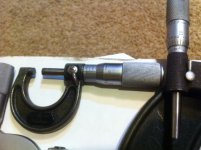
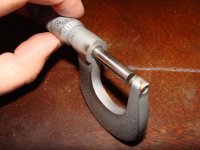
Here is a very old Brown & Sharpe micrometer that I bought at an estate sale a long time ago. It still works perfectly. View media item 35316

Here is a very old Brown & Sharpe micrometer that I bought at an estate sale a long time ago. It still works perfectly. View media item 35316
Some Browne and Sharpe micrometers have a slanted line which might be considered a vernier, but it isn't moveable. So anyone actually seen a vernier micrometer?
Those were never very popular with machinists. I think that the problem was the plastic construction.


I was wondering how the plastic affected things since all my mics are the traditional style. It is the blackness that appeals to me visually, like those old black 35mm SLR cameras.
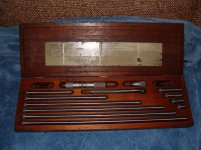
A very nice collection. Those old Etalon indicating micrometers were too large and clunky for regular use, in my opinion. The old Lufkin micrometers with the backlash-cancelling feature were very nice, and amongst the best made.


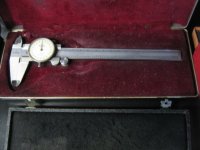

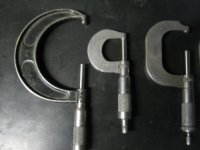
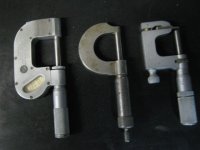

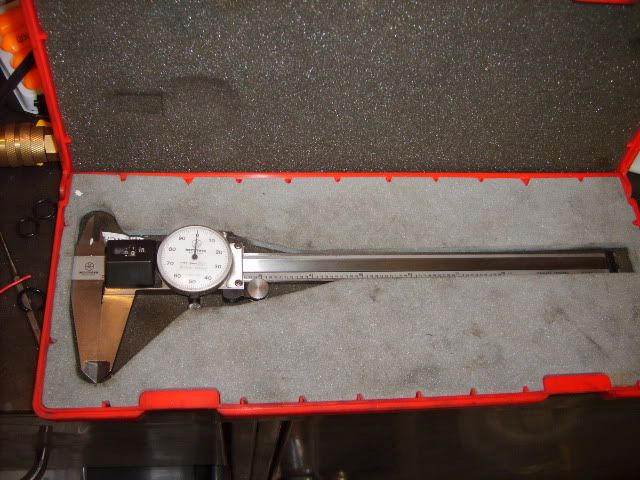
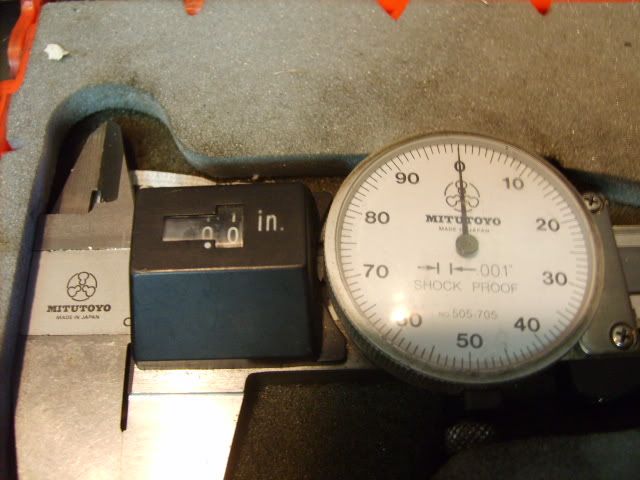

Here is a very old Brown & Sharpe micrometer that I bought at an estate sale a long time ago. It still works perfectly.

Those were never very popular with machinists. I think that the problem was the plastic construction.


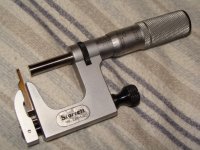
That looks like a Brown and Sharpe no. 621 Surface Gage. Surface gages are kinda old school tools. They typicallly function in conjunction with a granite surface plate. They are used to check or transfer scribe lines. You mark your workpiece with marking dye, then set the height of the scribe tip (using a scale, gage blocks, mating part, whatever), then you slide the surface gage across the granite surface plate to scratch a line thru the marking dye on the part. The result is a line parallel to the bottom of the workpiece at a set distance.And while I have some Machinist's eyes, what is this?, what does it do? ( I haven't been able to find anything on this.) I also have whole lot of other things I haven't been able to ID if anyone is interested.


The finish on these is really cool. If you just clean it with WD-40 and a soft cloth then rub it with mineral oil, you will see many colors. This was decorative and is not typically found on tools nowadays. Your Dad's looks like it is in good shape.
That looks like a Brown and Sharpe no. 621 Surface Gage. Surface gages are kinda old school tools. They typicallly function in conjunction with a granite surface plate. They are used to check or transfer scribe lines. You mark your workpiece with marking dye, then set the height of the scribe tip (using a scale, gage blocks, mating part, whatever), then you slide the surface gage across the granite surface plate to scratch a line thru the marking dye on the part. The result is a line parallel to the bottom of the workpiece at a set distance.
These tools were used more frequently when guys machined parts to scribe lines. Most of us now machine using DROs, directly reading the position of the mill table or CNC.
You can use these simple tools in many ways. I would say that it takes a creative, intelligent person to figure them out. Nowadays, guys like me use these as check tools. We remove the scribe and attach a dial test indicator (or a dial indicator) and use that to inspect a surface. You can also check for squareness (and get a reading of how out of square something is. You just need a master square to zero the indicator to.
This model also has little feet that you can use to overhang a part or the surface plate to allow the gage to only move in one direction.
The little square piece at the bottom of the mast is also a scribe.
The finish on these is really cool. If you just clean it with WD-40 and a soft cloth then rub it with mineral oil, you will see many colors. This was decorative and is not typically found on tools nowadays. Your Dad's looks like it is in good shape.
 , thank you


DUDE. great explanation
I take it there arm different length scribes? That would cover question #2