To avoid these ads, REGISTER NOW!

Help with lighting

ohioratrodder

Member
Joined
Jul 13, 2008
Messages
11
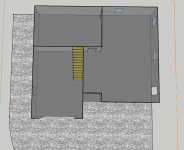
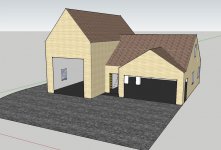
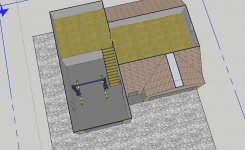
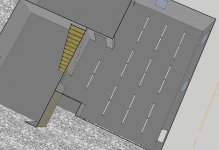
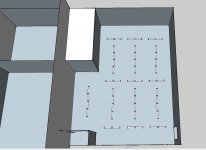
Trying to figure out lighting so i can finish my wiring and move on to insulation. I tried to figure out the lighting calculators but am lost. I will be doing body and paint plus suspension fab mostly. Any help i can get i would appreciate. Right now walls and ceiling are bare but i will be finishing them out in either osb or drywall and painting them white.
Thanks
 

Attachments

  • 6.jpg
    6.jpg
    122.7 KB · Views: 48
  • 2.JPG
    2.JPG
    119.7 KB · Views: 38
  • outside.jpg
    outside.jpg
    115.1 KB · Views: 32
  • 4.jpg
    4.jpg
    137.4 KB · Views: 36
Last edited:
To avoid these ads, REGISTER NOW!
OP
O

ohioratrodder

Member
Joined
Jul 13, 2008
Messages
11
the 14x25 room will be the paint booth, the side with the lift will be used rarely most for oil changes, light mechanical or remove body's from frames and storage. the 26x33ish area will be what i use mostly for welding, body work and buffing. Most cabinets will be upstairs. My toolboxes, tool cart, welders etc will be stored on the lift side and moved over as needed. I will have cabinets and a workbench by the paint booth and thats it downstairs.
 

Attachments

  • 7.jpg
    7.jpg
    142.1 KB · Views: 34
  • 8.JPG
    8.JPG
    104.3 KB · Views: 33

JoeFin

Well-known member
Joined
Sep 13, 2013
Messages
717
Location
NorCal - where the Rednecks Race
In the 33'x26' fab room, 6 rows of 3ea 2 lamp T-8s will put you in the 75 ft / candle range - or a little more depending on how much stuff you have on the walls/ up against the walls. Should be plenty for Gen. Fab.

Don't forget to place a separate fixture above your work bench - but spaced out enough to avoid shadows from your cabinets
 

2ManyProjects

Well-known member
Joined
Jul 18, 2013
Messages
757
Trying to figure out lighting so i can finish my wiring and move on to insulation. I tried to figure out the lighting calculators but am lost. I will be doing body and paint plus suspension fab mostly. Any help i can get i would appreciate. Right now walls and ceiling are bare but i will be finishing them out in either osb or drywall and painting them white.
Thanks

the 14x25 room will be the paint booth, the side with the lift will be used rarely most for oil changes, light mechanical or remove body's from frames and storage. the 26x33ish area will be what i use mostly for welding, body work and buffing.

Clearly, those are three separate areas, which will require three separate (and very different) solutions.

The paint booth is perhaps the most critical area, at least from a lighting perspective, because you REALLY need to see what you're doing, and even relatively minor shadows can be a big problem. To accomplish that goal, you want the ENTIRE vehicle covered as evenly as possible, and especially from as many different angles as possible. As such, you can forget "lighting calculators" for this part of the job; and you should accept going in that you WILL wind up with what would otherwise constitute "gross overkill" in terms of raw brightness. There are MANY possible approaches to this. But just to get you started...

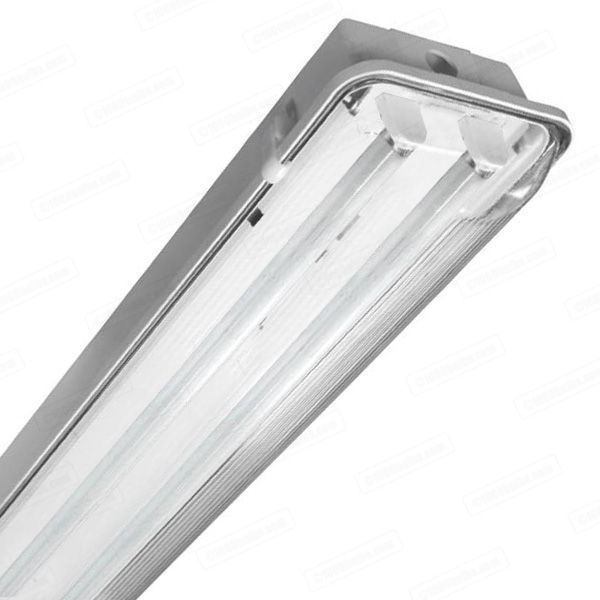
I'd probably start with pairs of twin-tube (or a single tandem 4-tube; i.e., 8-foot) fixtures placed VERTICALLY in each of the corners. Then put two more-or-less continuous runs of similar fixtures around the entire perimeter (or as much of it as you have solid wall surfaces to mount to, anyway -- and yes, you should make at least some effort to put solid doors on the main entrance, and attach lights there too); one of these would be at about knee height, the other at about shoulder height. Finally, fill in the overhead illumination with a few twin-tube fixtures, probably oriented crossways but in a somewhat staggered pattern. With the possible exception of the ceiling-mounted ones, all the fixtures should offer good impact protection, since they will be mounted in "vulnerable" locations. The simple "wrap" type fixtures with polycarbonate lenses that I've pointed to on many occasions (cf. http://www.garagejournal.com/forum/showpost.php?p=3615373&postcount=9) could work in a pinch; but I'd probably lean toward something more substantial, such as:

http://www.1000bulbs.com/product/59133/TCP-WL4WA254USPQS.html
59133_aed333bc136fa843c33291b5763dc0339059dbd5_original_x_600_1371807454.jpg


or:

http://www.homedepot.com/p/Lithonia...Fluorescent-Fixture-XWL-2-32-120-RE/202034431
ce081708-cec2-4b85-9218-af9e7a2901dd_1000.jpg


either of which would offer the added advantage of better sealing off the innards from the volatile solvents and such which will be floating around in that space.

Moving on to the lift area...

Your biggest challenge here will be getting sufficient light UNDER the car when it is elevated. I've seen a number of different approaches to this, but I've not exactly "fallen in love" with any of them. Among the possibilities are:

-- Do something similar to the paint booth, with wall-mounted lighting around the perimeter, placing the fixtures JUST low enough to throw light up onto the underside of the car when the lift is all the way up.

-- Mount some fluoresent strips to the lift posts themselves, probably two sets on each post, "front" and "back". This of course presumes that the lift-related controls (and other "stuff") are not in the way. And again, impact-protected fixtures are de rigueur.

-- Use mostly "portable" lighting, which can be easily moved to under the car once it is in place and elevated. This could be as simple as a cord-reel mounted drop light or two, to as ambitious as some home-brew "creeper lights" (basically, high-power LED or fluorescent fixtures mounted in a sturdy box, which in turn is mounted on casters, with a long and as-flexible-as-possible cord to a nearby wall outlet).

-- Some combination of the above.

The one thing you CAN count on is, any lighting mounted directly overhead will be a near-complete waste. When the car is on the lift, it will be making a huge shadow, and you will be working IN that shadow. Not fun.

Finally, for the body/fab shop area...

The first question is, will it be used more-or-less as you showed in your second set of images, with multiple cars parked "cheek to jowl"? Or will it be more of a "bring in one car at time to work on it" proposition? Your lighting needs (at least in terms of the ideal layout) WILL change, depending on the answer to that question.

Either way, I would probably split the space into two areas, at least for planning purposes, as this should help make things somewhat simpler (in terms of visualization, if nothing else)...

The smallish offset area where you're showing a workbench, cabinets, and various service doors is "Area 1", so to speak. Most of what you'll need here falls into the category of "task lighting", and can probably be fulfilled by LED or fluorescent fixtures mounted under those wall cabinets. That should light of the workbench itself quite nicely. But it won't throw much light into the surrounding area; so figure on adding one run of twin-tube fixtures just inside the (imaginary) "border" between this space and the main shop area. How many fixtures you'll need for this run will depend on several things, including the exact dimensions of that offset area and what you're doing for lighting in the rest of the space; but I'm guessing two or so will do the trick -- in effect, it's mostly a "hallway" anyway.

If I've figured out your diagrams correctly, this effectively leaves a simple rectangle measuring about 19 feet by 33 feet for the main shop area. That's ~627 ft.^2. You're going to want at least 100 lumens/ft.^2 for the sort of work your planning to do in there (and still more certainly won't hurt, but I won't insist on it). So figuring again on standard F32T8 tubes (due mostly to the ceiling height you're saddled with here), you want at least 24 of them, probably more like 28-32 by the time we account for "working height" vs. "source" lumens, and tube aging. In this case, they WILL be mounted out of harms way on the ceiling; so those simple "wrap" fixtures mentioned above should be just fine. The exact placement/layout will depend, as noted above, on exactly how you plan to use the space.

Most cabinets will be upstairs. My toolboxes, tool cart, welders etc will be stored on the lift side and moved over as needed.

For your sake, I'm hoping to be wrong; but I'd wager heavily that schlepping that stuff back and forth on a daily basis is going to get old in a hurry.

I will have cabinets and a workbench by the paint booth and thats it downstairs.

You didn't mention the loft area; but based on your comments above, it should not be ignored. I don't know what you're planning to use this space for besides storage; but even if only that, you'll need SOME decent lighting just to see what you're retrieving/replacing. You WON'T need the sort of intensity that would be required in a real work area, tho'; figure maybe 50 lumens/ft.^2 or so as a reasonable target.

 
OP
O

ohioratrodder

Member
Joined
Jul 13, 2008
Messages
11
Thanks for all the help so far. The work area will be pretty much only be one car at a time when i work, or less the weather is bad and the rest of the shop is full and i cant move a car out during the day. The booth lighting i am pretty much setting up like professional spray booth and similar to the one i use at work. I haven't decided on fixtures yet but would like them behind sealed glass. I will research the ones you linked to. The other two areas i was at a complete loss and want to make sure i get enough light and lay out correct. Right now i am mostly concerned with getting the work area and booth setup done. Hopefully by months end or next month i can start the lift area lights.

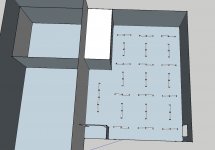
After what you described how would 10 of these in the 33x20ish work in the lay out attached. Plus i would have a light under the cabinet also.

For the tools i am use to only having a tool cart with pretty much everything i need in or on it and putting the tools up after i am done with the job. i just like having a open clean area to work in and would rather walk an extra 15ft then trying to keep tool boxes and welders clean from bondo dust and metal shavings.
 

Attachments

  • 10.JPG
    10.JPG
    51.8 KB · Views: 47
  • 9.JPG
    9.JPG
    118.3 KB · Views: 29
Last edited:

JoeFin

Well-known member
Joined
Sep 13, 2013
Messages
717
Location
NorCal - where the Rednecks Race
Right now i am mostly concerned with getting the work area and booth setup done .

The layout you have above will give you 100 fc. for the work area

The paint booth how ever is treated as a "Class 1, Div 2" in article 516 of the NEC. Don't know what your intended "Liabilities" are or how you want to treat this as the cost can get quite high very quickly.

And No, the fixtures posted above would not be code compliant for Class1, Div2 areas

Essentially you want to keep ALL the electrical outside of the paint booth. Any fixtures within the booth area should conform to Class 1, Div 2 specs.

Additionally - the areas outside the doors to the Paint Booth - a 3' perimeter around the doors must be treated as Class1, Div 2. So you would want to avoid placing any receptacles or lighting fixtures in those areas as well

These guys "Say" they have a paint booth light here

http://www.barzsprayboothsupplies.c...Lights/Paint-Spray-Booth-Light-Fixture-AFC215

But at $200 ea for a "General Purpose" fixture you would be getting ripped off as they ARE NOT code compliant for a paint booth.

These come in at $300 ea for a T-8 fixture that IS code compliant

http://www.autobodytoolmart.com/4-foot-2-lamp-light-fixture-inside-access-p-12602.aspx

And notice this in the "Specs"

The 240 Series is a very versatile fixture that is UL listed for hazardous environments (Class I Division 2 Groups A, B, C and D, Class II Division 2 Groups F and G and Class III).
 
Last edited:

2ManyProjects

Well-known member
Joined
Jul 18, 2013
Messages
757
Thanks for all the help so far. The work area will be pretty much only be one car at a time when i work, or less the weather is bad and the rest of the shop is full and i cant move a car out during the day.

In which case, you MAY want to set things up more along the lines of a "Big 'U'" (or maybe "Big 'W'") layout, than a simple "rank & file" approach. The idea here is that, in most cases, you will be working around the perimeter of the vehicle, so that's where to put the light; there's little or no need to brightly illuminate the roof.

OTOH, I got the impression that this space would also be used for general fabrication & etc.; in which case, you'll need even coverage EVERYWHERE, and so the "rank & file" approach is more reasonable.

The booth lighting i am pretty much setting up like professional spray booth and similar to the one i use at work. I haven't decided on fixtures yet but would like them behind sealed glass. I will research the ones you linked to.

IF from legal/insurance/liability standpoint, you need to treat this as a commercial facility, pay heed to JoeFin's comments regarding the regulatory red tape you'll need to deal with on this front, and plan accordingly.

After what you described how would 10 of these in the 33x20ish work in the lay out attached. Plus i would have a light under the cabinet also.

IF you are certain that you will ALWAYS want to treat these lights as an "all or nothing" proposition, that could work fairly well. But in most cases (including this one, I suspect), such an approach is far from ideal. If nothing else, using individual 4-foot twin-tube fixtures will afford you far more flexibility in terms of both placement (particularly with respect to keeping the end-to-end gaps between each fixture in a given "run" down to a minimum) and especially switching (which can save you a LOT of money in the long run, by allowing you to run only as much light as you really NEED at any given moment, yet still maintain quasi-even distribution of that light. IMHO, you usually don't save enough (or perhaps "anything") in terms of either initial purchase cost or installation cost by using tandem fixtures to justify giving up that flexibility.

For the tools i am use to only having a tool cart with pretty much everything i need in or on it and putting the tools up after i am done with the job. i just like having a open clean area to work in and would rather walk an extra 15ft then trying to keep tool boxes and welders clean from bondo dust and metal shavings.

Understood; and it is of course your call. But I just wanted to point out that you ARE potentially setting yourself up for more work, on an ongoing basis.


The paint booth how ever is treated as a "Class 1, Div 2" in article 516 of the NEC. Don't know what your intended "Liabilities" are or how you want to treat this as the cost can get quite high very quickly.

And No, the fixtures posted above would not be code compliant for Class1, Div2 areas

I got the impression that this was a "home/hobbyist" application, as opposed to a professional/commercial shop, with real "employees" and such. As such, how do these regulations come into play? My first guess would be, "They don't." But I would prefer to really know, than to guess at it.


JoeFin

Well-known member
Joined
Sep 13, 2013
Messages
717
Location
NorCal - where the Rednecks Race
I got the impression that this was a "home/hobbyist" application, as opposed to a professional/commercial shop, with real "employees" and such. As such, how do these regulations come into play? My first guess would be, "They don't." But I would prefer to really know, than to guess at it.


Kind of the impression I got too until he started adding the contents of the building and the intended purpose.

I have helped out a few guys who have used a "Home Shop" to cut operating cost for their LLC business. Definitely if he has "Employees" even a friend or friend of a friend then I would be inclined to say he should pursue a code compliant booth.

Here is where it gets difficult - "IF" in fact he is a 1 man shop but working on "other" people's cars could he just load up the liability value of his homeowners policy and be fine. Insurance Companies make a Big Defining Line between "Personal" and "Commercial" use and that is the last thing you want to hear when pursuing a claim. But I'm sure it would come up when they start writing checks or evaluating claims of an auto title made out to "John Doe and Bank XYZ"

If he is merely "Flipping Cars" then by all means - don't sweat it. But like I said, it is really a question only he can answer
 
OP
O

ohioratrodder

Member
Joined
Jul 13, 2008
Messages
11
This my home garage is only going to be used to build my own personal projects and maybe help a friend out here or there. I see older booth for sale or free from time to time but most would more then likely have t12 fixtures. Could I swap out ballast and make the fixtures t8 and still be legal?

In the main area I will do probably 90% of my work from building frames, body work, sand and buffing to final assembly. I will have a 220 outlet by the lift in case I have to weld up an exhaust or replace floor braces etc.

I am lost on how to lay out the lights and give me plenty of lights on the sides of cars along with the top. Right now I am use to using a bank of lights on wheels to use when sanding and buffing the sides of cars and would love to not need anything besides flipping on a switch.
 
To avoid these ads, REGISTER NOW!

2ManyProjects

Well-known member
Joined
Jul 18, 2013
Messages
757
This my home garage is only going to be used to build my own personal projects and maybe help a friend out here or there. I see older booth for sale or free from time to time but most would more then likely have t12 fixtures. Could I swap out ballast and make the fixtures t8 and still be legal?

Are you talking about prefabricated paint booths, which you would simply assemble into a larger space? Again, I got the "impression" (there's that word again!) that you were planning to build the booth from scratch, as part of the overall building. And I strongly suspect that would produce the nicer end-result anyway.

In any event, I'm not at all sure the "swapping ballasts" approach would necessarily help on the "legal" front. If the used pre-fab booth is old enough to use T12 lighting, it's probably also old enough to, AT BEST, be built to now-obsolete versions of the code, which may or may not be applicable (or adequate) today. And bureaucracy being what it is, even if the used booth DOES "meet code" as it stands, swapping out the ballasts, or even just converting over to T8 tubes, could very easily constitute a "non-approved" (because it didn't go through a Byzantine "certification" process) modification, and thus render the booth NON-complaint.

And we haven't even touched on the ventilation and pollution-control issues which would presumably apply, if this is (or ever could be) considered a "commercial" application. I'm sure there are at least several reams-worth of regulations on THOSE items alone.

I think you need some truly EXPERT advice on this one. I think I'd start by talking to the owners of a couple of local body shops. Buy them a beer (or three) and pick their brains regarding what hoops THEY were forced to jump through.

In the main area I will do probably 90% of my work from building frames, body work, sand and buffing to final assembly. I will have a 220 outlet by the lift in case I have to weld up an exhaust or replace floor braces etc.

I am lost on how to lay out the lights and give me plenty of lights on the sides of cars along with the top.

Well, it would admittedly be something of a "brute force" solution; but why not take BOTH approaches? IOW, put up both good perimeter lighting AND plenty of fixtures in the middle to fill in the lighting pattern for the fab work and such. This will surely lead to "too many" lights en toto, vis-a-vis what you really need for either application. But as long as you set up the switching correctly, it will remain very workable on a day-to-day basis, and NOT cause your electric bill to skyrocket (which, in the long haul is THE key issue). At worst, you're talking a few hundred bucks in "extra" fixtures & tubes. That's a one-time expense that will be long forgotten once you've gotten used to using the space, and having the "perfect" lighting for any task available at the push of a button.

Right now I am use to using a bank of lights on wheels to use when sanding and buffing the sides of cars and would love to not need anything besides flipping on a switch.

I'd definitely hold onto that cart-mounted light setup. Even with "perfect" permanently installed lighting, it will likely come in handy from time to time.

 
Last edited:

JoeFin

Well-known member
Joined
Sep 13, 2013
Messages
717
Location
NorCal - where the Rednecks Race
In any event, I'm not at all sure the "swapping ballasts" approach would necessarily help on the "legal" front. If the used pre-fab booth is old enough to use T12 lighting, it's probably also old enough to,

I'm going to differ with your opinion on this one 2Many as I see the Electricians swapping out ballast all the time in the refinery.

Mostly the difference between 3R and Class 1 fixtures is in the housing and the temperature of the ballast. Class 1 must be able to contain a small explosion from inside the fixture and the ballast are limited to less then 400 watt.

The big difference in Class 1 Div 2 is the wiring methods. Romex and Flex Cable most certainly not allowed which make wiring down the length of the walls fairly difficult. Additionally each device must have an electrical seal to prevent gases from migrating down the conduit.

Also the walls and framing of paint booths are usually metal to prevent any absorption of flammable vapor. The vent fans are belt drive to keep the motor out of the air stream and the motor is rated too
 
OP
O

ohioratrodder

Member
Joined
Jul 13, 2008
Messages
11
Thanks for all the help so far. I will be building my booth but may have the option to get get t12 fixtures housing with glass and all from an old side draft booth. I have seen booths on craigslist already disassembled fairly cheap and could scrape what i don't use. Also i have a friend who has seen a couple pretty complete booths come through his work to be scraped.

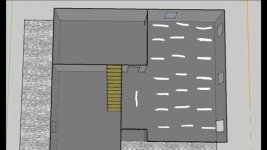
I will keep my light rack if needed for buffing or could also use it under the lift to help with lighting if need. Would either of these ideas work better for lighting the main area? I will also install a light under my cabinet above my work bench.
 

Attachments

  • 11.JPG
    11.JPG
    68.9 KB · Views: 21
  • 12.JPG
    12.JPG
    69.7 KB · Views: 18
OP
O

ohioratrodder

Member
Joined
Jul 13, 2008
Messages
11
Also any recommendations on bulbs? I haven't found a place local that has 4100k 5000k and 6500k to tell a difference in color but most seem to think 5000k is closest to natural sunlight and 6500k is slightly blue. I tried to research these bulbs but couldn't find much but they are 5000k 2950 mean lumens and cri 90 http://www.1000bulbs.com/product/56690/F-32L359.html Or would i be better off spending more pre a bulb and get a better brand?
 

2ManyProjects

Well-known member
Joined
Jul 18, 2013
Messages
757
I'm going to differ with your opinion on this one 2Many as I see the Electricians swapping out ballast all the time in the refinery.

Maybe. Maybe not. It is about equally plausible that they too are making "non-approved" modifications (perhaps perfectly reasonable and completely "safe" modifications, but "non-approved" modifications nonetheless), and are simply "getting away with it" because none of the Bureaucracies Which Matter are being made aware of it. Note that I'm NOT saying this is necessarily the case, or that were "ohioratrodder" to do similarly with a 2nd-hand prefab paint booth, it would cause a problem. It's just that when you get into a regulatory realm where outfits like OSHA and EPA get into the act, all common sense flies straight out the window and the ONLY thing which really matters is that some pencil-pusher sees the right labels on things, and the right forms filed with all the "correct" check-boxes checked -- and if they aren't, you'd better DUCK, because a hurricane of sh*t is about to fly. So if/when there is ANY real chance of having to deal with such organizations, best to make CERTAIN that all the "I"s are dotted and all the "T"s crossed.


Thanks for all the help so far. I will be building my booth but may have the option to get get t12 fixtures housing with glass and all from an old side draft booth. I have seen booths on craigslist already disassembled fairly cheap and could scrape what i don't use. Also i have a friend who has seen a couple pretty complete booths come through his work to be scraped.

It sounds like you still have quite a few balls in the air in this one. If some appropriate "behind glass" fixtures become available at a good price, that would certainly be something to consider. But I would still caution you to avoid T12 fixtures if at all possible. Yes, it MAY be feasible to convert such to use T8 tubes; but this could be problematic (and NOT just for the reasons discussed above).

I will keep my light rack if needed for buffing or could also use it under the lift to help with lighting if need.

Sounds good.

Would either of these ideas work better for lighting the main area? I will also install a light under my cabinet above my work bench.

Of the two, I prefer the first one. But that said, I would not consider it even close to ideal. Among the issues:

-- Earlier, you said that this work area would be predominantly a "one car at a time" proposition. Yet even this "better" plan seems optimized for four vehicles.

-- As a general rule, grouping fixtures together into pairs (or quads) within longer "runs" plays hob with getting even distribution, as the gaps between each pair (or quad) of fixtures necessarily grows to make up for the lack of ANY gaps between the fixtures comprising those pairs (or quads). Now, in this case, the intervening cross-ways runs would help ameliorate that problem; but to what degree, I'm not sure.

-- There is no scale or measurement grid shown in your sketches, so I have to guess at this; but it APPEARS that the main fore/aft runs are too far off the walls to do a truly effective job of illuminating any wall-based storage (cabinets, shelves, stuff hung from pegboard or SlatWall, etc.). Ditto for the crossways run at the rear of the shop.

-- The "stand-alone" run of four fixtures over near your workbench seems like overkill. Given that the bench itself will presumably have adequate (hopefully even "generous") task lighting, and that the rest of that space is mostly just a high-traffic transition area, one or two fixtures should be more than enough.

Also any recommendations on bulbs? I haven't found a place local that has 4100k 5000k and 6500k to tell a difference in color but most seem to think 5000k is closest to natural sunlight and 6500k is slightly blue.

That seems to be the general consensus (with which I concur). But do be aware that NO fluorescent light really does all that good a job of mimicking natural daylight, and most of them utterly ****. If you're doing color-critical work, then you absolutely need tubes with the highest CRI ("Color Rendering Index") possible; and even then, they'll only be "so-so". For REALLY good color rendering, you want high-CRI halogens -- but you WON'T want to pay the electric bill to routinely use these throughout your shop; nor will you appreciate the gobs of waste heat they will create in the process, especially in the Summer time.

I tried to research these bulbs but couldn't find much but they are 5000k 2950 mean lumens and cri 90 http://www.1000bulbs.com/product/56690/F-32L359.html Or would i be better off spending more pre a bulb and get a better brand?

I have no first-hand experience with Litetronics-brand tubes; but based on the specs, they should be fine for general-purpose shop illumination. And <1000bulbs.com> is a fairly well-known reputable outfit; so if it turns out that there IS a problem, I would expect them to make it right.

 
Last edited:
OP
O

ohioratrodder

Member
Joined
Jul 13, 2008
Messages
11
There will be no other cabinets or anything on walls besides over the work bench on that side. And when I will be working on one car at a time once it's blown apart they take up a decent amount of room. All the panels will be on stands spread out over the work area along with body and sometimes frames of the car. I tried to research but can't find anything on how to properly setup lights so all I am doing is guessing. I know at work all we have on the paint side is 5 6 (4')bulb t8 fixtures hanging from the ceiling about 14' from the floor along with a few 2(4') bulb t8 fixtures on the walls about 8' from the floor. It works okay but I know it's not the greatest layout. What would be the idea setup in my garage? Right now I have 23 2 (4')bulb t8 fixtures I can use these, buy more or buy different fixtures. Thanks again

http://www.cooperindustries.com/con...nds.lighting!metalux!strips.html#product-tabs

Model #: SNF232RC
 
Last edited:

2ManyProjects

Well-known member
Joined
Jul 18, 2013
Messages
757
There will be no other cabinets or anything on walls besides over the work bench on that side.

That seems like a waste of good storage opportunities; but it's your call. Me, I'm always desperate for more storage space.

And when I will be working on one car at a time once it's blown apart they take up a decent amount of room. All the panels will be on stands spread out over the work area along with body and sometimes frames of the car.

OK, that changes things a bit. When you initially said "one car at a time", I was thinking in terms of one "mostly-intact" car. But what you describe here means the space is really being used more like a general fabrication shop than specifically an automotive service facility. As such, that "four bay" arrangement (http://www.garagejournal.com/forum/attachment.php?attachmentid=308680) you posted recently is looking somewhat better, if rather seriously on the overkill side (ignoring the offset area near the bench and the four fixtures located there,I get more than 350 source lumens/ft.^2 for the main workspace). I would still try to avoid the "pairing up" of the individual fixtures, mostly because it gains you nothing and CAN cause issues (even if they will likely be minor ones in this case).

I tried to research but can't find anything on how to properly setup lights so all I am doing is guessing. I know at work all we have on the paint side is 5 6 (4')bulb t8 fixtures hanging from the ceiling about 14' from the floor along with a few 2(4') bulb t8 fixtures on the walls about 8' from the floor. It works okay but I know it's not the greatest layout. What would be the idea setup in my garage? Right now I have 23 2 (4')bulb t8 fixtures I can use these, buy more or buy different fixtures.

Are we still talking about the main shop/fab area, or are these 23 fixtures being considered in the context of the paint booth?

Given that they are open-tube strip lights, I would NOT use them in the paint booth unless you could indeed mount them in some sort of protective glass-fronted enclosures (and maybe not even then).

For the main shop area, your plan mentioned above is currently showing 42 twin-tube fixtures (84 tubes), not counting the "offset". As mentioned, that's WAY more than you need in ~660 ft/^2. Something in the neighborhood of 1/3 - 1/2 that should be quite adequate, provided the layout is reasonable. As for an "ideal setup", I would not presume to dictate that. But as a "reasonable starting point", and given that we're now thinking "fab shop" as opposed to "automotive bays", a simple rank/file arrangement could work well. I just spent five minutes with the online Acuity/Lithonia design tool http://www.visual-3d.com/tools/interior/default.aspx?id=15168. It turns out that my initial guess (in Post #5) of 28-32 tubes was a bit low. Based on Lithonia C2 32 strip lights (http://www.visual-3d.com/tools/photometricViewer/default.aspx?id=15168), which are essentially the same thing as what you have, I come up with EITHER three "lengthwise" runs with six or seven fixtures in each run (for approx. 100-115 lumens/ft.^2, respectively, at working height), OR 6-7 "crossways" runs with three fixtures in each run. The former would probably be preferable, as it produces significantly smaller end-to-end gaps between each fixture in each "run". And seven fixtures per run also seems to lend itself a bit better to a multi-stage switching arrangement. So, if you go for 3x7, that will use 21 of your existing fixtures, leaving two to fill in that offset area near the bench, which should be fine.

 
Last edited:
OP
O

ohioratrodder

Member
Joined
Jul 13, 2008
Messages
11
With storage I still will have open storage above the paint booth and sealed storage above the main work area with 7' ceiling not counting the basement on my house. Doing body work and fab work makes a mess everywhere and I like a clean work area and tools. It's a lot easier to clean with less in the way. Sorry my rendering was a little misleading. Each white box equaled a 4' ft tube so it's really only 21 fixtures in the main area, guess I should have but the line length wise to equal actual length of each bulb. I just made a 3" wide 4' long rectangle and the line in the middle was there just to help me line everything up and I was to lazy to delete them afterwards.
 
OP
O

ohioratrodder

Member
Joined
Jul 13, 2008
Messages
11
I am not trying to be confusing just want the best layout with least wasted money as possible. Also the booth will be sealed fixtures either new ones or used ones if i can find a deal on used t8 fixtures. Sorry i am out right now so my chappyphone rrendering will have to do lol. So you think the 6 or 7 rows off 3 would be better? Also would one 2 bulb t8 fixture be fine in the area by the man doors or still use 2 now knowing it isn't 4 lol sorry about that
 

Attachments

  • 2014-01-14-16-54-45.jpg
    2014-01-14-16-54-45.jpg
    16.6 KB · Views: 14
  • 2014-01-14-16-52-48.jpg
    2014-01-14-16-52-48.jpg
    15.8 KB · Views: 138

2ManyProjects

Well-known member
Joined
Jul 18, 2013
Messages
757
With storage I still will have open storage above the paint booth and sealed storage above the main work area with 7' ceiling not counting the basement on my house. Doing body work and fab work makes a mess everywhere and I like a clean work area and tools. It's a lot easier to clean with less in the way.

That's a good point. And if you do indeed have adequate storage space outside the main work area (but still with convenient access), then there is something to be said for setting things up so that the entire area can be "washed down with a fire hose", so to speak.

Sorry my rendering was a little misleading. Each white box equaled a 4' ft tube so it's really only 21 fixtures in the main area, guess I should have but the line length wise to equal actual length of each bulb. I just made a 3" wide 4' long rectangle and the line in the middle was there just to help me line everything up and I was to lazy to delete them afterwards.

OK, I'm still not sure I'm following you here. Are you saying that you were presuming SINGLE-tube fixtures? Those do exist, but are rarely all that useful. They tend to cost nearly the same (possibly even more) than standard twin-tube fixtures; and of course, you need twice as many of them.

I am not trying to be confusing just want the best layout with least wasted money as possible.

Understood. And that's certainly a reasonable goal (as long as the quest to "not waste money" doesn't lead to making excessively "penny-wise & pound-foolish" decisions; but I don't think you're in danger of that at this point). Hang in there; we'll figure it out.

Also the booth will be sealed fixtures either new ones or used ones if i can find a deal on used t8 fixtures.

Fair enough.

Sorry i am out right now so my chappyphone rrendering will have to do lol.

Heh. Yes indeed, they are crude. ;)

So you think the 6 or 7 rows off 3 would be better?

Of your two most-recently posted diagrams, I would vote for the second one:

http://www.garagejournal.com/forum/attachment.php?attachmentid=308953&d=1389736959
attachment.php


...which uses three more-or-less continuous "runs" of twin-tube fixtures, running from front to back in the main workspace, with seven (dead minimum of six) fixtures in each run. Add one or two more similar fixtures over in that offset area near the workbench and service doors, and you'll be good to go.

Also would one 2 bulb t8 fixture be fine in the area by the man doors or still use 2 now knowing it isn't 4 lol sorry about that

One would PROBABLY be adequate, presuming you aren't doing much/anything in the way of "real work" there, save for at your workbench (which would presumably have its own generously-proportioned task lighting anyway). But using two would also be OK, and might make for a somewhat less noticable contrast in general lighting level in that area vis-a-vis the main work area.

 
To avoid these ads, REGISTER NOW!
Top Bottom