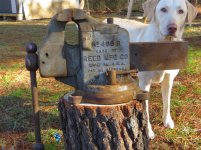
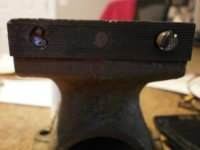
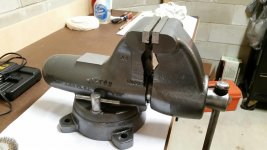
With some heat and an impact screw driver, 3 of 4 jaw screws were successfully removed. The last one is being stubborn and most of the head material was carved away by the impact, so I need to venture out tomorrow and find some left hand drill bits.

You are using an out of date browser. It may not display this or other websites correctly.
You should upgrade or use an alternative browser.
You should upgrade or use an alternative browser.
VISE REPAIR 101 all vise repairs, lubricants, sources for parts and the tricks to fix
- Thread starter drivesitfar
- Start date

OP
drivesitfar
Well-known member
Vert: if you don't want to buy a left handed drill bit you could probably hand drill off the head of the last screw and after the jaw is removed just use a vise grip to pull the rest of the screw out. did you buy a Snap on impact screw driver or did you have one in a drawer?
you are almost there and best of luck.
you are almost there and best of luck.
With some heat and an impact screw driver, 3 of 4 jaw screws were successfully removed. The last one is being stubborn and most of the head material was carved away by the impact, so I need to venture out tomorrow and find some left hand drill bits.
I just used a standard drill bit, a size or two smaller than suggested for tap size and drilled the center of the bolt out. The remaining bolt casing left in the threads came out with a pick tool, then I just ran the suggested tap size drill bit in, tapped it to clean the threads and was done.
That, after trying to use a ez-bolt out on another one and took me forever, I broke two ez-outs...

Keep it simple!
EDITED: Drives, you up late or early?

OP
drivesitfar
Well-known member
Nines: up early i guess for now because sick old furry friend is on her last days and woke me up a few hours ago. i usually get up at 4am anyway so might as well stay up and get some GJ posts in before the day gets busy.
nice idea on your jaw screw fix and personally if they are on there straight and true i'd leave them alone to work another 50-100 years without messing with the screws.
ALL: so i have one of my favorite vises that is a Wilton Baby Bullet that has a power arm and a clamp. it works great but the primer coat and dull jaws and main screw hub need a little color and shining up. so my question to you all is what color might look best on a small vise i use almost daily? i am not thinking of using my standard boiled linseed oil because i have my hand all over this vise when i more it around.
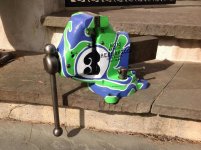
here are my color choices i'm thinking of and would like to see others that have pictures or ideas to post. i know it's my vise and my color so i'll probably pick my favorite unless i see something different. it's too small and i don't have the talent that Ritzblitz's sister had when she painted his Reed 1C. i'm thinking one color with painted letters and shiny steel jaws and handle.
1) John Deere Green and Yellow
2) Black and gold
3) Wilton green with white or black letters
4) Arrest me red with white or black letters
5) Blue and white
6) Yellow
7) Orange
what are your favorites and can you post your vise or one you like with your comments?
have a great day all
nice idea on your jaw screw fix and personally if they are on there straight and true i'd leave them alone to work another 50-100 years without messing with the screws.
ALL: so i have one of my favorite vises that is a Wilton Baby Bullet that has a power arm and a clamp. it works great but the primer coat and dull jaws and main screw hub need a little color and shining up. so my question to you all is what color might look best on a small vise i use almost daily? i am not thinking of using my standard boiled linseed oil because i have my hand all over this vise when i more it around.
here are my color choices i'm thinking of and would like to see others that have pictures or ideas to post. i know it's my vise and my color so i'll probably pick my favorite unless i see something different. it's too small and i don't have the talent that Ritzblitz's sister had when she painted his Reed 1C. i'm thinking one color with painted letters and shiny steel jaws and handle.
1) John Deere Green and Yellow
2) Black and gold
3) Wilton green with white or black letters
4) Arrest me red with white or black letters
5) Blue and white
6) Yellow
7) Orange
what are your favorites and can you post your vise or one you like with your comments?
have a great day all
Attachments
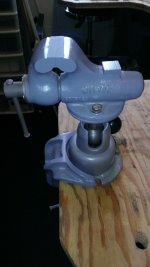
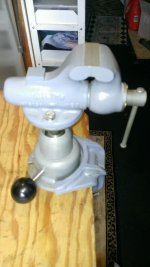
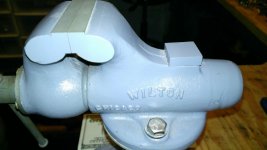
Drivesitfar: I had a HF impact screwdriver from a couple brake jobs on the Hondas for removing those pesky factory rotor retaining screws... and this is probably the only other time I have needed it. Good timing on the paint question as that is already running through my mind for this one. I am probably sticking with something in a gray and or hammertone to keep with the theme of the rest of the garage. This one will be bench mounted and put into uses, so it will need a durable finish.
Good points on KISS as I was already thinking about simply drilling the head out. And yeah, in hindsight the screws and jaws could have just been left alone. But my ****/perfectionist mindset kicked in as always, so the jaws had to come off. All part of the fun!!
Good points on KISS as I was already thinking about simply drilling the head out. And yeah, in hindsight the screws and jaws could have just been left alone. But my ****/perfectionist mindset kicked in as always, so the jaws had to come off. All part of the fun!!
McBrownie
Well-known member
ALL: so i have one of my favorite vises that is a Wilton Baby Bullet that has a power arm and a clamp. it works great but the primer coat and dull jaws and main screw hub need a little color and shining up. so my question to you all is what color might look best on a small vise i use almost daily?
Drives,
I used one of those small cans of lacquer from a hobby store on my 9300 at the beginning of the football season to help my Browns. It got them to 7-9, which is the best they have done in a long time. Maybe I'll paint the whole thing orange and see if they get to 14-2 next year.
The great thing about the hobby store paint is that it comes in all sorts of colors. I would pick something unique - metal flake. We've seen enough verde green.
Since it is lacquer it drys fast and can be covered with my favorite - Rustoleum Crystal Clear enamel. It is wearing really well. Better than the Rustoleum hammered that used to be on there.View media item 42668
Last edited:
wrenchguy
Well-known member
Nines: up early i guess for now because sick old furry friend is on her last days and woke me up a few hours ago. i usually get up at 4am anyway so might as well stay up and get some GJ posts in before the day gets busy.
Make it the best days or hours of its life. Been there done it several times.
McBrownie
Well-known member
Make it the best days or hours of its life. Been there done it several times.
I completely missed that in the original post We lost one a little over a year ago. Here she is with some guinea pigs that we were babysitting. When she was healthy, she wanted to eat them. But, during her last days, she seemed to like being around them and vice-versa. She had 13 good years.
View media item 46710
Success!! I ended up just drilling off the screw head leaving only a small amount of material and the jaw popped right off after a couple hammer taps. As expected, finding a screw with a small enough head to fit in the jaws was not feasible at my local stores. So I picked up the correct length 10-32 SS screws and will just run them down to the correct size with a file with them in the DP. My POS files don't like cutting stainless, so a good excuse to upgrade.
Drives, sorry to hear about the furry friend. My thoughts are with you and your friend, I hope y'all had some good times.
My mom had a Chihuahua named Elvis that lived a few days short of 19yrs old and the crazy thing, he died the same day the real Elvis died but this year.
I have a Shih Tzu that will be 9 in Feb, my baby, I will be a nut case when she goes...
Now, back to your regular programming. Glad you got it vertguy!
My mom had a Chihuahua named Elvis that lived a few days short of 19yrs old and the crazy thing, he died the same day the real Elvis died but this year.
I have a Shih Tzu that will be 9 in Feb, my baby, I will be a nut case when she goes...
Now, back to your regular programming. Glad you got it vertguy!
Also sorry to hear about your pooch Drives. My pups are my constant companions, hate to think about losing them. But they are now 12 1/2 years old and I have to begin to acdept it, but it just makes our time now that much better.
As a change of pace, I recently used Testors "Lime Ice" lacquer spray on a project. It turned out a nice metallic, green-apple color that is really appealing. Nice to mix it up once in a while and get away from black, blue &/or red.
As a change of pace, I recently used Testors "Lime Ice" lacquer spray on a project. It turned out a nice metallic, green-apple color that is really appealing. Nice to mix it up once in a while and get away from black, blue &/or red.
Blue Frog
Well-known member
The great thing about the hobby store paint is that it comes in all sorts of colors. I would pick something unique - metal flake. We've seen enough verde green.
View media item 42668
Love the color on the Wilton - Think I'll paint mine the same.

Thrumcap
Well-known member
Here's some reference breakdown shots of a Record No. 83 Engineer's vise.


Final paint job to come...
Thrumcap

Final paint job to come...
Thrumcap
CoyoteKyle
Well-known member
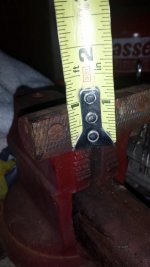
Can anyone point me in the right direction to find replacement jaw inserts for this Lakeside vise? I received it for Xmas and would like to get it into working condition.
Attachments


Last edited:
Outlawmws
Well-known member
The one you showed looks decent enough: Is one broken or missing? if so, contact Dr. Scott on the Vices thread you can send him one and get it duped.
CoyoteKyle
Well-known member
One jaw insert is gone. You can see it in the 3rd pic. You can tell the person who had this before me used without it for a while. I also noticed someone on the vises of GJ thread had restored the same Lakeside in December so I have a PM off to him.
Outlawmws
Well-known member
That big *** bolt that holds the swivel to the base. The one with the screw driver head, where people slid a metal in the slot and used a vise grips to turn it. How do repair the threads on that bolt. The threads don't seem standard.
Are you talking about someone else's vise post? Or is this a new question? If new, a picture is worth a thousand words...

GETRIDAONE
Well-known member
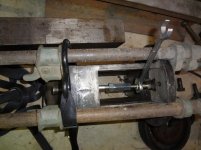
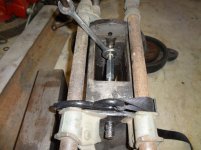
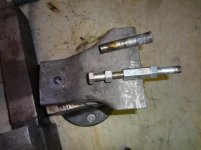
I decided to remove the swivel pin from my 6" American Scale. I first tried a 3/8 Jack Screw and I noticed it was pushing the jaw and body apart. The pin was stuck in the top jaw portion and free in the main body. I wasn't liking that so out come the old pipe clamps. There is only a small ridge of metal on the interlocking grooves inside so I didn't want to put to much pressure on it. You can see from the pictures what I rigged up to keep the two pieces together.
I moved up to a 1/2 jack screw and tightened until I thought something was going to break. I gave the pin a tap on the side and it just came out with a crack & pop !! Free Free Now I have to work the jaw back & forth to get all the rust out of it.
I moved up to a 1/2 jack screw and tightened until I thought something was going to break. I gave the pin a tap on the side and it just came out with a crack & pop !! Free Free Now I have to work the jaw back & forth to get all the rust out of it.
Attachments
McBrownie
Well-known member
I decided to remove the swivel pin from my 6" American Scale. I first tried a 3/8 Jack Screw and I noticed it was pushing the jaw and body apart. The pin was stuck in the top jaw portion and free in the main body. I wasn't liking that so out come the old pipe clamps. There is only a small ridge of metal on the interlocking grooves inside so I didn't want to put to much pressure on it. You can see from the pictures what I rigged up to keep the two pieces together.
I moved up to a 1/2 jack screw and tightened until I thought something was going to break. I gave the pin a tap on the side and it just came out with a crack & pop !! Free Free Now I have to work the jaw back & forth to get all the rust out of it.
Get, that is a great explanation and good idea with the pipe clamps.
OP
drivesitfar
Well-known member
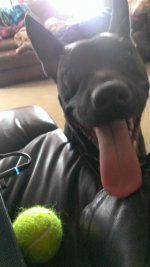
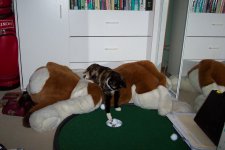
Wrench, McB, Lu-Max and Nines: thanks for the best wishes for my furry friend and she seems to be feeling a bit better and not throwing up 3 times a day the last couple days. Mirry is actually a tortoise shell calico cat and about 9 years old. the vet operated on her 6 years ago and then a month later wanted to charge another $1,000 to do the same operation. we declined and the nice Dr. said we should euphonize her and she would do that for no charge. except for the last month she has been a great addition to our family and hopefully she'll last a bit longer. we've had several cats and dogs over the years raising our 5 kids and still haven't been able to replace our last dog named Taffy since she passed in 2008. other than our grand god we've been dog less too long so that will be our next one when Mirry moves on. if my daughter ever moves and needs a home for the grand dog he can stay here in a minute. the dog craps in the high weeds over behind our fence.
Vert: did you get your vise back together after customizing some new screws?
Thrumcap: nice way to display your vise. is it back together and was it hard taking that apart with the closed end on the dynamic?
Get: the strap hook threw me off for a minute and then i saw your genius way of putting the pipe clamps on it while you reefed on it. success is great when it's your own plan and congrats. also i would have never thought to do that so thanks for teaching me (us) that.
Vert: did you get your vise back together after customizing some new screws?
Thrumcap: nice way to display your vise. is it back together and was it hard taking that apart with the closed end on the dynamic?
Get: the strap hook threw me off for a minute and then i saw your genius way of putting the pipe clamps on it while you reefed on it. success is great when it's your own plan and congrats. also i would have never thought to do that so thanks for teaching me (us) that.
Attachments




Last edited:
balane
Well-known member
I love those last photos. You won't ever find my Riley far from a tennis ball. My arm is sore pretty much all day from throwing it.
Outlawmws
Well-known member
Any tips for cleaning up the anvil area on my Wilton? I assume on the flat surface a hand file seems appropriate, but not so sure on the best way to remove/reduce some of the dings along the edges??
belt sander is what I generally use for that.
balane
Well-known member
I agree, belt sanders are best for that. If you don't have one and intend on purchasing one get the widest one you can afford. You want the belt to cover the entire anvil so you get a smooth, level surface.

Great idea. Always wanted to pick up a belt sander and now I have a good excuse. The width should not be a huge issue with this 3 inch Wilton, but thinking ahead I will get a larger one. Now onto some online searching. Thanks once again to GJ for spending my money
Any recommendations? Although my use would be limited, I am not going the HF route.
Any recommendations? Although my use would be limited, I am not going the HF route.
Last edited:
mtwaterguy
Well-known member
- Joined
- Nov 16, 2007
- Messages
- 3,518
I love those last photos. You won't ever find my Riley far from a tennis ball. My arm is sore pretty much all day from throwing it.
My friend just picked up his dog from the vet Yesterday. Had to have surgery from a piece of tennis ball being lodged in his stomach. $1500 later he's doing fine.
Great idea. Always wanted to pick up a belt sander and now I have a good excuse. The width should not be a huge issue with this 3 inch Wilton, but thinking ahead I will get a larger one. Now onto some online searching. Thanks once again to GJ for spending my money
Any recommendations? Although my use would be limited, I am not going the HF route.
I see used ones on CL all the time, picked mine up from a garage sale. If you go the used route, BE SURE to test it for tracking. It will need a belt to test, ask if it has one before going to look at it. Plug it in and make sure the belt stays centered while running.
I picked up one a long time ago from a sale for $5 and since it was so cheap, I didn't even test it. When I got home, the tracking adjuster was completely broken...
Mark in Indiana
Well-known member
belt sander is what I generally use for that.
I agree with using the belt sander for surface finishing. I like it because it gives the surface ground look. A portable sander can be used on the rounded tops of the jaws as an accent.
KMScott
Well-known member
Belt sanders work very good but you have to be careful, being a little off canter can make a simple job into a nightmare. The choice of grits, and bumping a shoulder are also issues. Not everyone has a surface grinder in their basement. This old #3 Wilton had missmatched jaws and the anvil had some dings, my surface grinder made easy work of both issues. What grit do you guys use with your beltsanders? i am sure some would like to know, my guess would be 60grit.
Attachments

Mark in Indiana
Well-known member
Belt sanders work very good but you have to be careful, being a little off canter can make a simple job into a nightmare. The choice of grits, and bumping a shoulder are also issues. Not everyone has a surface grinder in their basement. This old #3 Wilton had missmatched jaws and the anvil had some dings, my surface grinder made easy work of both issues. What grit do you guys use with your beltsanders? i am sure some would like to know, my guess would be 60grit.
Good looking vise
60 or 80 grit will do fine. I would also add that it is beneficial to use a light weight sander to reduce fatigue and they are easier to control.
Outlawmws
Well-known member
Yep 60 or 80; 120 to finish if I want it a finer pattern...
mtesh73
Well-known member
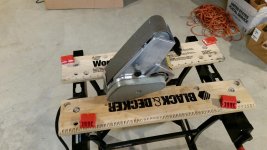
i clamp mine upside down in the center of the black and decker workbench. works like a bench mounted belt sander. i use 80 grit which gives a nice machined look to it. i use it on the anvil, jaw inserts and sides of the jaws.
recently completed C2 pictured for reference.
recently completed C2 pictured for reference.
Attachments
Mark in Indiana
Well-known member
OP
drivesitfar
Well-known member
MTesh: any chance you can show a few pictures of your modified belt sander and B&D workmate? did you see McB's Blockmeister that he mounts on his B&D workmate? sound like it works and nice job restoring your Wilton C2.
Montana: my daughter's dog has maybe chewed a 100 tennis balls but is was the only thing he would do to keep from putting the ball under my chair and trying to tip my chair over so i'd play with him. we have since used racketballs that he doesn't seem to like to eat. sorry to hear about your friend's dog.
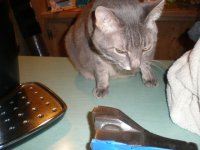
Mark: nice looking friendly furry assistant and by the way we changed our's to a different diet and she is on the mend and hasn't thrown up for 3 days now.
Vert: I've heard that the belt sander works great to smooth out vises and anvils and I haven't used it yet because i like my vises to have their character marks. since the guys that make the some of the sweetest restorations on GJ said they use a belt sander i'd say that might be the best unless you have access to a mill. Fretters might say a hand file is best and i'm sure it has its merits too. I also agree with Nines that you can find many old nice sanders and maybe with new sandpaper for under $50 on Craigslist if you spend a little time searching for them.
Montana: my daughter's dog has maybe chewed a 100 tennis balls but is was the only thing he would do to keep from putting the ball under my chair and trying to tip my chair over so i'd play with him. we have since used racketballs that he doesn't seem to like to eat. sorry to hear about your friend's dog.
Mark: nice looking friendly furry assistant and by the way we changed our's to a different diet and she is on the mend and hasn't thrown up for 3 days now.
Vert: I've heard that the belt sander works great to smooth out vises and anvils and I haven't used it yet because i like my vises to have their character marks. since the guys that make the some of the sweetest restorations on GJ said they use a belt sander i'd say that might be the best unless you have access to a mill. Fretters might say a hand file is best and i'm sure it has its merits too. I also agree with Nines that you can find many old nice sanders and maybe with new sandpaper for under $50 on Craigslist if you spend a little time searching for them.
Mark in Indiana
Well-known member
Vert: I've heard that the belt sander works great to smooth out vises and anvils and I haven't used it yet because i like my vises to have their character marks. since the guys that make the some of the sweetest restorations on GJ said they use a belt sander i'd say that might be the best unless you have access to a mill. Fretters might say a hand file is best and i'm sure it has its merits too. I also agree with Nines that you can find many old nice sanders and maybe with new sandpaper for under $50 on Craigslist if you spend a little time searching for them.[/QUOTE]
Hey Drives,
Glad to see that yours is on the mend.
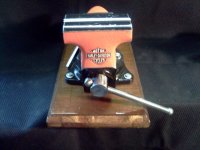
I agree with you on leaving as much character as possible. However, I dug up an example of a vise that had too much character (before) and sanding down the jaw tops (after).
BTW: Of all the vises that I've restored in the past 5+ years, that is the only one that I had to use a belt sander on.
The belt sander is much easier to use than a mill for finishing a bare metal detail. But I wouldn't want to make jaw faces or a swivel base (future project) unless I had a mill.
Hey Drives,
Glad to see that yours is on the mend.
I agree with you on leaving as much character as possible. However, I dug up an example of a vise that had too much character (before) and sanding down the jaw tops (after).
BTW: Of all the vises that I've restored in the past 5+ years, that is the only one that I had to use a belt sander on.
The belt sander is much easier to use than a mill for finishing a bare metal detail. But I wouldn't want to make jaw faces or a swivel base (future project) unless I had a mill.
Attachments

mtesh73
Well-known member
drives, here you go.
MTesh: any chance you can show a few pictures of your modified belt sander and B&D workmate? did you see McB's Blockmeister that he mounts on his B&D workmate? sound like it works and nice job restoring your Wilton C2.
Attachments
Fretters
Well-known member
Fretters might say a hand file is best....
IMHO, yup.
I'm one of those who classes it as almost criminal to remove all imperfections. Factory condition exists when things leave factory. I'm not one for trying to reinstate that appearance with used kit. Removing burrs etc., (that's as much for comfort/safety as owt else. Some of those things can be really rough or sharp), I have no problem with, but smoothing a used surface to make it characterless; nope. Plus, files are far easier to control than belt sanders. You have feel as well as visual feedback with a file.
97fordsuper
Well-known member
This is Sugar Mama and my reed.
The base is cracked in several place and was previously brazed but it didn't hold up. My step dad suggested using a certain type of welding rod. Nickle rod, maybe? I cant remember exactly what he said. He also said we would have to preheat and slow cool down. I'm sure someone knows what welding rod he was talking about. Would that be a good fix compared to a good braze job? When it comes to welding, he's good.
The base is cracked in several place and was previously brazed but it didn't hold up. My step dad suggested using a certain type of welding rod. Nickle rod, maybe? I cant remember exactly what he said. He also said we would have to preheat and slow cool down. I'm sure someone knows what welding rod he was talking about. Would that be a good fix compared to a good braze job? When it comes to welding, he's good.