Vinko
Well-known member
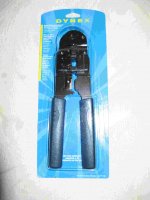
What do you guys use? I saw a made in Taiwan Klein for $45 at HD. Anyone know of a quality American made tool for this? Thanks
at HD. Anyone know of a quality American made tool for this? Thanks at HD. Anyone know of a quality American made tool for this? Thanks
I suggest you find a crimper that will work with connectors like these:
http://cableorganizer.com/ez-rj45-network-plugs/
the crimper will be different since it will trim the ends of the cable flush, this will make crimping much faster and make sure every crimp is perfect.
I suggest you find a crimper that will work with connectors like these:
http://cableorganizer.com/ez-rj45-network-plugs/
the crimper will be different since it will trim the ends of the cable flush, this will make crimping much faster and make sure every crimp is perfect.
Out of all the 45's or 11 connectors I have done (thousands), I have never had an issue with a cheap tool. It's usually because comebody ran the incorrect cable (solid, not stranded).
I agree. Personally, I don't belive that connectors should be put on any ran cable. It should be terminated (jack) and then a patch cord used to connect. Provides a good test point.
I have also had issues with patch panels that were destroyed. It's not fun swapping them out.
there are a few situations where it is appropriate to crimp male plugs on premise wiring.
One is when a network closet gets relocated. EIA/TIA spec only allows one intermediate connection between the endpoints, so you put patch panels at the new location and terminate the cables from them with RJ45 plugs which are plugged into the existing patch panels. The only other alternative short of pulling all new runs, is to rip out the patch panels and put a 110 block in, but there is often not enough slack, or due to lease issues you dont want to disturb the existing wiring.
The other common uses are ceiling mounted access points, IP surveillance cameras, etc.
This is the only correct way to wire a building. Using a long patch cable instead of a jack to patch panel punch-down is a hack job (or the person doing the wiring just doesn't know any better).
there are a few situations where it is appropriate to crimp male plugs on premise wiring.
One is when a network closet gets relocated. EIA/TIA spec only allows one intermediate connection between the endpoints, so you put patch panels at the new location and terminate the cables from them with RJ45 plugs which are plugged into the existing patch panels. The only other alternative short of pulling all new runs, is to rip out the patch panels and put a 110 block in, but there is often not enough slack, or due to lease issues you dont want to disturb the existing wiring.
The other common uses are ceiling mounted access points, IP surveillance cameras, etc.
I also thought of something else. We stipulate that there is to be a 10 ft service loop at each termination point. This allows for moving cable around in IDF's. In the grand scheme of things, the extra 20 ft is minimal in cost. Of course, in a campus scenario, budgets have to allow for it.
A good vender will always to this without saying .