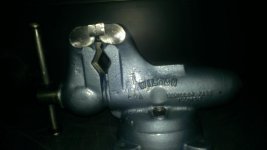
Greaseless is a much heavier cutting compound. Its abrasived grit held in a water-based glue binder, rather than tallow and wax, hence greaseless. It's much different to use than grease based compounds. You apply it to the wheel until it has a heavy coating, then let it dry for 15-30 minutes. Then you have about 10-20 minutes buffing time before you need to reload. For production work you have the same wheel on each side, and use one while the other drys. Once dry you smack the crust that formed with a piece of wood, making the wheel flexible again. Greaseless cuts about as aggressively as a belt sander, but leaves a much finer finish. I use it a lot for knifemaking.
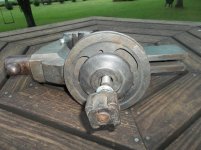
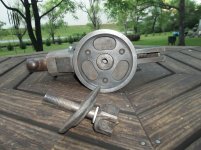
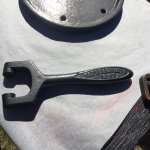
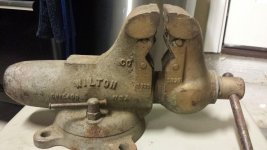
After 240 and 400 grit greaseless, I switched to a 12" spiral sewn wheel, and to a grease based black emery compound. That took it to enough of a mirror for a vise, but for knives I'd go to green conpound, and finally pink no scratch. This leaves a finish on steel about as good as your bathroom mirror. A big powerful buffer with long shafts makes it go very quickly. It's amazing the difference in production between 8" and 12" wheels. No way I could go back to a 6" buffer. I also have spiral points on my buffer that make for very fast wheel changes. Although they make it quite a bit more dangerous due to their tendency to grab and pull in anything that touches them. That's what mangled up my finger a while back, and its still not fully useable yet. I'm lucky I didn't loose it. Buffers also like to grab what you're working on and send it flying across the shop at about 100mph. Easily the most dangerous machine in any shop.
you can never have too many tools