To avoid these ads, REGISTER NOW!

Why do slotted taper screwdrivers exist?

To avoid these ads, REGISTER NOW!

zkling

Well-known member
Joined
Jan 23, 2007
Messages
16,939
Taper driver bits are stronger and will fit a wide range of screws for a given screwdriver size. Technically hollow ground bits should only be used for close fitting screw slots.
 

CNGsaves

Well-known member
Joined
Sep 26, 2012
Messages
13,233
Location
KS and OK
Tapered screwdrivers are NOT just for turning screws . . .
. . . . .
. . . . . . they're for being PRYBARS, half-**** chisels,
. . . . . . . . and electrical short sticks for starter solenoids, etc. !!! :D

Those little bit driver bits won't do **** for all of above demands on "screw"driver !! ;)
 

Robinson1

Well-known member
Joined
Jun 22, 2015
Messages
834
Location
Kentucky
The hollow ground drivers are for precision work where you don't want to mar the screw head. The problem with that is they only work if they actually fit the screw head, which means you need a set of 20-30 hollow ground bits. The taper drivers are more of a 1 size fits most approach.

If you are looking for hollow ground check out a set of gunsmithing screwdrivers.
 

larry_g

Well-known member
Joined
Apr 28, 2007
Messages
16,885
Location
oregon
I'm thinking that the tapered screwdrivers are easier to manufacture and only need to forge the end where the hollow ground are just that ground. Quick & dirty vs precision. Precision costs more.

lg
no neat sig line
 
Last edited:

humber2

Well-known member
Joined
Feb 13, 2011
Messages
1,767
Location
Downunder
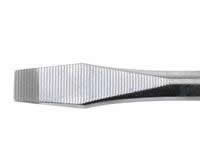
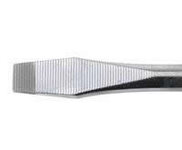
I have been wondering why the tapered style exist. The other type fits way better in my opinion.
standard-tip-screwdriver.jpg

apex-1-4-24-screw-shank-drive-slotted-screwdriver-bits.jpg

Large tapered ones are ideal for opening up and stirring old enamel paint. :eyecrazy:
 
OP
H

hautpot

Well-known member
Joined
May 25, 2015
Messages
824
Location
California
Thanks for the replies fellows!

So far I have both types from various manufactures. but I was never certain why I bought some taper when I already had hollow ground.

I think i will stick to the the flat style.
 

natas2000

Well-known member
Joined
Jan 18, 2011
Messages
251
If you hold one in your hand and shake it while trying to make a point your point will be better understood
 

Wamsutta

Well-known member
Joined
Jan 8, 2014
Messages
10,878
Location
Amarillo, Texas
Once in a blue moon I'll run into a screw head with a tapered straight slot and it'll fit the screwdriver perfectly.
 

Davefr

Well-known member
Joined
Jan 7, 2010
Messages
11,833
Location
OR
I agree that taper tips aren't very good. PB Swiss has the best tips IMHO. The two sides of the tip are parallel so that the entire tip should contact the slots in the screw vs. just the top edge.

3021_04.jpg


IMHO slotted and phillips screws should have been phased out decades ago. They are both real crappy designs.
 
Last edited:

'sallgood

Banned
Joined
Jun 28, 2015
Messages
107
Because The Coupon People are too cheap to buy a complete set of mandrivers from Brownells ;)
l_080110801_2.jpg
 

2oolhound

Well-known member
Joined
Dec 18, 2010
Messages
5,918
Location
BC Canada
How often do you get to unscrew a slotted screw when you can hold the screw driver in perfect alignment with the screw? A tapered screwdriver allows you to be off axis slightly.
 

HanShotFirst

Well-known member
Joined
Jun 29, 2015
Messages
846
Location
NW Nevada
Some of it is just "that's the way we've always done things". Roll the clocks back a couple hundred years and all screw slots were tapered, as were screwdrivers. Today some screw slots are tapered, but most are straight slots. For most things you're better off with a properly fitting hollow ground bit, but that has you swapping bits all day instead of working. A quality tapered bit screwdriver will fit well enough, and keep you working instead of swapping bits.

If you're doing work where the aesthetics of the screw is important, then it's time to get the bit that fits. I'm a gunsmith so I have a LOT of bits. I also have a drawer full of extra screwdrivers in case I need a custom screwdriver in a pinch.

Here's a tip - Never grind your bits, file them. When you grind them they heat up and lose their temper. If you file them, then you don't have to re-harden the bit when you do a custom bit/screwdriver.
 

Dave455

Well-known member
Joined
Mar 19, 2013
Messages
5,821
Location
Sussex, England
Mostly it's due to metallurgy!

Take a bar of rolled steel, and the metallurgy is o.k. for a screwdriver shaft, but if you just grind the tip, then made it hard enough, it will be a bit brittle! If ever you've overloaded one of those gunsmiths drivers you will know what I mean!

Take the same bar of steel, heat it, bash it to shape with a hammer (preferably a mechanical one) and the molecules in the steel will 'lie flat' giving it much greater resistance to bending and twisting! The grinding required is then much less, and by the time it's been properly hardened it'll have strength far in excess of any driver ground from bar stock!

Of course, not every driver that looks like it's been forged, has been! As always, buyer beware!

Also, some hollow ground drivers are better than others. The PB Swiss come to mind, but when you are using them, you really need to pick EXACTLY the right size driver for the screw slot. I have, and rate highly, many PB Swiss drivers, but for some applications (or inch sized screw slots) you are better off with a conventional tapered driver!
 
To avoid these ads, REGISTER NOW!

rlitman

Well-known member
Joined
Oct 18, 2010
Messages
24,613
Location
Long Island
>Taper driver bits are stronger

>No. Quite the opposite.


Because a hollow ground screwdriver places more supporting metal directly behind the edge. More metal, closer to the tip, equals stronger.

Think of it this way: You can take a grinder to a hollow ground screwdriver tip and end up with a taper ground (cabinet) tip by just removing metal. As for the metal wings or hips on the sides of non-cabinet taper tips, they serve no purpose. They're there because taper tips are stamped onto a shaft, and what's left from the first forging step is only easily cut in the second stamping at that tapered shape (because it gets thicker as you leave the edge). To make a tapering cabinet tip requires grinding, a costly step (which is why cabinet tip screwdrivers are more money than standard).
 

zkling

Well-known member
Joined
Jan 23, 2007
Messages
16,939
They (tapered drivers) are cheaper to make true, but by design they are stronger than hollow ground bits*. If we model the end of the bit as a flat plate (hollow ground) vs a tapered plate (tapered bit), under a torsional load (as would be applied when using a screwdriver) the tapered will have more strength via a lower stress peak as there is more material volume behind the engaged portion. Same reason why light posts and the like are tapered.

*assuming material properties are constant between the two drivers.
 

JR 42

Well-known member
Joined
Nov 2, 2013
Messages
966
Location
Sunny Seattle
Mostly it's due to metallurgy!

Take a bar of rolled steel, and the metallurgy is o.k. for a screwdriver shaft, but if you just grind the tip, then made it hard enough, it will be a bit brittle! If ever you've overloaded one of those gunsmiths drivers you will know what I mean!

Take the same bar of steel, heat it, bash it to shape with a hammer (preferably a mechanical one) and the molecules in the steel will 'lie flat' giving it much greater resistance to bending and twisting! The grinding required is then much less, and by the time it's been properly hardened it'll have strength far in excess of any driver ground from bar stock!

Of course, not every driver that looks like it's been forged, has been! As always, buyer beware!

Also, some hollow ground drivers are better than others. The PB Swiss come to mind, but when you are using them, you really need to pick EXACTLY the right size driver for the screw slot. I have, and rate highly, many PB Swiss drivers, but for some applications (or inch sized screw slots) you are better off with a conventional tapered driver!

Um, no molecules in steel, it's crystalline. I agree that production quality is way more important than screwdriver type, but I dunno how much grain direction actually matters in real world screwdriver use.

I've always found the hollow bits to fit screw slots much better than tapered, especially when unsticking decades-old hinge and escutcheon screws, and I've twisted the tips of both types of driver, so I prefer tapered for my ham-handed hack work.

JR
 

rlitman

Well-known member
Joined
Oct 18, 2010
Messages
24,613
Location
Long Island
If we model the end of the bit as a flat plate (hollow ground) vs a tapered plate (tapered bit), under a torsional load (as would be applied when using a screwdriver) the tapered will have more strength via a lower stress peak as there is more material volume behind the engaged portion. Same reason why light posts and the like are tapered.

Again, I have to disagree. Hollow ground bits are not parallel, except at the exact edge. The curve is only tangential to parallel.

You are only correct, in that if you were to mill a flat rib out the exact dimensions of the screw's slot out of a solid driver shaft, the stress riser where such a rib connects to the shaft would be a weakness. But hollow ground profiles are not as simple as this.
 

hunterguy86

Well-known member
Joined
Jan 22, 2012
Messages
168
Location
Central Texas
I learned the hard way about hollow ground screw drivers. They are a MUST when removing soft material such as a brass jet from a cast iron carburetor. I broke a jet off in my carb on my 8n tractor because I attempted to use a regular screw driver instead of a hollow ground. Time spent getting that out is worth getting a good set, which I have yet to do. A 9 month old takes up much of my tool budget. That's ok by me though. She's worth it.


Sent from my iPhone using Tapatalk
 

d.mcfarland

Well-known member
Joined
Jun 18, 2012
Messages
6,572
Location
Western PA
I'm sure this can all be explained by either manufacturing costs, or the old "does the average consumer even care?".
 

defektes

Well-known member
Joined
Nov 24, 2014
Messages
547
Location
Arizona
When properly used with a good driver you can get a lot more torque on them than Phillips.
 

zkling

Well-known member
Joined
Jan 23, 2007
Messages
16,939
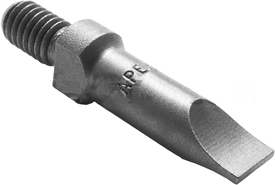
What's with that bit? Why does it have a threaded end?

They are typically used with pneumatic screwdrivers or "drill motors" for high production areas. It eliminates radial slop that even some of the tightest fitting hex inserts have and pretty much makes it impossible for the bit to come out accidentally.
 

partsproduction

Well-known member
Joined
Apr 22, 2015
Messages
74
Location
Tillamook, Oregon, soggy coast.
No molecules? Huh? I think all matter except pure materials are formed of molecules, am I wrong?
Pure iron or gold is atom upon atom, but I'm not sure even that is not part of a molecular formation. I'm waiting to be schooled.

Phillips screws are very fast, because they are self centering, fast in, fast out. Properly fitted Phillips screwdrivers work very well, until someone dulls them, in my experience.

There is another type of screwdriver I was told, that looks like a Phillips but is a different form and name. IMHO Torx screws are very nice, but in a thin headed screw the socket compromises strength because there is only a thin area of steel between the shank of the screw at the bottom of the head where it meets and the bottom of the socket, which also goes for hex socket.
 

Adam.C

Banned
Joined
Jan 29, 2013
Messages
1,490
I always assumed the hollow ground bits could only be made as large as the stock they are made from. You cant really make the blade any wider. I have seen wider. They are made from larger stock, turned down on a lathe to fit 1/4 or 3/8 hex. The point at which they are turned down is the weak part.

A regular screwdriver like the one shown is probably a 5/16 or so rod, forged to form the wide blade. Forging can have a positive effect on grain size and direction. Doesn't make "molecules lie flat" but partsproduction has the right idea. Forging is probably necessary to form the other end as well (under the handle) which is likely machined on the hex bit.

It would be cheaper to machine 1 screwdriver blade then building the forging dies. So if you are a small company in Taiwan, machining would be the way to go. But a big old company like Ideal/SK/western forge can forge screw driver blades way cheaper than machining them.
 
Last edited:

rlitman

Well-known member
Joined
Oct 18, 2010
Messages
24,613
Location
Long Island
pesky Pozidrivs

Obligatory link:
http://www.instructables.com/id/When-a-Phillips-is-not-a-Phillips-Plus-So-Much-Mor

I always assumed the hollow ground bits could only be made as large as the stock they are made from. You cant really make the blade any wider. I have seen wider. They are made from larger stock, turned down on a lathe to fit 1/4 or 3/8 hex. The point at which they are turned down is the weak part.

A regular screwdriver like the one shown is probably a 5/16 or so rod, forged to form the wide blade. Forging can have a positive effect on grain size and direction.


Yes, real hollow ground bits are not wider than the stock they are made from. I do happen to own something of a strange middle-ground. I've got a Wera insulated screwdriver with an -almost- hollow shaped tip that was pinched into shape. But it's kind of a specialty tool.

Anyway, I wouldn't in the slightest bit be concerned about the turned down part of a bit being the weak part. The concern is with damaging the tip and the fastener, which are both invariably weaker than the turned down part.
Now for a solid shaft screwdriver (not bits), as the shaft gets longer, a hollow ground screwdriver shaft might be more prone to twisting.

Yes, forging can improve the strength of steel. But both forged and hollow ground screwdriver shafts start from drawn wire that is heat treated after shaping, so I'm not convinced that forging brings anything to the party.
 

rancherbill

Well-known member
Joined
Oct 18, 2007
Messages
5,334
Location
Foothills County, Alberta, Canada
The two types exist for several reasons.

Tapers are forged. The steel is a lower grade of steel and when it it forged it gets a great level of toughness and hardness, however it it is not possible to get precision.

Precision are made out of tool steel and they are precision machined to get accuracy before they are tempered.

They are different processes which produce different results. Forging is cheaper and for the vast majority of applications do very well.

I view all the screwdriver types as part of the conspiracy get me to spend all my money on specialized tools that sit in the box and are used infrequently.
 

Fugio

Well-known member
Joined
Dec 5, 2014
Messages
460
I know that if I use the tapered screwdriver for gun smithing, the screws will be ruined very quickly because the driver will slip.

Using my gun smithing screwdrivers, which have zero taper, keeps them from slipping. Very important when working on antiques with irreplaceable or rare screws.
 

BDT/NWMN

Well-known member
Joined
Jan 22, 2012
Messages
3,762
Location
Erskine, Mn
I agree that taper tips aren't very good. PB Swiss has the best tips IMHO. The two sides of the tip are parallel so that the entire tip should contact the slots in the screw vs. just the top edge.

3021_04.jpg


IMHO slotted and phillips screws should have been phased out decades ago. They are both real crappy designs.


Oh boy... If I buy a set of those of those screwdrivers; I am going to name them after You.. There are some pictures that stop me dead in my tracks..that screwdriver picture is one of them :bowdown:
 
To avoid these ads, REGISTER NOW!
Top Bottom