
You are using an out of date browser. It may not display this or other websites correctly.
You should upgrade or use an alternative browser.
You should upgrade or use an alternative browser.
Show us your cool, "old" drill press
- Thread starter rickairmedic
- Start date
Here's what I am currently working on. Some of you might have already seen this picture.

EDIT: here's a picture after I finished it.


EDIT: here's a picture after I finished it.

Last edited:
bubinga
Well-known member
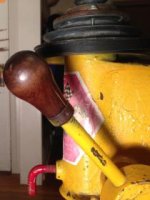
l like them too, did you make them?Love the hardwood handle grips.
l like them too, did you make them?
No, they were on it, and the PO had it from about 30 years ago (he had it from another before that, and this make is hard to date - pre1957, anyway). I think they are original. They are very similar to what I've seen on vintagemachinery.org, where some have identified them as maple or walnut. I haven't given them a real hard look yet, but I think walnut. They seem like they must be jammed on, not screwed on. The round metal rods are flat with no thread on the ends in pics. Mine are each split from shrinking. I will probably start restoring them with BLO, and see if they swell a bit.
Last edited:
tombell572
Well-known member
LesserSon, I can't tell the make of your DP from the photos but I have a Buffalo drill that has the same wood knobs on the handles and they are definitely stock and shown in the manual. They are pressed on.
Tom B.
Tom B.
bubinga
Well-known member
Oh Wow, they are original?No, they were on it, and the PO had it from about 30 years ago (he had it from another before that, and this make is hard to date - pre1957, anyway). I think they are original. They are very similar to what I've seen on vintagemachinery.org, where some have identified them as maple or walnut. I haven't given them a real hard look yet, but I think walnut. They seem like they must be jammed on, not screwed on. The round metal rods are flat with no thread on the ends in pics. Mine are each split from shrinking. I will probably start restoring them with BLO, and see if they swell a bit.
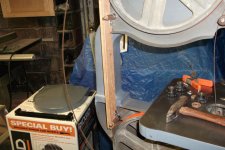
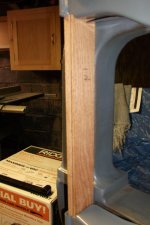
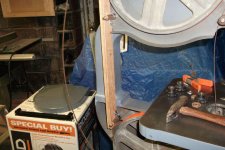
Reminds me of when Delta used to use wood for the blade guard on there bandsaw.
When I restored mine, I made one out of oak.
LesserSon, I can't tell the make of your DP from the photos but I have a Buffalo drill that has the same wood knobs on the handles and they are definitely stock and shown in the manual. They are pressed on.
Tom B.
Yes, mine is a Buffalo, too. I don't have a manual. Is there a pdf online somewhere?
Attachments

Bubinga, I've noticed a few folks mention using oak to fabricate accessories for their tools. And there's a long tradition of using it for just about everything. It's not a species I would use in contact with ferrous metal. Like cedar, the acidity makes it rot resistant, and it's hard and tough, with a lovely coarse grain, but the acidity can damage iron, steel, and even stainless, especially in humid conditions. Depending on the situation, might want to check for darkening and pitting periodically. I've taken apart furniture where different wood species were used together, and where fasteners would come out of poplar, elm, chestnut pretty much intact, the oak had eaten up the same fasteners.
Last edited:
jabberwoki
Well-known member
Here's an old W.J&F Barnes drill press that I bought a few years ago...
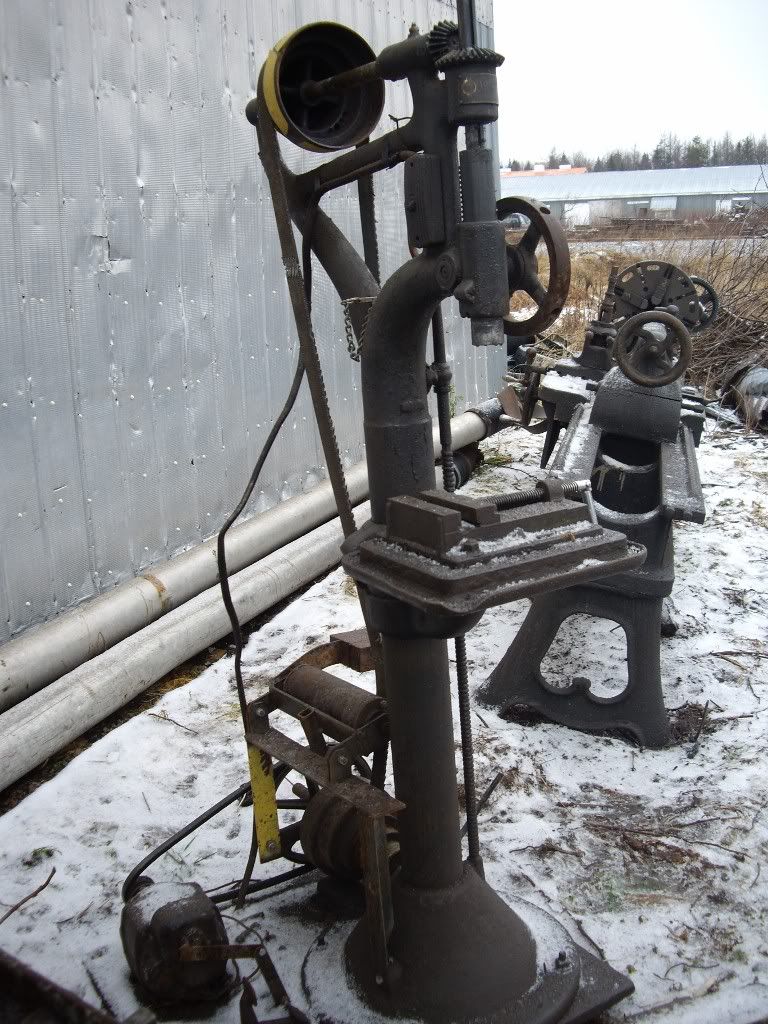
Neat machinery dealer tag...

Original decal...

Cleaned up and painted...

Did you get the lathe as well?
McBrownie
Well-known member
Here's what I am currently working on. Some of you might have already seen this picture.
EDIT: here's a picture after I finished it.
Wow! Nice job Nutts! Probably nicer than it left the factory new.
CSFJ
Well-known member
Here is my Beaver drill press circa 1950
Lol. Love the Hurst handles.
CSFJ
Well-known member
So, this followed me home the other day.
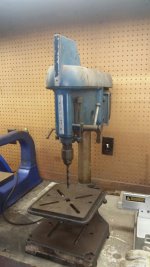
Seems run well, a little noise from the bearings, and a few marks of shame on the work table. Came from a small car dealer that was closing down here in Michigan. The same family had owned the place for about 77 years, from what I was told. They said they were the 2nd Pontiac dealer in the state. Picked up a few old hubcaps to hang on the garage wall too.
Seems run well, a little noise from the bearings, and a few marks of shame on the work table. Came from a small car dealer that was closing down here in Michigan. The same family had owned the place for about 77 years, from what I was told. They said they were the 2nd Pontiac dealer in the state. Picked up a few old hubcaps to hang on the garage wall too.
Last edited:
G20-Budo
Well-known member
Hey guys,
Well I finally picked up an old drill press, a 1/3HP CM from around 1937/38. It's in pretty good condition (yes it's dirty and needs some paint/lube). I grabbed the spindle/shaft and checked for slop, and it's tight. Then I drilled a test hole in a 2x8 and it feels great! I won't have time to strip it down for at least a month, but I will when time permits. It's about the right size drill press for my needs, and I'm happy to have it.
Well I finally picked up an old drill press, a 1/3HP CM from around 1937/38. It's in pretty good condition (yes it's dirty and needs some paint/lube). I grabbed the spindle/shaft and checked for slop, and it's tight. Then I drilled a test hole in a 2x8 and it feels great! I won't have time to strip it down for at least a month, but I will when time permits. It's about the right size drill press for my needs, and I'm happy to have it.
Attachments
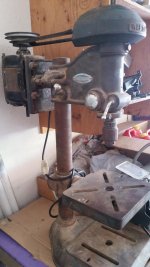

DanZ3
Active member
I have the same model. Based on the serial number its 38 vintage. I like mine too. Just the right size for occasional use.

G20-Budo
Well-known member
Danz3,
Thanks for your post. Just curious, what motor do you have on yours? And I noticed yours came with the spindle cover on top. Mine did not.
Thanks for your post. Just curious, what motor do you have on yours? And I noticed yours came with the spindle cover on top. Mine did not.
millforge
Member
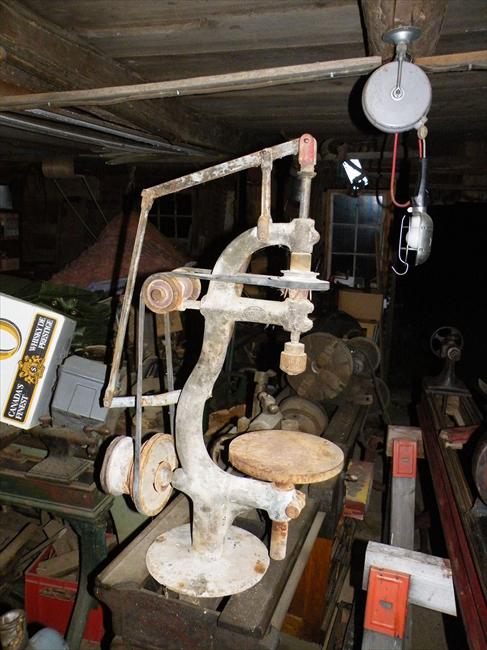
Here's a cool one last seen in my barn a few years ago. Now buried somewhere out there.
It was a mystery at first but with some help from Jeff Joslin we identified it as a product of Schumacher from Cincinnatti Ohio.
My son says it was designed by Dr. Zeus.
http://http://vintagemachinery.org/photoindex/detail.aspx?id=17445
(can't seem to post pix from my own computer)
It was a mystery at first but with some help from Jeff Joslin we identified it as a product of Schumacher from Cincinnatti Ohio.
My son says it was designed by Dr. Zeus.
http://http://vintagemachinery.org/photoindex/detail.aspx?id=17445
(can't seem to post pix from my own computer)
bl00
Well-known member
For millforge:
DanZ3
Active member
Danz3,
Thanks for your post. Just curious, what motor do you have on yours? And I noticed yours came with the spindle cover on top. Mine did not.

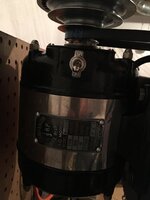
The brand is Companion from Sears. I assume it's original to the unit.
bubinga
Well-known member
Yeah,Bubinga, I've noticed a few folks mention using oak to fabricate accessories for their tools. And there's a long tradition of using it for just about everything. It's not a species I would use in contact with ferrous metal. Like cedar, the acidity makes it rot resistant, and it's hard and tough, with a lovely coarse grain, but the acidity can damage iron, steel, and even stainless, especially in humid conditions. Depending on the situation, might want to check for darkening and pitting periodically. I've taken apart furniture where different wood species were used together, and where fasteners would come out of poplar, elm, chestnut pretty much intact, the oak had eaten up the same fasteners.

I know what you mean, I have seen the black stains many times around oak, esp oak that is outside.
Like say around a nail or screw. I was not aware that it attacked the metal though.
I will keep an eye on my blades,
I have not noticed any issues thus far.
Darn it, That oak guard looks so pretty too.....LOL

Guess I could make a Walnut one.
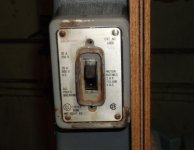
Also shown is the period correct looking switch, a 50 cent thrift store find.
I just up loaded 5 pictures, twice for that matter,
I will try later.
Well, not the 5 different ones, close enough.


Attachments

Last edited:
G20-Budo
Well-known member
The brand is Companion from Sears. I assume it's original to the unit.
DanZ3,
Interesting where the switch is located on your motor. Mine has a switch on the cord. After I clean mine up some, I should be able to see if they look like the same motor. Perhaps someone just restored yours, and added the switch there?
I can finally join this "club". Heres my new Hamilton Camel Back.
Click on the picture and you should get video

Here's a picture of it

It has a weird conversion on the back side. I'm not sure what vintage it is, anyone care to guess, I'm thinking pre 1930? That's a 11/4" bit so you can get an idea of scale. I needs some love but man does it make me happy!!
Click on the picture and you should get video
Here's a picture of it

It has a weird conversion on the back side. I'm not sure what vintage it is, anyone care to guess, I'm thinking pre 1930? That's a 11/4" bit so you can get an idea of scale. I needs some love but man does it make me happy!!
Last edited:
DanZ3
Active member
DanZ3,
Interesting where the switch is located on your motor. Mine has a switch on the cord. After I clean mine up some, I should be able to see if they look like the same motor. Perhaps someone just restored yours, and added the switch there?
The motor and drill press was "preserved" by me. The paint is all original. The only new parts were the drive belt, electrical cord and the switch. There is a hole in the motor casting that was the perfect fit for a switch.
G20-Budo
Well-known member
The motor and drill press was "preserved" by me. The paint is all original. The only new parts were the drive belt, electrical cord and the switch. There is a hole in the motor casting that was the perfect fit for a switch.
DanZ3,
Good stuff!! That looks great. Now I want to get into mine and clean it up even more. That looks like a nice place to put the switch. The unit is small enough that you could easily reach up and turn it on/off without having to move much.
Thanks for the info.
gnpenning
Well-known member
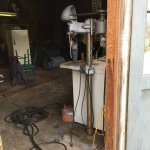
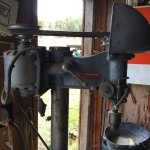
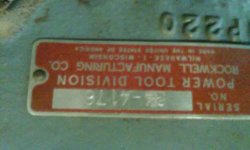
Picked up a Delta/ Rockwell 220 today. Dirty but other wise in pretty good outside shape. Only one errant mark on the table. The serial number is 94-4176 how do you decode the year?
I need new bearings for the motor and spindle. Can anyone point me to what bearings and belt (currently has a Napa that is to small, and yes I can go there. looking for other options) and where to get them. The motor is 1/3 hp see tag.
Edit: so how do some pics come out right and others not???
I need new bearings for the motor and spindle. Can anyone point me to what bearings and belt (currently has a Napa that is to small, and yes I can go there. looking for other options) and where to get them. The motor is 1/3 hp see tag.
Edit: so how do some pics come out right and others not???
Attachments


Ntzabtntr
Member
Did you get the lathe as well?
Hey Jabber,
Sorry for taking so long to reply..... Yes, I did purchase the lathe as well. Unfortunately, in my haste to buy it, I didn't notice that it had parts missing and damage. I didn't pay much for it, but it was too far gone to fix, so I scrapped it. I felt like a traitor as I followed the wrecker to the scrap yard....
Brian
Isaiah6113
Well-known member
On the DP220: 1951 as per the Magic Decoder Ring at vintagemachinery.com wiki.
Outlawmws
Well-known member
Hey Jabber,
Sorry for taking so long to reply..... Yes, I did purchase the lathe as well. Unfortunately, in my haste to buy it, I didn't notice that it had parts missing and damage. I didn't pay much for it, but it was too far gone to fix, so I scrapped it. I felt like a traitor as I followed the wrecker to the scrap yard....
Brian
Why scrap it? That should have become a parts lathe to save other deserving lathes...
Ntzabtntr
Member
Why scrap it? That should have become a parts lathe to save other deserving lathes...
Real estate.... that lathe was over 12 feet long...
crguy
Well-known member
Real estate.... that lathe was over 12 feet long...
You likely made the best choice with it.
gnpenning
Well-known member
On the DP220: 1951 as per the Magic Decoder Ring at vintagemachinery.com wiki.
Thanks you Sir. I joined that site and need to spend sometime learning how to navigate it.
Outlawmws
Well-known member
Real estate.... that lathe was over 12 feet long...
You likely made the best choice with it.
A post to a couple of the Lathe forums would have likely got a lot of the small off that for far more that the whole thing brought as scrap and likely fairly quickly so IMO a double loss: for NTZ, and for the guys searching high and low for the parts they needed.
scooternut
Well-known member
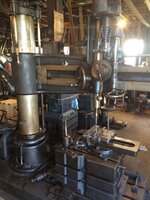

Not mine, on display, and fully functioning at an old frozen in time machine shop that had an open house today.
Sent from my iPhone using Tapatalk
crguy
Well-known member
A post to a couple of the Lathe forums would have likely got a lot of the small off that for far more that the whole thing brought as scrap and likely fairly quickly so IMO a double loss: for NTZ, and for the guys searching high and low for the parts they needed.
The only people buying parts for old lathes are the home shop crowd, and that lathe was too big for them.
I've scrapped out several old lathes after trying to sell them for parts first.

Outlawmws
Well-known member
You don't know until you at least try, and I know of quite a number of "home shops" using lathes that big.
Thread cleaned up, agree to disagree and leave the drama elsewhere gentlemen.
454ragtop
Well-known member
So no one knows anything about my Hamilton Camel Back?
Might try over at OWWM.org
crguy
Well-known member
So no one knows anything about my Hamilton Camel Back?
There is some info at vintagemachinery.org. Lots of companies made those drill presses, and yours is the basic model without back gears or power downfeed.
Can't tell fom the picture if the electric motor is original or if it was converted from a lineshaft driven machine.