To avoid these ads, REGISTER NOW!

Using Skytrak/Telehandler on slab.

Status
Not open for further replies.

justanengineer

Well-known member
Joined
Apr 5, 2011
Messages
7,722
Location
Motor City
What you call a PITA customer is merely a customer that is engaged in his project. Would you prefer he wait until the end of the project, and hit you blindsided with the, as you call it, nitpicking?

If this is fixed price project, it's not the OP's problem if it takes a crane or a D9 bulldozer to complete the project to his satisfaction. He has zero obligation to pay more for the contractor to provide a satisfactory product (unless the scope of work changes).

^^^The entitlement shown above is why so many on this forum end up paying $30+/ft2 for a cheap minimum-code garage on a slab in low-cost construction areas.

Quite realistically, once work begins there should be no surprises or issues between contractors and customers. The customer should ask and the contractor answer questions up front to know how the work is going to be completed BEFORE signing with a contractor. If the customer chooses to be ignorant, making demands or threats is simply being a rude PITA IMHO. The contractor quoted and customer signed based upon certain methods, materials, and equipment driving $XXk cost into the project. Discussed upfront, most contractors will happily use alternative methods, materials, or equipment if the customer's willing to pay for them. In this case, most folks aren't uber-picky about their concrete so that should've been mentioned by the OP upfront along with any other special requests (not faulting anyone btw, we all make mistakes). Since it wasn't, at this point the best course of action IMHO is the old "hey man, I've got a couple boxes of donuts and coffee.....can your guys make these scuffs and drips disappear?" On a multi-day project like this I'd guesstimate they've got a couple hours cleanup anyway so its probably no big deal. OTOH, making threats or demanding costly alternative methods like extra days with a crane isn't likely to end well.
 
Last edited:
To avoid these ads, REGISTER NOW!

readhead

Well-known member
Joined
Dec 8, 2012
Messages
6,181
Location
Durango, Co.
Just, you are making a lot of assumptions about how this job evolved to this point. I agree that in a perfect world there is a pre bid meeting and a pre construction meeting and all of this is discussed. This is not a commercial job, it is a residential garage and I am pretty sure that a lot of assumptions were made. The OP sounds like a reasonable guy and I think they will come to an agreeable solution. But the only leverage the OP has is money.
 

Roddyo

Well-known member
Joined
Nov 16, 2015
Messages
89
If this is fixed price project, it's not the OP's problem if it takes a crane or a D9 bulldozer to complete the project to his satisfaction. He has zero obligation to pay more for the contractor to provide a satisfactory product (unless the scope of work changes).

This is where I think you are arguing both sides of the issue. If the contract states X inches thick, XXXX PSI and a troweled finish that's the specs. No tire marks, oil drips or whatever else you want to dream are extras that wasn't put in the contract by the owner.

It's really not the GC fault the owner failed to disclose wanting to epoxy the floor until after the fact. It should have been in the specs. If it had been in the specs it probably wouldn't have been a problem. This is where I'm coming from about working together.

There is also a liability issue when the homeowner starts telling people how to do their job. That's why the homeowner would be renting the tire covers. Not just money but liability. The same goes with getting the SkyTrack off the slab. Do you want to assume the liability?

Once again working together is the best for everyone and usually gets you the best work because that screw you I have a contract goes both ways.

That's in no way directed at the OP BTW. The OP seems like a reasonable guy who is looking for answers before making his decision.
 
Last edited:

readhead

Well-known member
Joined
Dec 8, 2012
Messages
6,181
Location
Durango, Co.
Roddyo, I think you need to brush up on your contract law. I never put exclusions in my contracts. If the contract says the GC will provide a finished slab then that is what the OP should expect. No more, no less. The GC has failed to provide a finished slab. It is now blemished.

None of us are privy to what is actually going on so take this as my assumptions as well.
 

lakeroadster

Well-known member
Joined
Jan 19, 2015
Messages
5,166
Location
Central Colorado
^^^The entitlement shown above is why so many on this forum end up paying $30+/ft2 for a cheap minimum-code garage on a slab in low-cost construction areas.

Entitlement. :lol_hitti

No entitlement, just common sense.
  • You don't drive a 20,000 pound piece of equipment on a 4" thick slab,
  • You don't allow equipment to drip oil on a new slab,
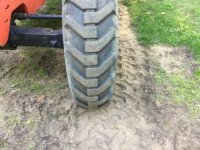
  • You don't allow equipment to "rubber track" a new slab.

The GC could have easily taken steps to avoid the above, he chose not too. The OP making the GC aware that it isn't acceptable, so the GC can remedy the situation is prudent.

Common Sense.. such as:

Our Skytrak didn't leak but I had a policy that no equipment but a small man lift was allowed on the slab. The OP is paying for new stuff and the GC has no regard for protecting the new work. I would tell him to keep the machine off the slab and to have it cleaned immediately. Let him know that the money has stopped until the damage is taken care of.

He knew it was leaking when he drove it on the slab and didn't care. This kind of work makes the rest of us look bad.

-----------------

If the contract states X inches thick, XXXX PSI and a troweled finish that's the specs. No tire marks, oil drips or whatever else you want to dream are extras that wasn't put in the contract by the owner. ....

Every contract assumes a professional quality of work.

Would either of you two fellas, justanengineer & Roddyo, be ok with paying a GC for a brand new concrete pour, be it a garage or driveway both of which typically will not be covered in the future, that had oil staining and severe tire track marks all over it? I can only speak for myself, but it's not only unacceptable, it's unprofessional.

.... Once again working together is the best for everyone and usually gets you the best work because that screw you I have a contract goes both ways.

Very true.. well said.
 
Last edited:

My Old Tools

Well-known member
Joined
Jun 4, 2014
Messages
5,440
Location
Hamrick Lake, TX
When I did my previous building I told the contractor up front that the slab would be stained and sealed and I needed a finish that would allow that. My current building I didn't specify anything on the slab. In my view, if the GC normally builds with a telehandler (mine did) then that's what you get if you don't have detailed specs. If he breaks the slab, that's a whole different deal, but that hasn't happened.

It's all in the written contract. If you didn't specify, I think he's doing ok. If you did, read it to him. A finished slab to me means smooth an flat, suitable for carpet, tile, other coverings. If the slab is the finish or will be stained or sealed, that is a condition that needs to be detailed. And expoxy is not the contractors responsibilty unless you told him up front that he should provide it in his price.
 
Last edited:

manwithtools

ALLIANCE MEMBER
Joined
Aug 24, 2015
Messages
13,937
Location
Lebanon, TN
This is where I think you are arguing both sides of the issue. If the contract states X inches thick, XXXX PSI and a troweled finish that's the specs. No tire marks, oil drips or whatever else you want to dream are extras that wasn't put in the contract by the owner.

I'm not arguing both sides and I'm not dreaming a thing, he paid for new concrete and should receive new concrete. This is just not a point worth arguing over.

Look at it this way - what color oil stains would you like on the seats of the next new vehicle you buy? I guessing that's okay because you did not specifically tell the dealer that you would not accept stains. There are some things in life that just are common sense, this is one of them.

He's not telling them how to do their job. He's telling them he does not want tire marks, oil or broken concrete as part of this project - which he is perfectly correct to expect. Are you really suggesting he rent tire covers to remove liability from himself? :eyecrazy::eyecrazy:

If it wasn't for GJ he might not know that tire covers even exist. He's not telling the GC to get tire covers, he's saying he does not want tire marks.

By what logic could the contractor think he did not want concrete without oil stains and tire marks (let alone possible broken concrete) as part of this transaction?

There is no need to threaten anything at this point and I never said to threaten anything. I said not to pay until this is cleared up to his satisfaction, those are two distinctly different things. If you have ever performed work as a contractor you would see this clearly. I know what service I deliver to my customers and I know what I expect from those who provide services to me and it starts with fair treatment.
 

bczygan

Well-known member
Joined
Nov 4, 2009
Messages
22,002
Location
DETROIT! Arsenal of Scrappers
The relationship between a contractor and an owner is, and will always be, adversarial.

Because of that, if the owner wants to control any of the job, his main tool is in the contract documents and choice of contractor.

That is a problem, because the more complete the documents, and the better the contractor, the higher the price (Usually).

A true meeting of the minds and hearts, reflected in the contract documents, is what to shoot for.

But **** happens, and having parties who will work together helps a lot.

Bill
 

wssix99

Well-known member
Joined
Mar 2, 2011
Messages
5,161
Location
Chicago, IL
Building something is a lot like a marriage. Unexpected problems arise that may or may not be either parties fault but they still have to be dealt with.

Yea, but the OP raised this issue and concern with the contractor BEFORE he went out and leaked the oil on the slab.

... This is why we are allowed to burn our spouses at the stake when they go off and do something we instructed them not to do. (My wife keeps telling me that that law came out of effect over a hundred years ago, but I wasn't around then, so I'm not buying it.)

I'm very used to the give and take of construction, but when I put in my 2 cents and the other party chooses to unilaterally discount my expertise, go on their own, and then they screw up... they pay for 100% of the consequences!
 

wssix99

Well-known member
Joined
Mar 2, 2011
Messages
5,161
Location
Chicago, IL
Every telehandler we own at work and every one i've ever seen use foam filled tires. Stop and imagine what could happen if a telehandler with a load on the forks had a tire blow or even leak down quickly, they are foam filled for this reason.

Even if a pneumatic tire is foam-filled instead of air filled, the same logic applies. The foam pressure should be similar to the specified air pressure and the contact patch (and weight distribution) should be similar.

Since telehandlers can't sink in to mud, etc. they will have large tires (and large contact patches) so a machine heavier than a car could conceivably impart less stress on a concrete slab if the tires/pressure/contact patch combo is right.

^ The mud test is a good quick litmus test here. If the thing doesn't sink in to the mud, it definitely isn't stressing the slab out.
 
OP
R

Radix2

Well-known member
Joined
May 28, 2014
Messages
1,853
Location
the thumb!, MI
Yea, but the OP raised this issue and concern with the contractor BEFORE he went out and leaked the oil on the slab.

... This is why we are allowed to burn our spouses at the stake when they go off and do something we instructed them not to do. (My wife keeps telling me that that law came out of effect over a hundred years ago, but I wasn't around then, so I'm not buying it.)

I'm very used to the give and take of construction, but when I put in my 2 cents and the other party chooses to unilaterally discount my expertise, go on their own, and then they screw up... they pay for 100% of the consequences!


The GC is fully aware of the planned final finishes for these slab areas. I owe the board a full build thread and I will get it going soon, but I will say this, this is a full spec building, with a full spec price designed as a bit of a show place. The property has two other garages for the dirty drippy stuff.

I am a bit mystified that anyone would think major oil staining of a new garage slab would be acceptable. And remember these pictures which show a 50 foot long trail of puddles are after only the first day of work - there are many weeks to go - at the current rate , there will be a solid 3 foot path of oil soaked concrete for me to deal with. Yet nothing was said about fixing, diapering (never heard of that) the machine or offering to clean up the current mess or preventing more of the same.

Obviously the ball is well dropped. As to the contract, I don't see how the workmanlike and professional language does not cover clean and suitable for the future planned finishes.

I have tried additional means to get the stains out - oil dry rubbed and left on the spots, brake cleaner, baking powder - all to no effect... Next up will be one of the pour n restore type of poultices.
 

Roddyo

Well-known member
Joined
Nov 16, 2015
Messages
89
Common sense is we are talking about a garage floor. Driving on a floor during construction is common practice where I live. Any steel building that I have contracted was built this way. Tracks and all. Withholding payment over tracks is ridiculous IMO if it wasn't in the original agreement.

I've said since the beginning the oil is a separate issue from the tracks. However, common sense should dictate that if you have equipment, leaks are a possibility. If that's a problem, you deal with it upfront with stipulations. Either the age of equipment on the job or spec biodegradable oil.

In this case I agree with the OP that the oil leaks look excessive and should be resolved. I disagree with the SkyTrack on the slab and think the OP should offer to pay for the boot rental since it wasn't brought up before and probably wasn't priced into the job.

In closing I would like to say that a lot of what goes on here is not normal. The time, money and effort put into some of these garages is incredible. If you are starting a project you should really show your contractor what you are trying to do and give them an idea of what you expect.
 
OP
R

Radix2

Well-known member
Joined
May 28, 2014
Messages
1,853
Location
the thumb!, MI
Even if a pneumatic tire is foam-filled instead of air filled, the same logic applies. The foam pressure should be similar to the specified air pressure and the contact patch (and weight distribution) should be similar.

Since telehandlers can't sink in to mud, etc. they will have large tires (and large contact patches) so a machine heavier than a car could conceivably impart less stress on a concrete slab if the tires/pressure/contact patch combo is right.

^ The mud test is a good quick litmus test here. If the thing doesn't sink in to the mud, it definitely isn't stressing the slab out.

The comments on the tire pressure and contact patch are missing the issue at hand. The issue is the absolute weight at the approaches where there is limited concrete to spread the load. The manufacturer states a tire pressure of 65psi and a max ground pressure of 93 psi - this predicts a tire patch in the 80sq in range - say 9x9 - go look at the construction photos of the approaches posted above. When the tire is on the first 9 in of the slab, all you have for support is the 25psi foam underneath and the bending/shearing forces on two sides. Even a full sq foot of the foam is only good for 3600lbs, with the tire load coming in at 5-6000 lbs.

As far as sinking into the mud, I can tell you this, we have had all sorts of trucks and vehicles here, and this thing sinks in far more than anything else, while the tires are large in diameter, they aren't very wide.
 

Attachments

  • image.jpg
    image.jpg
    26.8 KB · Views: 18

Majordisorder

Well-known member
Joined
Jan 5, 2014
Messages
234
Location
North Idaho
I checked the machine based on your post - the 6036 sitting outside definitely has air in the tires ( and the tires look pretty old and are starting to get surface cracks from the sun..)

Might be a California safety reg ? Sounds smart.

My 6036 has a calcium chloride solution. They must be filled to counteract tipping forces. Other liquids are now being used that don't freeze. Beet juice is one of them, and not corrosive like the calcium solution.
 

readhead

Well-known member
Joined
Dec 8, 2012
Messages
6,181
Location
Durango, Co.
Things are done different ways in different places. I have been a structural steel fabricator and erector for sixteen years and have never put a forklift on a new slab. A forklift is a choice for inexpensive lifting. I chose to own cranes. I also had forklifts to move material around the job. I don't think the contractor made a bad choice with the forklift. He did make a bad choice in the way he used it. The OP should expect a new, undamaged slab and the contractor has taken that away. Now it is a matter of coming to a mutual resolution.
 
OP
R

Radix2

Well-known member
Joined
May 28, 2014
Messages
1,853
Location
the thumb!, MI
Common sense is we are talking about a garage floor. Driving on a floor during construction is common practice where I live. Any steel building that I have contracted was built this way. Tracks and all. Withholding payment over tracks is ridiculous IMO if it wasn't in the original agreement.

I've said since the beginning the oil is a separate issue from the tracks. However, common sense should dictate that if you have equipment, leaks are a possibility. If that's a problem, you deal with it upfront with stipulations. Either the age of equipment on the job or spec biodegradable oil.

In this case I agree with the OP that the oil leaks look excessive and should be resolved. I disagree with the SkyTrack on the slab and think the OP should offer to pay for the boot rental since it wasn't brought up before and probably wasn't priced into the job.

In closing I would like to say that a lot of what goes on here is not normal. The time, money and effort put into some of these garages is incredible. If you are starting a project you should really show your contractor what you are trying to do and give them an idea of what you expect.

Which is why I posted here to see what is normally done while building biggish garages, and I appreciate the responses. I am less concerned about the tracks based on these posts although a good bit of scrubbing with various cleansers has not made much of a dent, but at least it is a surface condition. I have no idea if these tire boots are available here, never heard of it, I'll see if the GC has( or diapers for that matter). - this GC is a home builder, having a slab like this to work off of is not I believe he has done before.

The GC is fully aware of the plans, has seen detailed renderings of the final product.

I have explained the issue with the approach openings above several times, and that is my second concern about getting back on the slab. It Seems like there should be straight forward fixes for the oil leaks - I also need an eyes open acknowledgement from the GC that if his chosen construction method breaks anything he accepts liability for it - not "you said we could go up there".

My engineering and common sense assessment of the way the slab edges and openings are built is that they are unsuitable for 20,000+ lb equipment - my guess is he has no idea what a skytrak weighs, what the compressive strength of the foam is, or what the risks might be. Let's see what he wants to do when all the facts are presented.
 

wssix99

Well-known member
Joined
Mar 2, 2011
Messages
5,161
Location
Chicago, IL
20,000+ lb equipment

This is irrelevant. What matters is:

Weight / [number of wheels] / [tire contact patch area]

^ That will give you a weight across area, which you can compare to the specs on your slab and foam. (If you adopt some conservative numbers for the above, you'll see that a 20,000 lb truck with big soft tires is no problem.)

Since your slab is continuously supported by the base below it doesn't get stressed out by dead loads like an elevated beam does. The static dead load is handled by the base below. The dynamic loads of highway pavements are a concern, but in a garage (where the speeds are slow) they aren't significant.
 
To avoid these ads, REGISTER NOW!
OP
R

Radix2

Well-known member
Joined
May 28, 2014
Messages
1,853
Location
the thumb!, MI
This is irrelevant. What matters is:

Weight / [number of wheels] / [tire contact patch area]

^ That will give you a weight across area, which you can compare to the specs on your slab and foam. (If you adopt some conservative numbers for the above, you'll see that a 20,000 lb truck with big soft tires is no problem.)

Since your slab is continuously supported by the base below it doesn't get stressed out by dead loads like an elevated beam does. The static dead load is handled by the base below. The dynamic loads of highway pavements are a concern, but in a garage (where the speeds are slow) they aren't significant.


See posts 53 and 25
 

Cyberbear

Well-known member
Joined
Nov 23, 2013
Messages
1,524
Location
California
My thoughts are with readhead, the customer did not order a blemished slab. A slab may "only" be a workshop/floor, but why should the customer be made to suffer the bad work of others w/o compensation?? Not holding others responsible for the damage they cause is why so many trades people don't give a damn, that's why we see so much bad work being done, because too often they simply walk away leaving the customer holding the bag.
 
OP
R

Radix2

Well-known member
Joined
May 28, 2014
Messages
1,853
Location
the thumb!, MI
Had a talk with the GC. He will not take the Skytrak on the slab again and will add another crane day if required.

He had no idea that these machines weigh as much as they do, never heard of diapers or boots for these machines either. Not happy with his crew for leaving a leaking piece of machinery on a new slab. He will see if there are any cleaning services that can address the oil stains. I will try other removal means on my own as well.

Once we have exhausted the alternatives for cleaning, I will decide if I want to ask for some offset for the cost of a coating to hide the problem (I really prefer a clear sealer type finish over a epoxy paint finish even if it was free.)


Another comment to those that think these thin slabs over foam can handle 10+ ton machines - even beyond my concern of the unsupported edges - there is also the fact that the foam boards do not conform completely to the underlying soil - there are many more voids than under concrete poured directly onto a base. The issue is not the PSI at the tire patch the issue is the reliance on the strength of the concrete to transfer load beyond the contact patch since the underlying materials cannot support the load within the area of the tire patch - tough to do at edges and joints.

I'd be interested to hear if those who drive these on slabs regularly - are doing so on 4in slabs on foam board with pex (the pex will make the concrete much less than 4 in...)
 

justanengineer

Well-known member
Joined
Apr 5, 2011
Messages
7,722
Location
Motor City
Entitlement. :lol_hitti

No entitlement, just common sense.
  • You don't drive a 20,000 pound piece of equipment on a 4" thick slab,
  • You don't allow equipment to drip oil on a new slab,
  • You don't allow equipment to "rubber track" a new slab.

The GC could have easily taken steps to avoid the above, he chose not too. The OP making the GC aware that it isn't acceptable, so the GC can remedy the situation is prudent.

Would either of you two fellas, justanengineer & Roddyo, be ok with paying a GC for a brand new concrete pour, be it a garage or driveway both of which typically will not be covered in the future, that had oil staining and severe tire track marks all over it? I can only speak for myself, but it's not only unacceptable, it's unprofessional.

JMO but none of that is common sense, quite the contrary actually. Telehandlers, manlifts, skidsteers, and all manner of other construction machinery is operated on new slabs daily, much of which is similarly heavy with wide/soft tires that similarly scuff even polished concrete. My 28' JLG scissor lift for example is 15k lbs and has rather wide, soft, gummy tires bc these machines slip a LOT on soft ground.

I agree with you in that the contractor must be notified and has been, but he also must be given opportunity to make things right. For all we know he may have already planned to simply have the slab cleaned at the end of the job and that somehow works out to be less expensive or more worthwhile than alternatives. Personally, even if they were discussed prior I wouldn't nitpick the marks until the final day's walkthrough, I'd focus on the actual build process in the meantime and trust the contractor to do right by me until then. Until the build is complete the OP cant do anything in the building so who cares if the contractor resolves it now or later? So long as theyre doing good quality work in the meantime and not leaving a huge eyesore for the neighbors to gripe about each night, marks on the concrete are inconsequential. None of these will leave permanent marks nor uncommon, step into any diesel, ag, construction, or rental shop and you'll see these marks cleaned regularly. My shop in the Army looked worse than that by 9:15 every Monday, a couple hours Friday afternoon and it was spotless again.

As explained previously, this mistake is on the OP if it wasnt discussed prior to work commencing. We've all made similarly important mistakes, personally I'd just **** it up and spend the 2-3 hours (worst case scenario btw if it needs a skim grind) cleaning the slab or give it the few weeks for them to disappear naturally in the concrete dust. I wouldnt ***** bc I dont piss away money stepping over dollars to pick up pennies - 2-3 hours cleaning up my own mistake is well worth not paying an extra $10/ft2, $10/hr, or other PITA customer charge on the next job.
 

MJD1

Well-known member
Joined
Dec 28, 2014
Messages
607
Perhaps hiring the Amish would be a better option in the future.
 

kwb

Well-known member
Joined
May 1, 2009
Messages
1,775
Location
PNW
Tire marks will go away quickly, leaks probably should be addressed but not deal killers - OP has jumped the gun on this one.

Backfill the aproaches and put a few boards down to minimize edge loads if you are really worried. But do it after hours and out of the way of the work.

Monitor, make notes, and have a punchlist started for walkthrough. Shop isn't yours until then.

Some people should not go to the sausage factory.:eyecrazy:
 
Last edited:

Roddyo

Well-known member
Joined
Nov 16, 2015
Messages
89
Thanks to the OP for bringing this thread to life, not doubt it could save someone some headaches down the road. I'll answer the OP's questions and would like to hear some other opinions from different parts of the country.

I outgrew concrete work and building except for my own right after the turn of the century:) With our climate I dodged the pex floors and styrofoam. We was WAY ahead of the curve with geothermal though. Like I said with our climate and outdoor furnaces radiant heat floors was very low on most people's list.
The foam has caught on though. I poured a foam insulated floor as a favor for a friend who built a house with the insulated concrete walls. It was kind of a slipshod mess due to the GC. If the grade had been perfect the foam would have laid down better.

I've always screeded off 1X4's driven under the floor level with black pipe across the tops. It's really hard to get a hole or a hump that way and you can also get your sub grade dead nuts on. That's the number one thing for no cracks in the floor, a flat sub grade.

I don't like having foam between the floor and the footing and in our climate I personally wouldn't do it. In a 3 1/2 inch floor with wire mesh I'll try to have at least one 1/2 rebar around the edge. If not I'll usually float a couple in at the doors to keep from rolling off the edge driving on.

In your case jumping that SkyTrack a couple of inches on the floor was a rookie mistake and should have never happened. However, if there was any steel in there that's what it's for, to bridge the span. But it still should have been backed by gravel.

I've never been worried putting a SkyTrack on 3 1/2 inch concrete like a mini storage or running a backhoe with a loaded front bucket up a driveway. I've followed some work that we was probably on three inch concrete without a problem. YMMV.

It would be interesting to hear what people staying off the slab is charging to erect steel buildings. I quit fooling with steel around 2005 and had a really good crew that I paid extra to get when I needed them. It was $1.35 SF on mini storages and $1.10 or so on normal buildings. 30X50 to 60X100 and 10 to 22 foot sidewalls.
 
Last edited:

wssix99

Well-known member
Joined
Mar 2, 2011
Messages
5,161
Location
Chicago, IL
Thanks for the redirect:

The comments on the tire pressure and contact patch are missing the issue at hand. The issue is the absolute weight at the approaches where there is limited concrete to spread the load. The manufacturer states a tire pressure of 65psi and a max ground pressure of 93 psi - this predicts a tire patch in the 80sq in range - say 9x9 - go look at the construction photos of the approaches posted above. When the tire is on the first 9 in of the slab, all you have for support is the 25psi foam underneath and the bending/shearing forces on two sides. Even a full sq foot of the foam is only good for 3600lbs, with the tire load coming in at 5-6000 lbs.

This is definitely a stress point and a place to worry. There will be some concentrated stresses, but the tire will deform to irregularities. If your contractor didn't back fill the slab before driving on to it, then... wow.

(I have pex over foam board.) I poured sacrificial concrete sills at my approaches so I could hammer them out and replace them easily, if needed, after construction. I also had a dumpster delivered off the side of a new drive way slab and had to drive that loaded truck over the edge. I was able to make a good even ramp of gravel on the backside and escaped damage.


(I really prefer a clear sealer type finish over a epoxy paint finish even if it was free.)

If your vehicles are like mine, you'll just end up with more oil spots the minute you start using the garage. The nice thing with a good epoxy is that oils just wipe up with a towel and light de-greaser.


Another comment to those that think these thin slabs over foam can handle 10+ ton machines - even beyond my concern of the unsupported edges - there is also the fact that the foam boards do not conform completely to the underlying soil - there are many more voids than under concrete poured directly onto a base.

The loads will be concentrated at points above the pressures the boards can withstand, so there should will be some slight settlement in to those voids until the pressures even out a bit.

The issue is not the PSI at the tire patch the issue is the reliance on the strength of the concrete to transfer load beyond the contact patch since the underlying materials cannot support the load within the area of the tire patch - tough to do at edges and joints.

The pressures will decrease generally by the square of the depth of the slab. (As the stress spreads out through the concrete.) So, you fully loaded telehandler (93 psi ground pressure) would impart 6psi to your foam (on a 4" slab) and 12psi at the edges. (I'd call the effect of the PEX negligible as it should be able to withstand and transmit those slight pressures without deforming. You also won't have PEX at the edges.)

So, standard 40 psi foam board should be no problem in the field or at the edges. I'd be more worried about the stresses in the top edge corner of the concrete and getting chipping there.
 
OP
R

Radix2

Well-known member
Joined
May 28, 2014
Messages
1,853
Location
the thumb!, MI
Thanks for the redirect:


This is definitely a stress point and a place to worry. There will be some concentrated stresses, but the tire will deform to irregularities. If your contractor didn't back fill the slab before driving on to it, then... wow.

(I have pex over foam board.) I poured sacrificial concrete sills at my approaches so I could hammer them out and replace them easily, if needed, after construction. I also had a dumpster delivered off the side of a new drive way slab and had to drive that loaded truck over the edge. I was able to make a good even ramp of gravel on the backside and escaped damage.


If your vehicles are like mine, you'll just end up with more oil spots the minute you start using the garage. The nice thing with a good epoxy is that oils just wipe up with a towel and light de-greaser.


The loads will be concentrated at points above the pressures the boards can withstand, so there should will be some slight settlement in to those voids until the pressures even out a bit.


The pressures will decrease generally by the square of the depth of the slab. (As the stress spreads out through the concrete.) So, you fully loaded telehandler (93 psi ground pressure) would impart 6psi to your foam (on a 4" slab) and 12psi at the edges. (I'd call the effect of the PEX negligible as it should be able to withstand and transmit those slight pressures without deforming. You also won't have PEX at the edges.)

So, standard 40 psi foam board should be no problem in the field or at the edges. I'd be more worried about the stresses in the top edge corner of the concrete and getting chipping there.


Good comments,

I definitely plan on a clear sealer that must allow oil spills to wipe up without staining. Cant do that, it is pretty useless... thinking of something like SPGX or TPPLC.

I do have packed limestone to avoid edge pressure.

I'm not sure I agree with the pressure reduction you estimate at the edges of the slab, but in any case we are moving forward without taking that risk. Note that the sub concrete foam is 25 not 40 PSI.

And my issue with the PEX embedment is not that it is compressible, but that is has a significant effect on the thickness of the slab by creating voids that limit the concrete to only 3 3/8 thick where the tube runs are - I would expect these slabs to perform more like a thinner slab

It would be a great project for one of the Universities that offer Civil engineering to build and test these types of floors to see what the capacity really is - w/rebar - w/steel mesh - w/fiber - 3000psi vs 4000 psi mix. Move us out of guessing and into knowing.
 

wssix99

Well-known member
Joined
Mar 2, 2011
Messages
5,161
Location
Chicago, IL
It would be a great project for one of the Universities that offer Civil engineering to build and test these types of floors to see what the capacity really is - w/rebar - w/steel mesh - w/fiber - 3000psi vs 4000 psi mix. Move us out of guessing and into knowing.

They do. Concrete 101. :) Young Civil Engineering students who take an introductory concrete course will typically have a concrete lab, where they will experiment with mix designs, mix them, (in large KitchenAid mixers - it's great fun!) cure the samples, and then test them in a hydraulic ram. (After first performing the theoretical calculations, of course.)

Compressive-Strength-Test-on-Concrete.jpg


^ They also have a similar lab for asphaltic concrete, but it's less fun - that lab makes a horrible mess...


For a continuously supported slab (ie: slab on grade), the rebar/mesh/etc. doesn't typically add to the strength of the slab. (For industrial floors/designs, it can -> but you need a ton of steel -> much more than you'd use in a typical slab/shop/garage.) In a (relatively thin) common garage slab, the reinforcing is there only for crack control, managing the shrinkage stresses that build up in the concrete as the cement cures. So, for the purposes of this problem, you can ignore any steel that is there. (The American Concrete Institute Publication "Design of Slabs-on-Ground ACI360R-06" has all the gory details on this and designing reinforcement in to slabs.)


And my issue with the PEX embedment is not that it is compressible, but that is has a significant effect on the thickness of the slab by creating voids that limit the concrete to only 3 3/8 thick where the tube runs are - I would expect these slabs to perform more like a thinner slab

My understanding is that the voids from the PEX are not considered in the strength of the slab and are ignored in the design because: their volume in the overall cross section is minimal, at the bottom of the slab, the PEX is strong enough to transmit forces through and around it. (That being said, it is not strong enough to handle stresses at expansion joints and some other areas of the slab, which is why the PEX manufacturers give special specs on shielding it and proving stress reliefs at these locations.)


I'm not sure I agree with the pressure reduction you estimate at the edges of the slab, but in any case we are moving forward without taking that risk. Note that the sub concrete foam is 25 not 40 PSI.

The pressure reducing with the square of the distance is a descent approximation, based on the forces spreading out in a pyramid fashion. In reality, they spread out in the shape of a cone... but that takes a higher grade of math and doesn't deliver any beneficial precision for a problem like this one.
Create%20New%20Floor%20Plan%20button83_558x170.png


At the edge of the slab, you have 1/2 of that pyramid or cone, so your maximum stress is double. (If you assume that the base under that part of the slab is solid and the slab isn't bending.)

^ This also assumes a static load. There are other stresses on the slab from the dynamic/moving vehicle, but at slow speeds they are very very small.
 

ishiboo

Well-known member
Joined
Oct 27, 2010
Messages
9,481
Location
Oshkosh, WI
JMO but none of that is common sense, quite the contrary actually. Telehandlers, manlifts, skidsteers, and all manner of other construction machinery is operated on new slabs daily, much of which is similarly heavy with wide/soft tires that similarly scuff even polished concrete. My 28' JLG scissor lift for example is 15k lbs and has rather wide, soft, gummy tires bc these machines slip a LOT on soft ground.

I agree with you in that the contractor must be notified and has been, but he also must be given opportunity to make things right. For all we know he may have already planned to simply have the slab cleaned at the end of the job and that somehow works out to be less expensive or more worthwhile than alternatives. Personally, even if they were discussed prior I wouldn't nitpick the marks until the final day's walkthrough, I'd focus on the actual build process in the meantime and trust the contractor to do right by me until then. Until the build is complete the OP cant do anything in the building so who cares if the contractor resolves it now or later? So long as theyre doing good quality work in the meantime and not leaving a huge eyesore for the neighbors to gripe about each night, marks on the concrete are inconsequential. None of these will leave permanent marks nor uncommon, step into any diesel, ag, construction, or rental shop and you'll see these marks cleaned regularly. My shop in the Army looked worse than that by 9:15 every Monday, a couple hours Friday afternoon and it was spotless again.

As explained previously, this mistake is on the OP if it wasnt discussed prior to work commencing. We've all made similarly important mistakes, personally I'd just **** it up and spend the 2-3 hours (worst case scenario btw if it needs a skim grind) cleaning the slab or give it the few weeks for them to disappear naturally in the concrete dust. I wouldnt ***** bc I dont piss away money stepping over dollars to pick up pennies - 2-3 hours cleaning up my own mistake is well worth not paying an extra $10/ft2, $10/hr, or other PITA customer charge on the next job.

I agree with you on a normal construction project... operating equipment on a slab to put up a building is pretty common practice. I have a 50' Skyjack and it's about 15k lbs as well, and I know wherever it's driven it is going to rut, leave tire marks, etc.

The issue is the OP specifically told the contractor NOT to operate on the slab if the end result would be oil dripping and tire marks, the contractor agreed, and then it happened anyway.
 

Hobby_Man22

Well-known member
Joined
Nov 16, 2020
Messages
3,581
Location
tx
Seems like a great way to break in a new slab. On my slab if I do spill oil it seems to wipe right off pretty easily, not sure why because it isn't coated.
 

Hobby_Man22

Well-known member
Joined
Nov 16, 2020
Messages
3,581
Location
tx
I went with a 5in slab for this reason so I didn't have to worry about a heavy vehicle even though the contractor said I was wasting my money. It worked out good cause originally he wanted an extra 9k to do a 6inch slab but luckily he forgot what he said and I got him to do an extra inch for only 3k. I was like the first thing they'll do is put a heavy *** telehandler on it.
 

Hobby_Man22

Well-known member
Joined
Nov 16, 2020
Messages
3,581
Location
tx
Entitlement. :lol_hitti

No entitlement, just common sense.
  • You don't drive a 20,000 pound piece of equipment on a 4" thick slab,
  • You don't allow equipment to drip oil on a new slab,
  • You don't allow equipment to "rubber track" a new slab.

The GC could have easily taken steps to avoid the above, he chose not too. The OP making the GC aware that it isn't acceptable, so the GC can remedy the situation is prudent.

Common Sense.. such as:


-----------------


Every contract assumes a professional quality of work.

Would either of you two fellas, justanengineer & Roddyo, be ok with paying a GC for a brand new concrete pour, be it a garage or driveway both of which typically will not be covered in the future, that had oil staining and severe tire track marks all over it? I can only speak for myself, but it's not only unacceptable, it's unprofessional.


Very true.. well said.

The tire marks are unavoidable. My scissor lift with non marking tires makes tire marks everytime the wheels turn.
 
Status
Not open for further replies.
To avoid these ads, REGISTER NOW!
Top Bottom