
Private Lugnutz
Well-known member
I had the pleasure of rummaging through an old machine shop a few weeks ago. It was in operation from the 1930’s through the 1960’s, more or less abandoned in place until recently, when it was designated for demolition (property being sold for development). It was like walking through a time capsule. I had no interest in acquiring the huge machines (turret lathes, drill presses, etc), but I did come away from the experience with a renewed sense of awe and some interesting keepers.
Just to give you an idea of how old some of the stuff in the shop was…
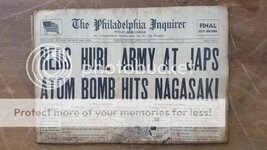
Catalogs and Tech Data

Empty Pratt & Whitney threading set box with a fairly intact label


Huge, orphaned threading set handles and dies (top to bottom: unmarked, S.W. Card, Wells Brothers, and a primitive Armstrong)
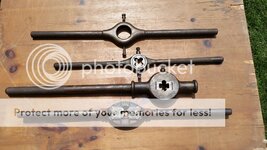
S.W. Card Mfg, Mansfield, MASS, No. 10 (never heard of it before!)

Wells Brothers “Little Giant” (part of the /G\T/D\ empire)

Armstrong


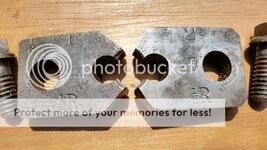
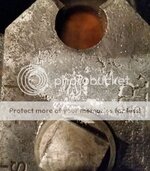
Others may be familiar with this tool, but I had never seen a threading set that worked like this before. It’s very primitive. The dies, which have a hole bored through them, are screwed into the handle, rather than held in a cavity by a screw plate. I have also never seen this Armstrong logo before, either on a tool or in a catalog. It’s a heraldry shield with an A and a T. Not the arm and hammer, or the older A-triangle. I tried to zoom in as close as I can with my camera phone. I am guessing this is their very first tool holder, dating to 1890 or so.



Just to give you an idea of how old some of the stuff in the shop was…
Catalogs and Tech Data
Empty Pratt & Whitney threading set box with a fairly intact label
Huge, orphaned threading set handles and dies (top to bottom: unmarked, S.W. Card, Wells Brothers, and a primitive Armstrong)
S.W. Card Mfg, Mansfield, MASS, No. 10 (never heard of it before!)
Wells Brothers “Little Giant” (part of the /G\T/D\ empire)
Armstrong
Others may be familiar with this tool, but I had never seen a threading set that worked like this before. It’s very primitive. The dies, which have a hole bored through them, are screwed into the handle, rather than held in a cavity by a screw plate. I have also never seen this Armstrong logo before, either on a tool or in a catalog. It’s a heraldry shield with an A and a T. Not the arm and hammer, or the older A-triangle. I tried to zoom in as close as I can with my camera phone. I am guessing this is their very first tool holder, dating to 1890 or so.
Last edited:


