To avoid these ads, REGISTER NOW!

Princess Auto deals

To avoid these ads, REGISTER NOW!

Scalemaster

Member
Joined
Feb 2, 2016
Messages
11
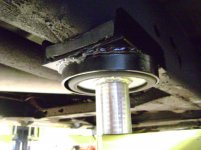
Got my new Dannmar lift installed. When I built the garage I was figuring on a symmetric lift. I ended up purchasing the asymmetric Dannmar 10ACX from Princess Auto. Easy to install and it works great. I have also attached a picture of the frame cradle pads I built. The factory ones were too expensive.
 

Attachments

  • DSC00553.jpg
    DSC00553.jpg
    147.8 KB · Views: 75
  • 20160507_140537.jpg
    20160507_140537.jpg
    137.9 KB · Views: 72

ADSR

Well-known member
Joined
Jan 12, 2013
Messages
10,713
Got my new Dannmar lift installed. When I built the garage I was figuring on a symmetric lift. I ended up purchasing the asymmetric Dannmar 10ACX from Princess Auto. Easy to install and it works great. I have also attached a picture of the frame cradle pads I built. The factory ones were too expensive.

Very cool! what did you use on the bottom of the pad?
 
OP
R

rmsg0040

Well-known member
Joined
Feb 15, 2012
Messages
2,635
Location
Toronto
Never used them, but the reviews seem favorable, only downside could be they are 36 tooth
 

Burgerkong

Well-known member
Joined
Apr 17, 2010
Messages
2,501
Location
Markham, Ontario, Canada
Works as you'd expect, only wish it was locking as well. Apparently you could retrofit the guts with 80-tooth components from Titan, but officially they said it doesn't work. :dunno:
 

PharaohXJ

Well-known member
Joined
Apr 10, 2012
Messages
152
Location
Vancouver/Cairo
I got stranded in multiple situation because of the sub 60 tooth count (wide arc), where I had to to go to an air ratchet at full throttle changing oil filter and removing a skid plate. 36 teeth is just way too low these days specially when you compare that to 168 tooth from propoint that is almost 1/4 or the arc length of the 36 tooth


Sent from my iPad using Tapatalk
 
OP
R

rmsg0040

Well-known member
Joined
Feb 15, 2012
Messages
2,635
Location
Toronto
Know your application, we have a few ratchets at work that are 20 tooth, still get the job done at the end of the day
 
To avoid these ads, REGISTER NOW!

ADSR

Well-known member
Joined
Jan 12, 2013
Messages
10,713
I have a few 36 tooth Williams that are work horses. Those titans being as long as they are, the end of the handle will have to move a mile before each tooth click. I'm sure they gave them 36 teeth for strength because of their leverage.
 

PharaohXJ

Well-known member
Joined
Apr 10, 2012
Messages
152
Location
Vancouver/Cairo
Surface to surface I think that higher tooth count is generally stronger because of larger contact surface provided that the machining was done right


Sent from my iPhone using Tapatalk
 

Sask dude

Well-known member
Joined
Sep 7, 2014
Messages
133
Location
Saskatoon Saskatchewan
I have a few 36 tooth Williams that are work horses. Those titans being as long as they are, the end of the handle will have to move a mile before each tooth click. I'm sure they gave them 36 teeth for strength because of their leverage.

This makes a lot of sense to me. I can't find a link to back up my opinion but, less teeth = more strength and contact area, that's how I've always understood it
 

PharaohXJ

Well-known member
Joined
Apr 10, 2012
Messages
152
Location
Vancouver/Cairo
This makes a lot of sense to me. I can't find a link to back up my opinion but, less teeth = more strength and contact area, that's how I've always understood it


All I know is that higher splined axle shafts in a rear end are stronger than lower splines for the same axle diameter

When it comes to ratchets. There is also the factor of multiple pawl design which almost doubles the number of engaged teeth vs a single pawl


Sent from my iPhone using Tapatalk
 

ADSR

Well-known member
Joined
Jan 12, 2013
Messages
10,713
All I know is that higher splined axle shafts in a rear end are stronger than lower splines for the same axle diameter

When it comes to ratchets. There is also the factor of multiple pawl design which almost doubles the number of engaged teeth vs a single pawl

Don't think axle, think ring and pinion.
 

2oolhound

Well-known member
Joined
Dec 18, 2010
Messages
5,918
Location
BC Canada
I'm not sure what you mean by rough machining. The 1st ratchets were crude tools that alleviated the need to remove a wrench from a fastener and reposition it. This was the primary goal of ratchets. They were 20 teeth or so until companies like SK started making 40 - 60 tooth versions.

When you think of the technology we have today and compare to a high speed roller bearing that has tolerances of .003" over temperature ranges of 300' or more and spinning at 10,000 rpm's supporting tons of force you have to wonder what took so long to make ratchets tighter. We are finally seeing precision made ratchets that can keep sufficient contact on 100 tooth multi tooth pawl designs to maintain strength and function. It's about time.
 

PharaohXJ

Well-known member
Joined
Apr 10, 2012
Messages
152
Location
Vancouver/Cairo
I got the the NANO PROpoint ratchets 168 teeth in 1/4" and 3/8"

As soon as I got home I took them apart

First of all they were not oiled with some traces if rust

But fitting 168 teeth on a 1/2" wide gear (used in the 1/4" ratchet) was extremely fine I have never seen any metal gear, knurl or machining done that fine before, maybe in a watch gear but that is brass with minimal loads on it

It was so fine that in order to feel the teeth you would have to do that with the edge of your nail, your skin just feels sandpaper


Sent from my iPhone using Tapatalk
 

2oolhound

Well-known member
Joined
Dec 18, 2010
Messages
5,918
Location
BC Canada
Whew, I hadn't heard of the 168 tooth rats. Guess I should have read posts from the front instead of starting on the last page.
 

MikeF2316

Well-known member
Joined
Dec 29, 2012
Messages
9,605
Location
Thornhill, ON
You could also compare fine vs coarse threads where fine is stronger.

Remember that you have every tooth engaged on axle splines, and more but smaller threads on fine threaded nuts and bolts. Everything else equal, more smaller tooth engagements will be stronger. On a ratchet only one tooth may be engaged, the coarse one will be stronger. On better fine tooth ratchets, more than one tooth is engaged, so they may be stronger.
 
To avoid these ads, REGISTER NOW!
Top Bottom