To avoid these ads, REGISTER NOW!

Installing a 220v outlet in the garage

sberry

Banned
Joined
Jun 18, 2005
Messages
35,747
Location
Brethren, Michigan
Don't you plug a 9 Watt (60 watt equivalent) led table lamp that draws .075 amps into 120 volt receptacle that is on a 20 amp breaker. The breaker and receptacle in this case are sized for the maximum current it can supply. It does not make a device draw any more than it is supposed to. A 120 volt grinder plugged into a receptacle can be pulling a lot less than the the 20 amp breaker that is protecting the line. The breaker is protecting the line that is wired for that amount of current, max. On a dedicated line the breaker can be sized to protect the device but that is often not the case with smaller stuff. I would have no problem putting a 50Amp plug on a grinder so I could plug it into a dedicated welder receptacle But that is me. I am sure I will get opposing opinions.

Sent from my SM-G900V using Tapatalk
Yes you put a 9 watt lamp on a 20A circuit but it doesn't use a 9 watt wire. All the listed smaller stuff is designed to be plugged in to a 20A circuit. The breaker is protecting the line from thermal as well as faults but it is there to protect against short circuit up to the point of any additional protection within the device. Do we really think that we could just hook and wire all this equipment to these circuits and hope for the best?
As long as it is a plug in adaptor you are ok.
How do you figure this? You made a cheater to by pass a safety feature and its ok because its an adapter?
As for me being confusing its not so much me as the lack of understanding that makes it confusing.
I am sure I will get opposing opinions.
What I am telling you is not an opinion. None of this is my opinion.
 
To avoid these ads, REGISTER NOW!

sberry

Banned
Joined
Jun 18, 2005
Messages
35,747
Location
Brethren, Michigan
Hi All. Newbie here with no posts but 40 years experience. Just to weigh in for a moment. Code is a good thing to use as the Bible. It is what could save you from financial disaster. Many things will work that are not up to code. But if it all goes wrong and an inspection reveals there is wiring that was done without inspection and was not up to code the insurance company can walk away. Read the fine print. To the op, you can put in multiple 240v outlets on the same breaker as long as all the parts are rated for that amperage. Set it up for the highest anticipated you may need. 60 amp welder is good. Use 60 amp wire. Then make up an adaptor for your grinder. As long as it is a plug in adaptor you are ok. I have commercial shops with multiple outlets on the same circuit. They move welder from station to station rather than long cords. Much safer. After you finish have it inspected.
This isn't meant to piss off a potential good new member but this should be re read. I would be willing to read where the code allows this adapter, as you mention many things will work without being safe and this is one of them. I wouldn't mind reading about how to size a circuit,,, what section says just pick one the largest you think you would use and go with that? If this is a common welding circuit it wont pass an inspection with a 60 on a 50A plug.
Yes, there could be multiples on a 240 provided they meet some conditions and you would be correct that all the parts would need to meet the ratings.
 
Last edited:

Matt Matt

Well-known member
Joined
May 11, 2017
Messages
523
Location
Ontario
This isn't meant to piss off a potential good new member but this should be re read. I would be willing to read where the code allows this adapter, as you mention many things will work without being safe and this is one of them. I wouldn't mind reading about how to size a circuit,,, what section says just pick one the largest you think you would use and go with that? If this is a common welding circuit it wont pass an inspection with a 60 on a 50A plug.
Yes, there could be multiples on a 240 provided they meet some conditions and you would be correct that all the parts would need to meet the ratings.

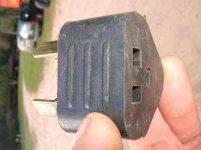
There is a 14-50 to 5-15 stove plug adaptor. This is commonly used to reduce amps and volts when swapping out an electric stove for natural gas. I think it's made by a company called "Woods"
 

Attachments

  • IMG_1059.JPG
    IMG_1059.JPG
    17.9 KB · Views: 8

rnscustom

Well-known member
Joined
Mar 20, 2017
Messages
340
Location
Plympton MA
Tagu as in lizard , ( spelling ?? ) . Well I think the op got his answer and if I'm reading correctly my setup is also safe ( equipment maybe not ) . Which if that's all the space he has he can work with it . Nice to hear all the experience out there but most people on here are looking for simple solutions ( I'm sure inexpensive too if possible ) to issues . Op I think had an electrician coming ( some do it yourselfers ) and wanted to ask the right questions and maybe have some supplies ready when he showed up ?? Hopefully the post was able to do that in time for him
 

rnscustom

Well-known member
Joined
Mar 20, 2017
Messages
340
Location
Plympton MA
That's an interesting adapter . I had one more thought to throw in . Aren't the wires from the pole down to your panel and to all the circuits after basically representing the actual question in this whole thread . If you protect the actual wire that is drawing the power your good to go
 

sberry

Banned
Joined
Jun 18, 2005
Messages
35,747
Location
Brethren, Michigan
There is a 14-50 to 5-15 stove plug adaptor. This is commonly used to reduce amps and volts when swapping out an electric stove for natural gas. I think it's made by a company called "Woods"

Lets see where this is listed, allowing a 15A plug to be installed on a 50A circuit. Right there with this gem, flea mkt special, doesn't even say made in China on it, no markings at all by mfgr.
 

Attachments

  • adapt 30.jpg
    adapt 30.jpg
    138.3 KB · Views: 10
Last edited:

sberry

Banned
Joined
Jun 18, 2005
Messages
35,747
Location
Brethren, Michigan
That's an interesting adapter . I had one more thought to throw in . Aren't the wires from the pole down to your panel and to all the circuits after basically representing the actual question in this whole thread . If you protect the actual wire that is drawing the power your good to go

No this is not correct,,, again, the equipment is not rated to be plugged in to a 50. Talk about insurance, not that it would be denied but imagine plugging a 15A gas range on to a 50A circuit? Now, maybe that adapter has an internal breaker like the MVP on welders.
 

Norcal

Well-known member
Joined
Mar 16, 2008
Messages
13,769
There is a 14-50 to 5-15 stove plug adaptor. This is commonly used to reduce amps and volts when swapping out an electric stove for natural gas. I think it's made by a company called "Woods"

Doubt it is listed, even Hubbell with their high dollar Twistlock® to straight blade adapters, or the reverse, obliterates the UL marking on them as they are assembled with parts from their product line. It's not really wise to put 15A,20A,30A rated devices on a 40-50A circuit.

The best thing the OP could do would have 2 circuits installed, 1 for the grinder, & 1 for a welder, he did say it was "next to the breaker" so it should be simple.
 

Hot Rod Grampa

Well-known member
Joined
Jul 7, 2017
Messages
812
Location
Near Cooperstown New York
Having seen many posts about de rating wires I guess the same is true there. Welder plug set up for old style machine with 60 a breaker and wire. New inverter machine comes in and because the factory whip is downsized to a 30a wire I should change the breaker? NEC deals with hard wiring. What plugs into the outlet is a different AHJ. I do not get upset over a different opinion. The only opinion that carries any validity is the inspector that will sign off on the installation. The op should connect with one and ask him/her what would be acceptable. Most electricians will not knowingly or intentionally do sub-standard work. They deal with inspections regularly and would have a name and contact info for clarification.
 

6PTsocket

Well-known member
Joined
Mar 12, 2014
Messages
4,593
By changing a plug and breaker we may be bypassing one of the most important safety designs with the equipment. After all why bother with all these specific plugs, why not just put everything 240 on a 50 and call it a day?
Obviously,,,, or maybe not there is more to it than a rudimentary thought that the plug is just there to make sure it gets enough electric as it needs. That is part of it, 1 part to insure its heavy enough and doesn't overheat but the other 1/2 of it is to insure its plugged in to a current limiter that the machine is designed for. So it will short circuit before it burns the wire in half in the event of a fault.
The breaker is there to protect the wiring unless it is a dedicated circuit. Drill presses, belt sanders, work lights, die grinders, hand drills, sawzalls, bench grinders and every small kitchen appliance is not on a breaker optimized to protect that devicee but wiring that is rated to carry the current the breaker is protecting, like #12 with a 20 amp breaker on a 120 volt circuit. If I read you correctly every device would need a dedicated breaker and separate circuit: 10 amps for a toaster, 1Amp for a table lamp, 3 amps for the TV, etc.

Sent from my SM-G900V using Tapatalk
 

sberry

Banned
Joined
Jun 18, 2005
Messages
35,747
Location
Brethren, Michigan
No you do not read me correctly. If the device comes with a 15 or 20 end it is listed to be plugged in to a 20A circuit. The breaker is not optimized for it.
The op should connect with one and ask him/her what would be acceptable.
This would be ok but he can learn this here. While some welders will run on 30A and in some cases it requires a 30 if the minimum wire size of 14 is used, if it comes with a 50A end it can go on a 50a circuit, its really as simple as that. It cannot go on a 60, it would require a heavier cord to start with. It would need 10 wire.
What plugs into the outlet is a different AHJ.
The code book has a whole section of cord and plugs and what is allowed or not allowed.
The op should connect with one and ask him/her what would be acceptable. Most electricians will not knowingly or intentionally do sub-standard work. They deal with inspections regularly and would have a name and contact info for clarification.
Now what makes one think someone would understand "clarification" better if they found an electrician, managed to find an inspector to explain a rudimentary basic better than reading it here? There are a dozen active masters here, half a dozen of them first rate code guru types and collectively they don't miss much. We got some fresh from school and testing and some like Norcal who if I am not mistaken may have held a masters for 3 decades?
I don't have paper but am from a fussy state with stringent inspection.
 
Last edited:

6PTsocket

Well-known member
Joined
Mar 12, 2014
Messages
4,593
There is a difference for dedicated circuit hooked to equipment like a data center. JACK, this is not the same as plugging a 1 amp to a 20. Stuff comes with a 15 plug is designed to go to 20, stuff designed for 20 is not designed for 50. The wire to it and internals of the machine not for it. I related this above.
The internals don't give a **** if the circuit is rated for 20 or 100 amps. They draw what they draw. As long as the circuit can supply at least as much as the device requires that us all the device 'cares' about. A 9 Watt led household bulb (60 watt equivalent) draws .075 amps. It will work just fine tied across a 120 volt leg of the 100 amp bus in my breaker box. A 300 psi rated air hose does not apply more air to an impact wrench than a 200 psi rated hose, if they are the same size. A 60 gal hot water tank does not increase the psi of the house hot water over a 40 gal one. A 3 ton jack does not put more stress on the "internals" of a 500lb. load than a 2 ton jack. They are all extra capacity, not extra power applied.


Sent from my SM-G900V using Tapatalk
 

6PTsocket

Well-known member
Joined
Mar 12, 2014
Messages
4,593
Can he just add a reset switch or breaker for required amp at the sander to protect it . Most all my machines have resets
How many devices have a reset switch. I have many corded power tools with no reset switch and the manufacturers never felt the need to provide one.

Sent from my SM-G900V using Tapatalk
 

6PTsocket

Well-known member
Joined
Mar 12, 2014
Messages
4,593
That is its short circuit rating. 8 for 100A and 6 for 200. The wire or cord is sized and protected by the max applied load, the wire then needs to be adequate to fault the breaker.
If you look at a 210 class welder at 240 volt. They actually allow a 14 with a 30, the machine comes with a 12 cord, it's bigger than the macine requires but is sized so it can be connected to 50A welder circuit.
And if you put a 50 amp plug on the #14 cord, what would go wrong? NOTHING.

Sent from my SM-G900V using Tapatalk
 

wyliesdiesels

Well-known member
Joined
Aug 14, 2012
Messages
20,067
Location
Modesto, CA
There is a 14-50 to 5-15 stove plug adaptor. This is commonly used to reduce amps and volts when swapping out an electric stove for natural gas. I think it's made by a company called "Woods"

whats the part # for that?

Doubt its NRTL listed.

Nor does it reduce the available amps since it cannot change the circuit breaker by itself.
 
Last edited:

sberry

Banned
Joined
Jun 18, 2005
Messages
35,747
Location
Brethren, Michigan
The internals don't give a **** if the circuit is rated for 20 or 100 amps. They draw what they draw. As long as the circuit can supply at least as much as the device requires that us all the device 'cares' about. A 9 Watt led household bulb (60 watt equivalent) draws .075 amps. It will work just fine tied across a 120 volt leg of the 100 amp bus in my breaker box. A 300 psi rated air hose does not apply more air to an impact wrench than a 200 psi rated hose, if they are the same size. A 60 gal hot water tank does not increase the psi of the house hot water over a 40 gal one. A 3 ton jack does not put more stress on the "internals" of a 500lb. load than a 2 ton jack. They are all extra capacity, not extra power applied.


Sent from my SM-G900V using Tapatalk
Yes, it doesn't change the draw, that isn't the point. It won't trip the breaker properly with too small of wire in the event of a fault. Simple as that. This is why the ground wire is a spec size.
As for the hose pressure comparison we could use a pressure relief valve in place of the breaker. It doesn't affect the performance or the air used or the pressure cut off but put a 300# relief on a 100# tank and it defeats the purpose.
 
Last edited:

sberry

Banned
Joined
Jun 18, 2005
Messages
35,747
Location
Brethren, Michigan
How many devices have a reset switch. I have many corded power tools with no reset switch and the manufacturers never felt the need to provide one.

Sent from my SM-G900V using Tapatalk

It doesn't need a reset as there may be other types of protection or it's designed to rely on the breaker in the event of a fault.
If this wasn't important why bother with breakers on dedicated equipment, we could just hook it all to 100a .
The plug is designed to limit the circuit it can be plugged in to. You can't plug the 15a grinder in to 30a circuit because you used 10 wire on it, yes, it won't overheat the building wire., there is no danger of overloading it but it's not properly fault protected.
 
Last edited:

manwithtools

ALLIANCE MEMBER
Joined
Aug 24, 2015
Messages
14,042
Location
Lebanon, TN
whats the part # for that?

Doubt its NRTL listed.

It's hard to tell frankly. It seems to have a 15 amp fuse and uses 120 + neutral to create a circuit. I did a lot of searching and came up empty handed as far as UL and a solid listing. Seems CSA likes it, but I can't find UL.
 

TTTTTT

Well-known member
Joined
Jun 23, 2014
Messages
164
Location
Steenburg Lake, Ontario
I used when switching to gas range for the 110 functions. Worked fine for many years. Yes I believe there is a fuse. At any big box in Canada

Sent from my HTC One M9 using Tapatalk
 
To avoid these ads, REGISTER NOW!

Matt Matt

Well-known member
Joined
May 11, 2017
Messages
523
Location
Ontario
It seems that Homedepot.ca sells them and Homedepot.com does not. They do look to have a CSA approval. But from what I have searched as well CSA can have a UL approval, but it looks like this device has not got it yet for the US. This is the best picture I've managed to get. It seems like there is a fusing device inside and they are only passing through one hot, ground, neutral.
 

Attachments

  • IMG_6706.jpg
    IMG_6706.jpg
    136.3 KB · Views: 24

sberry

Banned
Joined
Jun 18, 2005
Messages
35,747
Location
Brethren, Michigan
A 9 Watt led household bulb (60 watt equivalent) draws .075 amps. It will work just fine tied across a 120 volt leg of the 100 amp bus in my breaker box.
What would happen to it, the socket, the wire in the event it shorted out? Its when it doesn't work just fine is the problem.
 

rnscustom

Well-known member
Joined
Mar 20, 2017
Messages
340
Location
Plympton MA
Well most of my machines have either a reset on the motor or the switch itself has a reset , planer , edge sander , shaper , etc . My small grinder does not but my big one does . So it's mixed . The sander ( which was in the op question ) has one on the switch itself . My old unisaw has a fusable link in the switch . Again I was only asking about the op situation , so yes my sander has a reset
 

Farmall450

Well-known member
Joined
Dec 23, 2011
Messages
13,371
Location
Marengo, Illinois
The internals don't give a **** if the circuit is rated for 20 or 100 amps. They draw what they draw. As long as the circuit can supply at least as much as the device requires that us all the device 'cares' about. A 9 Watt led household bulb (60 watt equivalent) draws .075 amps. It will work just fine tied across a 120 volt leg of the 100 amp bus in my breaker box. A 300 psi rated air hose does not apply more air to an impact wrench than a 200 psi rated hose, if they are the same size. A 60 gal hot water tank does not increase the psi of the house hot water over a 40 gal one. A 3 ton jack does not put more stress on the "internals" of a 500lb. load than a 2 ton jack. They are all extra capacity, not extra power applied.


Sent from my SM-G900V using Tapatalk

Agreed.
 

Matt Matt

Well-known member
Joined
May 11, 2017
Messages
523
Location
Ontario
The book says you cant plug it in to a circuit larger than its designed for,,,, really,,, How hard it that to understand? WTF?
Electric stoves commonly have 2=>5–15 plug outlets on the top panel. In a way, Isn't this allowing you to plug it into a circuit that is larger than what the tool is designed for? I know it's fused underneath the top panel, but what makes a stove special?
 

sberry

Banned
Joined
Jun 18, 2005
Messages
35,747
Location
Brethren, Michigan
Its got a fuse.
Everything is plugged in to a bigger wire, the buss in the panel is protected by 100 or 200A,,, just got a smaller breaker on it to feed a branch. Same for a sub panel, big wire, breaker to a smaller wire. You could use a 10 wire to a 15 or 20 outlet,,, but it would still need a 20A breaker. The wire could be bigger but you have to over current protect the outlet at its rating or less.
 
Last edited:

Norcal

Well-known member
Joined
Mar 16, 2008
Messages
13,769
Matt Matt;6619051[B said:
Electric stoves commonly have 2=>5–15 plug outlets on the top panel.[/B] In a way, Isn't this allowing you to plug it into a circuit that is larger than what the tool is designed for? I know it's fused underneath the top panel, but what makes a stove special?

They USED to have receptacles & there was a fuse holder for them that had a 15A edison base fuse in it, GFCI requirements made em go away.
 

wyliesdiesels

Well-known member
Joined
Aug 14, 2012
Messages
20,067
Location
Modesto, CA
Electric stoves commonly have 2=>5–15 plug outlets on the top panel. In a way, Isn't this allowing you to plug it into a circuit that is larger than what the tool is designed for? I know it's fused underneath the top panel, but what makes a stove special?

Must be a really really old stove.

Ive been in hundreds of homes including vintage Knob and tube specials and have NEVER seen a stove with top mounted 5-15 outlets
 

Matt Matt

Well-known member
Joined
May 11, 2017
Messages
523
Location
Ontario
Must be a really really old stove.

Ive been in hundreds of homes including vintage Knob and tube specials and have NEVER seen a stove with top mounted 5-15 outlets
no, not all that Old. I still have four electrical stoves that are very similar to this one. But good chance of being, you would know, that a knob and tube home usually doesn't have any 5–15 outlets. I do still have an early 70s stove Canary yellow, I will check it.

My last knob and tube reno was about a dozen years ago. It was about 1902 build (Penny's hidden behind the baseboard) . I saved a few trophies. I know you can probably critique my rewire job, but I was just trying to put a display together. It was originally a 2=>30a feed. It was a forced insurance upgrade with purchase. The vacuum, TV, stove at dinner time would blow the fuses. That Reno pushed all limits as I was given only 60 days insurance to upgrade, and I had to pull all the permits.The air compressor and the tablesaw sometimes blew the main-fusing.


Attachments

  • IMG_0243.jpg
    IMG_0243.jpg
    20 KB · Views: 11
  • IMG_0242.jpg
    IMG_0242.jpg
    139.2 KB · Views: 21
  • IMG_6715.jpg
    IMG_6715.jpg
    133.1 KB · Views: 28
Last edited:

Hot Rod Grampa

Well-known member
Joined
Jul 7, 2017
Messages
812
Location
Near Cooperstown New York
My goodness the thread goes on. This site has many knowledgeable people on it and if the code was written by intelligent electricians there would be little dissention. Unfortunatley it was written and revised under the scrutiny of lawyers. There may also be more than one correct answer. Not to say others are wrong. There will be only two names on the inspection. The electrician and the inspector. It then becomes a legal document. Others may argue and question the determination of the inspector and demand chapter and verse to validate their case. In the end it boils down to a simple question. Do you want the installation to pass or do you want to be right?
 

Jackpod

Well-known member
Joined
May 12, 2017
Messages
371
Location
Tonopah Arizona
From the NEMA website
"The timing for code adoption varies by locale and may be amended by state and local jurisdictions. The result is that different electrical codes are being enforced in different parts of the U.S."
 

sberry

Banned
Joined
Jun 18, 2005
Messages
35,747
Location
Brethren, Michigan
Do you think this includes plug ins? Do we think the guy posted that nonsense actually knows anything about it? Yes the timing may change but they didn't adopt a local code for fuggin plug in that been in place for decades.
Second, the rationalization here is next to stupid. As we see in another current thread we got a contractor doesn't know the basics of a panel service install but this guy is sure all the local people know it better than I do. Most people say dumb **** like that never read the book, wouldn't know a local amendment or the type of things that may be included in one anyway, don't own a book let alone ever read it let alone studied, taken a single class or ever passed an inspection.
With a dozen masters on this forum you would think one of the, would pipe up and tell me I am full of **** in regards to this issue and now we should be able to come up with a local amendment to it? Feel free to prove this out, find one.
When all else fails and its obvious someone doesn't know anything about it there must be a local amendment that allows it.
 
Last edited:
To avoid these ads, REGISTER NOW!
Top Bottom