That’s an interesting observation. There’s a few reasons.
One is style. It changes and it does it in a cyclical way. Jeans are tight, jeans are loose. You get bored of doing something the same way so you look to change it. As a culture that’s essentially what a trend is - a group decision to change our behavior. In publishing like life, a few magazines or editors or photographers will take a chance and do the different thing. Sometimes it catches on and sometimes not. This is 2006 or 2007 and I was booked up!
I’ve noticed in my career that my images reflect my mood and that I’ve seen that over many years. Is the economy good? Photos will be bright, colorful and generally lighter toned. Really good? Pastels, like that shot above for Target. Amazing? Very experimental colors that intentionally clash - because, screw you, I’m booked solid and can do anything I want!
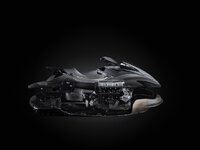
When things tank it gets dark. Literally. In 2008 my images became super gritty, dark and often set on black. I was tired of all the stuff I shot on white, tired of the bright airy sets and colors. I lost so much work. I lost my studio, and I lost my interest in happy images. Clients responded to this and we entered a dark phase like that 2009 image for Pop Sci.
Those are the big cycles you’ll see in 7-10 year periods. The next reason these things change is technology. I started in film, in black & white film no less. I’ve always tried to experiment and try new things be it cameras, film or software. We used to have cameras that held film. Kodak and Fuji were basically it. Kodak was natural and Fuji was punchy. Agfa was if you were a weirdo. Cameras couldn’t change how a photo looked. Light could and film could. Cameras were just the door the light passed on it’s way. Lenses could do something but other than minor differences everyone had the same lenses.
Now every camera is different and every year you’re tempted or tricked to buy a new camera because the chip is bigger, faster, finer. On top of that you can do anything with software after the fact. So there’s the technical roller coaster.
I used to sit by the side of the road and manually follow focus on cars to build muscle memory so I could shoot sports. I used to have a light meter. When I came back from a hard assignment I had no idea if I got the shot - in fact if the film got fogged, someone turned on a light or the chemicals were bad I didn’t have anything at all. Was my shutter speed too slow to freeze the motion? Guess we’ll know tomorrow! Now? You know exactly what you got instantaneously. You can change it instantaneously.
This has done two things. The cameras look can change but the other is the bar has been lowered to the floor as far as skills go. Imagine if people could just download their dreams into a book every day - we’d be neck deep in literature... well, words. Our low technical barrier means that everyone with a camera is a photographer. Instagram is the million monkeys on a million typewriters. Larger numbers of photographers means more images, that means more trends that cycle faster. Squirrel!
For the food photos it started all available light with a window in the 70’s and then in the 80’s-90’s it was all about softboxes which
looked like windows. So the same look but punched up to outdo the folks still using real light.
Then digital came along and it got punchier - because it could. So much so that the only thing to do was the stop using strobes and go back to windows so the
different thing was the natural look... again.
Around this time I met
Johnny Iuzzini and he asked me to shoot his first cookbook but to make it not look like the soft focus soft light food photos that were so popular and pervasive. I came up with a very edgy and technical hard light that I thought looked good and was different. This was 2007 and we published a very different cookbook:
Dessert Fourplay.
Then instagram happened and since 99% of the people with cameras don’t have strobes they used available light but they didn’t have retouching restraint so their photos looked really pumped up. That look was then aped by the magazines since everyone was being buried in it. Don’t be left out of a trend! But sneaky magazines decided to do something bold - go sloppy! Hours are spent making the shot look like a beautiful hot mess. Crumbs are cool!
It’s a cat chasing it’s tail and technology is the laser pointer.
Does that help?
The thing is that we’re so fractured that trends are going in really divergent ways simultaneously. It’s a weird time and no one really knows what’s next right now. My personal bet is focus. In one of the above “screw you” reactions to what I see as really precious yet dull IG food (dish from above anyone?) I decided to go way back to soft focus but in a “**** you” fashion. I’d not say that to a client but it’s more an experiment to see if I can get it to take.
So my shot for Hestan is current with the trend but it’s also driven by their product and their goals. It’s high end and tech. It’s for an affluent customer. For that market dark and moody is higher end. You’d think it would be styled perfect but we intentially make it “messy” because that’s exactly opposite what the cheap products look like. Think about the images you see from K-Mart, Walmart etc: on white, bright color, perfectly styled and lowest common denominator.
Food is weird in general. I mean, taking photos of what you eat? We’re just one step away from taking photos of it after we’re done eating it. That’s next.
It’s been said that the fall of Rome was preceded by a time of food as entertainment. If we’re not in that time right now I would be very surprised.
Gregor





 I used to love shooting Agfa, but it was so much more expensive for my middle school allowance... I was one of the photographers for my middle school yearbook. I shot 3 rolls of pics for the yearbook on Agfa. I remember the teacher was pissed because there were only two pictures she liked after paying for the developing.


