To avoid these ads, REGISTER NOW!

What torque wrench for 10 ft-lbs?

JimH74

Well-known member
Joined
Jun 26, 2015
Messages
283
Location
South Central Texas
The title says it all. I only work on my own stuff and never had a need for this before. I do have a KD torque wrench for 20-150, I think. Don't want to spend 100's, but again want something reliable. Probably go with 3/8". Recommendations?
 
To avoid these ads, REGISTER NOW!

mike93lx

ALLIANCE MEMBER
Joined
Dec 9, 2013
Messages
37,617
Location
Richmond, VA
No specific recommendation, but you'll probably want to get something in in-lbs instead. That's a pretty low torque rating.
 

VoodooCLD

Well-known member
Joined
Sep 12, 2014
Messages
414
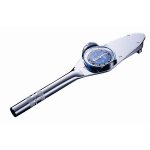
I prefer the dial type torque wrenches for ratings that low. I don't trust the click style ones.
 

Attachments

  • Dial type torque wrench.jpg
    Dial type torque wrench.jpg
    10 KB · Views: 63

LXCam

ALLIANCE MEMBER
Joined
Apr 23, 2013
Messages
19,150
Location
AZ
A inch pound been style would be fine. I have one inch lb to go to 250 and one that goes too a 1000. Both are proto clickers and work really we for your range.
 

Adam.C

Banned
Joined
Jan 29, 2013
Messages
1,490
Torque wrenches are most accurate from 20%-100% of their range. Below 20% their accuracy could halve.

So a 3/8" drive torque wrench typically has a range of 5-80ftlbs. You probably shouldn't use it much below 20ftlbs. If you have a torque spec that low you need a 1/4" drive. Multiple ftlbs X12" so you need a 10ftlb X12 =120inlb wrench. That's pretty much in the middle of a std 1/4" drive wrench (typically 24-240inlbs =2-20ftlbs).
 

Trey T

Well-known member
Joined
Aug 3, 2011
Messages
3,749
Location
Houston, TX
Depend which style you like, the two common types are clicker or digital

I own clicker types but Snap-On are now embracing the digital torque wrenches made by CDI. Supposely, they're more reliable in term of accuracy and for small bolts, accuracy is important.

I'm pretty set on getting either a CDI or Westward 1/4" digital torque wrench in near future but haven't pull the trigger yet.
 

joe_padavano

Well-known member
Joined
Feb 26, 2011
Messages
1,788
Location
Northern VA
The title says it all. I only work on my own stuff and never had a need for this before. I do have a KD torque wrench for 20-150, I think. Don't want to spend 100's, but again want something reliable. Probably go with 3/8". Recommendations?

0-150 in-lbs. I'd suggest a dial, since often you need to measure running torque in in-lbs.
 

Jeeper

Well-known member
Joined
Dec 25, 2006
Messages
2,124
Location
Round Rock, TX
I have a precision instruments 1/4" drive clicker. Goes from 30 inch/lbs to 200 inch/lbs. Since you need 10 ft/lbs so the conversion is 120 inch/lbs and it's in the range of a torque wrench like the PI one I have.

PREM1R200HX.jpg

http://www.tooltopia.com/precision-instruments-m1r200hx.aspx
 

byoungblood

Well-known member
Joined
Apr 6, 2011
Messages
2,590
Location
Berryville, VA
I have a 3/8" drive beam style in in-lbs for values that small. Worked well for checking the pinion bearing preload on a couple of axles I've worked on.
 

Treeman

Well-known member
Joined
Jan 4, 2008
Messages
548
Location
Michigan
I would try to get an inch lb. wrench with maximum value of 240 inch lbs. +/-. This will cover 4 to 20 ft. lbs.. Your next wrench should top out at 100 ft. lbs. (20 - 100 ft. lbs.), and your last wrench at 250 ft. lbs., especially if you have truck wheels or ag. equipment.

This provides good coverage of most user needs, unless you get into bigger equipment.

Just my opinion. No matter how you tweak your wrench purchase, you almost always need three to cover all the bases. I suppose 200 in. lb./ 80 ft. lb./ and 150 ft. lb. would work for most with nothing more than cars.

If trying to use a torque wrench for cover gaskets like transmission or valve cover, I learned that once you torque it up to value, i.e. 11 ft. lbs., the gasket compresses and relaxes a bit. If you come back and retorque again to 11 ft. lbs. one or more times, you continue to crush the gasket and will ruin it. I recommend torquing once to the recommended value. After that, if it needs snugging, just do each bolt an equal turn....1/8 to 1/4 turn. Just my experience.
 
Last edited:

pauls_workshop

Well-known member
Joined
Mar 7, 2013
Messages
2,788
Location
Indiana, USA - Underappreciated Place to Live!
For 10 foot pounds, a calibrated human hand works best! That is 10 pounds of force at one foot of rachet length. Or, 15 pounds of force at the more typical 8 inches of rachet length. So just pretend you are lifting a bowling ball with your arm, which is 16 pounds for your calibration. - Paul
 

Jeeper

Well-known member
Joined
Dec 25, 2006
Messages
2,124
Location
Round Rock, TX
Thanks for everyone's insight. I have ordered the PI Prem2r200hx, which is a 3/8 drive, 30-200 in-ib range. Jim

Nice choice. Way to embrace GJ as a newbie. Post a question and it leads you to spend double what you wanted but you walk away with a good tool.

:beer:
 

Murphy4570

Well-known member
Joined
Feb 27, 2012
Messages
2,821
Location
West Deptford NJ
For such a low amount I use my inch-lb torque wrench. You can also use a beam-style torque wrench, as those don't have the issues that clicker types do. They are however harder to use in odd locations.
 

6PTsocket

Well-known member
Joined
Mar 12, 2014
Messages
4,593
Depend which style you like, the two common types are clicker or digital

I own clicker types but Snap-On are now embracing the digital torque wrenches made by CDI. Supposely, they're more reliable in term of accuracy and for small bolts, accuracy is important.

I'm pretty set on getting either a CDI or Westward 1/4" digital torque wrench in near future but haven't pull the trigger yet.
CDI is Snap-On. It is part of the Snap-On Industrial Brands division. While not always identical, you can get the exact same quality for a whole lot less buying CDI branded stuff as opposed to Snap-On. For example, one SO wrench has a flex head, the otherwise identical CDI does not. While not significant under 15 degrees, flex heads do affect the reading if not straight.

Sent from my SM-G900V using Tapatalk
 
To avoid these ads, REGISTER NOW!

bsaint

Well-known member
Joined
Apr 26, 2010
Messages
5,109
Location
Manchester, CT
Dont get a dial unless your application you can always look at the dial. I had a dial only at one point, then I had to torque something on the side of the engine and the line of sight was impossible to read the dial.
 

Danglerb

Well-known member
Joined
Sep 6, 2007
Messages
9,736
Location
SoCal
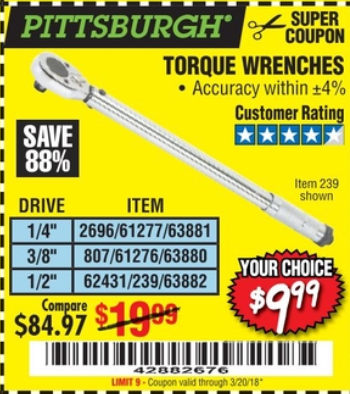
in that torque range for my use I want consistent more than exact, so a cheap HF clicker 1/4 works fine for me.
 

Richsgarage

Well-known member
Joined
Jan 12, 2018
Messages
105
Location
Nebraska
Get the non clicker type. One you can read a dial or an arm. The cheap clicker ones are no good for light torques unless you spend some $. I have Fd up some small stuff back in the day trusting those cheap clickers. A high quality clicker is good but you have to dish out more $. Just my opinion and It's based on real life exp. Find a old style craftsman or something reputable brand wise and go with it!!
 

tym

Well-known member
Joined
Mar 5, 2016
Messages
2,438
Location
MA
This thread just prompted me to order a Central Tool clicker, 25-250 in-lb, from HJE. At the moment the lowest range torque wrench I have is 10-75 ft-lb.

Thanks for helping me spend my money. LOL.
 

jonesg

Well-known member
Joined
Mar 15, 2010
Messages
1,698
Location
northern Maine/
For 10 foot pounds, a calibrated human hand works best! That is 10 pounds of force at one foot of rachet length. Or, 15 pounds of force at the more typical 8 inches of rachet length. So just pretend you are lifting a bowling ball with your arm, which is 16 pounds for your calibration. - Paul

That's what I do, stubby ratchet ensures I don't go over. There are situations where torque wrenches just won't fit, like the water pump on my fwd volvo.
 

Mr Ratchet

Well-known member
Joined
Mar 3, 2011
Messages
928
Location
Michigan

6PTsocket

Well-known member
Joined
Mar 12, 2014
Messages
4,593
For such a low amount I use my inch-lb torque wrench. You can also use a beam-style torque wrench, as those don't have the issues that clicker types do. They are however harder to use in odd locations.
If you don't like coil spring clickers, split beam clickers are the best of both worlds. They are audible so you don't have to see the scale and they work by bending a beam and do not have a spring under compression. The only minor down side is that they only work in one direction.

Sent from my SM-G900V using Tapatalk
 

bsaint

Well-known member
Joined
Apr 26, 2010
Messages
5,109
Location
Manchester, CT

bob15

Well-known member
Joined
Dec 8, 2011
Messages
6,863
Location
Northeasten, CT
What happens if you go past the torque set point? Loosen it up and retry? I have the same type as a armstrong. I almost never use it.

Yes. You could also use a mirror.

All depends on the situation and how many times you plan on working in that location/configuration as to the best torque wrench.
 

Rustypigeon

Well-known member
Joined
May 2, 2014
Messages
95
Location
USA
What happens if you go past the torque set point? Loosen it up and retry? I have the same type as a armstrong. I almost never use it.

Precision Instruments makes those dial torque wrenches for SnapOn. You can get the Precision Instruments version with a light that illuminates when the torque is reached so you don't have to see the dial. Any Precision Instrument dial torque wrench with a model number that ends in "L" has an indicating light on it. The lighted versions are about $60 more than the non-lighted versions.

By the way, I would never buy one of those torque wrenches from SnapOn. Snap on charges $384 for their pretty red dial. The EXACT same torque wrench is $134 with the blue Precision Instruments dial. You are paying an extra $250 to have the same factory put on a red SnapOn dial.

http://www.tooldiscounter.com/ItemDisplay.cfm?lookup=PRED2F150HM
 

Mr Ratchet

Well-known member
Joined
Mar 3, 2011
Messages
928
Location
Michigan
What happens if you go past the torque set point? Loosen it up and retry? I have the same type as a armstrong. I almost never use it.

Depends on how much it's over torqued and what's being torqued. I've only needed to do a blind torque once. I finessed it or walked it up slowly. Sure it took an extra minute. That's not going to keep me from recommending this type because maybe someday someone might have to do a blind torque. If you do blind torques quite often then a clicker or E wrench may be the way to go.I was also going to suggest the mirror method that bod 15 brought out. I have used it for a spark plug one time and worked perfectly.

The PI wrench in the link is not the same as the SO that I linked. First the SO is 0-150 in/lbs to the PI30-150 in/lbs. The second is the SO is an FU model with the follow up pointer and the PI does not have one. The SO FU models cost more than the basic ones. They are still a great deal and were not popular or available when I bought my two SO Torqometer.

Each style has their own pro's and con's.
 

Rustypigeon

Well-known member
Joined
May 2, 2014
Messages
95
Location
USA
The PI wrench in the link is not the same as the SO that I linked. First the SO is 0-150 in/lbs to the PI30-150 in/lbs. The second is the SO is an FU model with the follow up pointer and the PI does not have one. The SO FU models cost more than the basic ones. They are still a great deal and were not popular or available when I bought my two SO Torqometer.

What is different other than the dial color?

The PI dial goes from 0-150 in/lbs just like the SnapOn. The description says the range is 30-150 because they are only calibrated to be accurate from 20%-100% of rated torque. 20% of 150 in/lbs. is 30 in/lbs.

The "M" in the model number indicates that it has a memory pointer. SnapOn call this same feature a “Follow Up”.

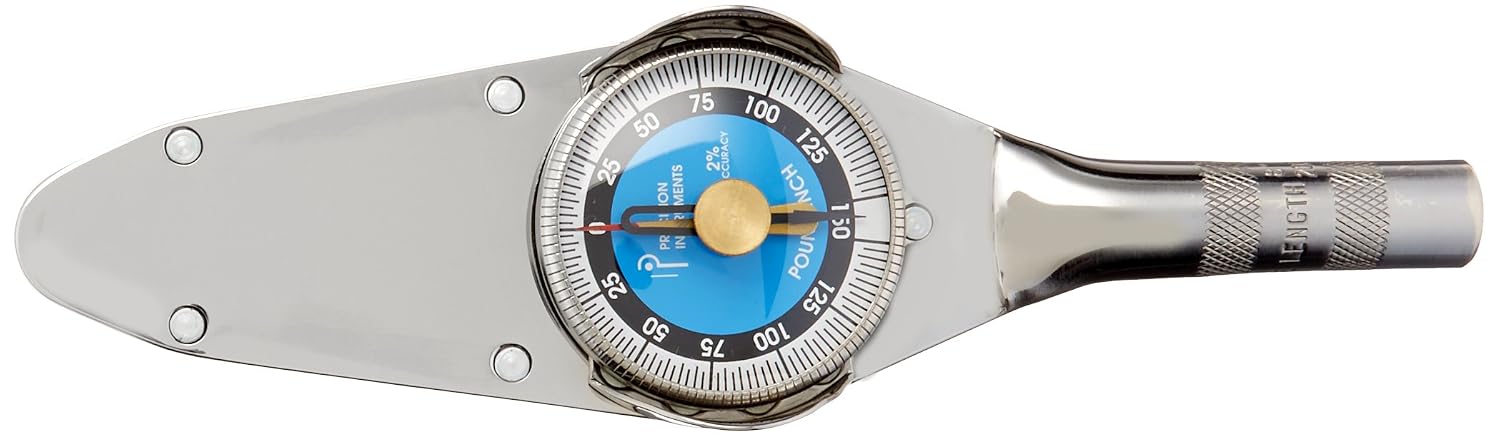
There are several options available for all the PI torque wrenches. The numbers and letters of the model number tell you what options your torque wrench has. You have to go by the model number, not the generic photo supplied by the PI website.

Precision Instruments D2F150HM decoded...
D=Dial
2=3/8" Drive
F=Fixed Drive
150=Max range
H=In/lbs.
M=Memory Pointer

Here is what the Precision Intruments D2F150HM torque wrench I linked actually looks like. The dial goes from 0-150 just like the SnapOn, and it has a memory pointer just like the SnapOn.


6179CPF6COL._SL1500_.jpg
 
Last edited:

Mr Ratchet

Well-known member
Joined
Mar 3, 2011
Messages
928
Location
Michigan
What is different other than the dial color?

Here is what the Precision Intruments D2F150HM torque wrench I linked actually looks like. The dial goes from 0-150 just like the SnapOn, and it has a memory pointer just like the SnapOn.

Yep, you're right they are the same. Of course you had to post a link to a POS one that has the specs listed differently and no mention and a picture minus memory pointer. A link to Amazon would have been better since they have the details all correct. Thanks for clearing it up though.

Like I said, I would have likely gotten PI's instead of my SO's to save some coin had I known about them. Especially since I was only in High School back in the 80's when I bought mine.
 

Rustypigeon

Well-known member
Joined
May 2, 2014
Messages
95
Location
USA
Yep, you're right they are the same. Of course you had to post a link to a POS one that has the specs listed differently and no mention and a picture minus memory pointer. A link to Amazon would have been better since they have the details all correct.

I linked the best price I could find with a quick search, not taking into account the sellers pictures or other listing details. Just about every online seller of PI torque wrenches uses the same generic photos.

Even on Precision Instruments own website, they have just a generic photo of a dial torque wrench. They don’t make it easy to see what you are getting from the picture.
 
To avoid these ads, REGISTER NOW!
Top Bottom