
You are using an out of date browser. It may not display this or other websites correctly.
You should upgrade or use an alternative browser.
You should upgrade or use an alternative browser.
Show us Your Vintage Bench Grinders!!!!
- Thread starter 48James
- Start date
454ragtop
Well-known member
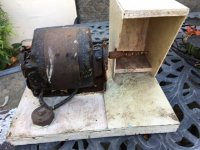
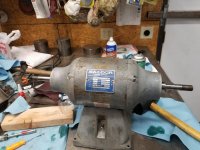
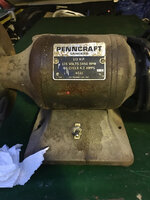
Shift, that actually looks like a buffing arbor on a basic cushion mount motor. Nothing really to be afraid of, probably works OK for what it is, though I suspect it's underpowered for a lot of uses. Google dental lathe to see similar manufactured buffers.
Shiftless
Well-known member
Shift, that actually looks like a buffing arbor on a basic cushion mount motor. Nothing really to be afraid of, probably works OK for what it is, though I suspect it's underpowered for a lot of uses. Google dental lathe to see similar manufactured buffers.
You're right! It didn't occur to me that when the seller called it a grinder, it was probably used as a buffer... not scary.
Seller says that it was his grandpa's machine and obviously just wants to get rid of it.
edit: If anybody wants pieces of that thing, let me know right away. I just heard from a member of the old guy's family saying it is heading to the dump soon.
I don't want it and I have to resist getting fairly large stuff even free that may or may not be useful in the future.
Last edited:
drivesitfar
Well-known member
Shift: i've got one similar to yours with a hood made out of metal sitting on shelf somewhere.
in fact i like the idea of containing all the stuff flying off a grinder or buffer with that style of hood.
Outlaw: i'll get you and anybody that wants some pictures of my old antique hand grinder as soon as i get caught up around here before the rains start again.
in fact i like the idea of containing all the stuff flying off a grinder or buffer with that style of hood.
Outlaw: i'll get you and anybody that wants some pictures of my old antique hand grinder as soon as i get caught up around here before the rains start again.
EOC_Jason
Well-known member
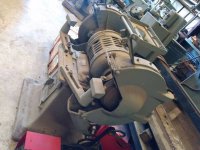
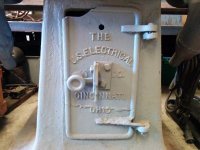
These are a couple CL ads I saw... Just wanted to post pics to save them for posterity...
Blue one is a 2HP Baldor Single-Phase - Asking $400
Grey one is a 16" diameter heavy duty grinder, 10hp, 3 phase - Asking $300

Blue one is a 2HP Baldor Single-Phase - Asking $400
Grey one is a 16" diameter heavy duty grinder, 10hp, 3 phase - Asking $300
Attachments



bagged89s10
Well-known member
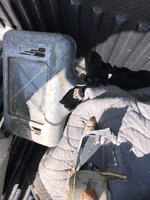
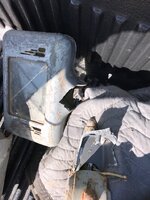
Just picked up this delta with stand for $40. I think it’s a 1/2 HP. Only thing wrong with it is the broken eye shield. Does anyone have an eye shield for sale?


Attachments

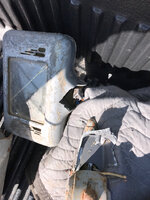

Just picked up this delta with stand for $40. I think it’s a 1/2 HP. Only thing wrong with it is the broken eye shield. Does anyone have an eye shield for sale?
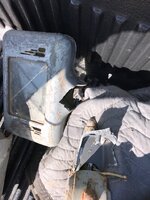


Great score! The stand and cast water cup (the right side cup) fetch far more than your cost--you can toss the grinder out.

Attachments


bagged89s10
Well-known member
Great score! The stand and cast water cup (the right side cup) fetch far more than your cost--you can toss the grinder out.
I’ve noticed the selling prices on those but I kind of want to restore it and keep it.
jabberwoki
Well-known member
These are a couple CL ads I saw... Just wanted to post pics to save them for posterity...
Blue one is a 2HP Baldor Single-Phase - Asking $400
Grey one is a 16" diameter heavy duty grinder, 10hp, 3 phase - Asking $300
I`d be all over that 10hp beasty, shame it`s too far away.
flippin
Well-known member
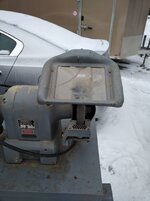
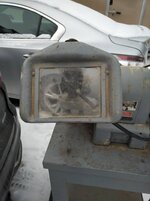
Got lucky!! Found this vintage Black & Decker - Van Dorn 8" Heavy Duty model 74 type G about 20 minutes from home. Includes the bench and Square D switch. Only $60 Canadian, about $45 USD. Immaculate condition, runs forever after powering off. Glass is intact, all 4 lights work and the spark arresters are in place. Again I got lucky!!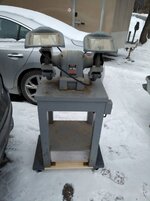


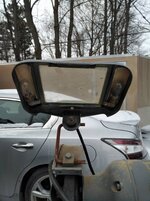
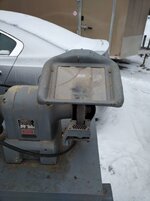

Sent from my BBB100-1 using Tapatalk
Sent from my BBB100-1 using Tapatalk
Attachments
-
 3a4314e033ead8120bb18590b0c6f3a9.jpg65.8 KB · Views: 3
 -
 56ff70e1c0f194bc635144bf9b124267.jpg80.6 KB · Views: 3
 -
 b5d5092a59ed5da82a200922ea66bc20.jpg46.3 KB · Views: 3
 -
 663d6110be76aa9ebc567f9b0255813a.jpg66.7 KB · Views: 3
 -
 e35ccbe0b7a538661fbc65cffc9b791e.jpg93.7 KB · Views: 3
 -
 01da495864137a1a7bfa7e372e16aaa5.jpg54.8 KB · Views: 3
 -
 378b2b014029bf3e4afe3b9a8955dbf6.jpg60.5 KB · Views: 4
Here’s my contribution. Started out as a baldor grinder with a bent shaft and a shattered base casting. I assume it was dropped. I straightened the shaft and repaired the base. I ended up with a nice wire wheel/buffer. Check out my thread on the repair.
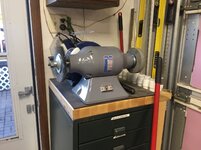
(IMG]https://uploads.tapatalk-cdn.com/20180203/002c2098154493310c9c168ebc35ab56.jpg[/IMG]


Sent from my iPhone using Tapatalk
(IMG]https://uploads.tapatalk-cdn.com/20180203/002c2098154493310c9c168ebc35ab56.jpg[/IMG]
Sent from my iPhone using Tapatalk
Attachments



EOC_Jason
Well-known member
I remember that repair from way back when! That baldor looks great!
Got lucky!! Found this vintage Black & Decker - Van Dorn 8" Heavy Duty model 74 type G about 20 minutes from home. Includes the bench and Square D switch. Only $60 Canadian, about $45 USD. Immaculate condition, runs forever after powering off. Glass is intact, all 4 lights work and the spark arresters are in place. Again I got lucky!!
Wonderful grinder there, with all the accouterments anyone could want. For $45 USD. You ****.
hitthewall79
Well-known member
- Joined
- Feb 2, 2018
- Messages
- 196
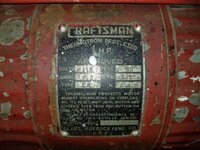
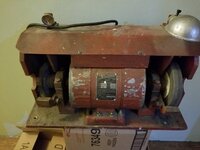
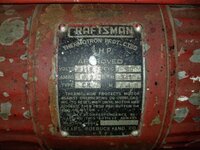
Outlawmws
Well-known member
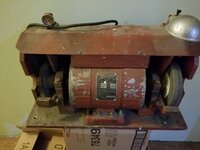
Hmm, Lots of questions on that grinder! Why:
- The Pillow blocks between the wheels and motor housing?
- two switches? Why?
- Odd motor guards - Fabricated?
- Is this an open frame motor?
Forgive my ignorance, but this is my first bench grinder, so...
1. What are the pillow blocks?
2. From what the previous owner told me, one is for the grinder, and one is for the lights that sit above
3. Where are the motor guards?
4. How would I tell if this is an open frame motor or not?
Sent from my SM-G955U using Tapatalk
1. Bearing supports
3. thes sheet metal guards?
4. Under the guards is the motor enclosed, or can you see big openings and windings inside? (Common on Washer/dryer motors)
Attachments
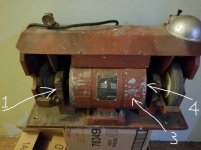
Outlawmws
Well-known member
I don't think this is a grinder as sold from hr factory. I think it was fabbed up and probably during WWII when tools were hard to get for the civilians.
I looked from 1935 to 48 in the catalogs. Not in there as pictured...
I looked from 1935 to 48 in the catalogs. Not in there as pictured...
Last edited:
hitthewall79
Well-known member
- Joined
- Feb 2, 2018
- Messages
- 196
Pic 1. Does that help any with bearing supports1. Bearing supports
3. thes sheet metal guards?
4. Under the guards is the motor enclosed, or can you see big openings and windings inside? (Common on Washer/dryer motors)

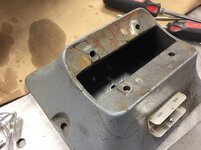
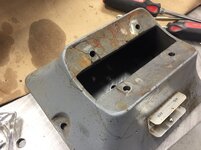
Pic 2. Sheet metal guards look like they were made to fit that button, so maybe not?
Pic 3. How would I go about exposing whatever is under the sheet metal guards?
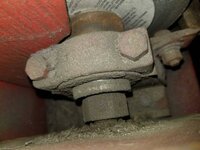

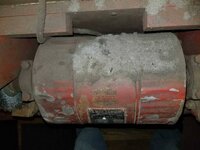
Sent from my SM-G955U using Tapatalk
Attachments
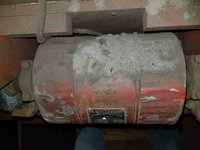
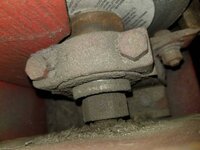

hitthewall79
Well-known member
- Joined
- Feb 2, 2018
- Messages
- 196
So if I wanted it to restore it to original, I would remove the sheet metal guards and housing around the grinder?I don't think this is a grinder as soled from hr factory. I think it was fabbed up and probably during WWII when tools were hard to get for the civilians.
I looked from 1935 to 48 in the catalogs. Not in there as pictured...
Sent from my SM-G955U using Tapatalk
Outlawmws
Well-known member
Hard to tell until its cleaned up and at least partly taken apart.
The shields might be original to the motor, But again "original" may be a motor not a grinder?
The shields might be original to the motor, But again "original" may be a motor not a grinder?
bigb56
Well-known member
I picked up a Baldor for $15, so far fixed the electrical and replaced the bearings. Runs great but missing left side guard cover and the right side guard is cracked pretty bad, going to try and braze it if I can't find one used. GJ won't let me post a WTB till I have 100 posts
Attachments
I picked up a Baldor for $15, so far fixed the electrical and replaced the bearings. Runs great but missing left side guard cover and the right side guard is cracked pretty bad, going to try and braze it if I can't find one used. GJ won't let me post a WTB till I have 100 posts
Don't bother with the guards. You have an awesome BUFFER the way it sits.
bigb56
Well-known member
I thought about that but I am having trouble thinking of how I would need a buffer.....Then I have 5 bench grinders presently...hmmmm
Motorman55
Well-known member
So if I wanted it to restore it to original, I would remove the sheet metal guards and housing around the grinder?
Sent from my SM-G955U using Tapatalk
Those guards with their crimped sheet metal look as though they just push on over the motor ends (similar to how your house gutter down spouts slip over one another) once you remove all the parts from their shafts.
I picked up a Baldor for $15, so far fixed the electrical and replaced the bearings. Runs great but missing left side guard cover and the right side guard is cracked pretty bad, going to try and braze it if I can't find one used. GJ won't let me post a WTB till I have 100 posts
I have a set of guards, but no side covers. One guard has some cracks around the mounting holes. (This is why I now have a buffer haha) pm me if interested.
Sent from my iPhone using Tapatalk
EOC_Jason
Well-known member
I'm curious too why they made those end caps, the old craftsman motors had curved ends, I even found one with two switches like yours! But the guy claims it reverse direction? I don't know if he actually tried it or not. Maybe it was to help prevent debris from being sucked into the motor?
http://vintagemachinery.org/photoindex/detail.aspx?id=14208

http://vintagemachinery.org/photoindex/detail.aspx?id=14208

Attachments


EOC_Jason
Well-known member
A 3/4HP buffer seems a little excessive unless you are buffing large things. Though if I picked that up for $15 and already had other grinders then heck yeah I would use it for a buffer! 
You could also mount wire wheels on it, assuming you are using a full face shield when operating.
You can watch eBay too, I've seen parts pop up from time to time for various brands of grinders. People are always parting them out so you might get lucky.
You could also mount wire wheels on it, assuming you are using a full face shield when operating.
You can watch eBay too, I've seen parts pop up from time to time for various brands of grinders. People are always parting them out so you might get lucky.
I picked up a Baldor for $15, so far fixed the electrical and replaced the bearings. Runs great but missing left side guard cover and the right side guard is cracked pretty bad, going to try and braze it if I can't find one used. GJ won't let me post a WTB till I have 100 posts
Don't bother with the guards. You have an awesome BUFFER the way it sits.
hitthewall79
Well-known member
- Joined
- Feb 2, 2018
- Messages
- 196
So I've run into a snag... Actually 2 of them.Those guards with their crimped sheet metal look as though they just push on over the motor ends (similar to how your house gutter down spouts slip over one another) once you remove all the parts from their shafts.
1. How do I get these bearings off? There's a tiny lip on the end if the rod preventing them from coming off, before I go filing it down, should that lip be there?
2. How do I get this nut off, is there a set screw inside of here?
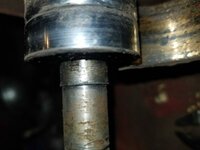

Sent from my SM-G955U using Tapatalk
Attachments


hitthewall79
Well-known member
- Joined
- Feb 2, 2018
- Messages
- 196
You are the man! This is my exact grinder!I'm curious too why they made those end caps, the old craftsman motors had curved ends, I even found one with two switches like yours! But the guy claims it reverse direction? I don't know if he actually tried it or not. Maybe it was to help prevent debris from being sucked into the motor?
http://vintagemachinery.org/photoindex/detail.aspx?id=14208
Sent from my SM-G955U using Tapatalk
EOC_Jason
Well-known member
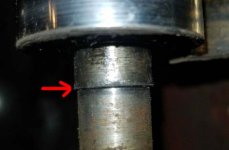
In regards to your first question. Are you saying a 'lip' at the point where the shaft diameter steps down? Was that were one of the washers were? If so it probably just got mushed out over time from pressure and you can file it smooth.
Not sure what you are taking of pic of in #2... Maybe you should clean off that grinder before tearing it apart?
Not sure what you are taking of pic of in #2... Maybe you should clean off that grinder before tearing it apart?
So I've run into a snag... Actually 2 of them.
1. How do I get these bearings off? There's a tiny lip on the end if the rod preventing them from coming off, before I go filing it down, should that lip be there?
2. How do I get this nut off, is there a set screw inside of here?
Attachments
Outlawmws
Well-known member
Just leave the bearing on for the time being. You need it apart to clean and identify, so 100% disassembly shouldn't be needed.
hitthewall79
Well-known member
- Joined
- Feb 2, 2018
- Messages
- 196
Torn down, and waiting to repair the cord, it was dry rotted, so I'm just replacing jtJust leave the bearing on for the time being. You need it apart to clean and identify, so 100% disassembly shouldn't be needed.

Sent from my SM-G955U using Tapatalk
Attachments

Outlawmws
Well-known member
Are there any setscrews on the "Nut" portion of the arbor? I'm trying to figure out if the shafts are add on and they felt they needed the extra bearings, or if its all one shaft end to end and the berings are really superfluous?
Hmmm, another possibility: Does the motor have bearings or bushings? Maybe those are to unload the bushings if not bearings inside the motor.
Has the base motor been identified? If not what is its full model no? Maybe a catalog can add info...
Hmmm, another possibility: Does the motor have bearings or bushings? Maybe those are to unload the bushings if not bearings inside the motor.
Has the base motor been identified? If not what is its full model no? Maybe a catalog can add info...
dodge610
Well-known member
hitthewall79
Well-known member
- Joined
- Feb 2, 2018
- Messages
- 196
Yup, there sure are, a nice set of stripped set screws, not from me btw.Are there any setscrews on the "Nut" portion of the arbor? I'm trying to figure out if the shafts are add on and they felt they needed the extra bearings, or if its all one shaft end to end and the berings are really superfluous?
Hmmm, another possibility: Does the motor have bearings or bushings? Maybe those are to unload the bushings if not bearings inside the motor.
Has the base motor been identified? If not what is its full model no? Maybe a catalog can add info...
How do I tell if the motor has bearings or bushings, since I can't get inside of it? Yes, thanks to another user, we found out that it was Packard Electric Co. & Packard Electric Division-General Motors Corp., Warren, OH. Manufactured by Sunlight, model # 115.5559
Sent from my SM-G955U using Tapatalk
Outlawmws
Well-known member
Actually that was me; I just could not read the whole Model number. 115 = Packard. The rest may help ID the motor? I think someone else found a 2 switch motor in the catalogs? but what year?...
To tired to look tonight...
To tired to look tonight...
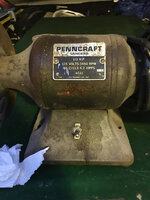
Dont know if I ever posted this one got it last summer for $10.00 the guy I got it from was an old guy that I used to work with didn’t know it was him till I went to get it.
Great buy! Can't tell from the small pic, but it looks like it may have been made by either Baldor or Doerr---both excellent makers.
Attachments

EOC_Jason
Well-known member
That whole nut w/set-screw and double bearing combo is really crazy...
The single nut doesn't seem wide enough to join two shafts together, usually one sleeves over the other with 1"+ and a couple set screws.
The bearing assembly makes it look like they want any load to be taken there instead of inside the motor, maybe it does just have bushings like you said and they wanted to beef things up?
The whole design of the grinder looks crazy over-built, especially for its HP... Either it's a very early attempt or maybe it was used in some harsh environment? Or maybe some machinist got bored and decided to overbuild one the way he wanted?
The single nut doesn't seem wide enough to join two shafts together, usually one sleeves over the other with 1"+ and a couple set screws.
The bearing assembly makes it look like they want any load to be taken there instead of inside the motor, maybe it does just have bushings like you said and they wanted to beef things up?
The whole design of the grinder looks crazy over-built, especially for its HP... Either it's a very early attempt or maybe it was used in some harsh environment? Or maybe some machinist got bored and decided to overbuild one the way he wanted?
Are there any setscrews on the "Nut" portion of the arbor? I'm trying to figure out if the shafts are add on and they felt they needed the extra bearings, or if its all one shaft end to end and the berings are really superfluous?
hitthewall79
Well-known member
- Joined
- Feb 2, 2018
- Messages
- 196
So I may if just screwed up, as far as I knew, white cables is always positive, and black cables are the hot ones. In the outlet, the little hole is hot and the the big hole is positive, right? Put a new plug on, it sounded like it grinded for about 3 seconds, and then I heard a pop, and the button on the side popped out, signaling it was either overloaded or overheatedThat whole nut w/set-screw and double bearing combo is really crazy...
The single nut doesn't seem wide enough to join two shafts together, usually one sleeves over the other with 1"+ and a couple set screws.
The bearing assembly makes it look like they want any load to be taken there instead of inside the motor, maybe it does just have bushings like you said and they wanted to beef things up?
The whole design of the grinder looks crazy over-built, especially for its HP... Either it's a very early attempt or maybe it was used in some harsh environment? Or maybe some machinist got bored and decided to overbuild one the way he wanted?
Sent from my SM-G955U using Tapatalk
wrenchguy
Well-known member
"black gold"
hitthewall79
Well-known member
- Joined
- Feb 2, 2018
- Messages
- 196

