What everyone is forgetting about is the pex,
This isn't a problem, but it does need to be designed for.
#4 bar plus the pex now leaves in a perfect world 3" of mud over each intersecting point.
No problem here. The critical forces that cause cracking in a thin slab like this are the tensile forces from slab shrinkage. The steel deals with these and if there is any localized effect here (there isn't because the grid is relatively small) then the steel in the cross section is the part doing the work. (not the concrete)
Back to Doug's points above, the "strength" of the slab comes from the base below.
1.5" aggregate isn't going to cut it just with the pex so he'll need to go with a pea gravel mix which is inherently weaker.
I've never seen anything that would limit the aggregate based on PEX. I've seen aggregate limitations based on what contractors have for pumping.
No problems with pea gravel either. A 4000 psi crushed mix is
exactly the same strength as a 4000 psi pea gravel mix. However, the pea gravel mix may take more cement $$$ and the crushed should perform better over time.
This is why I suggest going with the 6" thick slab, this will leave you a solid +4" of coverage. Enough to install anchors for most anything other then the car lift in the event he needs too.
A 4" is fine. All one has to do is mark out where the post legs are going to go and route the pex so it leaves an empty square in that area. No one will be standing on those squares ever and will never notice those small spots aren't heated.
I also recommend putting the pex on the bottom of the slab for this type of installation. (I zip tied mine to a layer of mesh laid directly on top of the foam so the pex wouldn't float up during the pour.) pex on the bottom performs just fine, particularly when a lot of insulation is being used and it provides flexibility in the future if one wants to sink some short anchors in the slab.


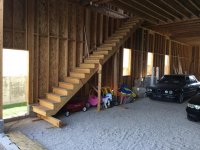

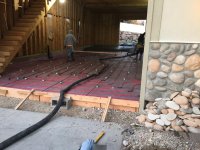
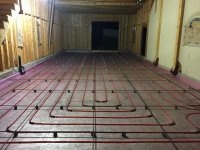
 (That's quite a sidewalk.)