To avoid these ads, REGISTER NOW!

Lets digital caliper 10mm sockets of different brands

noid

Well-known member
Joined
Jul 15, 2010
Messages
1,341
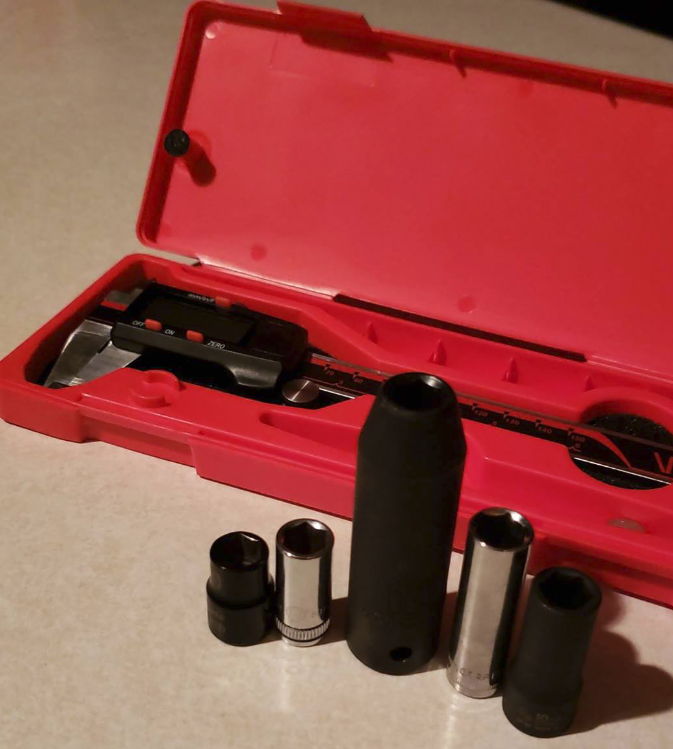
I thought it would be fun if we used our digital calipers to check the tolerance of different socket brands. Using 10mm as the baseline as its a very common size.

I'll start:

Stanley W86-098B: 10.14mm Measured by Noid
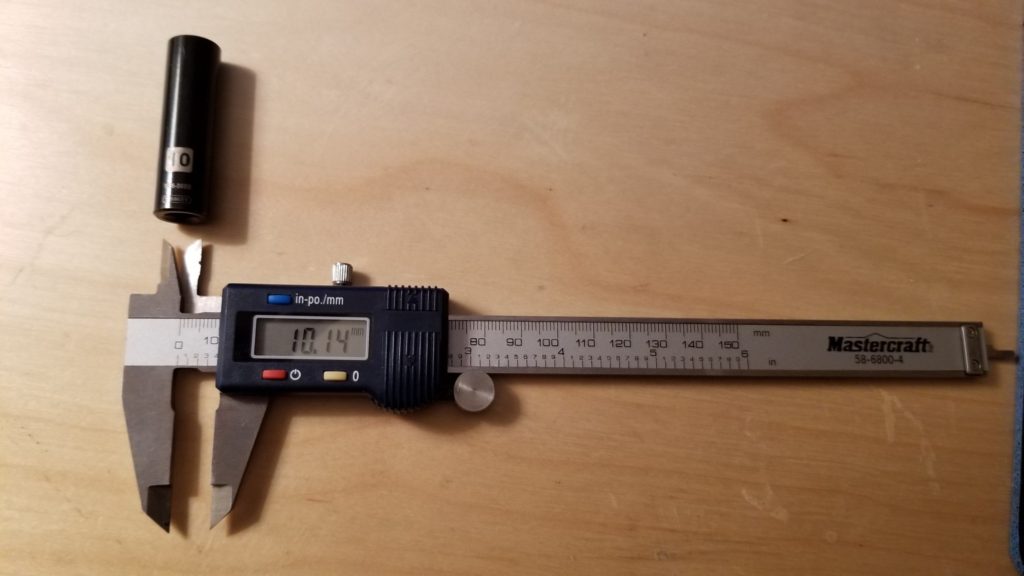
Stanley10mmsocket-1-1024x576.jpg


Gray (Canada) MTL10H: 10.08mm Measured by Noid
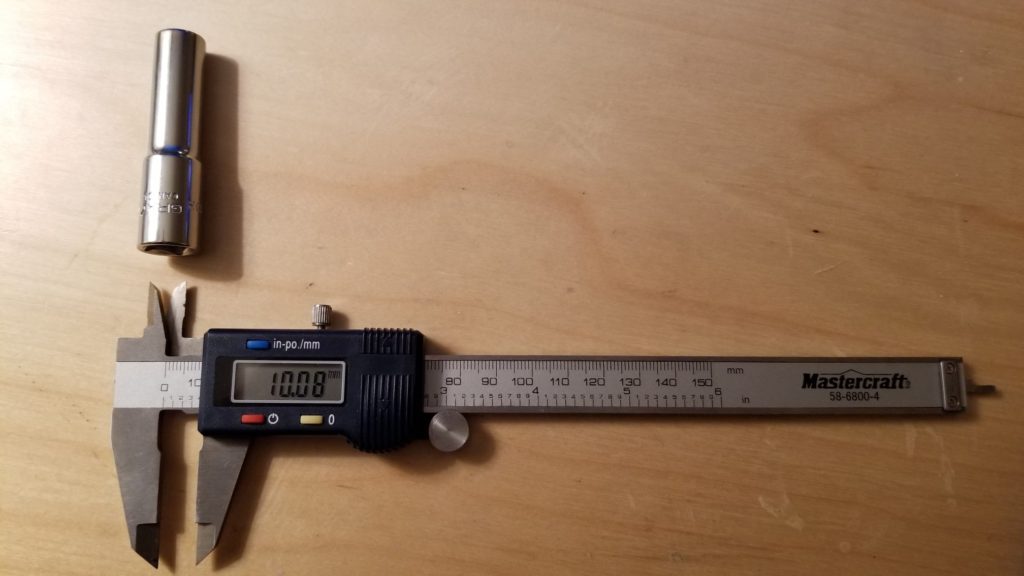
Gray10mmsocket-1-1024x576.jpg


Koken 3800MZ: 10.04mm Measured by Negen

attachment.php


Koken 3400MZ: 10.04mm Measured by Negen

attachment.php


Results without pictures:

Astro Pneumatic 10mm Brake bleeder socket 12pt - 10.31mm Measured by Negen
Carlyle mid-depth 1/4" - 10.13mm Measured by Spacey_G
Carlyle deep 3/8" - 10.10mm Measured by Spacey_G
Cornwell 3/8" - 10.23 (well used) Measured by larry_g
Craftsman 1/4" - 10.20mm Measured by larry_g
Craftsman 1/4" - 10.15mm Measured by larry_g
Craftsman G-series shallow 1/4" - 10.20mm Measured by Spacey_G
Craftsman V-series shallow 3/8" - 10.26mm Measured by Spacey_G
Craftsman S-AC series shallow 3/8" - 10.11mm Measured by Spacey_G
Craftsman Laser etched shallow 3/8" - 10.14mm Measured by pipsters
Craftsman - 10.15mm Measured by Yarpo
Gear Wrench - 10.18mm Measured by Yarpo
Gear Wrench 1/4" deep - 10.16mm Measured by TwoInch
Gear Wrench 3/8" deep - 10.14mm Measured by TwoInch
Gear Wrench 3/8" mid length - 10.16mm Measured by TwoInch
Gray (Canada) 3/8" MTL10H - 10.08mm Measured by Noid
Grey Pneumatic - 10.13mm Measured by Yarpo (impact)
Harbor Freight - 10.26mm Measured by Yarpo (impact)
Harbor Freight Pittsburgh Pro 1/4" - 10.16mm Measured by Zewnten
Koken 3800MZ 3/8" - 10.04mm Measured by Negen
Koken 3400MZ 3/8" - 10.04mm Measured by Negen
Malaysia 1/4" - 10.14 Measured by larry_g
Pittsburgh 3/8" - 10.12mm Measured by Negen (impact)
SK shallow 1/4" - 10.12mm Measured by Spacey_G
SK wobbly 1/4" - 10.16 Measured by larry_g
SK deep 1/4" - 10.19mm Measured by Spacey_G
SK shallow 3/8" - 10.16mm Measured by Spacey_G
SK shallow 3/8" - 10.16mm Measured by pipsters
SK mid-depth 3/8" - 10.16mm Measured by Spacey_G
SK shallow 1/2" - 10.20mm Measured by Spacey_G
SK deep 1/2" - 10.15mm Measured by Spacey_G
Snap-on New - 10.127mm Measured by equitiesguy
Snap-on Used - 10.127mm Measured by equitiesguy
Stanley W86-098B 1/4" - 10.14mm Measured by Noid
Stanley - 10.11mm Measured by Yarpo
Williams 3/8" - 10.109mm measured by Zewnten (impact)


If you see your sockets in the list, please still measure them so we have a bigger data set!


I will add in Koken and Blue point at a later time from my collection.

To keep things consistent remember to use the inside measurement arms, measure middle of flat to flat and measure then slide the arms out to record the number as to stay consistent for pressure. If the number changes as you're sliding it out, measure again.
 
Last edited:
To avoid these ads, REGISTER NOW!

ChevyEFI

Well-known member
Joined
Sep 2, 2012
Messages
8,738
Location
Phoenix, AZ
Is there an SAE or JIS or somesuch standard on how far into the socket broaching the flats should be uniform for figment of the fastener?

Or are we going by "average 150mm caliper inside depth arm length" and calling it good?

Further, digital only offends me. ;)
 
OP
N

noid

Well-known member
Joined
Jul 15, 2010
Messages
1,341
Is there an SAE or JIS or somesuch standard on how far into the socket broaching the flats should be uniform for figment of the fastener?

Or are we going by "average 150mm caliper inside depth arm length" and calling it good?

Further, digital only offends me. ;)

We do with what we got :), in a perfect world we would all have and use micrometers.

By sliding it out, we are testing the tightest spot. Most things considered, the broaching process leaves the tightest clearance towards the exit right before the chamfer.
 

Binkie

Member
Joined
Sep 14, 2012
Messages
21
Location
Edmonton
Further, digital only offends me. ;)


The measurement is only as good as the operator. Huge misconception that digital calipers are accurate. It simply removes the requirement of the operator to have to know how to read calipers.
 

Shehzada

Well-known member
Joined
Oct 14, 2008
Messages
246
What's the margin of error +/- on those calipers?

Sent from my mobile device
 

Wamsutta

Well-known member
Joined
Jan 8, 2014
Messages
10,876
Location
Amarillo, Texas
That's not the most important part. The most important part is the detent location. Does the socket stop on the square drive when it's supposed to? You could have a socket with extreme accurate fastener tolerance, but fails to stop on the extension when/where it's supposed to.
 

TwoInch

Well-known member
Joined
Mar 29, 2012
Messages
2,828
Location
NW INDIANA
That's not the most important part. The most important part is the detent location. Does the socket stop on the square drive when it's supposed to? You could have a socket with extreme accurate fastener tolerance, but fails to stop on the extension when/where it's supposed to.
?

Sent from my LGLS676 using Tapatalk
 

Mr_B

Well-known member
Joined
Nov 21, 2016
Messages
5,376
Location
Reading
^
I got a load of taiwan and japan sockets used 10hrs a day and don't have them falling off various ratchets and extensions of massive variety, US western and asian ratchets/extensions ...
 

Spacey_G

Well-known member
Joined
Dec 31, 2015
Messages
492
I need to make a video about it. Nobody understands in print.

We understand, we just don't care. That's not at all the point of the thread. Feel free to start your own instead of derailing @noid's.

OP, to get good measurements, you'll also need to make sure you're measuring the shortest distance between flats, not at some angle. You can gently rock the calipers back and forth as you open them to ensure that. You should also clean out any grime or SK silver paint so that you don't incorrectly measure low.

And one minor point, but we're measuring how individual sockets fit here, not their tolerance. We can compare our measurements to standard tolerances (e.g. ASME or ISO), but a few measurements won't tell us much at all about the tolerances that various manufacturers hold.

For example, you could have one sample from Mfg. A that measures 10.20mm and another from Mfg. B that measures 10.10mm, when in reality Mfg. A usually makes a tighter fit socket than Mfg. B but we just happen to have two sockets at opposite tails of the distributions.
 
Last edited:

bob15

Well-known member
Joined
Dec 8, 2011
Messages
6,863
Location
Northeasten, CT
I think you would get a more accurate result using telescoping gage and measuring off of that, mainly due to human error when trying to maintain perpendicularity to the socket.

One "issue" is a sample size of one or two or even three doesn't really tell anyone what a particular company's tolerance is.
 

anetode

Well-known member
Joined
Aug 22, 2016
Messages
120
And one minor point, but we're measuring how individual sockets fit here, not their tolerance. We can compare our measurements to standard tolerances (e.g. ASME or ISO), but a few measurements won't tell us much at all about the tolerances that various manufacturers hold.

For example, you could have one sample from Mfg. A that measures 10.20mm and another from Mfg. B that measures 10.10mm, when in reality Mfg. A usually makes a tighter fit socket than Mfg. B but we just happen to have two sockets at opposite tails of the distributions.

The way to fix bad data is with more data. The more people who join in and do measurements, the more accurate our picture will become.

Plenty to nitpick with this methodology, but much easier to grab a caliper and a 10mm and join in.

Nice experiment, OP!
 

equitiesguy

Banned
Joined
May 21, 2018
Messages
114
Location
Florida
If you want to measure this properly, you use a telescoping gauge and a micrometer.

The dimensions of a socket interior have nothing to do with the way it engages the fastener. Almost every socket you'll "measure" will engage on the point of the fastener, and is therefore inferior to Snap-on, MAC, and other quality brands.

That being said, using a Starrett telescoping gauge, and then measuring with both my Central 1" micrometer, and my Starrett dial caliper --- the answer is the same:

My Snap-on used 10mm beat up socket is exactly 5 thousandths over 10mm, or 10.127
My new Snap-on 10mm socket is exactly 5 thousandths over 10mm or 10.127.

I'll add that they're both six point sockets. I didn't measure my 12 point.

I did measure my 10mm shallow MAC impact socket, and the interior is also 5 thousandths oversize. Interestingly enough, the lip of the entrance to the socket is only 3 thousandths oversize. Whether this is because it's a MAC or because it's an impact, I don't know.
 
Last edited:

equitiesguy

Banned
Joined
May 21, 2018
Messages
114
Location
Florida
I think you would get a more accurate result using telescoping gage and measuring off of that, mainly due to human error when trying to maintain perpendicularity to the socket.

One "issue" is a sample size of one or two or even three doesn't really tell anyone what a particular company's tolerance is.

A+ response.

Also have to be temperature controlled when you're dealing with these particular levels of tolerance. Leave your calipers/micrometers/sockets in the same area overnight before you test.
 

Spacey_G

Well-known member
Joined
Dec 31, 2015
Messages
492
A+ response.

Also have to be temperature controlled when you're dealing with these particular levels of tolerance. Leave your calipers/micrometers/sockets in the same area overnight before you test.

Temperature control is good practice in general, but to put it in perspective, a 40 degree F temperature change will only open or close our 10mm socket by .0001".

The way to fix bad data is with more data. The more people who join in and do measurements, the more accurate our picture will become.

Plenty to nitpick with this methodology, but much easier to grab a caliper and a 10mm and join in.

Certainly! I'll have a half-dozen or so data points to add when I get home tonight.
 
Last edited:

Sycan

Well-known member
Joined
Aug 5, 2015
Messages
414
You guys could **** up a *********:headscrat:headscrat


OP cool idea, I'll try and add a couple later when I get to work
 

6PTsocket

Well-known member
Joined
Mar 12, 2014
Messages
4,593
I need to make a video about it. Nobody understands in print.
I know exactly what you are talking about. The MTS socket rail ads say "works with most sockets". I found out why they say that; a number of mine would not work. The ball on their post is operated by a cam when you rotate it, not a spring, like a ratchet. If the detent is is too far into the socket, you can't lock it. I don't know if there is a standardized spec for each drive size but it does vary and can make problems in some applications. I have a set of Sunnex crow foot wrenches that have no detent. I did not see that until after I bought them. I would have bought another brand. I have not had problems with any decent brand being off size in the socket size. If you want real accuracy you probably want to use an outside micrometer, not a verneir caliper, easpecially one of the cheaper ones.

Sent from my SM-G900V using Tapatalk
 

Showkey

"MEMBER EMERITUS"
Joined
Aug 9, 2014
Messages
8,638
Location
Wausau WI
That's not the most important part. The most important part is the detent location. Does the socket stop on the square drive when it's supposed to? You could have a socket with extreme accurate fastener tolerance, but fails to stop on the extension when/where it's supposed to.


That gets into the flank drive sockets .........many discussions on that topic

flank%20drive-S.jpg


One of many:
https://www.garagejournal.com/forum/showthread.php?t=366221
 
To avoid these ads, REGISTER NOW!
OP
N

noid

Well-known member
Joined
Jul 15, 2010
Messages
1,341
The way to fix bad data is with more data. The more people who join in and do measurements, the more accurate our picture will become.

Plenty to nitpick with this methodology, but much easier to grab a caliper and a 10mm and join in.

Nice experiment, OP!

+1

We understand, we just don't care. That's not at all the point of the thread. Feel free to start your own instead of derailing @noid's.

OP, to get good measurements, you'll also need to make sure you're measuring the shortest distance between flats, not at some angle. You can gently rock the calipers back and forth as you open them to ensure that. You should also clean out any grime or SK silver paint so that you don't incorrectly measure low.

And one minor point, but we're measuring how individual sockets fit here, not their tolerance. We can compare our measurements to standard tolerances (e.g. ASME or ISO), but a few measurements won't tell us much at all about the tolerances that various manufacturers hold.

For example, you could have one sample from Mfg. A that measures 10.20mm and another from Mfg. B that measures 10.10mm, when in reality Mfg. A usually makes a tighter fit socket than Mfg. B but we just happen to have two sockets at opposite tails of the distributions.

All great points, we are definitely aiming for the tolerance in the sense of between expected fastener size (10mm) and actual socket size.

If you want to measure this properly, you use a telescoping gauge and a micrometer.

The dimensions of a socket interior have nothing to do with the way it engages the fastener. Almost every socket you'll "measure" will engage on the point of the fastener, and is therefore inferior to Snap-on, MAC, and other quality brands.

That being said, using a Starrett telescoping gauge, and then measuring with both my Central 1" micrometer, and my Starrett dial caliper --- the answer is the same:

My Snap-on used 10mm beat up socket is exactly 5 thousandths over 10mm, or 10.127
My new Snap-on 10mm socket is exactly 5 thousandths over 10mm or 10.127.

I'll add that they're both six point sockets. I didn't measure my 12 point.

I did measure my 10mm shallow MAC impact socket, and the interior is also 5 thousandths oversize. Interestingly enough, the lip of the entrance to the socket is only 3 thousandths oversize. Whether this is because it's a MAC or because it's an impact, I don't know.

Thanks for the first measurements! Ideally micrometers are more accurate.

Although, to anetode's point and for the sake of maybe sacrificing 1 decimal place; we are making the experiment accessible to all.

A+ response.

Also have to be temperature controlled when you're dealing with these particular levels of tolerance. Leave your calipers/micrometers/sockets in the same area overnight before you test.

Lets call it room temperature. Approximately 70F(21C).

Temperature control is good practice in general, but to put it in perspective, a 40 degree F temperature change will only open or close our 10mm socket by .0001".


Certainly! I'll have a half-dozen or so data points to add when I get home tonight.
You guys could **** up a *********:headscrat:headscrat


OP cool idea, I'll try and add a couple later when I get to work

Looking forward to it.

As we get more data I will try to consolidate the information in the original post.
 

L.Cheapo

Well-known member
Joined
Oct 23, 2014
Messages
5,932
I'm sure most sockets manufactured today are well within tolerance. But as mentioned above, that doesn't mean much. As an example, I have a 19mm USA Craftsman deep impact socket that was constantly getting stuck on lugnuts--even new ones. Bought a 19mm Snap On deep impact socket, and it does not jam on the exact same lug nuts. The Craftsman is .003" tighter than the Snap On, but the Craftsman has 3 times the rotational play--likely why it's jamming. Both well within tolerance, but one works well and the other doesn't.
https://www.garagejournal.com/forum/showthread.php?p=7373718#post7373718
 

Spacey_G

Well-known member
Joined
Dec 31, 2015
Messages
492
All great points, we are definitely aiming for the tolerance in the sense of between expected fastener size (10mm) and actual socket size.

Since we're splitting hairs here...

The bolt head and socket opening each have a tolerance which combine to give a range of acceptable clearance between fastener and tool. The bolt head will have a minus tolerance and the socket opening will have a plus tolerance such that the smallest allowable socket will still fit on the largest allowable bolt head.

I can't find the relevant standards for hex head bolts and hex sockets, but we can look at ISO 4762 for a standard 10mm socket head tolerance and ASME B18.3.2M for the mating hex key tolerance to illustrate the point.

10mm socket head screw - 10.025mm - 10.175mm
https://www.amesweb.info/Fasteners/Screws/Metric-Hexagon-Socket-Head-Cap-Screw-Dimensions.aspx

10mm hex key - 9.950mm - 10.000mm
https://www1.mscdirect.com/PDF/FASTENERS/HexKeys.pdf (p.33)

So if you have a fastener and a tool that are both made to these specs, you'll have anywhere from 0.025mm to 0.225mm of clearance.

If the hex socket and hex head bolt tolerances are the same, just inverted (which we can't say for sure without finding the relevant specs), we'd be looking for our sockets to measure between 10.025mm and 10.175mm.

As far as everyone saying:
Measure the flats.

NO, you don't measure the flats.
You measure the
very repeatable, hard to **** it off kilter,
corners
and extrapolate.

But I'll measure the flats until someone brighter than I does the math for us.
Measuring across corners and doing the math isn't a suitable method here because nearly every socket we're measuring will have a relief cut in each corner. So-called "flank-drive".

If you do have a non-flank drive socket and you'd like to measure from corner to corner, simply multiply your measurement by cos(30°) or 0.866 to get the width across flats. There may be some error here, however, because the corners likely still have some small radius due to broaching tool wear and the caliper jaws may not fit all the way into the corners anyway. Probably still better to measure across flats using good practices.
 
Last edited:

FSrepair&fabrication

Well-known member
Joined
Jul 28, 2017
Messages
908
Location
maryland
I think that the exact meassurement of the socket is irrelevant. In the real world of repairs, not all fasteners are created equal. A really tight fitting socket can be a pain when youre working on say a caterpillar engine where everything is covered in a thick coat of paint, or bolts subject to alot of corrosion that slightly increases the size of the head. Also a socket too loose will strip things left and right. Sometimes the thing to do is use the best fitting socket for the job regardless of what size the fastener is “supposed” to be.

Point being the measurement of one 10mm bolt compared to another will vary +/- much more than the difference from one socket manufacturer to another.
 
OP
N

noid

Well-known member
Joined
Jul 15, 2010
Messages
1,341
I think that the exact meassurement of the socket is irrelevant. In the real world of repairs, not all fasteners are created equal. A really tight fitting socket can be a pain when youre working on say a caterpillar engine where everything is covered in a thick coat of paint, or bolts subject to alot of corrosion that slightly increases the size of the head. Also a socket too loose will strip things left and right. Sometimes the thing to do is use the best fitting socket for the job regardless of what size the fastener is “supposed” to be.

Point being the measurement of one 10mm bolt compared to another will vary +/- much more than the difference from one socket manufacturer to another.

People will be free to make any number of interpretations based on data collected.

The real world is variable and having the data available to determine the best socket for the job is valuable. Nothing wrong with having two sockets sets, one that is tight and the other loose. If we dont measure, how would we know whats tight and loose?

Opinions on whats better in what situation, or whats better or worse in any subset of real world circumstances, can only be strengthened with more information.
 

VinceG

Well-known member
Joined
Nov 11, 2016
Messages
408
Location
Hobart Indiana the armpit of the USA
:beer:Man you guys over think tools I have been a professional tech over 25 years and I just buy decent quality stuff and use it . If it gets used every day its probably Snap On if not then another cheaper but quality brand. I have not had many issues with my tools rounding bolts or nuts unless they were already severely rusty or someone else already did it. but I guess that is what GJ is about so have fun:beer:
 

Wamsutta

Well-known member
Joined
Jan 8, 2014
Messages
10,876
Location
Amarillo, Texas
No, Wamsutta is talking about the retention detent on the square drive end. It's a pet topic of his that he likes to inject into discussions wherever and whenever he can. It has nothing to do with the topic at hand.

I thought the topic was related because it's about the functional attributes of sockets. You sir obviously have a better set of nerves than I do because I can't stand the agony of detents being in the wrong location. It makes me want to open my wallet wide open and spend whatever money is necessary to get sockets that function properly.
 

FSrepair&fabrication

Well-known member
Joined
Jul 28, 2017
Messages
908
Location
maryland
Originally Posted by Spacey_G View Post
No, Wamsutta is talking about the retention detent on the square drive end. It's a pet topic of his that he likes to inject into discussions wherever and whenever he can. It has nothing to do with the topic at hand.
I thought the topic was related because it's about the functional attributes of sockets. You sir obviously have a better set of nerves than I do because I can't stand the agony of detents being in the wrong location. It makes me want to open my wallet wide open and spend whatever money is necessary to get sockets that function properly.

I have a fit over this too. It makes a huge difference when usingthe wobble plus extensions. Besides, you use ratchets and extensions more than you do a particular socket. Makes sense that the sockets should fit your favorite ratchets and extensions the way you want.
 
Last edited:

FSrepair&fabrication

Well-known member
Joined
Jul 28, 2017
Messages
908
Location
maryland
Excluding once in a while defects, generallly the more you pay, the better quality control you will get. I wouldnt expect 100 craftsman sockets to to measure as close to one another as I would 100 snap on sockets. (Id like to see how koken stacks up I bet they’re at the top of the list)

I spend alot of money to not have to measure my tools to make sure they are what size they say they are.
 

davethorik

Well-known member
Joined
Sep 14, 2013
Messages
4,992
Location
Norka, Ohio
Telescoping gage and a mic? Amateurs.
You need a bore gage with a .00005" dial comparator for this type of work. Accept no substitutes.
 

Negen

Well-known member
Joined
Jul 15, 2015
Messages
1,909
Location
Seatltle WA
Excluding once in a while defects, generallly the more you pay, the better quality control you will get. I wouldnt expect 100 craftsman sockets to to measure as close to one another as I would 100 snap on sockets. (Id like to see how koken stacks up I bet they’re at the top of the list)

I spend alot of money to not have to measure my tools to make sure they are what size they say they are.
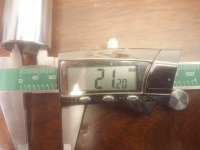
Koken 3400mz 22mm reading 22.15mm
Koken 3300m 21mm reading 21.20mm
Koken 3400m-24 32mm reading 32.25mm
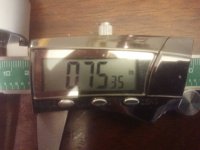
Wera 3/4" 8790HMB .7535 reading in
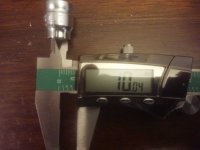
Sk 1" 45032 reading 1.0070


IMG_20181119_152359.jpg1542669953645.jpeg1542670107122.jpeg1542670237234.jpegView attachment 11542670363303.jpeg


EDIT: I am not sure how accurate I took these measurements. And furthermore this digital calipers may be not so accurate it is a cheap one.

Edit#2 added 10mm LOL


Koken 3800MZ 10mm reading 10.04
 
Last edited:

Negen

Well-known member
Joined
Jul 15, 2015
Messages
1,909
Location
Seatltle WA
Here are my 10mm sorry for double post couldn't edit to add pics.

Koken 3800MZ 10mm reading 10.04
Koken 3400MZ 10mm reading 10.041542672598334.jpeg1542672790646.jpeg
 

Spacey_G

Well-known member
Joined
Dec 31, 2015
Messages
492
1/4" Drive:

SK shallow - 10.12mm
Carlyle mid-depth - 10.13mm
SK deep - 10.19mm
Craftsman G-series shallow - 10.20mm

3/8" drive:

SK shallow - 10.16mm
SK mid-depth - 10.16mm
Carlyle deep - 10.10mm
Craftsman V-series shallow - 10.26mm

1/2" drive:

SK shallow - 10.20mm
SK deep - 10.15mm
 

larry_g

Well-known member
Joined
Apr 28, 2007
Messages
16,879
Location
oregon
brand, drive measured
craftsman 1/4 10.2
craftsman 1/4 10.15
craftsman 1/4 10.15
Malaysia 1/4 10.14
SK wobbly 1/4 10.16
cornwell 3/8 10.23 (well used)


These were measured with a Mits caliper direct and confirmed with a snap gauge.

lg
no neat sig line
 

Yarpo

Well-known member
Joined
Feb 11, 2017
Messages
1,356
Location
Minnesota
I was bored, wouldn't say I took quick measurements but also didn't take 10 minutes per socket. I kept them square on the flats and opened until they stopped. Enough so that I could often justttt about pick up the socket.

All sockets are well worn, minus the GP as they're new. All have been sitting in my garage in 20 degree weather for the last 3 weeks.

88c16e43d7d4b34b30a35fa463e841ad.png


Stanley - 10.11
GW - 10.18
Harbor Freight - 10.26
Craftsman - 10.15
Grey Pneumatic - 10.13
 
OP
N

noid

Well-known member
Joined
Jul 15, 2010
Messages
1,341
Here are my 10mm sorry for double post couldn't edit to add pics.

Koken 3800MZ 10mm reading 10.04
Koken 3400MZ 10mm reading 10.041542672598334.jpeg1542672790646.jpeg


1/4" Drive:

SK shallow - 10.12mm
Carlyle mid-depth - 10.13mm
SK deep - 10.19mm
Craftsman G-series shallow - 10.20mm

3/8" drive:

SK shallow - 10.16mm
SK mid-depth - 10.16mm
Carlyle deep - 10.10mm
Craftsman V-series shallow - 10.26mm

1/2" drive:

SK shallow - 10.20mm
SK deep - 10.15mm


brand, drive measured
craftsman 1/4 10.2
craftsman 1/4 10.15
craftsman 1/4 10.15
Malaysia 1/4 10.14
SK wobbly 1/4 10.16
cornwell 3/8 10.23 (well used)


These were measured with a Mits caliper direct and confirmed with a snap gauge.

lg
no neat sig line

I was bored, wouldn't say I took quick measurements but also didn't take 10 minutes per socket. I kept them square on the flats and opened until they stopped. Enough so that I could often justttt about pick up the socket.

All sockets are well worn, minus the GP as they're new. All have been sitting in my garage in 20 degree weather for the last 3 weeks.


Stanley - 10.11
GW - 10.18
Harbor Freight - 10.26
Craftsman - 10.15
Grey Pneumatic - 10.13


The cavalry has arrived!

I have updated the original post in alphabetical order to group the results.

Interesting to see that there are already patterns emerging.

If you see your socket on the list, please still measure it as to grow the data set.
 

TwoInch

Well-known member
Joined
Mar 29, 2012
Messages
2,828
Location
NW INDIANA
The dimensions of a socket interior have nothing to do with the way it engages the fastener. Almost every socket you'll "measure" will engage on the point of the fastener, and is therefore inferior to Snap-on, MAC, and other quality brands.
.
That's not really true. Any sockets made in the last two decades or so has utilized the "flank drive" even the bottom of the barrel chinese **** in the $2.00 bin.

Wrenches are a different story. But decent sockets are pretty universally broached with relieved corners and slightly swept flats.

Sent from my LGLS676 using Tapatalk
 
Last edited:
To avoid these ads, REGISTER NOW!
Top Bottom