To avoid these ads, REGISTER NOW!

Is my panel big enough?

OP
D

DIYGuy

Well-known member
Joined
Dec 23, 2018
Messages
57
Location
Michigan
This is the 100amp panel I will be installing. It has a bolted in main breaker like someone mentioned earlier. It has 20 spaces. Should be plenty of room.

Next step I need to figure out is if I'm going to inquire about needing a permit. I have a feeling I will be opening a can of worms because it seems as there will be a lot of other stuff that will need to be done to get it signed off. Someone mentioned grounding rods and I read somewhere last night that I will need to have GFCI circuits added as well. Maybe even AFCI's. Not sure though. Some of the codes are a bit hard to interpret. And I'm not really even sure what the difference between a GFCI and AFCI is. Still have lots to learn. I'm going to go see if I can find a copy of the NEC code book locally tonight.20190103_152419.jpg
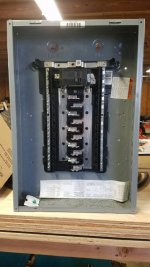
Sent from my SM-G935V using The Garage Journal mobile app
 
To avoid these ads, REGISTER NOW!

mm08822

Well-known member
Joined
Jan 13, 2012
Messages
5,965
Location
NJ
This is the 100amp panel I will be installing. It has a bolted in main breaker like someone mentioned earlier. It has 20 spaces. Should be plenty of room.

Next step I need to figure out is if I'm going to inquire about needing a permit. I have a feeling I will be opening a can of worms because it seems as there will be a lot of other stuff that will need to be done to get it signed off. Someone mentioned grounding rods and I read somewhere last night that I will need to have GFCI circuits added as well. Maybe even AFCI's. Not sure though. Some of the codes are a bit hard to interpret. And I'm not really even sure what the difference between a GFCI and AFCI is. Still have lots to learn. I'm going to go see if I can find a copy of the NEC code book locally tonight.20190103_152419.jpg

Sent from my SM-G935V using The Garage Journal mobile app

Now is the time to verify that 20 spaces is enough. Not sure of all of the loads/circuits you plan on, but I think you are half full with what has been mentioned already. It goes quick for some. If this is a big box store purchase, I suggest return it and get a 24 space.

If you go for the permit, you will most likely need to get the entire bldg inspected as there are probably add-ons from the prior owner post original inspection. Easier to get it all blessed at one time and be done.

You will need the 2 grd rods installed
Neutrals and grounds separated
No green bonding screw installed – neutral stays isolated
GFCI protection for all 15/20A 120v receptacles
Minimum of a switch at each personnel entryway and one light inside
Won’t need afci’s

Go to NFPA.org and search for NFPA 70 (NEC). You need the 2014 edition. This can be viewed in a reader online after you register. But it’s free as compared to ~$130 for the hardcopy. The reader is a PIA even when you know where you need to go. First pass thru using the reader may be brutal!!
 

Terry D

Well-known member
Joined
Mar 25, 2015
Messages
2,202
Location
St. Louis, MO.
I don't know where you're getting this residential vs. commercial from in the NEC. Wiring for branch circuits/feeders is sized using table 310.15(B)(16). Services and feeders where supplying the entire load associated with a dwelling is 310.15(B)(7) and does not apply in this case. #4 Cu is 85A at 75 deg. C., not 100A.

Edit: I didn't mean to pile on. I was typing when mm08822 posted his reply.

Like I said, This is how we do it here #4 copper or# 2 aluminum for a 100 amp sub panel. We do not consider sub panel feeders a branch circuit. Unless the garage is used for commercial purposes, it is part of the dwelling. And usually if that is the case, It would have its own service to that building. And yes St. Louis County is still in the 2008 code. Sorry if I upset anyone, This is how we do it here. Maybe I miss understood and he is running a business out of it. But if the garage is attached to the house or it sits in the yard some where, and used for personnel use, it is part of the dwelling. And im not saying that would be correct up there, but it would pass here.
 
Last edited:

Terry D

Well-known member
Joined
Mar 25, 2015
Messages
2,202
Location
St. Louis, MO.
I appreciate everybody's help so far. [emoji481]

I've never fished wire through conduit before. So if I do decide to go that route, does anybody have a good how-to or some tips for me? This would probably be a good time to run some cat5 too if it fits.

Do I pull out the old wires and use a fish tape to run the new ones? Or would I tie off the new ones to the old ones and pull the new ones through?


Sent from my SM-G935V using The Garage Journal mobile app
Do not put Cat 5 in the same conduit as the feeders
 

Bert_

Well-known member
Joined
Dec 24, 2016
Messages
9,746
Location
NW Iowa
Like I said, This is how we do it here #4 copper or# 2 aluminum for a 100 amp sub panel. We do not consider sub panel feeders a branch circuit. Unless the garage is used for commercial purposes, it is part of the dwelling. And usually if that is the case, It would have its own service to that building. And yes St. Louis County is still in the 2008 code. Sorry if I upset anyone, This is how we do it here. Maybe I miss understood and he is running a business out of it. But if the garage is attached to the house or it sits in the yard some where, and used for personnel use, it is part of the dwelling. And im not saying that would be correct up there, but it would pass here.

The only time that you can use #4 CU or #2 AL for a 100A load is a residential SERVICE. If it isn't the service then you can't use it.

That said I have put both on 100A breakers before. My argument was I couldn't get a 90A breaker since nobody stocked it, so I rounded up to 100A. Load still has to be below 90A. Not really correct since 90A is a standard breaker size but close.
 

Terry D

Well-known member
Joined
Mar 25, 2015
Messages
2,202
Location
St. Louis, MO.
The only time that you can use #4 CU or #2 AL for a 100A load is a residential SERVICE. If it isn't the service then you can't use it.

That said I have put both on 100A breakers before. My argument was I couldn't get a 90A breaker since nobody stocked it, so I rounded up to 100A. Load still has to be below 90A. Not really correct since 90A is a standard breaker size but close.

Im done talking about this, we use it for services and sub panels in residential. If you cant do it like it there, I get it. But that's how we do it here. Not saying I agree with it, but when your bidding on a job where other contractors are bidding, You better be bidding apples to apples or you will loose money
 
OP
D

DIYGuy

Well-known member
Joined
Dec 23, 2018
Messages
57
Location
Michigan
Now is the time to verify that 20 spaces is enough. Not sure of all of the loads/circuits you plan on, but I think you are half full with what has been mentioned already. It goes quick for some. If this is a big box store purchase, I suggest return it and get a 24 space.

If you go for the permit, you will most likely need to get the entire bldg inspected as there are probably add-ons from the prior owner post original inspection. Easier to get it all blessed at one time and be done.

You will need the 2 grd rods installed
Neutrals and grounds separated
No green bonding screw installed – neutral stays isolated
GFCI protection for all 15/20A 120v receptacles
Minimum of a switch at each personnel entryway and one light inside
Won’t need afci’s

Go to NFPA.org and search for NFPA 70 (NEC). You need the 2014 edition. This can be viewed in a reader online after you register. But it’s free as compared to ~$130 for the hardcopy. The reader is a PIA even when you know where you need to go. First pass thru using the reader may be brutal!!
Unfortunately, I bought this panel last year and don't have the box it came in anymore so I don't think I'll be able to return it. Besides, I think 20 spaces should be ok.

I think I will see if a permit is required, but I am a bit nervous that this will end up costing me a bunch of money. Lol.

I bought a separate grounding bar when I bought the panel so I have that covered. I will need to install the grounding rods which I know nothing about yet. And I will need to install GFCI protection. Can I install a GFCI breaker? Or can I install a GFCI outlet that protects all the other outlets? Which is better? I already have switches and lights at the entryway.

Sent from my SM-G935V using The Garage Journal mobile app
 

TractorJeff

Well-known member
Joined
Dec 8, 2013
Messages
3,309
Location
Elkhorn, WI
My understanding is the first outlet is GFCI, then it daisy chains the rest of the outlets in that run! Next run of outlets you set it up the same way.
Overhead light outlets (10 or 12 feet up) I am not sure if they need GFCI?
 
OP
D

DIYGuy

Well-known member
Joined
Dec 23, 2018
Messages
57
Location
Michigan
So I am going to be installing a 220v outlet on each wall of my shop. (4 total.) My compressor, welder, and plasma cutter all run on a 30amp circuit. I would like to have one on each wall in case I decide to reorganize the shop one day.

Previously, I plugged the welder into a 6-50 outlet which I believe is a 50amp outlet. It was wired up to a 30amp breaker with 10/2 romex though. I would like to do this again with all the outlets. Am I allowed to do this? It would be easier as all of my equipment already has a 6-50 plug on it.


Sent from my SM-G935V using The Garage Journal mobile app
 
OP
D

DIYGuy

Well-known member
Joined
Dec 23, 2018
Messages
57
Location
Michigan
How do you get the bare copper wire out of the panel and outside to the grounding rod?

Also, I see that there are a few different lengths and diameters of grounding rods. I think I need an 8' length, but not sure about diameter.

Also the location outside where I want to install the grounding rod I might want to install a concrete pad there in the future. Will I be able to pour and enclose the grounding rod? Would I be able to pour over it or does it have to stick out?

I am picking up my permit in the morning and getting started on everything tomorrow. Hopefully will be making my last trip to the store for supplies. Do you guys have any suggestions for other things I will need to complete this job?

The new panels center inlet hole for the metal conduit isn't in the same spot as the old panel so I'm going to have to figure out something to get the conduit lined up.

Sent from my SM-G935V using The Garage Journal mobile app
 

sberry

Banned
Joined
Jun 18, 2005
Messages
35,747
Location
Brethren, Michigan
There is a little knockout in the bottom of the panel for small wire, for ground wire. Ideally the acorns for the rods should be accessible. It needs 2 of them, 5/8. I like to put them in drip edge or near it if I can help it. Wet ground is best, right in to the water table is the very best.
 
OP
D

DIYGuy

Well-known member
Joined
Dec 23, 2018
Messages
57
Location
Michigan
There is a little knockout in the bottom of the panel for small wire, for ground wire. Ideally the acorns for the rods should be accessible. It needs 2 of them, 5/8. I like to put them in drip edge or near it if I can help it. Wet ground is best, right in to the water table is the very best.
2 acorns or 2 ground rods? The inspector said I only needed 1 ground rod.

So when you come out the bottom of the panel do you just drill a hole in the wall or is there some kind of box or transition piece you install that the bare copper travels through to get outside?

Sent from my SM-G935V using The Garage Journal mobile app
 

teamextreme

Well-known member
Joined
Aug 10, 2013
Messages
867
Location
Lakewood, CO
Bare copper just goes through the small (1/4"?) hole in the bottom of the panel.
Code requires 2 ground rods (or 1 if you can prove 25 ohms or less of impedance, which nobody can do because it takes very expensive test equipment). If your inspector only says one, then he's not following code. Your call on how to handle that.
 
OP
D

DIYGuy

Well-known member
Joined
Dec 23, 2018
Messages
57
Location
Michigan
Bare copper just goes through the small (1/4"?) hole in the bottom of the panel.
Code requires 2 ground rods (or 1 if you can prove 25 ohms or less of impedance, which nobody can do because it takes very expensive test equipment). If your inspector only says one, then he's not following code. Your call on how to handle that.
Once coming out of the panel, how does one get the wire outside?

And from what everyone has told me, it would seem that I need 2 grounding rods. But i specifically asked him if i needed 2 and he said no. In hind sight, i wish i would of asked him why.

Sent from my SM-G935V using The Garage Journal mobile app
 

Ohmthis

Well-known member
Joined
Jan 20, 2013
Messages
3,014
Location
Outside of Louisville KY
You can take the ground out the bottom of the panel, through the wall into an LB fitting and down to the ground rod in some form of conduit (pvc, emt, imc, etc) it is up to you as his suggestion of only one rod will satisfy him, but 2 rods would be better. Also for 100a 1/2” rods are only required.
 

teamextreme

Well-known member
Joined
Aug 10, 2013
Messages
867
Location
Lakewood, CO
I have never used anything but 5/8" rods, and never knew of 1/2" rods to be acceptable. I often wondered why they sold them. Out of curiosity, I just checked my '14 NEC copy and 250.52.A.5.b states: Rod-type grounding electrodes of stainless steel and copper or zinc coated steel shall be at least 5/8" in diameter, unless listed.
I guess the important part is "unless listed". If those 1/2" rods are listed as grounding electrodes, then thy're ok. Are they only listed for <100A?
 
To avoid these ads, REGISTER NOW!
OP
D

DIYGuy

Well-known member
Joined
Dec 23, 2018
Messages
57
Location
Michigan
What kind of box does everyone recommend for the 6-50r outlets? They will be wired with 10/2 romex. I currently have 1 flush mounted in a nail in plastic single gang box. I've read some threads here where people are recommending putting them in metal 2 gang boxes. Do they make them that are flush mount and nail in?

Also, my air compressor is a 5hp 220v IR 80 gallon. It has a pigtail with a 6-50r plug that I plug into an outlet. Through my research I've read where this is not allowed and it should be on some kind of disconnect. Is this true? Can anyone link me to the kind of setup I would need?

Thanks for everyone's help thus far. You guys are great.

Sent from my SM-G935V using The Garage Journal mobile app
 

sberry

Banned
Joined
Jun 18, 2005
Messages
35,747
Location
Brethren, Michigan
If the breaker is local and in sight it can be used as a disconnect. A 5 hp comp is sposed to be hard wired as a 6-50 is only 3hp rated. I normally put them in a 4x4 box but it will go fine in a 2x4 with 10 wire provided its a deep box.
 

sberry

Banned
Joined
Jun 18, 2005
Messages
35,747
Location
Brethren, Michigan
The disconnect will, the basic rule is within 50 ft and within sight. I am going to be wiring a good sized building coming up, going to run another panel to the far wall as he wants the comp in the back corner. There are a couple reasons for the second panel but 1 is to comply with disconnect rule for equipment in that area without adding extra **** and cutting a perfectly good wire in 2.
 
Last edited:
OP
D

DIYGuy

Well-known member
Joined
Dec 23, 2018
Messages
57
Location
Michigan
Does anyone know if they make a square d HO bolt on 60 amp breaker? The one in my sub panel is a 100amp. I know I dont need it, but it would be a lot more convenient to not have to walk all the way back to the house to reset the 60 amp inside if it ever were to trip.

Sent from my SM-G935V using The Garage Journal mobile app
 

Bert_

Well-known member
Joined
Dec 24, 2016
Messages
9,746
Location
NW Iowa
Does anyone know if they make a square d HO bolt on 60 amp breaker? The one in my sub panel is a 100amp. I know I dont need it, but it would be a lot more convenient to not have to walk all the way back to the house to reset the 60 amp inside if it ever were to trip.

Sent from my SM-G935V using The Garage Journal mobile app

Sberry is right you don't need to worry about this. Even if you had a 60 in the garage panel and in the house you would have no guarantee which would trip first.

SQ D HOM doesn't come in bolt on. QO does but a bolt on panel is expensive and totally unnecessary in a home shop.
 
OP
D

DIYGuy

Well-known member
Joined
Dec 23, 2018
Messages
57
Location
Michigan
Sberry is right you don't need to worry about this. Even if you had a 60 in the garage panel and in the house you would have no guarantee which would trip first.

SQ D HOM doesn't come in bolt on. QO does but a bolt on panel is expensive and totally unnecessary in a home shop.
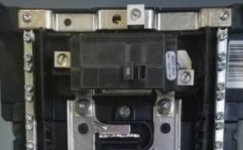
The panel I'm installing is a Square D HOM and it has a 100amp bolt on main.

Sent from my SM-G935V using The Garage Journal mobile app
 

mm08822

Well-known member
Joined
Jan 13, 2012
Messages
5,965
Location
NJ
I hope he is referring to changing out the main cb.
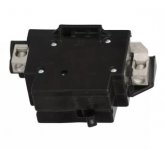
Could be this part# QOM60VH.

If the op meant a hold-down kit to back-feed a 2p 60a HOM cb, then it would require a homeline HOM1RKCP kit. However, this would completely hack a new panel that already has a main cb.

This is totally a waste of your money. You haven't even installed everything planned and have never experienced a tripped breaker yet.

As Bert pointed out, there is no guarantee which cb would trip.

Put your money into more/better lights, more recepts or save it for an upgraded feeder once you are certain you need it..
 
OP
D

DIYGuy

Well-known member
Joined
Dec 23, 2018
Messages
57
Location
Michigan
I hope he is referring to changing out the main cb.
Could be this part# QOM60VH.

If the op meant a hold-down kit to back-feed a 2p 60a HOM cb, then it would require a homeline HOM1RKCP kit. However, this would completely hack a new panel that already has a main cb.

This is totally a waste of your money. You haven't even installed everything planned and have never experienced a tripped breaker yet.

As Bert pointed out, there is no guarantee which cb would trip.

Put your money into more/better lights, more recepts or save it for an upgraded feeder once you are certain you need it..
I was indeed referring to the main cb. But you guys have convinced me that I dont need it. Thank you for your help.

Sent from my SM-G935V using The Garage Journal mobile app
 
OP
D

DIYGuy

Well-known member
Joined
Dec 23, 2018
Messages
57
Location
Michigan
I was hoping to have had all this installed by now as I've had about 4 days off, but I've been a bit busy caring for my neighbor. He doesn't have long and has decided to live out his last days at home. He has hospice care, but they haven't been much help thus far. I'm trying to do what I can for him. His family hasn't really came around. I think dealing with this and having this sub panel project in the back of my mind may be causing me to overthink it a bit. Then again, maybe I tend to overthink all my projects.

I did find a little bit of time yesterday evening though. I was able to drive the ground rod in. I was a bit nervous that the ground may have been to hard because of the cold. However, I had drove all the way in less than 10 minutes. I'm going to try and do a little bit with the panel after work everyday until it's done. It has been dark out when I get home from work so I'll be working with a head lamp. Or I can use this as an excuse to finally buy one of the milwaukee m18 job lights.


Sent from my SM-G935V using The Garage Journal mobile app
 

Bert_

Well-known member
Joined
Dec 24, 2016
Messages
9,746
Location
NW Iowa
The panel I'm installing is a Square D HOM and it has a 100amp bolt on main.

Sent from my SM-G935V using The Garage Journal mobile app

Sorry for the confusion I didn't read very closely. There is a terminology difference though. Your breaker is not bolt in, that refers to how it connects to the bus. A bolt in breaker uses screws to attach to the bus, the screws carry electrical current.

Your breaker has a "Hold Down"
 
Last edited:

mm08822

Well-known member
Joined
Jan 13, 2012
Messages
5,965
Location
NJ
Sorry for the confusion. A main breaker in a panel like this typically has a "Hold down", it can be a clip or bolt holding the breaker to the panel. A real bolt in breaker uses screws to attach to the buss rather than a stab in connection. Some manufactures use bolt in breakers for 150A and above residential panels but none use bolt in breakers for 100A or less.

This panel has a bolt in main cb. A main lug panel would need a hold down kit.

OP's earlier posted pic:
Screen Shot 01-13-19 at 12.30 PM.JPG

QOM60VH pics are the same as this 100A pictured below:
Screen Shot 01-13-19 at 12.34 PM 001.JPG
Screen Shot 01-13-19 at 12.34 PM.JPG
 

Norcal

Well-known member
Joined
Mar 16, 2008
Messages
13,758
A QO breaker is plug in, a QOB is bolt on. Since I have been reading this thread on a phone I might have missed if someone has mentioned to the OP that his new panel is a Homeline and the existing QO breakers will not fit.
 

mm08822

Well-known member
Joined
Jan 13, 2012
Messages
5,965
Location
NJ
It was earlier stated that if the OP were to buy a QO panel, he could re-use the existing QO cb's. He since came back with a pic of a main breaker'd HOM panel that he had already purchased.

So his existing QO's won't help here.
 
OP
D

DIYGuy

Well-known member
Joined
Dec 23, 2018
Messages
57
Location
Michigan
A QO breaker is plug in, a QOB is bolt on. Since I have been reading this thread on a phone I might have missed if someone has mentioned to the OP that his new panel is a Homeline and the existing QO breakers will not fit.
I figured this out after I had posted the pictures the other day. Unfortunately I bought the new homeline panel a couple years ago and no longer have the receipt or the box it came in. I did a little research comparing QO panels to HO panels and IMO I think it the homeline panel will be fine for my needs. I did have to buy some breakers though. They were pretty affordable though compared to buying a QO panel.

Sent from my SM-G935V using The Garage Journal mobile app
 

mm08822

Well-known member
Joined
Jan 13, 2012
Messages
5,965
Location
NJ
Sorry for the confusion I didn't read very closely. There is a terminology difference though. Your breaker is not bolt in, that refers to how it connects to the bus. A bolt in breaker uses screws to attach to the bus, the screws carry electrical current.

Your breaker has a "Hold Down"

I think the confusion is also around the branch cb's vs. a main cb. In his new panel (with the main cb), the two cb's are not of the same series.

If he had a main lug Homeline panel and added a "main", the cb's to all branch ckts as well as the backfed "main cb" would be HOM series.
 
OP
D

DIYGuy

Well-known member
Joined
Dec 23, 2018
Messages
57
Location
Michigan
I think the confusion is also around the branch cb's vs. a main cb. In his new panel (with the main cb), the two cb's are not of the same series.

If he had a main lug Homeline panel and added a "main", the cb's to all branch ckts as well as the backfed "main cb" would be HOM series.
So are you saying that the main in my new panel is QO series and all the rest are HO?

Sent from my SM-G935V using The Garage Journal mobile app
 

mm08822

Well-known member
Joined
Jan 13, 2012
Messages
5,965
Location
NJ
So are you saying that the main in my new panel is QO series and all the rest are HO?

Sent from my SM-G935V using The Garage Journal mobile app

NO! It might be a "QOM" if that is even a breaker style. I dont have a catalog in front of me to check.

But for certain a QO style cb will not fit onto the buss anywhere in a Homeline panel.
 
To avoid these ads, REGISTER NOW!
Top Bottom