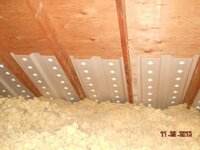
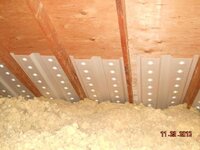
So is 24” kraft faced R-15 or R-13 cut in half my only option?
Some food for thought:
You could use rigid foam sheets. They could be cut to size fairly easily. Some people have had success finding used sources of foam sheets which helps mitigate the cost.
You should be able to find mineral wool insulation batts that are designed for 24" on center studs but I'm not sure if it's available for 2x4 widths so you can maintain your air gap. If it is available, it's fairly easy to cut with serrated insulation saw. Mineral wool is sound proof, fire proof, easy to install and blocks the flow of air through the wall much much better than fiberglass. It also has a little higher r-value than fiberglass when comparing standard sizes. It will likely cost a little more. If you have an 84 Lumber nearby, check with them.
You can blow in cellulose but you'd have to first install some type of baffle to maintain the air gap. Some guys have had success borrowing the cellulose blowing machines from Lowe's or Home Depot but you have to develop a good technique to get the insulation dense enough to not settle in the walls. You might call a pro to get a cost on true dense pack cellulose. Sometimes they can buy the insulation cheap enough to offset much of their labor costs.
You could use spray foam but again you'd have to install a baffle first and spray foam is not really DIY. Also, it's the highest cost option.
The air gap may not really matter all that much. Here's why. Heat is transferred into a building through one of 3 ways: Radiation, Convection, Conduction. Insulation takes care of the conduction and proper air sealing (caulk, spray foam, etc) takes care of convection (heat transfer through air flow). Once you take care of conduction and convection, you've taken care of the majority of the heat gain. The remaining heat gain due to radiation becomes inconsequential. That's why it's rarely cost effective to install radiant barriers.
Your desert climate changes the game somewhat. Since you've already installed the radiant barrier, it may make sense to go ahead and take advantage of it but I wouldn't worry too much about it if you decide to blow off the air gap.
I think you might be better off with more insulation instead of the air gap, especially if you use mineral wool, dense pack cellulose, or spray foam, all of which will help block air flow better than fiberglass. 5.5" of insulation compared to 3.5" is nearly a 60% increase. I'm thinking the additional insulation blocks the heat transfer more so than would the radiant barrier with a 2" gap.
And finally, you could post your question on the Q&A forum at GreenBuildingAdvisor.com. They have building science gurus who hang out on the forum. I would ask them their thoughts on filling the cavity completely with insulation vs leaving the 2" air gap for the radiant barrier. If you get a response from a guy named Dana Dorsett, pay particular attention to what he says.
Good luck. Hope this helps.
DC