

You are using an out of date browser. It may not display this or other websites correctly.
You should upgrade or use an alternative browser.
You should upgrade or use an alternative browser.
Move over Snap-on have a viable competitor for ratchets
- Thread starter ssdave
- Start date
Some of my Facom round-head ratchets have pretty darned low back-drag (and 72 teeth). Struggling to see how Koken would beat that, but I haven’t tried a Koken ratchet personally.
The Palm Control Facom ratchets (and it's variants, i.e. Proto) are some of my favorite ratchets and were my go to for years. I own 4 Palm control ratchets. When I got the Ko-ken 24t a couple years ago I was blown away and the light back drag compared to anything else I've owned, including Facom and yes, Dual 80.
CrazyTools
Banned
However, there is objective evidence that Snapon quality superiority is at best overhyped. A German magazine did a lab test of 13mm wrenches. Here are some scans:
https://www.garagejournal.com/forum/showpost.php?p=2713213&postcount=13
I expect you're too provincial to be able to read the test, so I'll leave you with this highlight: two Snapons were tested, regular and FD. Both had thicker open ends than a 1 EUR wrench from India (FD was even thicker than regular), yet standard Snapon's open end was inferior to the Indian wrench's! FD Snapon's open end was merely equal to the 1 EUR Indian throwaway. So much for that mighty American steel and magical mystery treatments!
This is exactly my point. You use one article of nonsense that is clearly not even a valid test. Have you been to real tool reviews where the Snap-on wrenches on the open end were shearing off grade 8 bolt heads? Every other wrench spreads.
The only wrenches in that test that were comparable were the Wright wrenches with the teeth (WrightGrip?).
Or even better... Your best buddy AvE who tested the older style of Snap-on ratchet wrench (forget the Husky comparison in the video) and the ratchet end went to 432ft/lb before it rounded his tool steel. Ratcheting box end was still fine.
A non-ratcheting box end would be even stronger.
In all of this you've still not provided ONE SHRED of any VALID argument that Koken is anything but mediocre junk.
You're a joke, and your information is a joke.
I learned something new from this thread, a knowledgeable member posted that Koken knurling is cast metal and not machined. See that's what I love about this place great folks with true insight about the finer details.
A member that has never seen or handled the ratchet in person. And no offense to the poster you refer to, but knowledgeable? I'm not saying it isn't cast but really?
CrazyTools
Banned
A member that has never seen or handled the ratchet in person. And no offense to the poster you refer to, but knowledgeable? I'm not saying it isn't cast but really?
It's really not hard to take a look at machining and see quality vs not. I had a German car dealer try to sell me Chinese cast rotors, with no country of origin on either the product or the packaging. It's pretty obvious in the finishing of the product.
The Koken tools have the finish of cheap, medicore tools. In some ways Husky and Kobalt appear to be better tools, with higher tooth count, and are likely better quality to boot. Husky and Kobalt are the bottom of the barrel. What does that really say about Koken?
Here's the best pic I could get of my personal 3774NB handle. Hopefully the quality is OK from my phone. I have no idea if it's cast or not...
Clic on the pic to enlarge

I can tell you that it is extremely comfortable and in no way "tears up" my hands. Doesn't matter to me wether it's cast or machined. It's great.
Most people that actually own and use the tools agree that Ko-ken has the best knurling in the business.
Edit: Looking at the handle, is it even possible to cast uniform detail that small? If so that is a testament to their manufacturing lol.
Clic on the pic to enlarge
I can tell you that it is extremely comfortable and in no way "tears up" my hands. Doesn't matter to me wether it's cast or machined. It's great.
Most people that actually own and use the tools agree that Ko-ken has the best knurling in the business.
Edit: Looking at the handle, is it even possible to cast uniform detail that small? If so that is a testament to their manufacturing lol.
Last edited:
measuredtwice
Well-known member
A member that has never seen or handled the ratchet in person. And no offense to the poster you refer to, but knowledgeable? I'm not saying it isn't cast but really?
I also don't think that poster or my reply to him confirmed anything. We both just questioned how it was manufactured.
measuredtwice
Well-known member
Most people that actually own and use the tools agree that Ko-ken has the best knurling in the business.
That could be true regardless of how it is manufactured.
CrazyTools
Banned
Here's the best pic I could get of my personal 3774NB handle. Hopefully the quality is OK from my phone. I have no idea if it's cast or not...
Clic on the pic to enlarge
I can tell you that it is extremely comfortable and in no way "tears up" my hands. Doesn't matter to me wether it's cast or machined. It's great.
Most people that actually own and use the tools agree that Ko-ken has the best knurling in the business.
Definitely cast from the look of it. Could just be from the way they have the roll setup. Hard to tell if that's comfortable or not without actually gripping it. What "People" are these that claim their knurling is the best in the business? The fictional ones you've created to make your post validated?
Last edited:
Definitely cast from the look of it. Could just be from the way they have the stamp setup. Hard to tell if that's comfortable or not without actually gripping it. What "People" are these that claim their knurling is the best in the business? The fictional ones you've created to make your post validated?
Dude, have you looked through the many "Koken" and "Tools from Japan" threads? Fictional?
That could be true regardless of how it is manufactured.
Agreed
CrazyTools
Banned
Dude, have you looked through the many "Koken" and "Tools from Japan" threads? Fictional?
I've read some of them, and for the most part they seem more interested in polishing their Nepros ratchet than seeing if it can handle 30 ft/lbs of torque.
I've had my hands on some of the Nepros tools (all 3/8" drive). It's pretty, but I'm not sure how it would hold up if you really got on it. Since the price is higher than Snap-on it's not really worth discussing anyway.
If your whole argument about Koken was based on price, I wouldn't be giving you as hard a time. You've chosen, quite poorly, to make a direct quality comparison and so far you haven't said a single word to validate any point you've made.
CrazyTools
Banned
Here's another shot from Ko-kens product page...
Is that cast?
I took a close look at their website, and I believe it's just the way they have the roll setup. I'm pretty sure if it was cast they would have to machine it smooth enough to make it comfortable in the hand.
I've never dealt with knurls that weren't rolled. Someone else could chime in here that does this regularly on a lathe, or otherwise.
I've read some of them, and for the most part they seem more interested in polishing their Nepros ratchet than seeing if it can handle 30 ft/lbs of torque.
I've had my hands on some of the Nepros tools (all 3/8" drive). It's pretty, but I'm not sure how it would hold up if you really got on it. Since the price is higher than Snap-on it's not really worth discussing anyway.
If your whole argument about Koken was based on price, I wouldn't be giving you as hard a time. You've chosen, quite poorly, to make a direct quality comparison and so far you haven't said a single word to validate any point you've made.
You sir are the one who, over and over and over again, makes references to quality "of a $30 ratchet" (which is funny because it is actually a $30 ratchet lol).
I didnt bring up price because my Ko-ken ratchets hang with the best, even those that are 4x more expensive. know how I know? Because I've actually owned and used Dual 80's. Guess which isn't in my toolbox...
And yeah, I love that S-o has great resale, when I go to off load them.
I never once said that Ko-ken was "better" than S-o, but I do prefer Ko-ken. Live with it.
Last edited:
measuredtwice
Well-known member
Here's another shot from Ko-kens product page...
Is that cast?
It doesn't look like knurling done the old fashioned way. But photos can be deceiving. I've done it the old fashioned way. The photos below show homemade and PB Swiss cut knurling. But I don't know the alternatives. I have not worked in manufacturing. I don't know that "casting" is right guess. That description originated from another forum member.
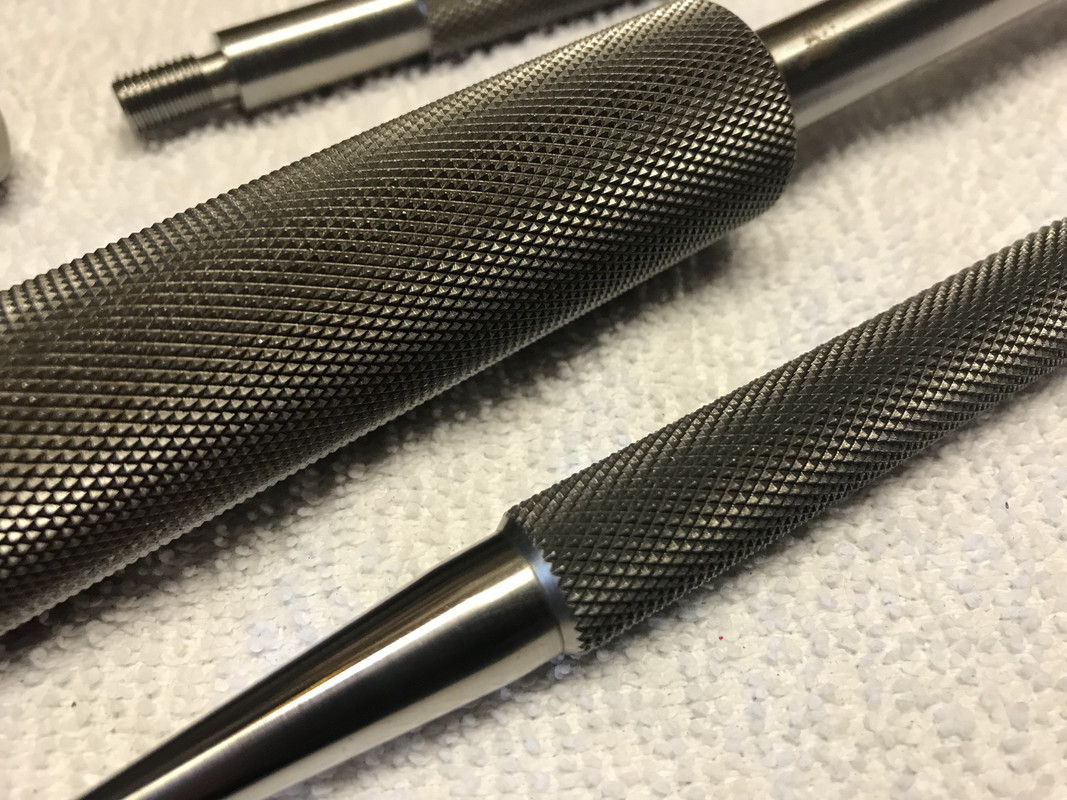
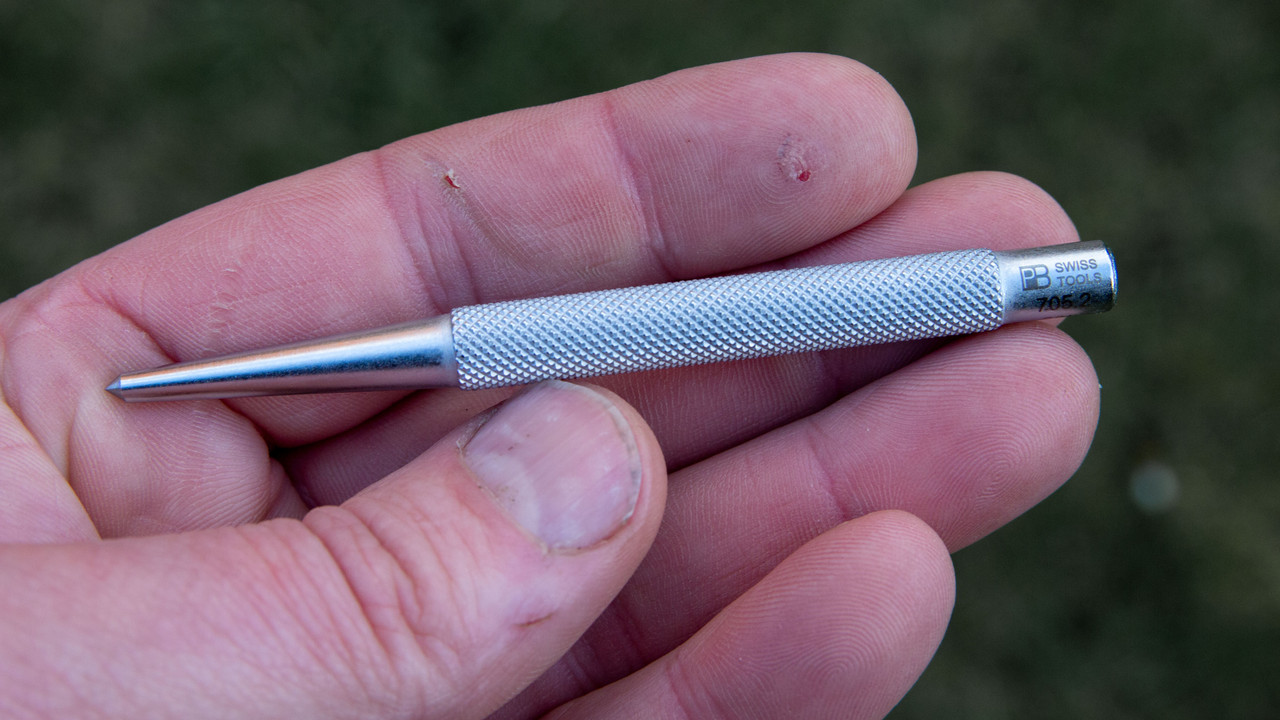
Last edited:

Definitely cast from the look of it. Could just be from the way they have the roll setup. Hard to tell if that's comfortable or not without actually gripping it. What "People" are these that claim their knurling is the best in the business? The fictional ones you've created to make your post validated?
I wrote "cast," because they did not look machined -- but, i don't think the Ko-ken ratchet was actually cast steel. Most likely, given the 3 dimensional diamond shaped knurls, it was pressed at high pressure in a "closed die forge." A closed die forge would give it the needed high strength from the hot metal forging process, and the closed die would force those diamond-shaped knurls into the handle. My guess is that they would then have some type of mechanical finishing process that removed any sharp edges from the diamond knurls.
The above said, I'm pretty certain these low-dollar ratchets are not machined, as that's the type of knurl stippling you might see on a $600 + 1910 style handgun - somewhere on the handgrip. A $600 handgun would justify that level of attention, but I can't imagine that in Japan, where manufacturing costs are as high as they are, that a $50 ratchet would have that level of CNC style machining... again, my best guess is that the knurls were closed die forged.
Also, I'm still not sold on the "less is better" tooth count on the Ko-kens. Sure, one can argue that the Japanese manufacturing is precise and this allows Ko-ken to use such a low count mech, but what if Ko-ken used a 90 tooth mech, would it be EVEN better... or is every other ratchet manufacturer, including the biggest of the big, wrong about high tooth counts -- at least up to 90 teeth? Once you hit 120, as with GW, it seems there are complaints about its high tooth count causing too much backdrag resistance.
Definitely, buy what you like, but I was just perusing the Ko-ken website, yet again, and I've noticed that most of their newer ratchets ditch the knurling and look more like the Snapon traditional style high polished handle. Also, they're selling 3/8 ratchets with tooth counts as low as 20! I don't know what the swing arc on that is, but if a S80 SO is around 5 degrees, then having 4 times less teeth would have to be a considerably higher engagement arc... that's not good news when you're working on modern day vehicles where access can be extremely tight.
This is exactly my point. You use one article of nonsense that is clearly not even a valid test.
What exactly makes it "one article of nonsense?" I mean specifically, as in what part of their outlined methodology do you object to? Could you even read it and discern the methodology? If so, please summarize.
Let's try to think beyond "they gored my sacred cow," OK?
Real_PhillBert
Well-known member
This thread has turned into a complete cesspool. Yikes.
Koken casts their ratchet's.... (face palm emoji). Japan who produces the finest grade tool steel on earth & a flagship Japanese tool brand now (according to members who truly know the finer details of tool production) casts their hand tools. A 6 y/o could work this stuff out. But anyway, a deer with no eyes would be called a no...
(face palm emoji). Japan who produces the finest grade tool steel on earth & a flagship Japanese tool brand now (according to members who truly know the finer details of tool production) casts their hand tools. A 6 y/o could work this stuff out. But anyway, a deer with no eyes would be called a no...Koken casts their ratchet's....
This thread went off the rails a long while ago, now it's just amazingly idiotic
measuredtwice
Well-known member
Koken casts their ratchet's....
Dude, he corrected his statement already. (before you posted)
I wrote "cast," because they did not look machined -- but, i don't think the Ko-ken ratchet was actually cast steel. Most likely, given the 3 dimensional diamond shaped knurls, it was pressed at high pressure in a "closed die forge." A closed die forge would give it the needed high strength from the hot metal forging process, and the closed die would force those diamond-shaped knurls into the handle. My guess is that they would then have some type of mechanical finishing process that removed any sharp edges from the diamond knurls.
Last edited:
Did you buy a 24-tooth model, measuredtwice? I can see from catalogue photos of the mechanism that that design would produce low back-drag, given a few givens. The interior of the 36-tooth model is less obviously convincing.
Clearly having that few teeth will reduce working speed and convenience in situations where there isn’t space to swing the handle through a decent arc. But that must be traded off against better speed and convenience when working with free-spinning fasteners and enough space to swing the ratchet, if the lower back-drag applies.
Some of my Facom round-head ratchets have pretty darned low back-drag (and 72 teeth). Struggling to see how Koken would beat that, but I haven’t tried a Koken ratchet personally.
Nope, didn't measure twice, but I read it twice -- it clearly advertises 20 teeth in their flex head 3/8 ratchet. See for yourself on Ko-ken's own website:
http://www.kokenusa.com/products/model/54
Backdrag is definitely an issue when you're just starting a bolt, as it tends to unscrew it... but otherwise, it just adds to a more precise feel to the tool which better justifies charging over $100 retail for a single ratchet. The real issue is clearance and arc... when you're wrenching in close confines, it can be really tough with a low tooth count wrench. That said, it's odd if you read the history of the guy that started Ko=ken, he worked for Ford and then later for GM in Japan, prior to starting his namesake tool business. Vehicle maintenance is exactly the place where you'd tend to appreciate higher tooth counts... I mean, as opposed to taking your $150 Snapon or Matco to bolt up the porch furniture your significant other just bought at Walmart...
I like that Koken offers a different style of ratchet, that being low drag vs high tooth count simply because the market is full of high tooth count. You can get snap on/matco industry leaders, Nepros 90 if you want a thing of beauty, or Gearwrench 120 for super tight situations, and those are just some popular ones. I don't know many that advertise super low drag ratchets, I think SK did.
While it doesn’t get into the details of the knurling process, there is an interesting write up by Koken about some of their processes at: https://precitorc.com/pub/media/katalog/ko-ken-katalog-allgemeines-2018.pdf
I judge a tool on how well it fits the task, it’s durability, it’s quality, and how well it fits my use. Somehow I missed out on how deep the engraving is as my criteria. This is probably a personal failing on my part, but I’ve decided to live with it.
One effect that this thread has had is that I’m going to be buying several Koken ratchets in the near future. I already have more sockets and extensions that I can justify to myself, but hey, there is always room for more ratchets.
Max
I judge a tool on how well it fits the task, it’s durability, it’s quality, and how well it fits my use. Somehow I missed out on how deep the engraving is as my criteria. This is probably a personal failing on my part, but I’ve decided to live with it.
One effect that this thread has had is that I’m going to be buying several Koken ratchets in the near future. I already have more sockets and extensions that I can justify to myself, but hey, there is always room for more ratchets.
Max
The link has some nice photos but they are small-->
https://www.garagejournal.com/forum/showthread.php?t=415933&showall=1
I can't tell from the photos. I wouldn't be surprised if it was cast but I can't tell.
I should get mine late this week and can take close up photos of the knurl. Or maybe one of you guys can take some close up photos first.
I'm sure cutting knurling or casting knurling or forging knurling adds some cost but how much depends. Rogue Fitness can cut knurling even on their cheapest powerlifting barbells. And I've yet to see knurling on ratchets that compares to that. That might be a good thing since it would tear up your hands.
Last week I paid 26USD plus 10USD shipping from Amazon. That order contained other non-Ko-ken items as well. And I should get it this week shipped from Japan. Seems like a good deal to me even if it's 3/4ths as good as everyone says.
I had the same curiosity and bought one to find out. Likewise I bought the Vessel and PB Swiss stuff to see what all the hype was about.
Yeah, definitely follow up on the Ko-ken. I'm not here to bash it -- just giving an honest opinion and analysis of what I'm reading and seeing. Since I'm not sold on the Ko-ken design, I was looking at that KTC Nepros ratchet -- specifically the 1/4 stubby flex head. I noticed that Nepros has a US website where you can purchase their ratchets cheaper than from Amazon, Amazon in Japan, or eBay.
Also, regarding Vessel -- I do like the ball shape design. I have the Vessel that comes with 3 different 2 sided end attachments. It's a cool tool for a reasonable price. As for the PB Swiss, I have a number of PB drivers, including an entire 7 or 8 piece screwdriver set, a couple loose PB Torx drivers (actually have a T50 that I got dirt cheap on an Amazon clearance many years ago) -- but one of my more expensive sets was the PB Swiss Swiss Grip Phillips Head 4 piece driver set. I love the grips, but I have to tell you... I'm actually a bit disappointed in the PH2 I have in that there is more wear on the end than I'd expect (esp since I don't use this driver THAT often). I was working on something with a highly torqued phillips head screw, and grabbed the Swiss Grip, but was disappointed to see the end slipping / camming out. I have a US made SK set as well - the Cushion Grip set, and the PH2 SK grabbed the screw without slipping. I was really surprised that my high end PB's let me down... but, at the same time, I can definitely speak highly of the precision machining on the SK Cushion Grip drivers.
Nope, didn't measure twice, but I read it twice -- it clearly advertises 20 teeth in their flex head 3/8 ratchet. See for yourself on Ko-ken's own website:
http://www.kokenusa.com/products/model/54
Where's the face palm emoji??? Perhaps reading it a 3rd time will be the charm...
You linked to the 1/4" drive page, which are 20t. 3/8" & 1/2" drive are 24t, swivel head ratchets are 45t, and their Zeal line is 36t.
I dont think I've seen a thread with more misinformed posts as this one...
Measuredtwice is another user’s name, not my doubting your counting, Mr_John.
So there is clearly a trade-off to be made here between low back-drag and short minimum required swing arc.
Similarly, 360 divided by Snap-on’s 72 teeth – not 80 although I can see why they call it that! – gives 5 degrees per click.
For a 250 mm long ratchet (tip of handle to axis of square drive) with 20 teeth, that produces a whopping 79 mm (over 3 inches) of arc travel per click, plus some extra movement to take up backlash. That’s a lot and presumably the reason Koken increased the tooth-count to 36 for their Z-EAL automotive line-up.
It’s the other way around, surely? More, smaller teeth demand higher manufacturing precision. But smaller teeth are shallower, so the engagement force needs to be higher to prevent jumping a tooth. And with smaller teeth you need the pawls to engage more teeth simultaneously to avoid stripping them, which increases back-drag. Plus, more teeth have a larger surface area at which lubricant and dirt must be displaced or compressed for the necessary full engagement, which requires higher spring force. Smaller teeth of the same width are less tolerant of running askew, so you need tighter clearances that may result in greater drag or other practical problems. Smaller teeth are less tolerant of dirt particles and corrosion, so the head has to be better sealed, and better seals are draggier, etc., etc., in a vicious circle of increasing back-drag as tooth-count goes up. I’m sure I’ve missed half of it.Also, I'm still not sold on the "less is better" tooth count on the Ko-kens. Sure, one can argue that the Japanese manufacturing is precise and this allows Ko-ken to use such a low count mech, […]
So there is clearly a trade-off to be made here between low back-drag and short minimum required swing arc.
There are 360 degrees in a full circle, so dividing that by 20 teeth gives 18 degrees per click, assuming for simplicity that there’s no play anywhere (there will be some).Also, they're selling 3/8 ratchets with tooth counts as low as 20! I don't know what the swing arc on that is, but if a S80 SO is around 5 degrees, then having 4 times less teeth would have to be a considerably higher engagement arc... that's not good news when you're working on modern day vehicles where access can be extremely tight.
Similarly, 360 divided by Snap-on’s 72 teeth – not 80 although I can see why they call it that! – gives 5 degrees per click.
For a 250 mm long ratchet (tip of handle to axis of square drive) with 20 teeth, that produces a whopping 79 mm (over 3 inches) of arc travel per click, plus some extra movement to take up backlash. That’s a lot and presumably the reason Koken increased the tooth-count to 36 for their Z-EAL automotive line-up.
measuredtwice
Well-known member
Nope, didn't measure twice, but I read it twice -- it clearly advertises 20 teeth in their flex head 3/8 ratchet. See for yourself on Ko-ken's own website.
http://www.kokenusa.com/products/model/54
I don't get this post. He asked me what I ordered. I replied with the model number and a catalog page that describes it as 24 tooth.
Don't know if it matters but the ratchet you linked is 1/4", not 3/8". Maybe you should have read it or measured it 3 times.
measuredtwice
Well-known member
Yeah, definitely follow up on the Ko-ken.
Will do.
Also, regarding Vessel -- I do like the ball shape design. I have the Vessel that comes with 3 different 2 sided end attachments. It's a cool tool for a reasonable price. As for the PB Swiss, I have a number of PB drivers, including an entire 7 or 8 piece screwdriver set, a couple loose PB Torx drivers (actually have a T50 that I got dirt cheap on an Amazon clearance many years ago) -- but one of my more expensive sets was the PB Swiss Swiss Grip Phillips Head 4 piece driver set. I love the grips, but I have to tell you... I'm actually a bit disappointed in the PH2 I have in that there is more wear on the end than I'd expect (esp since I don't use this driver THAT often). I was working on something with a highly torqued phillips head screw, and grabbed the Swiss Grip, but was disappointed to see the end slipping / camming out. I have a US made SK set as well - the Cushion Grip set, and the PH2 SK grabbed the screw without slipping. I was really surprised that my high end PB's let me down... but, at the same time, I can definitely speak highly of the precision machining on the SK Cushion Grip drivers.
I've had the Vessel stuff for a while now and I got the PB stuff already. They're nice but I could make criticisms of both.
Where's the face palm emoji??? Perhaps reading it a 3rd time will be the charm...
You linked to the 1/4" drive page, which are 20t. 3/8" & 1/2" drive are 24t, swivel head ratchets are 45t, and their Zeal line is 36t.
I dont think I've seen a thread with more misinformed posts as this one...
Ok smart guy - what are you, a Ko-ken shareholder? --- well, big deal, a 4 tooth difference from the 1/4 to the 3/8! Excuse, Me. I accidentally clicked on the 1/4, I guess, and Ko-kens website really isn't the best, but that aside, 75% of the 3/8 ratchets on the page I was looking at were 24 tooth models - and not the 45 tooth variant. Also, the guy that was asking me to measure twice was referring to not believe there were only 24 teeth when he saw a 45 tooth model. I was pointing out that, yes, the Ko-kens are as low as a 20 tooth count.
Not sure what you've proved there -- 24 teeth in a 3/8 ratchet is ridiculously low for a professional style ratchet. Even if the back drag is ultra smooth, the engagement arc swing on a 24 tooth ratchet, especially one with a long handle, has to be quite large. Also, if 24 teeth are so damn great, then why does Ko-ken even bother offering a 45 tooth model?
Finally, the website kinda ***** -- under "New Products" they list "2015/2016" as their year for "new products." Again, I'm not here to bash Ko-ken, they appear to be decent quality, but you're going wayyyy overboard in your acclaim for a not so well known Japanese tool brand that there's little evidence that many in the mechanics trade actually use. Oh, and hey, you want to point out Ko-kens vast torque wrench offerings? What, they don't have them - do they? Well I looked, and not only don't they have any digital torque wrenches, which are fairly common among high end tool brands, but Ko-ken hardly sell ANY torque wrenches at all... they have a few weird looking ratchets for "spark plugs" at low torque setting, but that's it...
Last edited:
measuredtwice
Well-known member
Checked the tracking and it has been in the USA since Saturday (I ordered on Thurs). Amazon estimates delivery by Thurs.
Last edited:
I don't get this post. He asked me what I ordered. I replied with the model number and a catalog page that describes it as 24 tooth.
Don't know if it matters but the ratchet you linked is 1/4", not 3/8". Maybe you should have read it or measured it 3 times.
Okay, didn't realize your screen name was "measured twice." Also, he doubted the 24 tooth count, and I KNOW they were 24 tooth counts, but the one I accidentally clicked on was a 20 tooth count. I was simply confirming that the tooth count was in the 20s. Again, the question was 45 vs 24, so 20 is besides the point - and I thought he was asking ME to "measure twice."
Ok smart guy - what are you, a Ko-ken shareholder? --- well, big deal, a 4 tooth difference from the 1/4 to the 3/8! Excuse, Me. I accidentally clicked on the 1/4, I guess, and Ko-kens website really isn't the best, but that aside, 75% of the 3/8 ratchets on the page I was looking at were 24 tooth models - and not the 45 tooth variant. Also, the guy that was asking me to measure twice was referring to not believe there were only 24 teeth when he saw a 45 tooth model. I was pointing out that, yes, the Ko-kens are as low as a 20 tooth count.
Not sure what you've proved there -- 24 teeth in a 3/8 ratchet is ridiculously low for a professional style ratchet. Even if the back drag is ultra smooth, the engagement arc swing on a 24 tooth ratchet, especially one with a long handle, has to be quite large. Also, if 24 teeth are so damn great, then why does Ko-ken even bother offering a 45 tooth model?
Finally, the website kinda ***** -- under "New Products" they list "2015/2016" as their year for "new products." Again, I'm not here to bash Ko-ken, they appear to be decent quality, but you're going wayyyy overboard in your acclaim for a not so well known Japanese tool brand that there's little evidence that many in the mechanics trade actually use. Oh, and hey, you want to point out Ko-kens vast torque wrench offerings? What, they don't have them - do they? Well I looked, and not only don't they have any digital torque wrenches, which are fairly common among high end tool brands, but Ko-ken hardly sell ANY torque wrenches at all... they have a few weird looking ratchets for "spark plugs" at low torque setting, but that's it...
Ko-ken specializes in socketry. They probably have the most comprehensive socket selection of any tool manufacturer in the world. They don't make wrenches or pliers, very few screwdrivers...
I'm not going overboard with my "acclaim", most of my posts have been to correct or refute ignorant statements made about Ko-ken. That's all.
Yeah, their website is bad, I agree, but so are many other tool companies'. Surf on over to the Tekton website if you want to see a great tool site.
Last edited:
CrazyTools
Banned
It’s the other way around, surely? More, smaller teeth demand higher manufacturing precision. But smaller teeth are shallower, so the engagement force needs to be higher to prevent jumping a tooth. And with smaller teeth you need the pawls to engage more teeth simultaneously to avoid stripping them, which increases back-drag. Plus, more teeth have a larger surface area at which lubricant and dirt must be displaced or compressed for the necessary full engagement, which requires higher spring force. Smaller teeth of the same width are less tolerant of running askew, so you need tighter clearances that may result in greater drag or other practical problems. Smaller teeth are less tolerant of dirt particles and corrosion, so the head has to be better sealed, and better seals are draggier, etc., etc., in a vicious circle of increasing back-drag as tooth-count goes up. I’m sure I’ve missed half of it.
So there is clearly a trade-off to be made here between low back-drag and short minimum required swing arc.
In comparing my last remaining Snap-on F730 ratchet (36 teeth) to the current 80 teeth version (F80) --- there is a clear backdrag winner. The 80 teeth version. Older style ratchets from the 80s, 90s (the designs Koken still imitates) use a very strong spring to prevent the ratchet pawl from clicking to the next "tooth." Otherwise the ratchet would skip under force.
Dual 80, and similar style dual pawls, do have quite a bit of force to engage the 4-8 teeth pawl, but once you switch to "ratcheting" mode it requires zero effort to disengage the pawl.
Remember : All the Gearwrench folks claim that their 120 teeth ratchets have no backdrag at all!
We’re getting there, Mr_John. As you’ve since noticed, I didn’t ask you to measure twice. But neither did I doubt the 24-tooth count.
However, if the 3/8"-drive ratchets are 24-tooth instead of 20-tooth, that changes my swing-arc calculation a little in their favour. Still, it’s 2 inches per click at the end of the handle for the regular length 3753N, plus play. More, about 3 inches, for the longer flex-head models. Sounds like a lot to me.
Not only is that the minimum space you need to get any ratcheting action at all, but even when you have more space, you’ll need to do more swings per fastener revolution.
For example, if you need 2 inches and you’ve got 3.9 inches, you’re still only going to get 1 click per swing, which is 15 degrees (360/24) of fastener rotation. With 3× the tooth-count (72 teeth, like Snap-on), you’d get not 3 clicks but 5 clicks in this case, which is 25 degrees of fastener movement. So the Snap-on gets the bolt out with 40% fewer swings in this contrived but explanatory case.
With more teeth, there is less wasted work in tight confines.
I guess I’ll have to get my hands on one of these peculiar Kokens to see how the swing versus back-drag trade-off works out in practice.
However, if the 3/8"-drive ratchets are 24-tooth instead of 20-tooth, that changes my swing-arc calculation a little in their favour. Still, it’s 2 inches per click at the end of the handle for the regular length 3753N, plus play. More, about 3 inches, for the longer flex-head models. Sounds like a lot to me.
Not only is that the minimum space you need to get any ratcheting action at all, but even when you have more space, you’ll need to do more swings per fastener revolution.
For example, if you need 2 inches and you’ve got 3.9 inches, you’re still only going to get 1 click per swing, which is 15 degrees (360/24) of fastener rotation. With 3× the tooth-count (72 teeth, like Snap-on), you’d get not 3 clicks but 5 clicks in this case, which is 25 degrees of fastener movement. So the Snap-on gets the bolt out with 40% fewer swings in this contrived but explanatory case.
With more teeth, there is less wasted work in tight confines.
I guess I’ll have to get my hands on one of these peculiar Kokens to see how the swing versus back-drag trade-off works out in practice.
CrazyTools
Banned
Ko-ken specializes in socketry. They probably have the most comprehensive socket selection of any tool manufacturer in the world. They don't make wrenches or pliers, very few screwdrivers...
I'm not going overboard with my "acclaim", most of my posts have been to correct or refute ignorant statements made about Ko-ken. That's all.
Yeah, their website is bad, I agree, but so are many other tool companies'. Surf on over to the Tekton website if you want to see a great tool site.
Again, this is based on what? Your opinion? There's no facts to back that up at all. More hyperbole.
Attachments

Last edited:
Clearly other factors than tooth-count affect back-drag. My old Facom round-head ratchets, pre-Palm Control (e.g. J.151A) have lower back-drag than the sealed modern versions sold today.In comparing my last remaining Snap-on F730 ratchet (36 teeth) to the current 80 teeth version (F80) --- there is a clear backdrag winner. The 80 teeth version.
I notice some of the Kokens are not sealed. One reason may be that larger teeth are more tolerant of dirt and corrosion, so they don’t need seals and clean-room conditions to work fine. There are advantages as well as disadvantages to fewer teeth.
I learned something new from this thread, a knowledgeable member posted that Koken knurling is cast metal and not machined. See that's what I love about this place great folks with true insight about the finer details.
Thank you, Sir! You made my day. The gentlemen are so red-hot that they took your sarcasm seriously. What a waterfall, a kaleidoscope of emotions here!!! What a lesson for us, immigrants in American enthusiastic and optimistic positivism brewed with British reserve and tradition of understatement. I bow to all great contributors...