To avoid these ads, REGISTER NOW!

Whole House Air Exchanger?

Jeepster04

Well-known member
Joined
Jun 25, 2013
Messages
3,100
So evidently Im behind the times. Was talking to a friend last night whom built a new house recently and the HVAC dealer put a whole house air exchanger in his house. They recommended it stay on 24/7 since his house was 'tight' with the spray foam insulation.

I asked some questions about it but he wasnt sure how it all worked. After some research, its a simple device but Im not understanding how its a good thing. When I heard air exchanger in the past I always thought the normal HVAC air handler would pull in fresh air from outside but only while it was running. For those of you that were like me, its just a box that pulls air out of the house and uses that air to warm or cool the air coming into the house... If its efficient enough you almost get the same temp air coming in as whats going out. But it doesnt remove moisture from what I understand. It does appear you CAN purchase one that removes moisture though. It would essentially be a glorified dehumidifier.

Wouldn't the air changer pull in humid air during humid times of the year and cause all sorts of issues? So when the humidity is 100% over half of the year he is pumping that right into his house. I dont get it? I would much rather it function when the A/C is running but even then its going to make the A/C work harder to remove all of that extra moisture.
 
To avoid these ads, REGISTER NOW!

yhprum

Well-known member
Joined
Jul 27, 2006
Messages
1,401
Location
Brisbane Australia
Wouldn't the humid air be on the outside part of the heat exchanger? ie the interior air is being conditioned. Presumably there would be drains for any condensation issues?
 

SGKent

Banned
Joined
Feb 12, 2010
Messages
1,959
Location
Citrus Heights CA
the air coming in goes thru the same radiator as the air going out. If the radiator path was long enough the heat loss in the trade would be quite minimal.
 
Last edited:

PFSard

Well-known member
Joined
Sep 12, 2013
Messages
2,423
Location
Mesa, AZ
Just happened to see these today.

How to Understand Indoor Air Quality | Ask This Old House

How Does Energy Recovery Ventilation Work? | This Old House
 
OP
J

Jeepster04

Well-known member
Joined
Jun 25, 2013
Messages
3,100
Just happened to see these today.

How to Understand Indoor Air Quality | Ask This Old House

How Does Energy Recovery Ventilation Work? | This Old House

That explains it very well! The article that I was reading left out the important part of the grid transfering humidity, which is hard to understand... Wonder how efficient it is at transfering the humidity?? Similar to the temp I assume.

Not sure if I would want it running 24/7. It would be nice if you could set it up to run a certain amount of time x times a day. And also be able to manually turn it on from the bathrooms and kitchen so you could do away with fans in bathrooms with showers.
 
Last edited:

jbwilkins

Well-known member
Joined
Mar 16, 2016
Messages
310
Location
Nashville Tn
Not sure if I would want it running 24/7. It would be nice if you could set it up to run a certain amount of time x times a day. And also be able to manually turn it on from the bathrooms and kitchen so you could do away with fans in bathrooms with showers.

There are controls (thermostats) that manage this.....They can activate the ERV/HRV only when the HVAC is running or, in the case of moderate weather, just turn on the ERV/HRV so to get you to your air exchanges if the HVAC isn't running......

I would think it doesn't need to run constantly if sized correctly for the home....Running constantly would make me think it would die in only a few years.......
 

Showkey

"MEMBER EMERITUS"
Joined
Aug 9, 2014
Messages
8,638
Location
Wausau WI
Mine can be set to run all the time, never, by timer, with HVAC on, Temperature or humidity settings.

Use the timer often to remove cooking odors. They are usually sized to exchange 100% the air a certain times per hour. Some areas they are required by code in new homes or large remodels.
 
Last edited:

yeldogt

Well-known member
Joined
Jan 2, 2012
Messages
18,184
All tight buildings need fresh air (AKA exchange) -- the question has always been how to do it with some level of efficiency ... overall cost.

There are also other factors that come into play -- number of people ..etc. Obviously a small tight house with many people is going to require more ventilation vs one that's very large with the same people

The transfer efficiency of many of the HRV/ERV units can be quite low in the real world -- so they can have quite a penalty when you factor in the cost of the motor and loss of conditioned air. Also -- at many times of the year when AC is not running and it's humid outside -- there is no way to remove humidity. Where you are (climate) really matters.

My solution to this has always been to use good exhaust fans in bathroom and kitchens -- vs piping an HRV/ERV in the bathroom for this. Get the humid air out. Same with the kitchen -- get the bad stuff out. Large fans need make up air.

I'm not knocking TOH -- but, there is no consistency throughout the shows over time. Rich should have said what he had in his house when he spray foamed -- they talked of HRV/ERV further back than 15 years ago.

Being in the mid-atlantic we can have a lot of humidity -- I always pipe in a dehumidifier. Radon is another factor to think about.

I'm not saying that an HRV/ERV is not a possible solution. They can be very expensive and like other items "sold" -- overly complex.

I typically provide a large inlet 8" someplace on the building that I can get to the HVAC system/ utility area -- off of this inlet it's easy to pipe a damper for "make up air" that will feed to the HVAC. Same with a smaller pipe (6") off of this that's set up for fresh air exchange -- again with a damper. All of this can go through a "whole house" dehumidifier with a fresh air controller. The controller will cycle based on factored need -- the dehumidifier is available to remove humidity when AC is not running 24/7.

TOH had a system one time that was running 24/7 -- piped all over the house with intakes and exhaust. They never discussed the cost -- both install and running ..... or why this was even necessary.

There is a theory now that in really tight houses the best solution may be a very small fan -- very small -- running 24/7 -- pressurizing the house. Helps with radon .... as well.
 

Jackfre

Well-known member
Joined
Dec 26, 2010
Messages
4,417
Location
N CA
Indoors is one of the most polluted environments we see given the outgassing of building materials and furniture, etc. Ventilation and air exchange is good. I have to say that it seems kinda backwards to take the technology of the thermos bottle and apply it to home construction and then have to add $y$tem$ to ventilate it. My wife pointed out a spot in the weather stripping of the front door where she could see light. "Are you going to fix it?" "Nah, that crack is fine."
 

ripperd

Well-known member
Joined
Jul 2, 2014
Messages
2,048
Location
Twin Cities, MN
Code here requires a whole house exchanger in all new construction.

Our house was built in 2017 and has an HRV. An ERV is the same thing except it also has mechanisms to exchange the humidity (somehwhat), not just the temperature.

I ran ours at high speed for the first month or two after moving in. Then I ran it at low speed. Then finally a few months ago I got a little wall controller set up for it in the main floor hallway next to the thermostat. Using that I set it to run 20 mins out of every hour. I also have the ability to bump it up temporarily to high if we cook something smelly or want to get cleaning chemical smells out fast.

If you turn it off for a day or two in the winter or summer you notice huge air quality difference. You can smell what was cooked or cleaned 2+ days ago still throughout the house. The house is very tight.
 

yeldogt

Well-known member
Joined
Jan 2, 2012
Messages
18,184
Code here requires a whole house exchanger in all new construction.

Our house was built in 2017 and has an HRV. An ERV is the same thing except it also has mechanisms to exchange the humidity (somehwhat), not just the temperature.

I ran ours at high speed for the first month or two after moving in. Then I ran it at low speed. Then finally a few months ago I got a little wall controller set up for it in the main floor hallway next to the thermostat. Using that I set it to run 20 mins out of every hour. I also have the ability to bump it up temporarily to high if we cook something smelly or want to get cleaning chemical smells out fast.

If you turn it off for a day or two in the winter or summer you notice huge air quality difference. You can smell what was cooked or cleaned 2+ days ago still throughout the house. The house is very tight.

How did they do the cooktop and bathrooms ?
 

WP9

Well-known member
Joined
Nov 26, 2014
Messages
81
Code here requires a whole house exchanger in all new construction.

Our house was built in 2017 and has an HRV. An ERV is the same thing except it also has mechanisms to exchange the humidity (somehwhat), not just the temperature.

I ran ours at high speed for the first month or two after moving in. Then I ran it at low speed. Then finally a few months ago I got a little wall controller set up for it in the main floor hallway next to the thermostat. Using that I set it to run 20 mins out of every hour. I also have the ability to bump it up temporarily to high if we cook something smelly or want to get cleaning chemical smells out fast.

If you turn it off for a day or two in the winter or summer you notice huge air quality difference. You can smell what was cooked or cleaned 2+ days ago still throughout the house. The house is very tight.

_____________________________________________________________

We buillt our house 3 years ago and builder installed the same unit that TOH used as a demo. In any new house, out gassing is an issue for the first year or two and we ran the unit ( "On" 80%W of time) for the first 6 months or so, then backed it down to running about 30-40% of the time. ( controller lets you vary percentages on in 10% increments)
Normally I keep ours running a 20-30% all year round and only increase the cycle percentage if we have a gathering of more people in the house, or waiting for new projects ( paint and/or adhesives outgassing). Has worked well for us.
 

SGKent

Banned
Joined
Feb 12, 2010
Messages
1,959
Location
Citrus Heights CA
the only thing that comes to my mind is you leave it on when you go to bed and your next door neighbor's dog tangles with a pair of mating skunks nearby on a damp windless night.
 

yeldogt

Well-known member
Joined
Jan 2, 2012
Messages
18,184
Mine has cook top hood and standard bath vents.

The exchanger has exhaust ports in three baths, laundry room, kitchen/great room, bedroom hall way.

I wondered because you mentioned smells -- there are system that try and vent bathrooms -- some have a booster buttons. IMO -- they don't work very well. They also tend to move heat from the bathroom -- not great in the winter

A large hood also has trouble with no make up air.

In general -- you don't want to create negative pressure. The short time that an exhaust fan operates is a necessary evil .. even with make up air it is going to be somewhat negative. Unless a power drive unit and they are overkill for most and need supplemental heat.

With todays VS HAVC systems -- mine runs on low fan all the time. So it;s easy to blend from different sources.
 

dw1

Well-known member
Joined
Jan 26, 2015
Messages
1,335
Location
Ky
All tight buildings need fresh air (AKA exchange) -- the question has always been how to do it with some level of efficiency ... overall cost.
There is a theory now that in really tight houses the best solution may be a very small fan -- very small -- running 24/7 -- pressurizing the house. Helps with radon .... as well.

I had asked all these questions when we were planning our build, our HVAC man was more than helpful, he actually said to wait a year before deciding if we needed an ERV/HRV system (So far, Im not sure if we need it? I was concerned about the humidity) I put Panasonic whisper quiet- bath fans in our bathrooms, I have since installed programmable smart switches, I have our hall bath fan come on and run several times each night for 2 hours, these are DC inverter fans and are cheap to operate. My walls are spray foamed and the top of the drywall ceiling is also along with R35 Cellulose on top of it. Im very happy with my utility bills so far.
 

ripperd

Well-known member
Joined
Jul 2, 2014
Messages
2,048
Location
Twin Cities, MN
How did they do the cooktop and bathrooms ?

I also have a cooktop hood that vents directly outdoors, and same for the bathrooms.

There is a 8" or so make-up air vent in the utility room in the basement that is open directly to outside.

Our exchanger takes air in from the furnace intake plenum, and exhausts to the furnace's exhaust plenum. I forget how it prevents short circuiting through the furnace when the furnace is off, but IIRC there was a way.
 

Showkey

"MEMBER EMERITUS"
Joined
Aug 9, 2014
Messages
8,638
Location
Wausau WI
I wondered because you mentioned smells -- there are system that try and vent bathrooms -- some have a booster buttons. IMO -- they don't work very well. They also tend to move heat from the bathroom -- not great in the winter

A large hood also has trouble with no make up air.

In general -- you don't want to create negative pressure. The short time that an exhaust fan operates is a necessary evil .. even with make up air it is going to be somewhat negative. Unless a power drive unit and they are overkill for most and need supplemental heat.

With todays VS HAVC systems -- mine runs on low fan all the time. So it;s easy to blend from different sources.

I did not build the home, so I am only guessing on the exact design parameters the original owner had in mind with the exchanger.

When I manual run the exchanger .......I run the HVAC blower on low.
The exchange fresh air connects to the HVAC cold air return duct. So it makes sense to run the blower to get maximum circulation.
The home has a great room and my wife often says cooking smells travel in the large room compared to contained kitchen.

I probably should run the blower on continuous. But the furnace is a multi stage so in cold weather it runs on the lowest heat lowest blower setting by itself.
 

yeldogt

Well-known member
Joined
Jan 2, 2012
Messages
18,184
I did not build the home, so I am only guessing on the exact design parameters the original owner had in mind with the exchanger.

When I manual run the exchanger .......I run the HVAC blower on low.
The exchange fresh air connects to the HVAC cold air return duct. So it makes sense to run the blower to get maximum circulation.
The home has a great room and my wife often says cooking smells travel in the large room compared to contained kitchen.

I probably should run the blower on continuous. But the furnace is a multi stage so in cold weather it runs on the lowest heat lowest blower setting by itself.

Sometimes it's best to build in an "out" ... being in the mid-atlantic I have humidity. It's been my experience that installing the proper whole house dehumidifier solved lots of issues. These have the ability to pull in outside air by way of a damper connected to the proper outside vent -- they have a special controller. The last bunch of projects I put in a 4" exhaust in case I needed to pipe in a HRV (I have heard too many issues with ERV's). 5" is about as easy.

With the hole in the wall for the dehumidifier -- is easy to "Y" off the pipe close to the vent opening and make twin dampers -- one for the dehumidifier and another for the make up air for the stove. There are various ways to pipe this ... my last sent the make up air directly into the HVAC return. With the proper sizing of the dehumidifier (not too large) it's fan will be able to introduce the proper amount of fresh air into the building over a long enough time and to also dehumidify that air should it need be (otherwise it's just coming directly into the building).

Again -- I pipe in for a possible HRV. If you leave enough pipe from the vent before the first Y -- it's easy to cut a 4" or 5" off shoot for the HRV. My new project is tight so I'm installing it and just caping it off.

This all sounds complex and expensive -- but the dampers are cheap and very reliable. There are companies that make "sail" switches for stove hoods that will not clog .. turn the fan up high enough and the sail switch tells the damper to open. I use an 8" incoming vent for all of this. 8" damper for the make up air. 6" to the dehumidifier.

With the new VS HVAC systems -- the low fan is really low. I find leaving this running equalizes the house (especially if zoned) .... it's the perfect place to dump all this air .. it quickly gets mixed and sent on it's way.

This is where I think the codes are behind ... some are mandating systems that technology has passed by. Watch THO or Matt R online and I see houses with three separate systems. Pipes all over the place ... huge cost.

My thought: I want to get bath and kitchen air out fast -- proper size fan and it's gone.

I like the positive pressure of the dehumidifier -- live in a radon zone.

If you follow some of the information -- the units can be 300cfm. That's a lot of air 24/7 -- especially when you think about the real world efficiency of the units.
 
To avoid these ads, REGISTER NOW!

Showkey

"MEMBER EMERITUS"
Joined
Aug 9, 2014
Messages
8,638
Location
Wausau WI
As far as the radon and air exchangers. I live a very high radon area with granite rock. The home as a radon abatement system as a completely separate system. The foundation perimeter drains are sealed, sump crocks are sealed and negative pressure fans are constant on the foundation and basement floor. The basement walls are sealed. Negative pressure fans vent to the outside. If I listen carefully I can hear air moment at the sewer or water lines where they penetrate the floor.
 

jgbnm

Member
Joined
Apr 6, 2016
Messages
20
Location
Northern NM
I'm in the final stages of a house build. Very tight, very energy efficient. We'll use a ducted mini-split for heating/cooling and an ERV for air exchange. As part of the planning, I spoke to a number of people living in similar homes and all of them were happy and commented on comfort and air quality.

I'm living there until I die (shouldn't be soon), so hopefully it all works out...
 

bochnak

Well-known member
Joined
Apr 9, 2007
Messages
1,230
Location
Mt. Prospect, IL
My home is finally "tight". Also, there is 6 of us in a 1000 sq ft ranch (full basement as well).

We also cook a lot (steam), and wife has a lot of plants. Humidity in winter is 50-60%. I have to run a dehumidifier upstairs in the winter!!

I need to look into this air exchange thing.
 

yeldogt

Well-known member
Joined
Jan 2, 2012
Messages
18,184
As far as the radon and air exchangers. I live a very high radon area with granite rock. The home as a radon abatement system as a completely separate system. The foundation perimeter drains are sealed, sump crocks are sealed and negative pressure fans are constant on the foundation and basement floor. The basement walls are sealed. Negative pressure fans vent to the outside. If I listen carefully I can hear air moment at the sewer or water lines where they penetrate the floor.

Testing -- you have to test.

I always plan an active radon abatement -- since most of my projects are at least part old structure the ability to design and seal up is not the same as all new.

Long term negative pressure should be avoided -- and remember with any heating system there is going to be some stack effect that will put negative pressure on the lowest level.

Blower door tests can give an idea of leakage -- I test for radon. That's the only way to be sure the system is working w/o wasting a lot of energy with a large fan.

Some of the HRV's can be set up to provide positive pressure -- this is a nice addition if you go that route.
 

Kaizen

Well-known member
Joined
Jan 9, 2015
Messages
6,948
Location
New England
As far as the radon and air exchangers. I live a very high radon area with granite rock. The home as a radon abatement system as a completely separate system. The foundation perimeter drains are sealed, sump crocks are sealed and negative pressure fans are constant on the foundation and basement floor. The basement walls are sealed. Negative pressure fans vent to the outside. If I listen carefully I can hear air moment at the sewer or water lines where they penetrate the floor.


My problem is I have a dirt floor. I also need to walk in it so the usual plastic sealing won’t work. Hence my wondering about just using an hrv to keep the air clean.
Otherwise I have to put a few trucks in with a pumper truck. Big price tag


Sent from my iPhone using Tapatalk
 

yeldogt

Well-known member
Joined
Jan 2, 2012
Messages
18,184
My problem is I have a dirt floor. I also need to walk in it so the usual plastic sealing won’t work. Hence my wondering about just using an hrv to keep the air clean.
Otherwise I have to put a few trucks in with a pumper truck. Big price tag


Sent from my iPhone using Tapatalk


have you tested ? if you have radon the fix is rock/pipe/plastic and a rat slab
 

jgbnm

Member
Joined
Apr 6, 2016
Messages
20
Location
Northern NM
My problem is I have a dirt floor. I also need to walk in it so the usual plastic sealing won’t work. Hence my wondering about just using an hrv to keep the air clean.
Otherwise I have to put a few trucks in with a pumper truck. Big price tag


Sent from my iPhone using Tapatalk


Hrv/erv generally exchange the air 8x/ day or so. Plenty to mitigate radon issues. There are probably cheaper options.

FYI - if you test for radon, do a long term test under normal living conditions. Ideally for a full year. If not, do a few months when the house tends to be more closed up (ie. winter in cold climates). The average you get will be worse when the house is more closed up.

Short term radon tests of a few days are almost worthless. The value you get can easily be off by a factor of 5 or more.


Sent from my iPad using Tapatalk
 

Showkey

"MEMBER EMERITUS"
Joined
Aug 9, 2014
Messages
8,638
Location
Wausau WI
I am going with my home is good enough on Radon:

Passed short term radon test 5 years back at time of sale.

RADON abatement system runs and basement is sealed.

Air exchanger is regularly used primarily in winter.

Spring, Summer, fall 6 months the home is open and well ventilated most of the time.

The home is well sealed and insulated again good enough.
Cost of NAT gas heating is very reasonable and more sealing and more insulation is not needed and would not be cost effective. There’s no problems or issues to solve.
 

Kaizen

Well-known member
Joined
Jan 9, 2015
Messages
6,948
Location
New England
I finally got an HRV installed in the basement. I have had other air quality issues but wanted to close out this thread. Its affect on the radon is good. I have had it running for a week and short term numbers are down by 2. Assuming the long term will drop after a few months.
Before i turned it on i got a professional radon test to confirm the monitor's numbers. Still waiting on those results.

hrv1.jpg
hrv2.jpg
 

jonshonda

Well-known member
Joined
Jul 17, 2017
Messages
4,749
Location
Wisconsin
I think what a lot of people who state they just run exhaust fans don't understand is that the air they are exhausting has to come from somewhere, and that somewhere is all the leaks in the house. So you are pulling dirty unconditioned air into your house. What good does that do?
 

Kaizen

Well-known member
Joined
Jan 9, 2015
Messages
6,948
Location
New England
I think what a lot of people who state they just run exhaust fans don't understand is that the air they are exhausting has to come from somewhere, and that somewhere is all the leaks in the house. So you are pulling dirty unconditioned air into your house. What good does that do?
I don't discount those people as it is common in the south and other areas to have a crawlspace with open vents. One side has fans that blow it out and since the other side is open it takes it from crawlspace. The house is sealed off for the most part......or supposed to be.
There are so many new technologies that i have seen when doing basement/crawlspaces all around north america.

I went HRV as i'm a cheap ******* and it kills me to hear my heater kicking on. I was impressed the outgoing vent was about 59 degrees and the incoming fresh air was 53 degrees. On the day i measured it the outside temp was 20 degrees.
 

Denwood

Well-known member
Joined
Sep 22, 2014
Messages
4,216
Location
Thunder Bay, Ontario, Canada
That's right around 70% efficiency which is not too bad. You can go higher yet to 88 with a Zehnder unit but they are $$$.

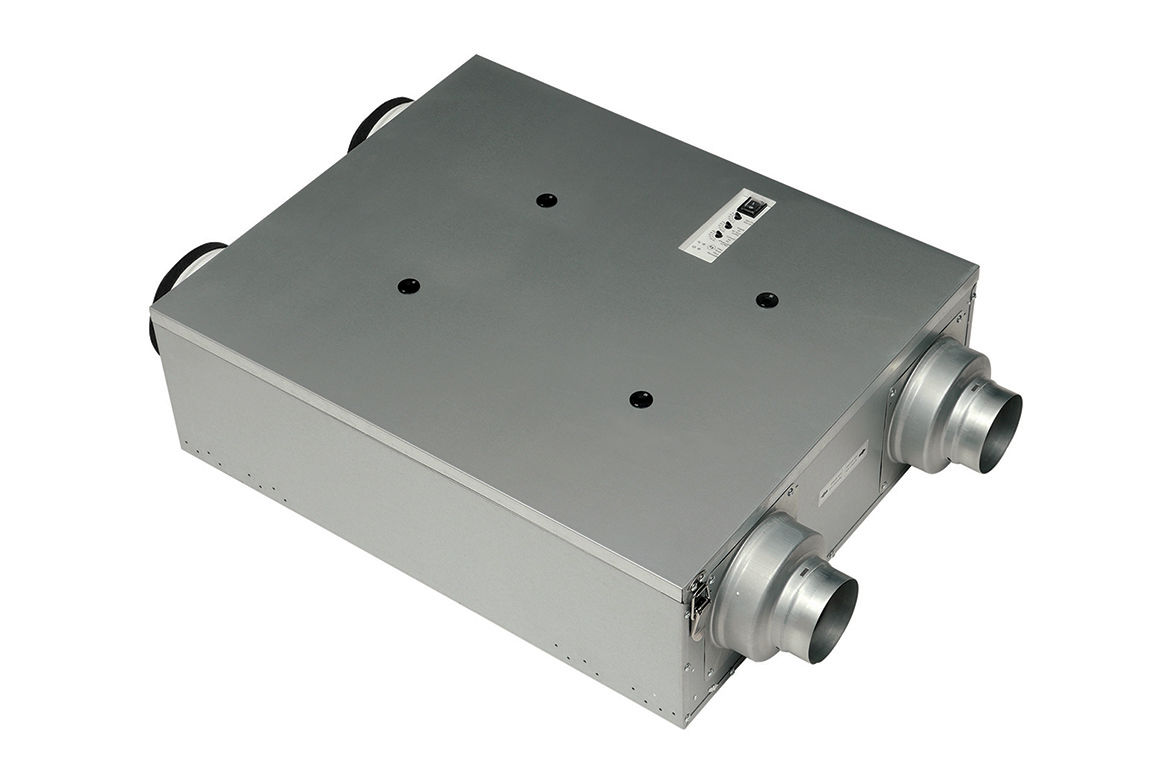
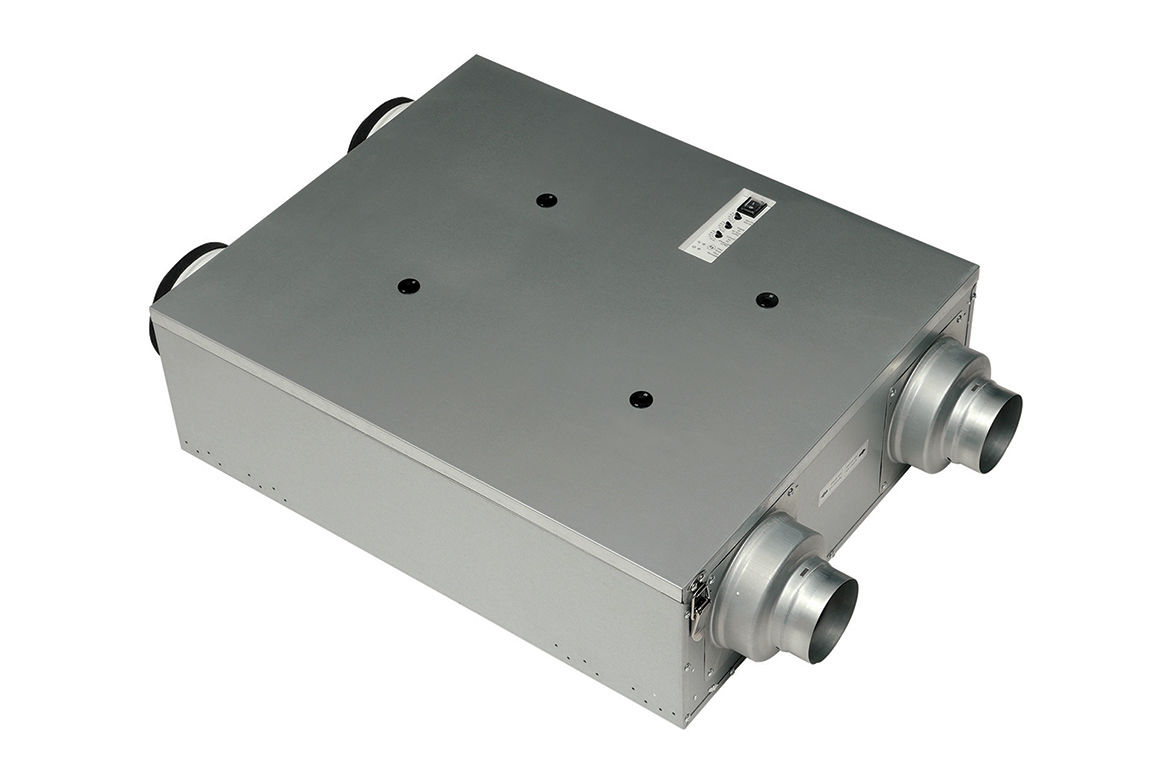
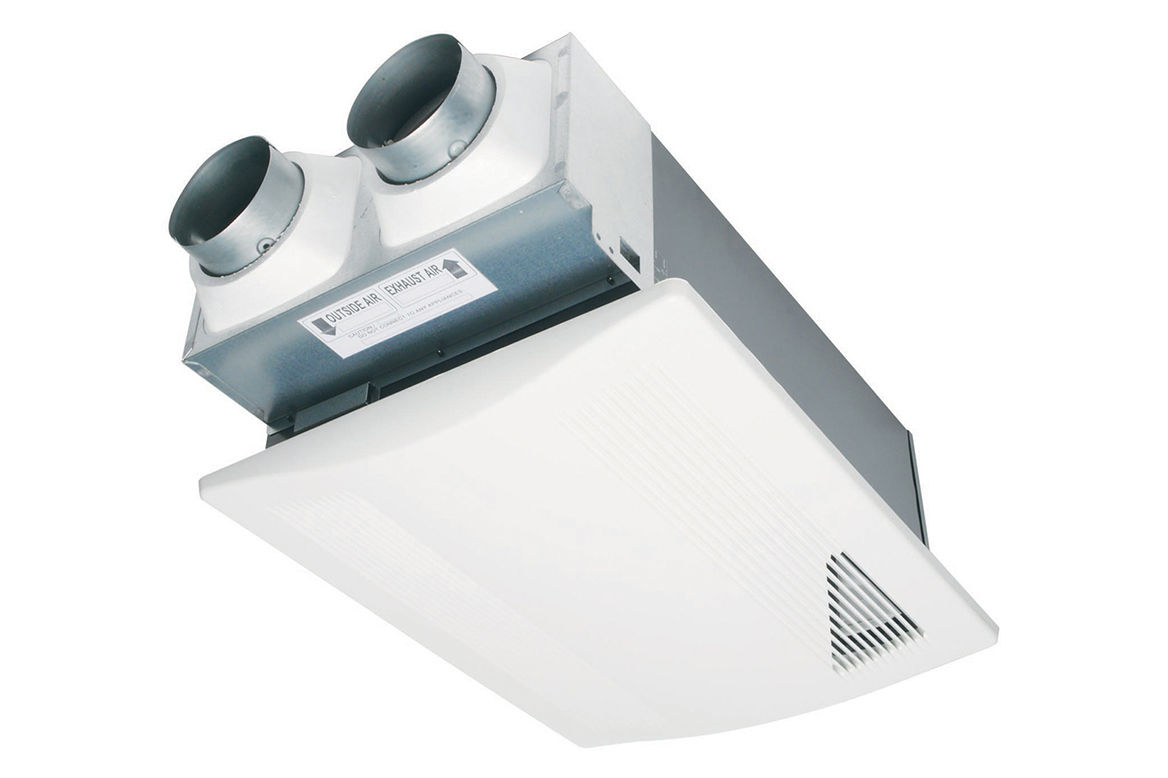
For those looking to add air exchangers into existing homes (and yes, you should probably have one) Panasonic has a small spot ERV (which I use) and a larger one now that can run standalone. ERVs don't require condensate drains, making them pretty flexible for installation.

Cold climate version:

Warmer climate version:

I will likely not replace the smaller FV-04VE1 that we are using as it is keeping CO2 levels in check in our particular application. However if faced with the decision today, I'd buy one of the bigger units as it would be in exchange mode longer during our cold winters.


yeldogt

Well-known member
Joined
Jan 2, 2012
Messages
18,184
I think what a lot of people who state they just run exhaust fans don't understand is that the air they are exhausting has to come from somewhere, and that somewhere is all the leaks in the house. So you are pulling dirty unconditioned air into your house. What good does that do?
Houses leak .... yes -- you are pulling in outside air. But -- it's the air you are going to get if you go outside? In many cases the air inside is more of a problem .... especially a new house with many products off gassing.

Many older houses leak enough that air-changes are not needed .. the stack effect and wind differentials on many that people think are tight do the same. A blower door test will tell.

IMO --- getting bathrooms cleared as fast and simple as possible is the ticket. I like programed intake air ... I would rather pay some penalty and keep a positive pressure house more of the time and just have the short term exhaust.

A very tight structure needs more control .... ERV/HRV's can be costly additions. Expensive to purchase/run/maintain ... and the transfer loss great over time.
 

Denwood

Well-known member
Joined
Sep 22, 2014
Messages
4,216
Location
Thunder Bay, Ontario, Canada
I have an older home, but with lots of retrofits. Stack effect and wind do the job (ish) at -30C or so, but at most other times the CO2 levels in our house (CO kills you, CO2 just gives you headaches/drowsiness) were rising above 1300 ppm. The target would be under 700ppm or so. My wife complained of "stale" air...and it was. The ERV resolved that issue, and only uses about 40 watts running.

Positive pressure here (particularly at very cold temps) is a virtual guarantee of mold/moisture issues, so the better bet is balanced, or slightly negative. We do have the typical bath exhaust and kitchen hoods (so three exhausts) but the ERV keeps the house fresh, manages air exchange during AC use in the summer, etc. HRV/ERV are now code required for a reason...building science has come a long way in the last decade or two.
 

slowtwitch73

Well-known member
Joined
Apr 18, 2019
Messages
5,876
Location
Hellgate
That explains it very well! The article that I was reading left out the important part of the grid transfering humidity, which is hard to understand... Wonder how efficient it is at transfering the humidity?? Similar to the temp I assume.

Not sure if I would want it running 24/7. It would be nice if you could set it up to run a certain amount of time x times a day. And also be able to manually turn it on from the bathrooms and kitchen so you could do away with fans in bathrooms with showers.
That's how ours is set up. Runs on a schedule at low speed, but bathrooms have timer switches that can turn it on anytime to high speed. If its on, its doing the whole house... can't have it condition just one space, which is fine.
 

beemerphile

Well-known member
Joined
Jul 9, 2021
Messages
727
Location
Danielsville, GA USA
Houses leak .... yes -- you are pulling in outside air. But -- it's the air you are going to get if you go outside? In many cases the air inside is more of a problem .... especially a new house with many products off gassing.
A properly designed intentional makeup source is always better than sucking air from unknown crevices and spidey holes. You get to choose between makeup air taken through a filter from a known intake location and totally unknown air quality that for all you know passes over a bed of hot rat excrement, mold, or could be sourced too close to an appliance vent or exhaust.
 

yeldogt

Well-known member
Joined
Jan 2, 2012
Messages
18,184
A properly designed intentional makeup source is always better than sucking air from unknown crevices and spidey holes. You get to choose between makeup air taken through a filter from a known intake location and totally unknown air quality that for all you know passes over a bed of hot rat excrement, mold, or could be sourced too close to an appliance vent or exhaust.
But that is what is going to happen -- once you inject heat (power) air will flow. any wind outside and the same will happen.
 

yeldogt

Well-known member
Joined
Jan 2, 2012
Messages
18,184
I have an older home, but with lots of retrofits. Stack effect and wind do the job (ish) at -30C or so, but at most other times the CO2 levels in our house (CO kills you, CO2 just gives you headaches/drowsiness) were rising above 1300 ppm. The target would be under 700ppm or so. My wife complained of "stale" air...and it was. The ERV resolved that issue, and only uses about 40 watts running.

Positive pressure here (particularly at very cold temps) is a virtual guarantee of mold/moisture issues, so the better bet is balanced, or slightly negative. We do have the typical bath exhaust and kitchen hoods (so three exhausts) but the ERV keeps the house fresh, manages air exchange during AC use in the summer, etc. HRV/ERV are now code required for a reason...building science has come a long way in the last decade or two.
There is no one solution that will work everywhere. I'm in a radon area ... so having a slight positive is a good thing. A poorly designed radon system can make a negative house and be doing only a partial job all the while wasting both electric for the fan and sucking out conditioned air. Slabs leak all around the edges ,,,

HRV/ERV do work ... the question: Is it the best ? Maybe it is ... Moving target IMO
 

Kaizen

Well-known member
Joined
Jan 9, 2015
Messages
6,948
Location
New England
There is no one solution that will work everywhere. I'm in a radon area ... so having a slight positive is a good thing. A poorly designed radon system can make a negative house and be doing only a partial job all the while wasting both electric for the fan and sucking out conditioned air. Slabs leak all around the edges ,,,

HRV/ERV do work ... the question: Is it the best ? Maybe it is ... Moving target IMO
In my case it is doing exactly what i wanted. My dehumidifier has not needed to run since the dry outdoor air is tempering any indoor humidity as well as knocking down my short term radon to about 4.
My professional radon test pre hrv came back at 7 so that little monitor i pictured above is pretty accurate in case anyone is looking for one.
As i continue to improve my house it gets more sealed from what it is used to for 120 years so i'm sure i will have unexpected things to contend with.
 
To avoid these ads, REGISTER NOW!
Top Bottom