To avoid these ads, REGISTER NOW!

Above 1200 Sq/FT Restored 1930's Auto Shop

Wokspaces above 1200 squarefeet.
OP
B

BB767

Well-known member
Joined
Dec 24, 2009
Messages
3,724
Location
Philo, IL
1964 Impala Super Sport Hub Caps

The hubcaps from the 1963 and 1964 Super Sports were a big deal when I was in high school.......

.......I bought a set of the 64' Super Sports hubs caps off of a used car on car lot for $10.00 which I though was a good deal........


........ Growing up in a wrecking yard and building cars from junk and trading parts and work for parts was a good way to learn about cars and to keep my car going.

Seeing your 64 with those hubcaps made me think of all this. So it is your fault for having so much content on here that caused me to carry on like this.

Thanks and I enjoy your thread very much.:thumbup:

Vince


Vince I think the '64 SS hubcaps were the best ever! '63's are good as well, but these were top of the heap. A nice set of 4 are $400-500 these days. NOS (New Old Stock) ones go for more than $500 each! :eek:


I quite agree that growing up around junked cars and making stuff from them is a great way to learn.

Thomas
 
To avoid these ads, REGISTER NOW!

oberst

Well-known member
Joined
Jan 8, 2008
Messages
205
I believe those hubcaps on the rail are from a shoebox Ford...and those headrests are the business!
 
OP
B

BB767

Well-known member
Joined
Dec 24, 2009
Messages
3,724
Location
Philo, IL
I believe those hubcaps on the rail are from a shoebox Ford...and those headrests are the business!

Mike you give two 14 year olds the run of the shop and yard and you never know what they'll come up with. You could be right about the hub caps, I've slept since we built that contraption many, many years ago. That's what you call a Custom Build. We were mighty proud of that machine. That was all BC - Before Chris. :)

Thomas
 

MG David

Well-known member
Joined
Apr 14, 2009
Messages
192
Location
Warwick UK
The fuel tank on your special is great. As far from the driver as possible. You clearly had an early instinct for safety!
Great car. Was it only for use in the garden or did you sneak out onto the public highway?
 
OP
B

BB767

Well-known member
Joined
Dec 24, 2009
Messages
3,724
Location
Philo, IL
The fuel tank on your special is great. As far from the driver as possible. You clearly had an early instinct for safety!
Great car. Was it only for use in the garden or did you sneak out onto the public highway?

Glad to see you appreciated the safety nuances designed in David.......even though we had no idea at the time!


We used it on country roads which ran right in front of Mr Johnson's shop. The above picture is right in front of my house in Philo. Never drove on the public highways! Speedometer worked and if it was somewhat accurate, we saw 75 mph (120 kph) on it. In the winter when the ground was frozen, we'd drive it across farm fields too - kind of an early ATV. :)

Thomas
 
OP
B

BB767

Well-known member
Joined
Dec 24, 2009
Messages
3,724
Location
Philo, IL
Powermatic Manual New Home

Just as I'd hoped, the Powermatic Band Saw manual has found a new home. A fellow member wrote that he had acquired a model #143 saw last month and was looking for a manual. Perfect. I still have the Kohler manual. Thanks everyone.

Thomas
 
OP
B

BB767

Well-known member
Joined
Dec 24, 2009
Messages
3,724
Location
Philo, IL
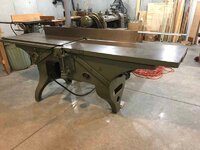
Yates-American 18" Planer

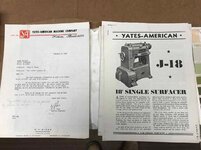
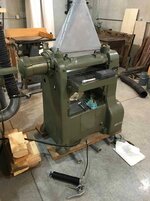
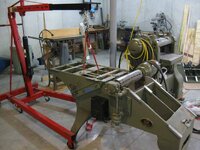
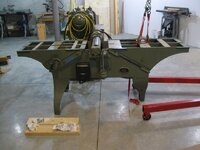
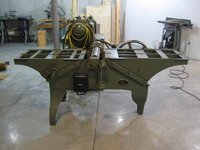
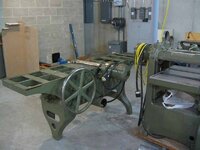
For those of you waiting patiently, I'll pick up with setting up and servicing some of the machines in the wood shop. Let's start with the Yates-American Planer. I went through all of our records of the planer and thought I'd post them in case someone has been waiting for more information on this machine.

IMG_6284_zpsop4mjg6y.jpg

Dad contacted Yates-American (YA) to get any and all information they had on the planer and jointer as well. The company service engineer, M.J. Hass sent us everything YA had pertaining to the machines.

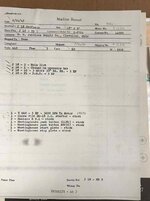
IMG_6285_zpsahrmdckk.jpg

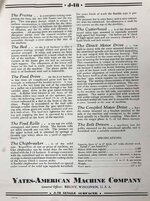
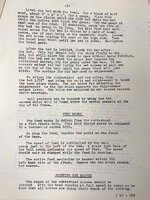
This shows the date of the order for the planer, June 24, 1943. It was shipped July 14, 1944. Below are the owner/operations manual for the planer.

IMG_6288_zps8ly6m8n0.jpg

IMG_6296_zpslz3cjdeo.jpg

IMG_6290_zpsc93sl1lu.jpg

IMG_6291_zpsjxrj5ina.jpg

IMG_6292_zpsamk3wdam.jpg

IMG_6293_zpsvovxhrng.jpg

To put the planer back in service after it had been sitting for a couple of years...

IMG_6273_zpsd6giquhz.jpg

IMG_6274_zps73dduboa.jpg

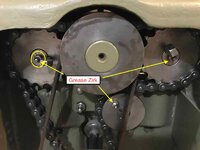
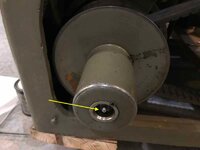
...I removed all service panels. Making a visual inspection, it showed nothing unusual internally. Everything was operating as designed and no adjustments were needed. I then proceeded to grease the machine. There are no pictures of where all the various grease zirks were, so I had to just hunt them all out. Having the machine clean greatly aided in that search.

GreaseZirk1_zps7vdxbgx0.jpg

Zirk2_zps1koycss8.jpg

Zirk3_zpsqqefosw0.jpg

Zirk4_zpsjbm0jamj.jpg

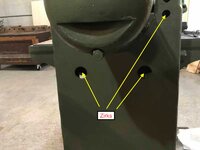
Most of the zirks were obvious and easy to get to, but a few...

Zirk6_zpsbnzwnb8m.jpg

Zirks5_zpsm3rwce0m.jpg

...were only discovered after going over the machine visually several times.


FrozenZirk1_zpsnjohokqy.jpg

This zirk wouldn't accept grease...

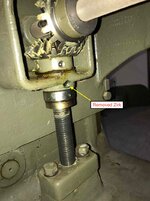
RemovedZirk1_zpsmiro1axc.jpg

... so it was removed...

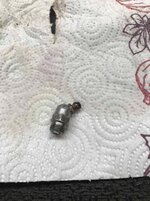
IMG_6301_zpsu5ubeonh.jpg

IMG_6304_zps5haaciv2.jpg

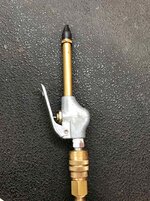
...and cleaned. Using a small pick and compressed air, I was able to remove all the old, harden grease and it is now good to go for a few decades more.

With the drive chains cleaned and lubricated, all zirks serviced and everything cleaned up inside...

IMG_6307_zpslgffu4rs.jpg

...the service panels were re-installed...

IMG_6309_zps4ykbx7pr.jpg

IMG_6310_zpsj1jotpwu.jpg

...and the hand wheel re-installed. The planer was then run for 20 minutes or so to let all the various parts get run in and thoroughly lubricated. The bearings on the cutter head use grease cups, not zirks, for lubrication. Grease cups have been discussed here before but I'll review that when I post about putting the jointer back in service.

So my, 76 year old, Yates-American 18" single surfacer planer is once again, ready to provide service for me. Our family has owned it for over 40 years now, which is longer than the original company, Fanner Mfg. Co, of Cleveland OH owned it.

As you can see, with proper care, these older wood working machines can last almost indefinitely. They were well engineered and designed and manufactured to the highest standards using the finest materials available. The likes of which will never be seen again. I feel very fortunate to be the custodian of such fine machinery. Up next will be the 16" YA Jointer. Thanks everyone.

Thomas
 
OP
B

BB767

Well-known member
Joined
Dec 24, 2009
Messages
3,724
Location
Philo, IL
Thanks Thomas!

You are more than welcome. As you know I have a very personal attachment to my equipment in general, but these 2 machines (YA planer/jointer) in particular. Dad was as happy as I'd ever seen him when he won these at auction in the late 1970's. I'm sure he never dreamed he'd ever own such fantastic equipment.

After I restored them and I would watch him use them, he had such joy and satisfaction on his face. It left an indelible memory with me. A few years before he passed away our daughter video taped him for several hours asking him various questions about his life. When she asked him what he was most proud of accomplishing in his life, after a little thought he replied, "putting together a rather complete wood working shop with mostly high quality vintage equipment".

So glad you were able and willing to revive the original zirk!

So was I Bill! No way was I going to replace that zirk if at all possible. It's made of much better quality material than a new one would be. I knew if I could remove it, I could get it functioning again. After all, it's only original once!

Thomas
 

CrocBox

Member
Joined
Nov 10, 2019
Messages
11
Location
FL
Outstanding post, Thomas. The back story adds so much perspective to the restoration.

Sent from my XT1650 using Tapatalk
 

Sweet Old Bill

Well-known member
Joined
Mar 20, 2009
Messages
362
Location
N. California
Thomas,

Is there now a list of all of the zirk's, with diagram of location? An extra copy inside one of the machine's service panel might help someone else 50-75 years down the road.
 

MG David

Well-known member
Joined
Apr 14, 2009
Messages
192
Location
Warwick UK
Am I correct in thinking this machine used to turn a sawn piece of timber from slicing up a tree into a smooth planed piece for making furniture etc?

In some pictures a while back you showed a store of planked American Walnut (there may have been a picture of the tree as well) and there are also pictures of finely crafted furniture you have made so I guess this machine is one of the missing links.
 
OP
B

BB767

Well-known member
Joined
Dec 24, 2009
Messages
3,724
Location
Philo, IL
Planer VS Jointer

Thomas,

Is there now a list of all of the zirk's, with diagram of location? An extra copy inside one of the machine's service panel might help someone else 50-75 years down the road.

That's a great idea Bill. I have them notated on the operating instructions but a diagram located inside the main service cover would be a good spot for it. I'll see what I can do about that. Thanks.

Am I correct in thinking this machine used to turn a sawn piece of timber from slicing up a tree into a smooth planed piece for making furniture etc?

In some pictures a while back you showed a store of planked American Walnut (there may have been a picture of the tree as well) and there are also pictures of finely crafted furniture you have made so I guess this machine is one of the missing links.

David a jointer is first used on a board from the saw mill that still has rough saw marks on it and might not be completely flat and true.

IMG_4100_zpsahdpmvwh.jpg

This is the slab of walnut that eventually became the mantle for example. While dimensionally it is straight and true with no warps, cupping or twists...

IMG_4107_zpszux7xveo.jpg

... it is rough sawn and needed to be dimensioned to the finish thickness. To start that process...

IMG_4202_zpswbndahzr.jpg

... it was cut to length.

IMG_4205_zpsx7wa1pe0.jpg

Then to create a smooth, true and flat surface on one side it was run over the jointer. Note the rough saw marks.

IMG_4204_zpsrmey0fsv.jpg

After being jointed it now had a mostly smooth, flat surface that would be used as a reference surface.

IMG_4214_zpsx8dw9e0a.jpg

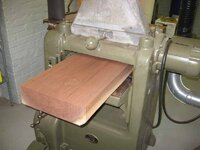
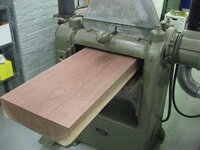
It was then taken to the planer where the smooth, jointed surface was placed face down on the planer platen.

Platen1_zps34nn8agj.jpg

The platen is this large casting that moves up and down via the hand wheel on the side.

IdleRollers_zpsk2myw6iu.jpg

With the platen lowered you can see it has 2 idler rollers. Those are positioned directly below the 2 feed rollers above them (not seen) on either side of the cutter head. To the left is the thickness scale. The pointer points to the approximate thickness the board or slab will be after it passes through the planer when set to the thickness indicated on the scale. The reason you want to start with flat, smooth surface on a board, is that a planer will cut a surface on the board that is parallel to the surface on the platen.

IMG_4207_zps95lz6e1u.jpg

Here the mantel is being fed into the planer...

IMG_4211_zpszasihzgx.jpg

IMG_4213_zpsbiqutylz.jpg

...until it is the final desired thickness.

So to recap, a jointer ...

IMG_2382.jpg

...smooths and trues up a surface or edge and a planer...

IMG_4212_zps5cnb3qcb.jpg

...is used to thickness a board or slab.

Hope that doesn't cause any confusion. Let me know and I can expand some more and really confuse you!! ;) Thanks to all for your interest.

Thomas
 

kevink1955

Member
Joined
Oct 1, 2019
Messages
10
Location
Suffolk Ny
Quite an amazing collection of equipment and such a clean shop!! My woodworking equipment consists of a chop saw and inexpensive table saw. There is always a pile of saw dust covering everything around the saws. Oh I forgot to mention I also own a SawzAll Lol.

Great job on the shop restoration and the Home build, your attention to detail is great and seen so infrequently these days. I return to this thread every few weeks to see what you are up to now, Love it.
 

MG David

Well-known member
Joined
Apr 14, 2009
Messages
192
Location
Warwick UK
Thomas, thanks for going to the trouble to explain. You had mentioned the jointer before but I had assumed it was a machine for cutting mortise and tenon or tong and groove or similar.

If I have understood the jointer gives you the datum face.

Great collection of equipment.
 
To avoid these ads, REGISTER NOW!

stillp

Well-known member
Joined
May 5, 2015
Messages
428
Location
Midlands, UK
In the UK, the first stage is done on a planer, then when one side is straight and flat we use a thicknesser. So, US jointer = UK planer, US planer = UK thicknesser.
Two great countries divided by a common language...
Pete
 
OP
B

BB767

Well-known member
Joined
Dec 24, 2009
Messages
3,724
Location
Philo, IL
Language Barrier

Thomas, thanks for going to the trouble to explain. You had mentioned the jointer before but I had assumed it was a machine for cutting mortise and tenon or tong and groove or similar.

If I have understood the jointer gives you the datum face.

Great collection of equipment.

Happy to help out David. Sounds like like you've got it now. :)

In the UK, the first stage is done on a planer, then when one side is straight and flat we use a thicknesser. So, US jointer = UK planer, US planer = UK thicknesser.
Two great countries divided by a common language...
Pete

Pete, there is confusion in this country too about machine terminology. Note the original Yates-American literature called the planer a "Surfacer", but engineer Haas called it a planer. Back in the 1930's and 40's and even into the 50's the term "surfacer" was often used. Even now, every so often I'll hear a planer called a surfacer. At some point those machines started to be called thicknessers and or planers. Not sure when or why. It might even be a regional thing.

For additional information on the operation of the jointer, look back to page 247, post # 4921. There I went into basic detail of how a jointer works. Cheers to all.

Thomas
 

TR6SR650

Well-known member
Joined
Dec 13, 2012
Messages
65
Re: Language Barrier

Thomas, allow me to go one further. When I was in Junior High School, about 1958 or 59 my shop teacher referred to them as a "surfacer-planer", one word. The times I used one that is how I referred to them. He eventually allowed me to use it unsupervised.

Calvin
 

realvc

Well-known member
Joined
Jan 7, 2011
Messages
394
Location
Lake Norrell, AR
I've tried very hard not to say anything.

All this talking about jointers and planers makes me wonder, if you operate a jointer does that make you a jointer? If you operate a planer does make you a planer or does operatering a planer make you a piloter?:thumbup:

Sorry, that is just the way my mind goes.
Remember when I thought it whas funny to ask about the "windshield factor" trying to make a joke about the "wind chill factor" and how well that went over?:)

I like zerks. When working at an auto parts store zerks and wheel cylinder bleeder screws were the parts that took a while to find.

Vince
 
OP
B

BB767

Well-known member
Joined
Dec 24, 2009
Messages
3,724
Location
Philo, IL
I've tried very hard not to say anything.

All this talking about jointers and planers makes me wonder, if you operate a jointer does that make you a jointer? If you operate a planer does make you a planer or does operatering a planer make you a piloter?:thumbup:

Sorry, that is just the way my mind goes.
Remember when I thought it whas funny to ask about the "windshield factor" trying to make a joke about the "wind chill factor" and how well that went over?:)

I like zerks. When working at an auto parts store zerks and wheel cylinder bleeder screws were the parts that took a while to find.

Vince

I'm sure I speak for many here in that we admire your restraint Vince. And who can forget the "windshield factor"/"wind chill factor" post? It's good to shake things up every so often! ;) Thanks

Thomas
 
OP
B

BB767

Well-known member
Joined
Dec 24, 2009
Messages
3,724
Location
Philo, IL
Yates-American 16" Hand Jointer

Here's some background and additional information on the YA 16" Jointer some of you might find interesting.


IMG_6286_zpsfqinycaz.jpg

Dad once again communicated with YA about the jointer and engineer M.J. Haas sent us information on the machine.

IMG_6294_zpsori8kxof.jpg

IMG_6295_zpsygnsb4u0.jpg

Below is a copy of the YA machine record.

IMG_6287_zpsycxjmtds.jpg

Note it was ordered January 27, 1944 and shipped to Fanner Mfg. Co., May 19, 1944. When we bought it and the planer at auction in the late 1970's, they were both being used in the pattern makers shop for the foundry at Fanner. We were confident that since they were used in the pattern makers shop to make molds for the foundry, that they had been well maintained and cared for. That has since be proved to be the case as both machines were in excellent operating condition. All I did was essentially just physically and cosmetically clean them up and do a little "tweaking" as necessary.

IMG_6395_zpsffg8esmv.jpg

Some of the information provided to us was a 16 page parts list with sheet 1 seen above. Note the date on the upper right, 6-30-30. That's the date these parts were first brought into production at YA. This means these jointers were first designed and brought into production by YA in 1930. When our particular jointer was manufactured in 1944 that design was already 14 years old. Other pages of the parts list show parts designed from as early as 1929 and revised as late as the 1950's so YA used the core design for over 20 years with mild revisions. A testament to a good, original design.

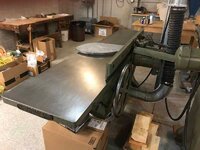
To set the jointer and all other equipment up, they were moved from the barn...

IMG_2368_zpsq853fxy9.jpg

IMG_2367_zpsdz5ga77c.jpg

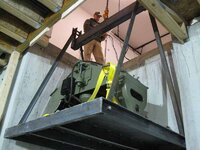
... to the basement via my lift. This was before the lift was powder coated of course.

IMG_5051_zpscdwmiaid.jpg

Since I was working alone, I brought my engine hoist down to the basement to assist in setting the jointer up.

IMG_5053_zpslgdej03s.jpg

IMG_5055_zpswjn9f73o.jpg

IMG_5057_zpssijoyffz.jpg

IMG_5062_zpsjasankba.jpg

IMG_5065_zpsyk2scgv8.jpg

IMG_5070_zpsnaljlbxv.jpg

IMG_5071_zpsog11l77l.jpg

Here's it's done with the the in-feed and out-feed tables next to be set up.

IMG_5337_zpsfbmbdvgd.jpg

IMG_5342_zps90aenwea.jpg

Once those were brought in...

IMG_0627_zpscym0czwb.jpg

... and installed along with the fence the set up was largely done. Next was servicing it to get it ready for use after sitting idle for a couple of years.

IMG_6319_zpsbipnsc5p.jpg

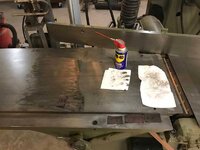
First thing was to polish the tables and fence. They were pretty clean and rust free but the last time this had been done was 1982 and I thought they were due. I used 400 grit emery cloth and WD40 as a lubricant.

IMG_6317_zpsmvot0dov.jpg

All hand work doing a small area at a time, I polished in the same direction as the machining marks on the tables.

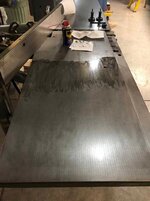
IMG_6318_zpsa3hawttw.jpg

I did each table twice, each time getting them a little more clean. I'd only work for a couple of hours at a stretch.

IMG_6339_zpsttlkr2q3.jpg

After a couple of times polishing them, they were quite clean. I'd cleaned and greased each table support and table ways as the machine was re-assembled so all that was left now was to grease the cutter head ball bearings via grease cups.

OldGrease_zpscsz8ufv7.jpg

The grease cups were repacked with new grease and with the machine running they were slowly turned in until the old grease was displaced...

IMG_6329%20copy_zpsvwb6rbmy.jpg

...with new grease showing. I left it running then for about 20 minutes with no load to thoroughly get the new grease into the ball bearings.

IMG_6338_zpsh5fgro6c.jpg

Now just like the planer, the jointer is cleaned, serviced and ready to work for a few decades more. I hope this is helpful information for some of you.

Thomas
 
OP
B

BB767

Well-known member
Joined
Dec 24, 2009
Messages
3,724
Location
Philo, IL
Do you wax the planer (OK, jointer) tables Thomas?
Pete

Yes I do Pete, in fact I wax all the bare metal surfaces of all the machines in the wood shop. I use...


...good old Johnson's paste wax on everything bare metal.


This is a practice I picked up from Dad. As you can see this can is just about done for and my waxing cloth is just about worn out. I don't use much wax, just a thin coating helps keep rust away and it does make the surfaces slicker when feeding wood over them. With a thin coat on the metal surfaces, wiped off after it's dried, it never transfers to the wood itself which could be a problem.

Anyway, using dehumidifiers and keeping the humidity in the shop below 45% and wax on bare metal surfaces, we've never had any hint of rust on the machines. Note: remember how clean all the bare metal surfaces were inside the planner service covers. Works good and lasts a long time. Highly recommended.

Thomas
 

stillp

Well-known member
Joined
May 5, 2015
Messages
428
Location
Midlands, UK
I wax all my machine surfacers as well, as you said it prevents rust and reduces friction. My bandsaw has a cast aluminium table, so rust isn't a problem, but a little wax helps the wood slide and stops any resin from sticking. I use a wax called Briwax, which is high in carnauba so sets very hard.
I made a mistake earlier when I referred to my planer as a Kity - that's the make of the bandsaw. My planer/thicknesser is actually badged AEG but made by Lurem. It's part of a combination machine, which also has a circular saw, spindle moulder, and slot mortiser, run from a single motor. I don't have space for separate machines, so when this came my way for £200 I had to snap it up.
Pete
 
OP
B

BB767

Well-known member
Joined
Dec 24, 2009
Messages
3,724
Location
Philo, IL
Yates-American Grease

Thomas, what type of grease are you using?

Calvin

Calvin, this is what Yates-American attached right to the side of the jointer and specified for lubrication of the bearings in 1944...


If you can't read the data plate, the 3 they listed were:

1. Starfak No. 2 (Texas Oil Co.)
2. Hytex No. 3 (Texas Oil Co. )
3. Andok M275 ( Standard Oil Co.)

They could also provide names of other approved products.
What they caution against in the operations manual was, "do not use oil or grease containing any filler whatever. Graphite, mica and soaps used in cheap greases are injurious to the highly polished surfaces of the ball bearings"

I did some research to find modern equivalent grease.


This is what we've always used in both the planer and jointer.

Mystik JT-6 Hi-Temp Grease is a high-temperature, lithium-complex grease that combines excellent multi-purpose properties with a high dropping point and low-temperature pumpability that provides a wide operating temperature range. This product provides superior protection in heavily-loaded industrial, mining and construction applications.

Both machines are designed for heavy industrial use. Once we removed them from the factory and brought them home, they have only been lightly used to say the least. Any high quality grease will do especially when you consider how the machines are now used. Modern lubrication materials are greatly superior to what was available in the 1930's, '40's and 50's.

Thomas
 

TR6SR650

Well-known member
Joined
Dec 13, 2012
Messages
65
Thanks Thomas! I need to renew my grease supply. Mystik JT-6 Hi-Temp Grease looks to be exactly what I'm looking for.

Calvin
 
OP
B

BB767

Well-known member
Joined
Dec 24, 2009
Messages
3,724
Location
Philo, IL
New Homes For Manuals

Just a heads up to everyone here. The 2 manuals I was giving away, see post # 11956, have both been mailed off to new homes. Glad they will be put to use.


Presently I'm working on wiring the basement wood shop lighting. The ceiling tiles should be completed within the next 30 days or so. This is the last big project at the house and I can't wait! Stand by.


Thomas
 
OP
B

BB767

Well-known member
Joined
Dec 24, 2009
Messages
3,724
Location
Philo, IL
Route 66 Part 2

Part 1 of the Route 66 trip information can be found on page 588, post # 11475. Moving forward here is additional information our Route 66 trip last April.

The 2 other cars that did the trip were located in California so they were shipped to the old shop where I stored them until we left on the trip.


The car carrier arrived at my shop before sunrise (note the long shadows) to deliver the cars.


Some very interesting cars like this Lamborghini Black Widow had to be unloaded first to provide access to the cars used on the trip. The cars driven on the trip were...


...a 1966 Chevelle SS 396 and...


...a 1966 Shelby GT 350 Mustang, both with manual transmissions and were both...


... almost entirely stock. No A/C, cruise or reclining seats etc. My new Corvette of course had all of those creature comforts and more but in my defense remember, I was driving round trip, nearly twice as far as they were. :eek:


With the cars safely stored in the shop, battery tenders were hooked up and I did some cursory checks to make sure all was in order.

A week later the fellow 2 driver teams (driver and a navigator each) flew into Chicago the day before the start of the trip. I picked them up and took them for an overnight at our house in Philo. For the trip we took short range walkie talkie radio's that had a range of about 1 mile. It made communicating much easier and faster than cell phones. 1 team also had an iPad which has a larger screen than a cell phone and was better using Google Maps to navigate the old road. Next day, after the cars were packed for the trip...


... they were lined up in front of the house for the start of the approximate 2 week trip. The day before, on the drive home to Philo from the airport we visited the few Chicago sites we wanted to see. That meant we started the trip in the old cars in Joliet, Illinois (IL)...


... at the abandoned old State Prison as seen in the film "The Blues Brothers" and headed south and west for the next 2 weeks.

What follows are some of the stops made along the way in IL.


There are several old service stations like these in Illinois. Inside...


...are lots of period tools and equipment. Many are similar to the ones that were left in Mr Johnson's shop. Right down to this...


...very nice Walker floor jack! :thumbup:


Before there were hydraulic lifts or if they couldn't afford a lift, many stations used racks like this to service cars from underneath. This one apparently hadn't been used in quite a while.

Leaving Illinois, Route 66 use to cross the Mississippi River...


...at the Old Chain of Rocks Bridge: https://www.nps.gov/nr/travel/route66/chain_of_rocks_bridge_illinois_missouri.html


It's only open to traffic 1 day a year now.

In Missouri (MO) we stayed in Cuba, MO...


... at the Wagon Wheel Motel. Where possible we always stayed in old vintage motels. Highly recommended. Part 3 is next, please check back. Thanks.

Thomas
 
Last edited:

Turbo1Ton

Well-known member
Joined
Dec 23, 2007
Messages
53
Ahhh, The Wagon Wheel... Made a quick stop by there last summer when we went through on the way home from visiting family in Irvington IL. Ate lunch next door at Missouri Hicks barbecue.

Glad to see another episode of the route 66 saga. Can't wait for the next one!

Thank Thomas for making this the most interesting thread on the internet!

-- Jeff


Sent from my iPhone using Tapatalk
 

ZAPPER68

Well-known member
Joined
Feb 14, 2011
Messages
807
Location
Sand Pit
This thread is 600 pages and 12,000 posts of which I have read with interest every one...

Thank you Thomas for the 'ride'.
 
To avoid these ads, REGISTER NOW!
Top Bottom