MushCreek
Well-known member
Our clay is pretty brutal, but sweet gum and Virginia pine seem to think it's OK, as do certain weeds, blackberries, and blueberries. When it gets dry, it's pretty close to brick.


maybe growing peanuts might work..........

Plant peanuts in clay, come back in a few million years and you will have fossils.

"We have plenty of trees and crops that thrive on clay around here. "
You must have some extremely special clay. Stuff around here has 0% organic material, no nitrogen and requires a jack hammer to dig with; have to admit very good bricks are made of it. Here it takes 20 years of weed growth before enough soil is produced to grow stunted trees, hell, even worms have a hard time.
Care to supply a picture of just one of your thriving crops.

I'll trade you my sand for your clay. You'll have plenty of drainage, but you won't be able to grow grass.
Just to follow up on this old thread....I ended up borrowing my neighbor's post hole digger and started digging a hole. It's not the typical post hole digger that you stab into the ground, spread the handles apart, and then lift and dump the dirt. It's an old school tool that you put into the hole and twist until it's full of dirt. The good thing about that type of tool is that there's no limit to the depth of the hole you can dig. I dug down 4' and was still pulling up clay, so I put on a 5' extension and kept digging. When I got about 8' deep, I started to hit what appeared to be gravel. And once I got through the shallow layer of gravel, the dirt I was pulling up was a completely different color (brown versus the red clay) and was obviously not sticky clay. I filled the hole with drainage stone about 2' from the top and then laid a piece of landscape fabric on top. Then I expanded the hole to about 8" wider than the root ball of the new tree, put a few bags of topsoil in the hole and planted the tree with the top of the root ball sticking out of the ground by about 5", surrounding the tree with fresh top soil and using it to make a nice mound up to the tree trunk.
The tree is a Merlot Red Bud (really pretty tree, it's full of purple flowers and then it gets dark red, almost purple colored leaves all season. It was about 8' tall when planted and had a really big root ball on it. The nursery told me to leave the root ball in the cage when I plant it and to just cut slices into the burlap for the roots to expand. Hopefully this one survives.
Tulips.
Just to follow up on this old thread....I ended up borrowing my neighbor's post hole digger and started digging a hole. It's not the typical post hole digger that you stab into the ground, spread the handles apart, and then lift and dump the dirt. It's an old school tool that you put into the hole and twist until it's full of dirt. The good thing about that type of tool is that there's no limit to the depth of the hole you can dig. I dug down 4' and was still pulling up clay, so I put on a 5' extension and kept digging. When I got about 8' deep, I started to hit what appeared to be gravel. And once I got through the shallow layer of gravel, the dirt I was pulling up was a completely different color (brown versus the red clay) and was obviously not sticky clay. I filled the hole with drainage stone about 2' from the top and then laid a piece of landscape fabric on top. Then I expanded the hole to about 8" wider than the root ball of the new tree, put a few bags of topsoil in the hole and planted the tree with the top of the root ball sticking out of the ground by about 5", surrounding the tree with fresh top soil and using it to make a nice mound up to the tree trunk.
The tree is a Merlot Red Bud (really pretty tree, it's full of purple flowers and then it gets dark red, almost purple colored leaves all season. It was about 8' tall when planted and had a really big root ball on it. The nursery told me to leave the root ball in the cage when I plant it and to just cut slices into the burlap for the roots to expand. Hopefully this one survives.

I will argue that tulip polders are not clay. Polders are made from land reclaimed from the sea that is sandy and loaded with organic material and they are also extremely well drained...
Tommy
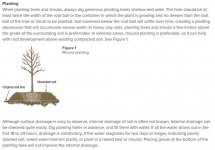
This is not the way either. When planting in clay soil, the best way is to raise the root ball, how much depends on seeing how long it takes the clay soil to drain. If the tree has a B&B, the root ball will be clay. So the backfill should be the same clay as well, not amended as this can retain the water, and hinder root growth into differing soils. And you do not dig below the height of the root ball, you want it resting on the virgin compacted soil. Any amendments to the soil is for surrounding the dig and maybe just the top couple inches of the hole backfill.Who taught you how to plant trees?
Here's how you can fix it......dig a hole 2-3 times larger diameter than the root ball, and deeper than the root ball If your root ball is 18" in diameter (diameter is across the root ball and not around it) then your hole should be not less than 36"-54" wide. And dig the hole at least 2'-3 deep. Fill the hole with a good soil to bring the root ball up to the height it should be. Take and cut all the **** off of the root ball, meaning remove the cage and burlap. Loosen the roots of the tree the best that you can, place it in the hole, then back fill with good dirt, add a little bit of fertilizer, then water. But don't flood it. Once the tree starts to get it root system spread out, the roots will grow into the clay. It will them flourish.
No, it’s clay. My neighbour down the road grows tulips and I’m pretty sure it’s clay.
Problem is that the rain water sits on top of the clay draining slowly. Last year a farmer made the news losing his harvest because they couldn’t get the machinery in in time because of the rain.
When it’s too dry the hard clay damages produces like potatoes during harvest.
This is not the way either. When planting in clay soil, the best way is to raise the root ball, how much depends on seeing how long it takes the clay soil to drain. If the tree has a B&B, the root ball will be clay. So the backfill should be the same clay as well, not amended as this can retain the water, and hinder root growth into differing soils. And you do not dig below the height of the root ball, you want it resting on the virgin compacted soil. Any amendments to the soil is for surrounding the dig and maybe just the top couple inches of the hole backfill.
Any of the other amendments people have been talking about are for gardening, not planting woody root plants into clay soils.
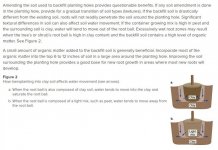
As for the hole filled with gravel, I have seen the OP's "sump" method before as a recommendation, but by also inserting a perforated pipe. Never just a bed of gravel though.
The burlap and string should be removed (at least as much as you can down to the bottom without collapsing the root ball), as even natural burlap takes quite a while to deteriorate. It could be synthetic, then it will impede growth.
The local ag extension offices are the best source of info, here is some on clay soils:
Well, I learned a new thing. I would have thought Holland made polders the same way as Denmark and other similar areas I've seen.
Tommy
Again, adding gypsum and other amendments to clay soil is only for gardening, not woody root systems. That means you can do it for your grass, tomatoes, and basil, but not trees. And even then you should only be adding based on a pH soil test so you know what and how much. Check your local university extension office, they will not recommend amending clay soil for trees.I got a 40# bag of gypsum at Lowe's and walked around a grass area with bare spots because of clay. It immediately softened up the clay once it was wet and dissolved:
This is not the way either. When planting in clay soil, the best way is to raise the root ball, how much depends on seeing how long it takes the clay soil to drain. If the tree has a B&B, the root ball will be clay. So the backfill should be the same clay as well, not amended as this can retain the water, and hinder root growth into differing soils. And you do not dig below the height of the root ball, you want it resting on the virgin compacted soil. Any amendments to the soil is for surrounding the dig and maybe just the top couple inches of the hole backfill.
Any of the other amendments people have been talking about are for gardening, not planting woody root plants into clay soils.
As for the hole filled with gravel, I have seen the OP's "sump" method before as a recommendation, but by also inserting a perforated pipe. Never just a bed of gravel though.
The burlap and string should be removed (at least as much as you can down to the bottom without collapsing the root ball), as even natural burlap takes quite a while to deteriorate. It could be synthetic, then it will impede growth.
The local ag extension offices are the best source of info, here is some on clay soils:
Soil that drains well will not drown your trees despite how much they get water. Soil that doesn't drain well definitely presents a problem for some trees. I have a River Birch that will **** up all the water you give it and be happy to sit in water all day long. But then again, I guess that's why they are called River Birch trees.I think that the clay soil is NOT your main problem...
you are literally drowning your trees by watering them every day.