

You are using an out of date browser. It may not display this or other websites correctly.
You should upgrade or use an alternative browser.
You should upgrade or use an alternative browser.
The VISES of Garage Journal
- Thread starter mjozefow
- Start date

C'mon; where the hell do you come up with something like this. I'll bet if we put a $1000 bounty on one that nobody could come up with one that they didn't already have.
Not that rare. Ebay sale on 3-8 $275 and on 2-16 $290.
For reference he is talking about the Parker Vise Bear
Kevin
Not that rare. Ebay sale on 3-8 $275 and on 2-16 $290.
For reference he is talking about the Parker Vise Bear
Kevin
I spend a good amount of time looking at eBay and I’ve only seen one, but maybe they just sell quickly.
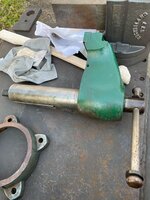
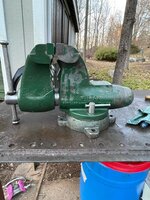
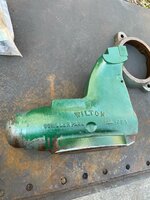
Ncgun- that C2 is coming together nicely. I think a BLO or sculpt nouveau metal oil finish would look nice on that. I just touched up the green C3 I picked up last week. There’s still a lot of original paint under there, so I’ll save what I can and use metal oil.
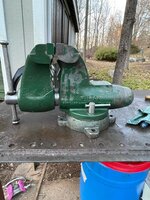
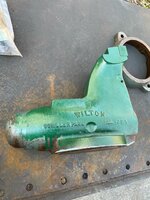

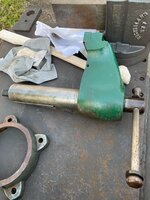
Sent from my iPad using Tapatalk
Attachments

Shiftless
Well-known member
NC:
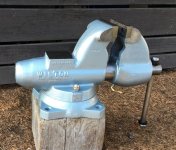
I have two C1’s. The first one pictured is Hammerite light blue, the second one is Rustoleum Verde Green.
re: Parker Bears
I got mine on eBay a few years ago. You can put it on your watch list. I paid about $100
I have two C1’s. The first one pictured is Hammerite light blue, the second one is Rustoleum Verde Green.
re: Parker Bears
I got mine on eBay a few years ago. You can put it on your watch list. I paid about $100
Attachments

Last edited:
jimmyin3D
Banned
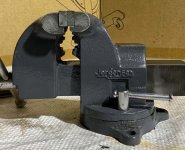
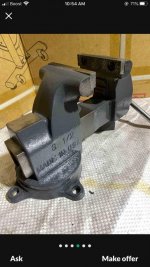
I asked this in the vintage bench vise thread but couldn’t get any answers. Does anyone know the actual manufacturer for this Jorgensen 3-1/2 Bench Vise? Also a time frame when it was made?
Jaw width 3-1/2 in
Swivel
Made in USA
Jaw opening 5 in
Thank you for any help.
Jaw width 3-1/2 in
Swivel
Made in USA
Jaw opening 5 in
Thank you for any help.
Last edited:
ncgun99
Well-known member
Drives, Vise, Shift,
Thanks for your pics and ideas! Hopefully we get a few more people to chime in.
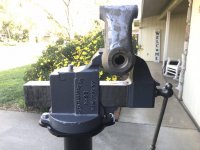
Finally got the dynamic and base cleaned up today. Put the dynamic in the no 22 to work on outside. I am still impressed how large that thing is.
Ordered new jaws from Autopts on eBay today which I believe was KM Scott’s place. Excited for those to come in!
Sent from my iPhone using Garage Journal
Thanks for your pics and ideas! Hopefully we get a few more people to chime in.
Finally got the dynamic and base cleaned up today. Put the dynamic in the no 22 to work on outside. I am still impressed how large that thing is.
Ordered new jaws from Autopts on eBay today which I believe was KM Scott’s place. Excited for those to come in!
Sent from my iPhone using Garage Journal
Shiftless
Well-known member
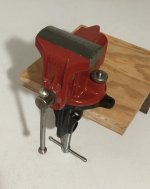
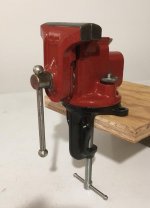
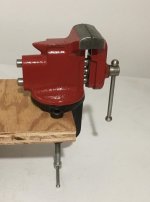
It’s just a humble clamp on vise but it has a plunger lock swivel base. 2 1/2 inch wide jaws.
Has anybody heard of a “SOLAR” brand? It’s got cast in lettering on the back saying made in USA. It was originally medium red. I thought a black base would look better.
I got this vise in decent condition from friend and fellow GJ member d42Jeep. He picked it up in a garage clean out before it was going to be tossed in a dumpster. It was missing the clamp screw. A small C clamp from his tool collection was sacrificed as an organ donor for the vise.
I stripped it, polished the bare steel pieces, and applied new paint after priming.
It’s Rustoleum Regal Red and Rustoleum Black.
Has anybody heard of a “SOLAR” brand? It’s got cast in lettering on the back saying made in USA. It was originally medium red. I thought a black base would look better.
I got this vise in decent condition from friend and fellow GJ member d42Jeep. He picked it up in a garage clean out before it was going to be tossed in a dumpster. It was missing the clamp screw. A small C clamp from his tool collection was sacrificed as an organ donor for the vise.
I stripped it, polished the bare steel pieces, and applied new paint after priming.
It’s Rustoleum Regal Red and Rustoleum Black.
Attachments

Last edited:
jimmyin3D
Banned
I asked this in the vintage bench vise thread but couldn’t get any answers. Does anyone know the actual manufacturer for this Jorgensen 3-1/2 Bench Vise? Also a time frame when it was made?
Jaw width 3-1/2 in
Swivel
Made in USA
Jaw opening 5 in
Thank you for any help.
Does anyone have any ideas or guesses to the maker?
454ragtop
Well-known member
Does anyone have any ideas or guesses to the maker?
Looks like the low end Starrett vises, the ones without the huge Starrett/Athol jaw supports, such as a 013-1/2.
akasrick
Well-known member
Does anyone have any ideas or guesses to the maker?
A C-Clamp with the same logo.
https://www.ebay.com/itm/392099111682?var=0&mkevt=1&mkcid=1&mkrid=711-53200-19255-0&campid=5337076337&toolid=10013&customid=A4JZPVNN8Cjorgensen+steel&ff20=A4JZPVNN8C
akasrick
Fierljeppen
Well-known member
- Joined
- Jan 26, 2018
- Messages
- 1,159
Looks like the low end Starrett vises, the ones without the huge Starrett/Athol jaw supports, such as a 013-1/2.
Nailed it!
Attachments


I finished rebuilding two of my newly acquired vises.
This is a Columbian 203 ½ M2 I got for $40.00.
Before
View media item 110914
After
View media item 111188
And this is a Reed 204 ½ R I got for $70.00.
Before
View media item 110932
After
View media item 111185
This is a Columbian 203 ½ M2 I got for $40.00.
Before
View media item 110914
After
View media item 111188
And this is a Reed 204 ½ R I got for $70.00.
Before
View media item 110932
After
View media item 111185
CRSINMICH
Well-known member
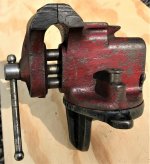
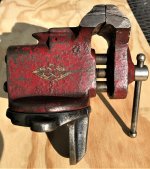
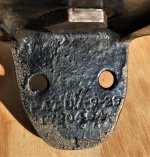
Shiftless: I've never heard of SOLAR but they owe Frederick Brink (Brink & Cotton) some money. Don't worry about that yourself. I don't think his patent covered the red and black color scheme.
Attachments
Last edited:
I finished rebuilding two of my newly acquired vises.
This is a Columbian 203 ½ M2 I got for $40.00.
And this is a Reed 204 ½ R I got for $70.00
Nice work on both!
txlonghorn1989
Well-known member
- Joined
- Feb 27, 2017
- Messages
- 2,786
Picked this Chas. Parker No. 975 bad boy this evening. Couldn't believe it was still available two hours after the CL ad was posted. The first Parker vise I've ever seen in the wild here. Seems like a very well made and solid vise. Got it apart to unload it after having to load it as one piece. Ugh! It's missing the wrench which I assume is common. Here's the only pic from the ad.
I'll probably start cleaning it up a bit tomorrow. I know nothing about these. Will there be any manufacture date stamped anywhere? I also googled to see if there was a wrench to be found and apparently there isn't. Did i read correctly that the No 975 would use the Parker No. 3 wrench? Are any of these available from any old tool vendors? I'll post pics of the vise tomorrow.
Thanks for any info!
I'll probably start cleaning it up a bit tomorrow. I know nothing about these. Will there be any manufacture date stamped anywhere? I also googled to see if there was a wrench to be found and apparently there isn't. Did i read correctly that the No 975 would use the Parker No. 3 wrench? Are any of these available from any old tool vendors? I'll post pics of the vise tomorrow.
Thanks for any info!
Attachments
Shiftless
Well-known member
Shiftless: I've never heard of SOLAR but they owe Frederick Brink (Brink & Cotton) some money. Don't worry about that yourself. I don't think his patent covered the red and black color scheme.
Thanks for posting those pics CRS.
It looks like a twin doesn’t it?
Maybe it’s like the Taskmaster vises which were such a blatant rip off of the Wilton Cadet design. I think I read somewhere that Wilton got a cease and desist order to shut down the Taskmaster line.
If an attorney need evidence, I might consider trading my solar for a Prentiss Jeweler’s vise or a baby bullet.

Outlawmws
Well-known member
It’s just a humble clamp on vise but it has a plunger lock swivel base. 2 1/2 inch wide jaws.
Has anybody heard of a “SOLAR” brand? It’s got cast in lettering on the back saying made in USA. It was originally medium red. I thought a black base would look better.
Shiftless: I've never heard of SOLAR but they owe Frederick Brink (Brink & Cotton) some money. Don't worry about that yourself. I don't think his patent covered the red and black color scheme.
Millers Falls sold the same vise with the clamp on swivel base. One I found (as well as the base separately) went to my son as his hobby vise.
Shiftless
Well-known member
Millers Falls sold the same vise with the clamp on swivel base. One I found (as well as the base separately) went to my son as his hobby vise.
That SOLAR vise sure looks like a Millers Falls doesn’t it?
PghJKB
Well-known member
Thanks for posting those pics CRS.
It looks like a twin doesn’t it?
Maybe it’s like the Taskmaster vises which were such a blatant rip off of the Wilton Cadet design. I think I read somewhere that Wilton got a cease and desist order to shut down the Taskmaster line.
If an attorney need evidence, I might consider trading my solar for a Prentiss Jeweler’s vise or a baby bullet.
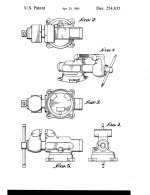
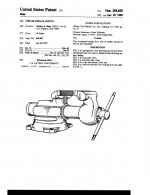
Seen this?
Possibly made in Taiwan??
IMHO
Wilton rips off York
Taskmaster rips off Wilton - who was cited in the patent ...
I have a Solar of a different design - the hunt is on....
JKB
Attachments
RTM
Well-known member
Has anybody heard of a “SOLAR” brand? It’s got cast in lettering on the back saying made in USA. It was originally medium red. I thought a black base would look better.
I started down this rabbit hole a while back fir someone, left them to finish the search. They never did. This showed some 1879-1940 era companies. The had a level with a brass plate.I’ve also seen a plane iron, a drill press, and some kind of oven for soldering or curling irons.
Here is where I left the,
This search may help a bit:
https://www.google.com/search?rlz=1....0...1c.1.64.psy-ab..0.1.246....0.gXPJ88R8Us0
Last edited:
Seen this?


Possibly made in Taiwan??
IMHO
Wilton rips off York
Taskmaster rips off Wilton - who was cited in the patent ...
I have a Solar of a different design - the hunt is on....
JKB
Can someone translate? What are they patenting, just the ornamental design?
Thought a patent had to innovate?
tool_scrounge
Well-known member
Can someone translate? What are they patenting, just the ornamental design?
Thought a patent had to innovate?
Design patent
https://en.m.wikipedia.org/wiki/Design_patent
zoomieport
Well-known member
Picked up this little Parker bear.
Zoomie (or others) - any ideas how these bears got distributed? Were they promotional giveaways? Bought from catalogs?
C'mon; where the hell do you come up with something like this. I'll bet if we put a $1000 bounty on one that nobody could come up with one that they didn't already have.
I'm not sure I'd take $1,000 for this one, but here is the whole group.


Attachments




Shiftless
Well-known member

Here is something a little different. Phoenix model 24 3in jaw mechanics vise. This vise was made using the Colton patent from June 16 1885. Phoenix appears to have been making vises from 1895 and till at least 1912. 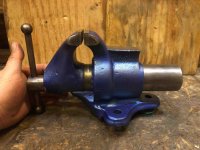

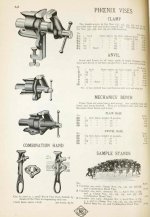
Sent from my iPhone using Tapatalk
Sent from my iPhone using Tapatalk
Fierljeppen
Well-known member
- Joined
- Jan 26, 2018
- Messages
- 1,159
Thanks for posting those pics CRS.
It looks like a twin doesn’t it?
Maybe it’s like the Taskmaster vises which were such a blatant rip off of the Wilton Cadet design. I think I read somewhere that Wilton got a cease and desist order to shut down the Taskmaster line.
Seen this? Possibly made in Taiwan??

IMHO
Wilton rips off York
Taskmaster rips off Wilton - who was cited in the patent ...JKB
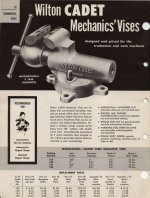
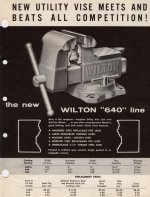
I just noticed the reference to the Wilton catalog no.117, pages (52-53). The Taskmaster vise definitely appears to be designed after the Cadet model as seen on page 52. I'm not sure what the connection is between the model "640" vise on page 53, maybe the pipe jaws?
Thanks to Shiftless and PghJKB for the "new to me" Taskmaster vise information.
<hr>
Attachments

TailGunner3000
Well-known member
Utility patents only last 20 years and design patents 14 years.
It should be noted that, just as Taskmaster, Duracraft, and other vises clearly riffed on Wilton, the founder of Wilton blatantly stole the design of his vise from his former employer: York.
It should be noted that, just as Taskmaster, Duracraft, and other vises clearly riffed on Wilton, the founder of Wilton blatantly stole the design of his vise from his former employer: York.
Outlawmws
Well-known member
Here is something a little different. Phoenix model 24 3in jaw mechanics vise. This vise was made using the Colton patent from June 16 1885. Phoenix appears to have been making vises from 1895 and till at least 1912.
Sent from my iPhone using Tapatalk
Rusty, from my notes:
"George A. Colton patent holder, No. 320,224. Patented June 16, 1885. H&B, Inmarks, Phoenix and unmarked examples exist. "Mfg by Moore & Barnes Manufacturing Co. of Phoenix, N. Y.": According to patent info? http://www.datamp.org/patents/displayPatent.php?id=7259 "
454ragtop
Well-known member
Here is something a little different. Phoenix model 24 3in jaw mechanics vise. This vise was made using the Colton patent from June 16 1885. Phoenix appears to have been making vises from 1895 and till at least 1912.
Sent from my iPhone using Tapatalk
Wow Rusty, thanks for that catalog page! Have a bunch of these, including the hand vise, but don't have that cool little bracket to mount it. Phoenix is actually in NY, not AZ in this case.
Shiftless
Well-known member
Utility patents only last 20 years and design patents 14 years.
It should be noted that, just as Taskmaster, Duracraft, and other vises clearly riffed on Wilton, the founder of Wilton blatantly stole the design of his vise from his former employer: York.
That sums it up!
Fierljeppen:
You’re welcome. You’ve given all of us 1000X as much information. I’m honored to have contributed some little tidbit of vise info that you didn’t know about.
I have had 2 Taskmasters. One I gave away to a guy who when he saw it started telling a story of how he as a child used to hang around his dad’s “Western Auto” hardware variety store where there was a vise “just like that one” that said Taskmaster in the back room.
Another one I still have and have stripped it of its ugly red paint and still holding off on painting it the bright Orange to match the original color. Orange?????
Maybe I should paint my Cadet and my Taskmaster matching orange ?
.
Last edited:
Utility patents only last 20 years and design patents 14 years.
It should be noted that, just as Taskmaster, Duracraft, and other vises clearly riffed on Wilton, the founder of Wilton blatantly stole the design of his vise from his former employer: York.
Doesn't affect me but I'd say there's a big difference.
Wilton founder came part way across the world to start a new manufacturing company. He didn't go to the cheapest exporter of the day and start pouring the product into Czechoslovakia.
Either way, whatever.
jimmyin3D
Banned
Hey does anybody know what way the swivel handle is supposed to spin for Athol 620 series? Is it clockwise looking from above or counter?
PghJKB
Well-known member
Jeppen's record keeping is far superior than mine, he probably has the dates for the catalog pages. Here is what I have on Colton pattern vises:
Who manufactured the Colton pattern vise?
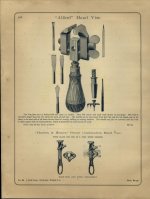
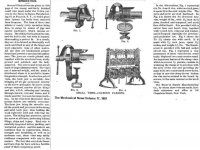
Based on an article in the December 1st 1887 issue of Mechanical News, Colton pattern vises were being manufactured by the Moore & Barnes Manufacturing Co. of Phoenix, N. Y. Note the statistic offered: 60,000 vises sold to date (The 1885 census puts population at 55.9 million. So, doing the math, this puts a Colton Pattern Vise in the hands of one of every <1000 citizens in the US) This article is the first reference I have found find online for Colton vises. (I have a corrected version of Google's OCR of the Mechanical News article. However, the text is not complete.)
Article URL:
https://books.google.com/books?id=EEY1AQAAMAAJ&printsec=frontcover&output=reader&hl=en&pg=GBS.PA280

A second (and most likely the first) manufacturer of the Colton Pattern is H&B (Hayden & Barnes) of Syracuse, N.Y.. The H&B designation is included with the patent date lettering. This would indicate that H&B would have taken over production sometime within the 17 year patent period (1885 - 1902). From: Journal of Railway Appliances and Railway 1885. The Hayden Barnes information is from a catalog page that recently surfaced on EvilPrey (eBay). This page features "Hayden & Barnes" and Bonny vises. I believe one of these catalog pages is from 1885.


A third manufacturer was The Phoenix Vise Company of Homer, New York. I have multiple references to the Phoenix Vise Company in late 19th early 20th century trade journals. The earliest Phoenix reference, 1911, lists Phoenix in Homer, NY. A later reference, 1914, lists Phoenix in Buffalo, NY. The last reference to Phoenix Vise Co. (49-53 Illinois Street. Buffalo NY) is the April 1929 edition of the Chilton catalog and directory. The Phoenix designation also appears on vises with the patent date. This would indicate that Phoenix was also manufacturing these vises in the 1885 - 1902 period. But, see below.
Based on what appears on the vises, the sequence of manufacturers is H&B, M&B and Phoenix. (Please note that there is no rule/law that requires that a patent date be removed from a piece once the patent expires. However, since the lettering on vises is embossed (raised), to display the patent lettering requires additional cast iron. By removing the patent lettering, the piece becomes slightly (very slightly) less expensive to produce.)
Text of Mechanical News article:
Several illustrations are given on this page of the strong and finely finished small vises made under the Colton patents by the Moore & Barnes Manufacturing Co. at Phoenix, N. Y. , to which place their factory has lately been removed from Syracuse. The form of these vises admits of nearly every operation being done to gauge by means of jigs and special machinery. which insures accuracy. The sliding bar is ground to size, and the hole in the vise body is reamed, thus making a perfect fit. As a result, they are. it is claimed, as thoroughly well made and fitted as any of the larger and more expensive vises of other makes. All the sizes are handsomely proportioned and present a mechanical appearance. The jaws are evenly jointed, and. together with the anvil and horn, nicely ground and polished and the body japanned. The screws and levers are all made of bright Bessemer steel. The visas are of unusual weight, and the metal is distributed where it is needed to insure the greatest strength. In other low priced vises, the back jaw is movable, thus bringing all the jar and pound directly on the screw; and again, the screw, being always exposed, catches all the filings and dirt, which. adhering and running through the nut, cuts and wears, and if much used the vise soon becomes worthless. In the vises here illustrated these carefully inspected before packing, and warranted perfect; and the makers are confident that in construction, finish, strength and durability, as well as in moderate cost, these vises may safely challenge comparison with any in the market. The fact that over sixty thousand have thus far been sold is a forcible proof of their conspicuous merit.
Who manufactured the Colton pattern vise?
Based on an article in the December 1st 1887 issue of Mechanical News, Colton pattern vises were being manufactured by the Moore & Barnes Manufacturing Co. of Phoenix, N. Y. Note the statistic offered: 60,000 vises sold to date (The 1885 census puts population at 55.9 million. So, doing the math, this puts a Colton Pattern Vise in the hands of one of every <1000 citizens in the US) This article is the first reference I have found find online for Colton vises. (I have a corrected version of Google's OCR of the Mechanical News article. However, the text is not complete.)
Article URL:
https://books.google.com/books?id=EEY1AQAAMAAJ&printsec=frontcover&output=reader&hl=en&pg=GBS.PA280
A second (and most likely the first) manufacturer of the Colton Pattern is H&B (Hayden & Barnes) of Syracuse, N.Y.. The H&B designation is included with the patent date lettering. This would indicate that H&B would have taken over production sometime within the 17 year patent period (1885 - 1902). From: Journal of Railway Appliances and Railway 1885. The Hayden Barnes information is from a catalog page that recently surfaced on EvilPrey (eBay). This page features "Hayden & Barnes" and Bonny vises. I believe one of these catalog pages is from 1885.
A third manufacturer was The Phoenix Vise Company of Homer, New York. I have multiple references to the Phoenix Vise Company in late 19th early 20th century trade journals. The earliest Phoenix reference, 1911, lists Phoenix in Homer, NY. A later reference, 1914, lists Phoenix in Buffalo, NY. The last reference to Phoenix Vise Co. (49-53 Illinois Street. Buffalo NY) is the April 1929 edition of the Chilton catalog and directory. The Phoenix designation also appears on vises with the patent date. This would indicate that Phoenix was also manufacturing these vises in the 1885 - 1902 period. But, see below.
Based on what appears on the vises, the sequence of manufacturers is H&B, M&B and Phoenix. (Please note that there is no rule/law that requires that a patent date be removed from a piece once the patent expires. However, since the lettering on vises is embossed (raised), to display the patent lettering requires additional cast iron. By removing the patent lettering, the piece becomes slightly (very slightly) less expensive to produce.)
Text of Mechanical News article:
Several illustrations are given on this page of the strong and finely finished small vises made under the Colton patents by the Moore & Barnes Manufacturing Co. at Phoenix, N. Y. , to which place their factory has lately been removed from Syracuse. The form of these vises admits of nearly every operation being done to gauge by means of jigs and special machinery. which insures accuracy. The sliding bar is ground to size, and the hole in the vise body is reamed, thus making a perfect fit. As a result, they are. it is claimed, as thoroughly well made and fitted as any of the larger and more expensive vises of other makes. All the sizes are handsomely proportioned and present a mechanical appearance. The jaws are evenly jointed, and. together with the anvil and horn, nicely ground and polished and the body japanned. The screws and levers are all made of bright Bessemer steel. The visas are of unusual weight, and the metal is distributed where it is needed to insure the greatest strength. In other low priced vises, the back jaw is movable, thus bringing all the jar and pound directly on the screw; and again, the screw, being always exposed, catches all the filings and dirt, which. adhering and running through the nut, cuts and wears, and if much used the vise soon becomes worthless. In the vises here illustrated these carefully inspected before packing, and warranted perfect; and the makers are confident that in construction, finish, strength and durability, as well as in moderate cost, these vises may safely challenge comparison with any in the market. The fact that over sixty thousand have thus far been sold is a forcible proof of their conspicuous merit.
Attachments

Boatman53
Well-known member
Doesn't affect me but I'd say there's a big difference.
Wilton founder came part way across the world to start a new manufacturing company. He didn't go to the cheapest exporter of the day and start pouring the product into Czechoslovakia.
Either way, whatever.
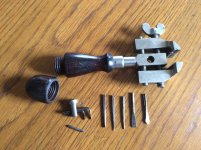
It wouldn't be too much of a stretch to form a similar analogy to the latest Wilton Tradesman vises coming from Taiwan/China....
Pghjkb: wow that’s impressive sir thank you for the information. I’ve really appreciated the history you’ve provided in the past and looks like your still finding more.
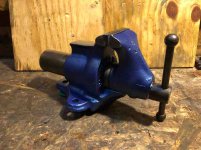
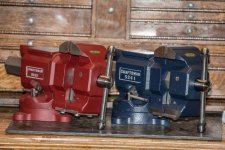
Random vise picture to keep on topic.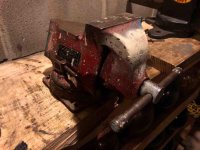
Sent from my iPhone using Tapatalk
Random vise picture to keep on topic.
Sent from my iPhone using Tapatalk
MayerMR
Well-known member
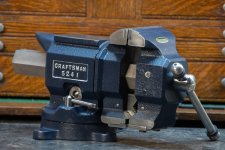
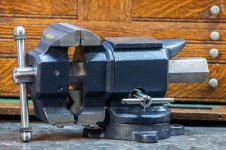
Finishing up this 3-1/2" 5241.The 5222 pictured was only offered 1934, while the 5241 was on sale 1935-1936.
Argagagahhh

Pghjkb: wow that’s impressive sir thank you for the information. I’ve really appreciated the history you’ve provided in the past and looks like your still finding more.
Random vise picture to keep on topic.
You need to restore that ole gal Austin!