To avoid these ads, REGISTER NOW!

Junction box size - #2 xhhw/mhf to SER

mike93lx

ALLIANCE MEMBER
Joined
Dec 9, 2013
Messages
38,398
Location
Richmond, VA
Getting ready to buy supplies for a workshop/shed. Plan is to run #2 AL, either MHF or XHHW, but I can't get conduit up to my main panel, so I need to switch to SER in my crawl space.

2018 code revision, in VA

#1 - junction box needs to be 6x conduit diameter, correct?

#2 - can I get away with 1.5" conduit? The run is short and simple (less than 30', 2 90 sweeps. I'd like to go straight into the back of the junction box on the other side of the house foundation from a LB.

I know that I'll hear 2" will be easier... A little harder pull doesn't bother me at all if it gets me a smaller junction box and smaller hole in the foundation.

Plan is to use Polaris connectors

In case it is mentioned, I will likely use a 60a breaker in the main (possibly up to a 90a but it depends on availability), with a 100a decent size panel in the shop, I'll pound in 2 ground rods with the right spacing and wire and the neutral bar will be unbonded
 
Last edited:
To avoid these ads, REGISTER NOW!

Terry D

Well-known member
Joined
Mar 25, 2015
Messages
2,202
Location
St. Louis, MO.
Yes, where there are splices, no less than six times the conduit size. 1.5 conduit will be fine, but 6x1.5 is 9, so you will need a 10x10x4.
 
OP
M

mike93lx

ALLIANCE MEMBER
Joined
Dec 9, 2013
Messages
38,398
Location
Richmond, VA
Yes, where there are splices, no less than six times the conduit size. 1.5 conduit will be fine, but 6x1.5 is 9, so you will need a 10x10x4.
****. I **** at math, which is bad for an accountant.
Thanks.

I am seeing steel 10x10 but not pvc. I guess I could do either but I was thinking pvc. Any preference in material for you?
 

Terry D

Well-known member
Joined
Mar 25, 2015
Messages
2,202
Location
St. Louis, MO.
****. I **** at math, which is bad for an accountant.
Thanks.

I am seeing steel 10x10 but not pvc. I guess I could do either but I was thinking pvc. Any preference in material for you?
You could use a 8x8x4 if you used 1.25 conduit, but you might appreciate that larger J-box when making those spices up.
 

sparky 1971

Well-known member
Joined
Oct 9, 2018
Messages
8,136
Location
Central Iowa
You could use a 8x8x4 if you used 1.25 conduit, but you might appreciate that larger J-box when making those spices up
I would use 1-1/4 conduit, but there is no way in hell I would use a 8X8 box. I probably wouldn't use a 10X10 unless a 12X10 or 12X12 wouldn't fit or wasn't available. I like lots and lots and lots of room.
 

Terry D

Well-known member
Joined
Mar 25, 2015
Messages
2,202
Location
St. Louis, MO.
****. I **** at math, which is bad for an accountant.
Thanks.

I am seeing steel 10x10 but not pvc. I guess I could do either but I was thinking pvc. Any preference in material for you?
I like metal boxes over PVC, since this is inside, go with the metal. Just make sure to bond it.
 

Bert_

Well-known member
Joined
Dec 24, 2016
Messages
9,911
Location
NW Iowa
The real ques
Insight on why metal versus plastic?
Asking for a friend. But honestly I’d like to understand. Thanks.
The real question is why would you want PVC? Unless you have a corrosive environment I would use metal every single time.
 

Bert_

Well-known member
Joined
Dec 24, 2016
Messages
9,911
Location
NW Iowa
1 1/2" is just fine. Last week I pulled (3) 4/0's, a 2/0, and a #4 through 150' of 2" EMT. Pulled fine. This forum probably would have insisted I needed 4" conduit...
 
OP
M

mike93lx

ALLIANCE MEMBER
Joined
Dec 9, 2013
Messages
38,398
Location
Richmond, VA
1 1/2" is more than enough. Last week I pulled (3) 4/0's, a 2/0, and a #4 through 2" EMT. Pulled fine. This forum probably would have insisted I needed 4" conduit...
Well if I can go with the 1-1/4, I will. I've read a lot of posts here saying use 2" with #2mhf and the one time I did, it flew through without lube. I figured we had lots of room to spare
 

Bert_

Well-known member
Joined
Dec 24, 2016
Messages
9,911
Location
NW Iowa
Well if I can go with the 1-1/4, I will. I've read a lot of posts here saying use 2" with #2mhf and the one time I did, it flew through without lube. I figured we had lots of room to spare
You can go 1 1/4 if you really want to. I pretty much always go straight to 1 1/2".
 
OP
M

mike93lx

ALLIANCE MEMBER
Joined
Dec 9, 2013
Messages
38,398
Location
Richmond, VA
The real ques

The real question is why would you want PVC? Unless you have a corrosive environment I would use metal every single time.
Just personal preference. When Im doing inside work, I like EMT and metal J-boxes.
I like metal boxes over PVC, since this is inside, go with the metal. Just make sure to bond it.
What's the best way to handle the bond? SER from the main panel with no conduit and pvc conduit going out. Run a separate ground for it (if so, what wire)? Or somehow pigtail off the ground in the SER?
 

Bert_

Well-known member
Joined
Dec 24, 2016
Messages
9,911
Location
NW Iowa
What's the best way to handle the bond? SER from the main panel with no conduit and pvc conduit going out. Run a separate ground for it (if so, what wire)? Or somehow pigtail off the ground in the SER?
Use a 2 hole lug screwed to the back of the box. It's where you splice your ground wires and bonds the box. It'll be cheaper than using a Polaris for the ground too.
 
To avoid these ads, REGISTER NOW!

pattenp

Well-known member
Joined
Jun 4, 2008
Messages
10,175
Location
Virginia - USA
I've used an 8x8x4 pvc box before for splicing #2 mhf to #2 ser using 1.25 conduit. It's doable. You just need to plan out the entry into the box so to have a loop that can be spliced together and pushed back into the box. Use pvc box so you don't have to deal with bonding the box.
 
OP
M

mike93lx

ALLIANCE MEMBER
Joined
Dec 9, 2013
Messages
38,398
Location
Richmond, VA
Lol. Lots of opinions on box size and type.

I'll be making the splice in a 2.5' crawlspace and I am 6'5"...need something that won't ****, so a bigger box would be nice.
 
OP
M

mike93lx

ALLIANCE MEMBER
Joined
Dec 9, 2013
Messages
38,398
Location
Richmond, VA
OP
M

mike93lx

ALLIANCE MEMBER
Joined
Dec 9, 2013
Messages
38,398
Location
Richmond, VA

Terry D

Well-known member
Joined
Mar 25, 2015
Messages
2,202
Location
St. Louis, MO.
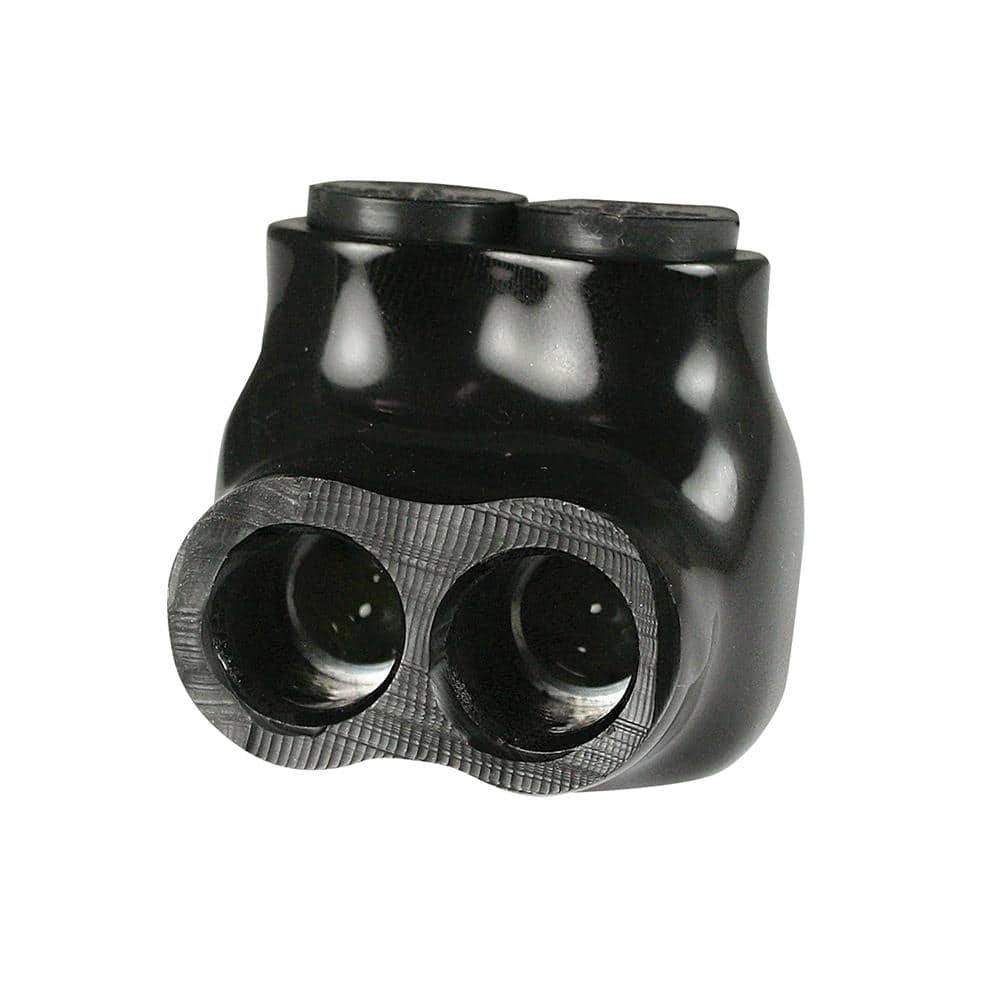
Anyone have experience with the ASI connectors that look just like Polaris? They're about half the cost

ASI 14 - 2 AWG Multi Tap Connector Insulated Single Side Entry 2 Ports, Black
SKU# 307769185
I have never used those, but at that price I would be willing to try those out. Last time I bought 3 Polaris connectors for # 2, they were 3 port, but also cost $ 100
 

Terry D

Well-known member
Joined
Mar 25, 2015
Messages
2,202
Location
St. Louis, MO.
Lol. Lots of opinions on box size and type.

I'll be making the splice in a 2.5' crawlspace and I am 6'5"...need something that won't ****, so a bigger box would be nice.
The NEC is not a How To Book, it is the bare minimum requirements for electrical installations. Most of the time it doesn't hurt to go bigger.
Give yourself enough room in that box for working in that cramped space.
 
OP
M

mike93lx

ALLIANCE MEMBER
Joined
Dec 9, 2013
Messages
38,398
Location
Richmond, VA
The NEC is not a How To Book, it is the bare minimum requirements for electrical installations. Most of the time it doesn't hurt to go bigger.
Give yourself enough room in that box for working in that cramped space.
Will do. Plan is now a 12x12, steel.

Not sure how I am going to clamp the ser to the main panel though. It's a flush mount and I will be coming up from below. I don't think I could properly tighten, or even mount a clamp. Any tips for that? Or do I just have to figure out how to get a SE clamp connector on the box?
 
Last edited:

Terry D

Well-known member
Joined
Mar 25, 2015
Messages
2,202
Location
St. Louis, MO.
Will do. Plan is now a 12x12, steel.

Not sure how I am going to clamp the ser to the main panel though. It's a flush mount and I will be coming up from below. I don't think I could properly tighten, or even mount a clamp. Any tips for that? Or do I just have to figure out how to get a SE clamp connector on the box?
Are you able to fish the SER up inside the wall to the bottom of the panel? If so, put the connector on the cable before fishing and bring it up through the knock out and put the locknut on. #2 SER is pretty easy to work with.
 
OP
M

mike93lx

ALLIANCE MEMBER
Joined
Dec 9, 2013
Messages
38,398
Location
Richmond, VA
Are you able to fish the SER up inside the wall to the bottom of the panel? If so, put the connector on the cable before fishing and bring it up through the knock out and put the locknut on. #2 SER is pretty easy to work with.
I haven't gotten under there yet, but I do expect that will be the case. Worst case, I'll send a snake down and pull the cable back up. Great idea on mounting the clamp first.

1-1/4 or 1-1/2 clamp?
 

RPH

Well-known member
Joined
Dec 17, 2006
Messages
4,190
Location
Michigan Thumb
The real ques

The real question is why would you want PVC? Unless you have a corrosive environment I would use metal every single time.
I worked the induction heating industry and did many machine installations. It was hard with some contractors that didn’t understand the applications. We used pvc even in industrial applications. The steel would heat from the magnetic field generated. They had a hard time understanding copper tubing be used as a water cooled wire.
I had a plant install steel conduit with the 480 vac 3 phase being fed to the tube welder. Each phase was in a separate conduit. No cancellation from the phases. They laughed when told that was incorrect and the heating effect was bs, plus being a steel tube manufacturer they don’t use plastic in their plant. They were about 30 minutes into a test run when the insulation finally melted up in the conduit. Blew out the transformer supplying the plant, welded their switchgear. Told us go home, will call when fixed. When we came back the phases were canceling and it was in pvc conduit. This happened in McKeesport, Pa.
I’ve seen things light up that people were positive it wouldn’t happen. Electricity is a strange beast, especially when running at 300 kHz.
 

Terry D

Well-known member
Joined
Mar 25, 2015
Messages
2,202
Location
St. Louis, MO.
I haven't gotten under there yet, but I do expect that will be the case. Worst case, I'll send a snake down and pull the cable back up. Great idea on mounting the clamp first.

1-1/4 or 1-1/2 clamp?
#2 SER is 1-1/4 clamp. Make sure you ask for a SER and not a SEU, they are different. SER is for round cable where a SEU is for oval
 

Terry D

Well-known member
Joined
Mar 25, 2015
Messages
2,202
Location
St. Louis, MO.
I worked the induction heating industry and did many machine installations. It was hard with some contractors that didn’t understand the applications. We used pvc even in industrial applications. The steel would heat from the magnetic field generated. They had a hard time understanding copper tubing be used as a water cooled wire.
I had a plant install steel conduit with the 480 vac 3 phase being fed to the tube welder. Each phase was in a separate conduit. No cancellation from the phases. They laughed when told that was incorrect and the heating effect was bs, plus being a steel tube manufacturer they don’t use plastic in their plant. They were about 30 minutes into a test run when the insulation finally melted up in the conduit. Blew out the transformer supplying the plant, welded their switchgear. Told us go home, will call when fixed. When we came back the phases were canceling and it was in pvc conduit. This happened in McKeesport, Pa.
I’ve seen things light up that people were positive it wouldn’t happen. Electricity is a strange beast, especially when running at 300 kHz.
Unless I reading this wrong, 300.3(B)(1) exception allows each phase conductor in separate PVC conduit when only installed underground. Plus if it is brought into a metal enclosure, 300.20(B) states that slots need to be cut between the individual holes. I have been in the business for a while now, I cant say that I have ever seen each phase conductor(s) in separate conduits. Maybe this is more common for a POCO
 

RPH

Well-known member
Joined
Dec 17, 2006
Messages
4,190
Location
Michigan Thumb
This was a tube welding plant. The president of it was an electrical engineer. He laughed at the cables caused heating. Didn’t believe that to be a problem. Yet, here their purchasing an induction welder. Strange people across industry.
 

Norcal

Well-known member
Joined
Mar 16, 2008
Messages
13,792
This was a tube welding plant. The president of it was an electrical engineer. He laughed at the cables caused heating. Didn’t believe that to be a problem. Yet, here their purchasing an induction welder. Strange people across industry.
The steel conduit was not the problem, putting each phase in a separate steel conduit was the problem and a code violation also.

The NEC is minimum standard, nothing more, just like any other code.
 

RPH

Well-known member
Joined
Dec 17, 2006
Messages
4,190
Location
Michigan Thumb
I understood the canceling effect of the phases. Brought to attention of top management. They dismissed the inductive heating effect of the 60 Hz while purchasing this high frequency induction tube welder to manufacture their steel tube with. That’s ironic plus add the president running the plant was a double e and he dismissed it.
that in itself is ironic.
I was wondering why metal was preferred over plastic. In my industry you stayed away from ferrous as conduit. Even non-ferrous at times was a no go. We were required to to lay the high frequency cables out in a canceled pattern. Some older units were fussy enough that the would not oscillate because of the incorrect cable installation.
 

sparky 1971

Well-known member
Joined
Oct 9, 2018
Messages
8,136
Location
Central Iowa
#2 SER is 1-1/4 clamp. Make sure you ask for a SER and not a SEU, they are different. SER is for round cable where a SEU is for oval
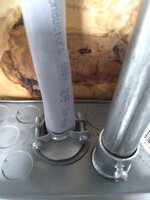
It doesn't matter, but fyi, #2 SER will fit in a 1" clamp. The photo is from my own panel.
 

Attachments

  • SER.jpg
    SER.jpg
    189.9 KB · Views: 31
To avoid these ads, REGISTER NOW!
Top Bottom