Piehammer thanks for joining the discussion! Really like your Western and Case M3 Finn. The Westerns are really growing on me, as a group.
Thanks, wish they were in better shape.

Piehammer thanks for joining the discussion! Really like your Western and Case M3 Finn. The Westerns are really growing on me, as a group.
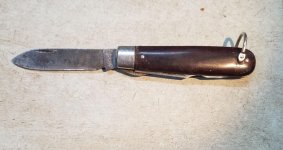
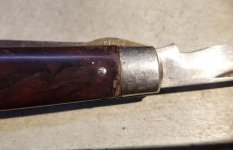
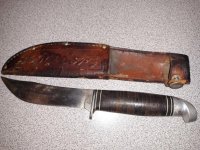
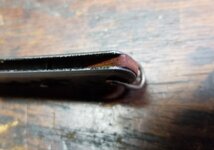
My Mom gave me this old knife that belonged to my Grandfather. I would like to show it a little love. What is the best way to clean or condition the handle and sheath as well as clean the bit of surface rust from the blade. Don't want to do a big restoration, just keep it nice while it is in my care.

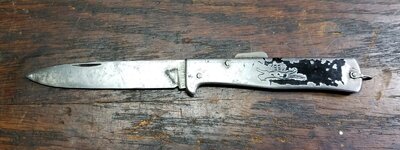


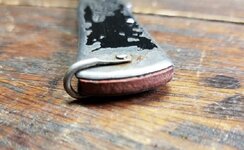
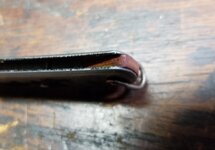

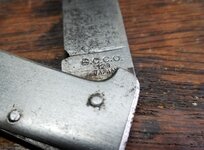
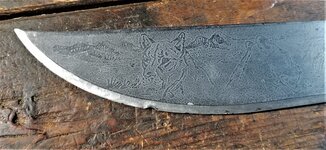
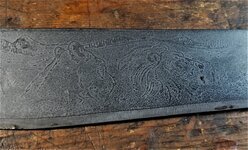
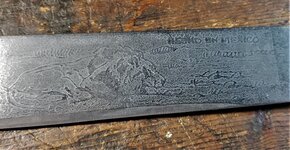
You're welcome. My pleasure. And thanks. I was elated. I'm very tempted to do a light resto. Try to get rid of some of the blight on the blade, touch up the black paint, and rub some gold into the etched cat and model number.Cool old knife, Lugz. Nice find.
Thanks for the detailed back story. I always learn something from your posts.



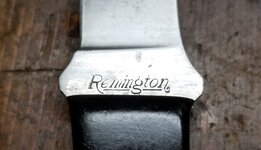
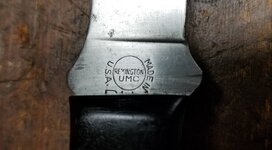
Remington copied the Marbles "Ideal" knife prior to WWII, in particular the massive fullers, and AFAIK was just one of several suppliers of that style knife to Uncle Sam. While doing some research on my dad's old Marbles (the knife shown in Post #6) I found a note about how some soldiers were buying their own knives during and after the war.You're welcome. My pleasure. And thanks. I was elated. I'm very tempted to do a light resto. Try to get rid of some of the blight on the blade, touch up the black paint, and rub some gold into the etched cat and model number.
As long as the thread has been bumped, I was rummaging around in my knife drawer, and I'm on a roll, I don't think I've posted this yet.
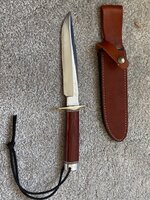
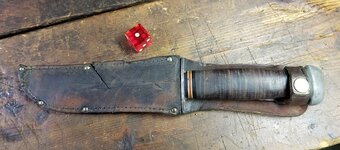
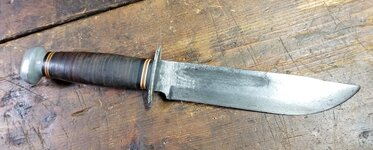
The PAL RH-36 was the first US military fighting and survival knife. Not the more famous Union Cutlery "Ka-Bar". Before the PAL RH-36, there was only the Mk 1 trench knife with the brass knuckle grip, which dated back to WWI. If you're wondering why it has a Remington Hunter knife model number, it's because this knife was made for many years leading up to WWII by Remington Cutlery, a division of the firearms company, as a hunting knife. In 1940, they sold their knife business to PAL, which was only making pocket knives at the time. PAL kept the RH-36 model number. At that time, sailors, soldiers and airmen were authorized to carry their own knives. The PAL RH-36 was such a popular sheath knife with all the country boys, that the PX started carrying it. That put it in the federal standard stock catalog. When the WPB needed a good fighting knife, they took notice. They asked PAL to make more and they asked PAL if they could send the specs to other knife makers, including Union Cutlery and E.G. Waterman. The Ka-Bar may get the lion's share of WWII glory, but without PAL (and without Remington Arms before that), there would be no Ka-Bar knife. 3baygarage posted a splendid example of a U.S.N. Mk 2 Ka-Bar in post #10. Levaughn and I posted EGW knives in post #55 and #59.
I think this is the first PAL RH-36 on the thread. It was produced throughout the war. After the war PAL sold stock parts to customers who made their own blades and assembled their own knives through at least 1950.
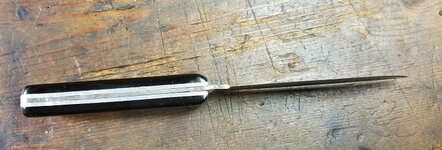
The pommel is rough cast zinc, which is early. Later knives had wooden guards and pommels, and those are mid- to late war. The blade is carbon steel. Stacked leather washer handle. The sheath is sewn and riveted.
The only fixed blade "fighting knife" the US military used prior to 1942 was the M1 trench knife with the brass knuckles grip. Remington Cutlery didn't supply any knives to the US military during WWII. They sold out to PAL in 1940 as stated above.Remington copied the Marbles "Ideal" knife prior to WWII, in particular the massive fullers, and AFAIK was just one of several suppliers of that style knife to Uncle Sam.
The only fixed blade "fighting knife" the US military used prior to 1942 was the M1 trench knife with the brass knuckles grip.

I'm not an expert either, but I think this article makes a convincing argument:.......
As for Remington Cutlery copying Marble's design, I'd never heard that before. I'm tempted to consult an authoritative knife source on that, too.

 www.fieldandstream.com
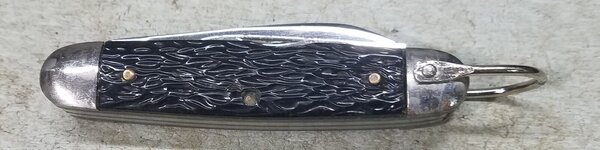
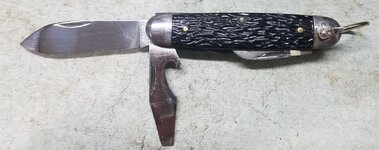
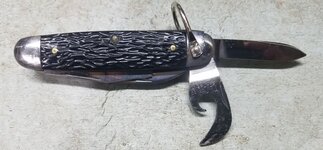
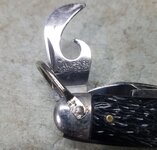
Nice one. I have a Navy FSN marked knife but that’s the first one I’ve seen with the USN marked on the handle. Cool find no matter the condition!Recently picked up this USN marked knife from the auction site, and today I bypassed this post-war Camillus TL-29 which was ground into a bottle opener.
The USN knife was made by Ulster, and has seen better days. But it's uncommon enough that I paid more in shipping than purchase price to get my hands on it.
NiceRecently picked up this USN marked knife


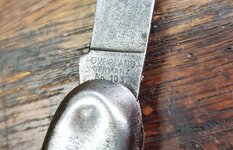
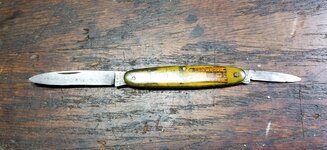
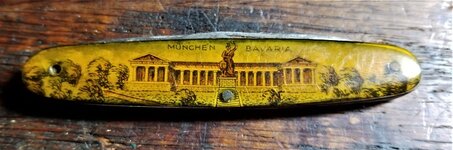


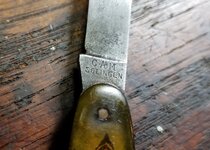
I'm assuming here, but guessing that proportionately few folks carry pocket knives today, compared to the past. It's become a bit of a "thing" at church that I generally, habitually, almost always have a knife in my pocket, in a congregation most of the men are vets.
You've come to the right thread! I look forward to seeing more.I like them a lot and have collected a bunch.
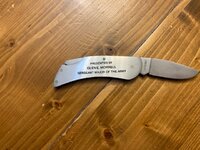
Morrel's Morals! That is way better than a freakin' commandant's coin!...presented to me by the Sergeant Major of the Army Glen E. Morrel in 1983.