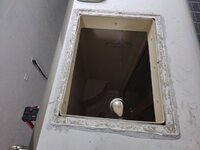
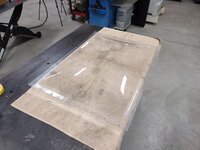
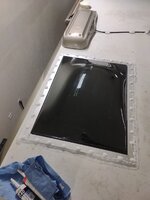
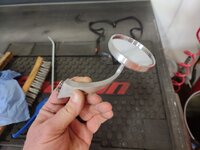
Last night I finished up the skylight replacement on our 2003 Monaco Dynasty coach. The coach is 20-years old now, we've owned it for 15 of those years and I've seen quite a few people having cracked and broken skylights even on newer coaches than ours lately so I figured I would replace it and it would be one less thing to have to worry about while on vacation.
Like most things I opted to take a slightly different approach to the skylight replacement however. I have never been impressed with how the coach manufacturers merely screw the Lexan skylights down directly. It appears to me that this would put a large pressure load directly under the screw head and create a possible area for stress cracking. I may be over-thinking it because our skylight is original and lasted 20-years but still I thought I could come up with a better solution and not have to worry about it ever again.
I have only had to touch up the caulking once or twice in the 15 years we've owned the coach and I used Dicor self-leveling lap sealant when I did have some cracking to address. However, on most skylight manufacturers websites and literature they caution against using Dicor lap sealant on their Lexan skylights. I'm not a chemist but I think it has to to with the petroleum base of the Dicor attacking the Lexan and accelerating the decomposition. I have seen a few over the years that were sealed with Dicor and they all have appeared to have cracked and become extremely brittle right where the Dicor met the Lexan. I am not risking it so I used the SR-140 butyl caulking that came with the new skylight for addressing the sealing duties. After everything was installed and tightened into position I did put a bead of Dicor around the outermost area and over the screw heads but none came in contact or even close to the Lexan.
I also opted to fabricate an aluminum frame work that would act as a picture frame to firmly and evenly secure the inner bubble and the new outer Lexan skylight down to the roof. This should alleviate any stress risers at the screw holes and should be a long term repair. Again, the original lasted 20-years so I am surely over-thinking this.
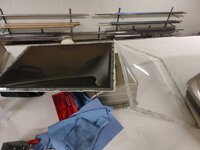
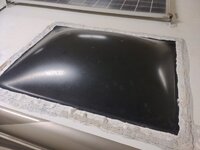
The original before beginning removal. Fairly chalked out from UV but overall still in good condition. Even upon removal I found it very flexible still. I kind of figured it would crumble and fall apart during removal but it didn't.
I used some 1-3/4" x 3/16" 6061 aluminum strap to create the frame work.

Cutting sections to length.

Mocking into position and noting where the screw holes are in the new skylight and not to put any at the corners where I will be welding.

The frame work pieces prepped by running a DA over them and then beveling the ends where they will meet. This will create a V for welding with only about 1/16" land remaining which will get welded and blended on the backside.

Clamped into position on the fabrication table. Note the bevels where the welds will be.
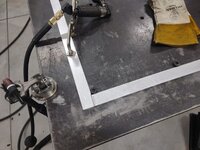
Welded the back side then blended smooth.

Aluminum frame clamped to the new skylight so I could transfer the screw hole locations to the aluminum.

Screw holes drilled and chamfered. I marked the far corner with a piece of masking tape then the skylight at the same location. This will help to quickly orientate when on the roof of the coach and not having to disturb the caulking to match up the screw holes.
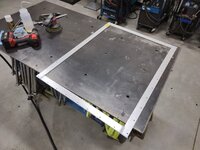
Note the masking tape at the corner.

More pictures to follow......