To avoid these ads, REGISTER NOW!

ZMotorsports Shop Projects 2.0

OP
Z

zmotorsports

ALLIANCE MEMBER
Joined
Oct 20, 2009
Messages
21,410
Location
Northern Utah
John (Jarhead), I did mention that I haven't fully gone over to the battery tools yet and still prefer my pneumatics in most situations. That being said, as you can see in quite a few of my pictures over the past several years I do have a few select Snap-on and Milwaukee cordless tools that I use. I just don't see myself fully committing like some of our forum members but the ones I do have I try to use more frequently to justify having them.
 
To avoid these ads, REGISTER NOW!

PugetDude

ALLIANCE MEMBER
Joined
Mar 13, 2013
Messages
22,410
Location
Superstition Mountains, AZ
I’m 90% cordless these days except for my angle grinders. Can’t get the power out of a cordless grinder without getting too heavy/bulky (I use them one-handed most of the time.)
M12 and a few 18V Ryobi
Very seldom drag out a corded tool unless I am mixing mortar or some other prolonged continuous application.
Have a few air tools, but my old Craftsman compressor sounds like an F-14 launching off the flight deck when it’s running so I rarely use them.
 

Jarhead0408

Well-known member
Joined
Apr 1, 2012
Messages
5,740
Location
Who knows?
John (Jarhead), I did mention that I haven't fully gone over to the battery tools yet and still prefer my pneumatics in most situations. That being said, as you can see in quite a few of my pictures over the past several years I do have a few select Snap-on and Milwaukee cordless tools that I use. I just don't see myself fully committing like some of our forum members but the ones I do have I try to use more frequently to justify having them.
Got it. Thanks for the clarification Mike.

I try and use as many cordless tools as are justifiable, but some applications need the trusted performance of my air tools. Sometimes convenience trumps performance and sometimes its the other way around.
 
OP
Z

zmotorsports

ALLIANCE MEMBER
Joined
Oct 20, 2009
Messages
21,410
Location
Northern Utah
Got it. Thanks for the clarification Mike.

I try and use as many cordless tools as are justifiable, but some applications need the trusted performance of my air tools. Sometimes convenience trumps performance and sometimes its the other way around.

Also John, as a general rule I don't like tools that require batteries. I feel that is just one more thing that has an ongoing expense and when I purchase tools I like it to be a one time purchase and the tool will outlast me. That isn't so with battery powered anything so I am a bit old school when it comes to purchasing battery powered tools. They have to really impress me and/or really be convenient for me to make that purchase and there just aren't many that fit the bill.

Hell, I don't even care for the auto-darkening helmets and have a couple of fixed shade helmets that are my "go-to" helmets. I'm that old school. :bounce:
 
OP
Z

zmotorsports

ALLIANCE MEMBER
Joined
Oct 20, 2009
Messages
21,410
Location
Northern Utah
Last night I finished up the skylight replacement on our 2003 Monaco Dynasty coach. The coach is 20-years old now, we've owned it for 15 of those years and I've seen quite a few people having cracked and broken skylights even on newer coaches than ours lately so I figured I would replace it and it would be one less thing to have to worry about while on vacation.

Like most things I opted to take a slightly different approach to the skylight replacement however. I have never been impressed with how the coach manufacturers merely screw the Lexan skylights down directly. It appears to me that this would put a large pressure load directly under the screw head and create a possible area for stress cracking. I may be over-thinking it because our skylight is original and lasted 20-years but still I thought I could come up with a better solution and not have to worry about it ever again.

I have only had to touch up the caulking once or twice in the 15 years we've owned the coach and I used Dicor self-leveling lap sealant when I did have some cracking to address. However, on most skylight manufacturers websites and literature they caution against using Dicor lap sealant on their Lexan skylights. I'm not a chemist but I think it has to to with the petroleum base of the Dicor attacking the Lexan and accelerating the decomposition. I have seen a few over the years that were sealed with Dicor and they all have appeared to have cracked and become extremely brittle right where the Dicor met the Lexan. I am not risking it so I used the SR-140 butyl caulking that came with the new skylight for addressing the sealing duties. After everything was installed and tightened into position I did put a bead of Dicor around the outermost area and over the screw heads but none came in contact or even close to the Lexan.

I also opted to fabricate an aluminum frame work that would act as a picture frame to firmly and evenly secure the inner bubble and the new outer Lexan skylight down to the roof. This should alleviate any stress risers at the screw holes and should be a long term repair. Again, the original lasted 20-years so I am surely over-thinking this.


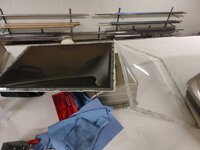
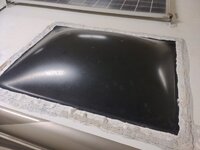
The original before beginning removal. Fairly chalked out from UV but overall still in good condition. Even upon removal I found it very flexible still. I kind of figured it would crumble and fall apart during removal but it didn't.
sky1.jpg

I used some 1-3/4" x 3/16" 6061 aluminum strap to create the frame work.
sky2.jpg

Cutting sections to length.
sky3.jpg

Mocking into position and noting where the screw holes are in the new skylight and not to put any at the corners where I will be welding.
sky4.jpg

The frame work pieces prepped by running a DA over them and then beveling the ends where they will meet. This will create a V for welding with only about 1/16" land remaining which will get welded and blended on the backside.
sky5.jpg

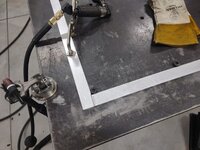
Clamped into position on the fabrication table. Note the bevels where the welds will be.
sky6.jpg

Welded the back side then blended smooth.
sky7.jpg

Aluminum frame clamped to the new skylight so I could transfer the screw hole locations to the aluminum.
sky8.jpg

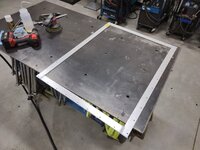
Screw holes drilled and chamfered. I marked the far corner with a piece of masking tape then the skylight at the same location. This will help to quickly orientate when on the roof of the coach and not having to disturb the caulking to match up the screw holes.
sky9.jpg

Note the masking tape at the corner.
sky10.jpg


More pictures to follow......
 
OP
Z

zmotorsports

ALLIANCE MEMBER
Joined
Oct 20, 2009
Messages
21,410
Location
Northern Utah
Continuing on..

Once on the roof of the coach I began the tedious task of removing the original skylight and inner bubble. The butyl caulk was hard and the best method I found was to cut the perimeter with a utility knife and then dig around the screw holes to remove the original screws.
sky11.jpg

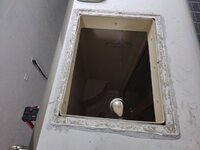
After removing the skylight and inner bubble I began cleaning off the original butyl putty with a putty knife.
sky12.jpg

After getting most everything that was standing proud off the fiberglass, I ran around the perimeter with some Mineral Spirits to thoroughly clean the roof and make ready to accept the new butyl caulking.
sky13.jpg

sky13.jpg

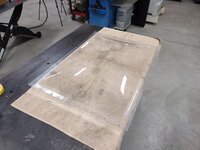
Prior to installing the original inner bubble I gave it a thoroughly cleaning on both sides. This creates the insulating gap as this inner bubble is a couple of inches lower than the exterior skylight bubble.
sky14.jpg

I ran a fairly heavy bead (approx. 3/8") around directly on the roof using the supplies SR-140 butyl caulking. The manufacturers all state not to use Dicor for this step. I then placed the inner bubble in place and pressed it down to spread the butyl caulk and fill the original holes.
sky15.jpg

Once the inner bubble was in place I put a smaller 1/4" bead around and then put the outer Lexan skylight into position.
sky16.jpg

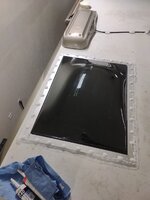
This step probably wasn't necessary but I then ran an even smaller bead around on top of the new Lexan skylight before putting the aluminum frame into place. Once in place I started in the middle and using some #8 x 1-1/4" stainless steel self tapping screws I secured the complete sandwiched assembly to the roof.
sky17.jpg

sky18.jpg

Where the butyl oozed out around the perimeter I ran my finger around and created a smooth transition from the fiberglass roof over the edge to the aluminum frame.
sky19.jpg


More to follow....
 
OP
Z

zmotorsports

ALLIANCE MEMBER
Joined
Oct 20, 2009
Messages
21,410
Location
Northern Utah
Continuing on...

This step also probably wasn't necessary as I feel the perimeter is adequately sealed, however, I chose to run a bead of Dicor self-leveling lap sealant over the edge of the aluminum framework and over the screw heads to ensure a leak proof repair that should last another 20+ years.
sky20.jpg

sky21.jpg

sky22.jpg


Thanks for looking.
 

purplezr2

Well-known member
Joined
Jun 1, 2010
Messages
5,292
Location
Central MN
John (Jarhead), I did mention that I haven't fully gone over to the battery tools yet and still prefer my pneumatics in most situations. That being said, as you can see in quite a few of my pictures over the past several years I do have a few select Snap-on and Milwaukee cordless tools that I use. I just don't see myself fully committing like some of our forum members but the ones I do have I try to use more frequently to justify having them.
Roughly 12 years ago I was in college, I didn't have an air compressor so I bought a few cordless Milwaukee tools. Big spend for a college student. I few years later I bought a 60 gallon IR compressor that was used. When I built my garage, I never moved the compressor to the garage from the storage garage on my property. I have gone completely cordless, it is crazy cause I never would have guessed I would have if you would have asked me 5 years prior to buying my first cordless tool. I have a nice 2135Ti that is hardly used.
 
OP
Z

zmotorsports

ALLIANCE MEMBER
Joined
Oct 20, 2009
Messages
21,410
Location
Northern Utah
I need to pull the three off my trailer and do very similar, how much you wanna charge to do three of the opening style vents

Dave, those standard 14" opening vents are pretty easy to do and really the worst part is cleaning off the original sealants before installing the new vent. If I can make one suggestion, when installing new ones put those Maxxair vent covers on. I love them and have had them on all three of our coaches now and even our two enclosed race trailers. You can leave the vents open going down the road without fear of having them rip off and it creates a venturi affect drawing air through the RV. With our race trailers I would leave them open and I never had a fuel smell or any foul odors when we got to the dunes or track. In our coaches, I crack a driver's side window and keep the vent in the back bedroom open and it draws a nice flow of air through the coach and we generally don't run any A/C unless temps get well into the 90's as it makes it so comfortable. As for me doing them, sorry, I will gladly work on most anything else but I hate getting on my own roof let alone another RV if I don't have to.
 
OP
Z

zmotorsports

ALLIANCE MEMBER
Joined
Oct 20, 2009
Messages
21,410
Location
Northern Utah
I didn't have much time after work yesterday as I had to pick up my wife from the airport so I thought I would take a few minutes and try and save my scale.

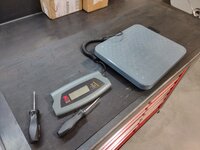
This is an Ohaus SD-200. It is intended to be a parcel scale for mailrooms but I purchased it about 25+ years ago when I was heavily involved in powersports and I was weighing snowmobile and sand quad chassis as well as components looking for any weight savings we could gain. It got a lot of use over a period of about 15 or so years but not much over the past 10 years since we got out of duning and sledding back in 2012. My son and I had a debate going a couple of weeks ago over how much something weighed and to settle the bet we pulled the scale out to weigh it and the dang thing was acting odd. At first I thought it was just batteries but after replacing the batteries I determined it was more than that as the LCD readout was all over the place. With a little more fiddling around with it I could get it to intermittently work when I held the cable just right so I figured it had a broken wire somewhere near the reader head. With no time to mess with it at that time I put it on my "to-do" list.

Last night with what I thought would only be about a half hour I looked over my list to see what fit the bill and allow me to do something productive before I had to leave for the airport. The scale jumped out at me so I grabbed it out of the cupboard and tore into it.

This was really a nice high end scale in its day so I hated to lose it or have to discard it.
scale1.jpg

After opening up the reader head/control head I started troubleshooting and determined that it was in fact one of the wires in the cable. I cut the wires just above the solder joint on the circuit board then pulled on the wires and actually 3 of the 4 wires pulled right out about 2" long in length. That put the break right where it protruded through the plastic housing. I cut the wiring back to expose some good wires, trimmed and resoldered the four wires onto the circuit board and BINGO, problem fixed.
scale2.jpg

All reassembled, zeroed out the scale and it works perfectly again.
scale3.jpg

Glad it was something simple and can go back on the shelf for next time.
 

Dodge

Well-known member
Joined
Feb 8, 2008
Messages
557
Location
Illinois
I too always try to give it a try to fix something, rather than just toss it. Example, last week my TV in my shop stop working during a YouTube video. Sound, no picture. I went on the internet. Tried suggested "reset" methods, nothing. Last comment was "get a new one"!
It is a Samsung Smart Tv, Series 5, only about 3 years old. So, I went to Costco and bought a new one. Mounted it on the wall where the old one was, but I was still determined to troubleshoot the non working Samsung. I went on the internet again and found a YouTube video of a guy with several different things to try. One of the suggestions was to remove the ribbons between the circuit boards and clean them with a pencil eraser. Which I did and also sprayed the circuit boards with Electrical Contact Cleaner, ok for circuit boards. Nothing looked dirty or dusty. Put everything back together, plugged it in, works like brand new. Feels good to revive anything rather than Just Get a New One!! Plus my kids bought me the TV for Father's Day 3 years ago! It meant something to me.
 
OP
Z

zmotorsports

ALLIANCE MEMBER
Joined
Oct 20, 2009
Messages
21,410
Location
Northern Utah
You sir, are a man of many talents! The sheer range of size in your repairs is pretty awesome - from welding a heavy off-road Jeep bumper to soldering the tiniest of wires on a circuit board - amazing!

Thank you. You know the old saying "Jack of all trades, Master of none." :bounce:

I appreciate you following along and for the comments.
 

zanyad

ALLIANCE MEMBER
Joined
Apr 26, 2018
Messages
2,790
Location
NE Ohio
Thank you. You know the old saying "Jack of all trades, Master of none." :bounce:

I appreciate you following along and for the comments.
I feel compelled to add that the original phrase continues: “A jack of all trades is a master of none, but oftentimes better than a master of one.” Very apt in your case, and many other forum members' cases too!
 
OP
Z

zmotorsports

ALLIANCE MEMBER
Joined
Oct 20, 2009
Messages
21,410
Location
Northern Utah
I feel compelled to add that the original phrase continues: “A jack of all trades is a master of none, but oftentimes better than a master of one.” Very apt in your case, and many other forum members' cases too!

Thank you. I guess I didn't know there was more to the original phrase. The short version is all I ever remember hearing.
 

WoodsTruck

Well-known member
Joined
Jan 12, 2013
Messages
1,024
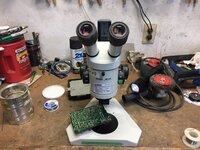
I'll have to keep that in mind. We had our big lab shut down a couple years ago and I got a scale just about like yours and a microscope. The microscope was handy when I had to do some soldering on an ECM panel. The pins break the solder joint when the vibration of the connector causes too much movement.
 

Attachments

  • IMG_6354.JPG
    IMG_6354.JPG
    227.9 KB · Views: 54
  • IMG_6370.JPG
    IMG_6370.JPG
    404.1 KB · Views: 56
To avoid these ads, REGISTER NOW!
OP
Z

zmotorsports

ALLIANCE MEMBER
Joined
Oct 20, 2009
Messages
21,410
Location
Northern Utah
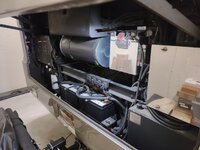
This first picture is embarrassing but I guess I should own it. I usually pride myself on the maintenance of my vehicles but this is a piss poor excuse for neglecting the batteries in the coach. I will usually wash out the battery compartment once a year and reapply the NOCO corrosion gel. However, I washed them last spring after a nasty wet road trip and they appeared to still have some gel on the connections so I didn't reapply. I checked the water in them twice throughout the year and then in the fall (November) when I put the coach away I knew I would be replacing the batteries soon so I guess I let them go. Over the past several months the corrosion on the battery connections on the house batteries got away from me. Battery maintenance definitely pays off because the last time I replaced the house batteries was in 2014, so I got 8 years out of these. I got 7 years out of the previous set.
bat1.jpg

The corrosion had actually started to damage a couple of the lugs and appeared to wick up into a couple of the cable's strands so I dug through my connections and grabbed some 2/0 x 5/16" lugs and purchased a length of 2/0 battery cable. With these bends being mild and gradual battery cable will work fine but on tighter bends I generally use welding cable. Unfortunately the welding supply house wasn't open on Saturday and I wanted to get going on this project.
bat2.jpg

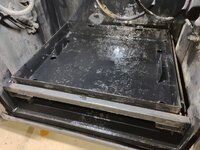
I scoured the battery tray and then vacuumed it and painted it giving it ample time to dry.
bat3.jpg

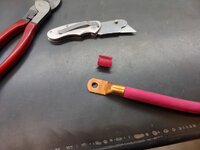
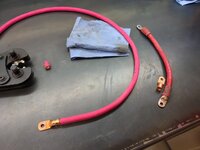
I marked the insulation to just give enough room for the lug to be crimped on.
bat4.jpg

I don't like to cut any more away than absolutely necessary.
bat5.jpg

Lug being crimped onto the cable.
bat6.jpg

Cable lug crimped to make a sound and solid connection.
bat7.jpg

Measuring and marking for proper length.
bat8.jpg

One duplicated and now three more to go.
bat9.jpg

Cables completed and heat shrink applied.
bat10.jpg

More pictures to follow....
 
OP
Z

zmotorsports

ALLIANCE MEMBER
Joined
Oct 20, 2009
Messages
21,410
Location
Northern Utah
Continuing on with battery replacement.

Battery tray sprayed liberally with NOCO corrosion grease/gel.
bat11.jpg

New batteries in place and torqueing the fasteners to the proper spec.
bat12.jpg

All cable connection points treated with NOCO NCP-2 anti-corrosion gel.
bat13.jpg

Battery tray slides lubed and tray slid back into place.
bat14.jpg

I then moved on to the chassis batteries. I generally don't replace them all in the same year but I also generally only go about 7 years on batteries. The fact that I went 8 years on the house batteries was good but I don't want to risk being out in the sticks and have chassis battery issues so the chassis is also getting new batteries. These were last replaced in spring of 2015 just before our first trip to Texas.
bat15.jpg

bat16.jpg

That is all for the battery replacement and they should be good for another 7 years or so. Who knows if we'll still own her by then.
 
OP
Z

zmotorsports

ALLIANCE MEMBER
Joined
Oct 20, 2009
Messages
21,410
Location
Northern Utah
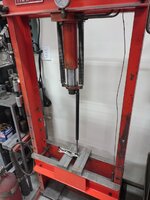
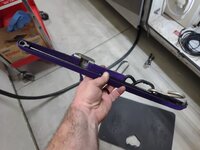
While I had the engine hatch open I thought I would install the new gas struts that I recently purchased for this door. These gas struts have 260 pounds of force and not the easiest to install but I've found a trick that I've been using for a while now that works well.

I will measure the distance from ball mount to ball mount and then compress the gas strut to a measurement about 2 inches less than that dimension.
gas1.jpg

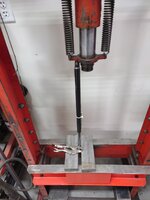
I then grab my .041" stainless steel safety wire and wire wrap pliers.
gas2.jpg

I wrap the safety wire around the ends and get them as tight as I can while in the press. Once I relieve the pressure from the press, the gas strut will expand about an inch to inch and a half but still slightly less than my original needed length.
gas3.jpg

Confirming my length is close enough for installation.
gas4.jpg

At this point it is a matter of simply popping the ends onto the balls at each end, cutting the safety wire and move on to the next one. Easy peezy.

Thanks for looking.
 
OP
Z

zmotorsports

ALLIANCE MEMBER
Joined
Oct 20, 2009
Messages
21,410
Location
Northern Utah
We all have our dirty little secrets Mike ;)

I'll have to look into a can of the gel, I've always used the product in the aerosol can.

Thanks Marc. That was hard for me to post that picture as I am embarrassed but it's real and I should not have let them go regardless of the time of year and knowing they were getting replaced soon. That is no excuse.

As for the anti-corrosion gel, I used to use the aerosol as well, actually that is what I coated the battery tray with prior to installing the new batteries, however, I don't like the stuff getting all over the battery tops. I switched over to the brush top can of gel several years ago and like it much better. You can get it in smaller 4 oz. cans but I do a lot of batteries each year so I bought the 32 oz. can. Even after several years of using it I don't feel like I've made much of a dent in the can of gel.
 

OutlawDrifter

Well-known member
Joined
Jan 20, 2015
Messages
3,876
Location
KS
Good to know on the gel!

I like that idea for the gas struts also, the only ones I change that can be a pain, are on the back hatch of the Z28.
 
OP
Z

zmotorsports

ALLIANCE MEMBER
Joined
Oct 20, 2009
Messages
21,410
Location
Northern Utah
Good to know on the gel!

I like that idea for the gas struts also, the only ones I change that can be a pain, are on the back hatch of the Z28.

Yeah, my other ones aren't too awfully bad at 90-100 pounds of pressure the but rear engine hatch ones are a handful to replace with assistance from other means. Stumbled across this method about 10 years ago when I replaced them last time and have done many others since using this technique.
 

jbmatth

Well-known member
Joined
Jun 3, 2013
Messages
5,686
Location
Northern Ok.
Great tip on the gel, I'll have to pick some of that up, sadly the only thing I've ever used is grease, old farm trick, but didn't know any better and it works but is VERY messy.

JB
 
OP
Z

zmotorsports

ALLIANCE MEMBER
Joined
Oct 20, 2009
Messages
21,410
Location
Northern Utah
Last night I marked off the last item on my pre-season "to do" list for the coach.

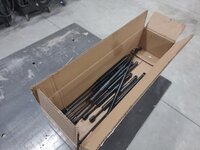
I had two compartment doors getting "lazy" on me last season and I could tell the gas struts were failing. I have replaced all of them over the past 15 years of ownership at one point in time or another and just purchased the closest match from my local NAPA. Well a month or so ago I opted to splurge and buy the correct ones to replace the OEM's that originally came on our coach.

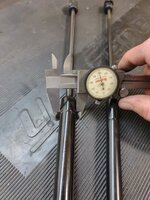
As you can see in the pictures there is quite a difference in the body and rod size of the NAPA sourced ones compared to the Suspa branded gas struts. Also the Suspa branded struts have higher force rating so time will tell how much longer they last.

Old gas strut removed and lying next to a new Suspa ready to be installed.
gas1.jpg

NAPA sourced strut has a body size of .600".
gas2.jpg

Suspa strut body measures .750" in diameter.
gas3.jpg

Suspa strut rod measures .312" in diameter.
gas4.jpg

Compared to the NAPA branded strut with a rod diameter of .235".
gas5.jpg

For the pantograph style of compartment doors the space is very limited and I can't merely open the doors far enough to replace the gas strut like I can on the standard upward rising compartment doors so I had to get creative. Being a smooth body I couldn't use the safety wire trick like the rear engine bay hatch struts so I tried a nylon tie-down and it worked perfectly.
gas6.jpg

Once in place I undid the tie-down and snaked the strap out from behind the strut and moved on to the next one.
gas7.jpg

After all were replaced I tossed the old worn out ones in the trash and hopefully won't have to perform that task again for quite a while if these Suspa branded struts last as long as I hear from other Monaco owners.
gas8.jpg

With the list complete I think she's travel ready for the season.

Thanks for looking.
 

sanddan

Well-known member
Joined
Jul 7, 2005
Messages
708
Location
Oregon
John (Jarhead), I did mention that I haven't fully gone over to the battery tools yet and still prefer my pneumatics in most situations. That being said, as you can see in quite a few of my pictures over the past several years I do have a few select Snap-on and Milwaukee cordless tools that I use. I just don't see myself fully committing like some of our forum members but the ones I do have I try to use more frequently to justify having them.
I was like you until I tripped on an air hose and fell on the concrete floor. Broke my wrist and was messed up for several months. I’m 69 so falling is no joke. For me, less tripping hazards in the shop the better. The fact that the current brushless technology is so good makes it an easy decision. I still use my air die grinders as they work better than electric but the electric impacts are better than air.
 

SilverJimmy

Well-known member
Joined
Apr 14, 2012
Messages
1,635
Location
Prescott/Flagstaff, AZ
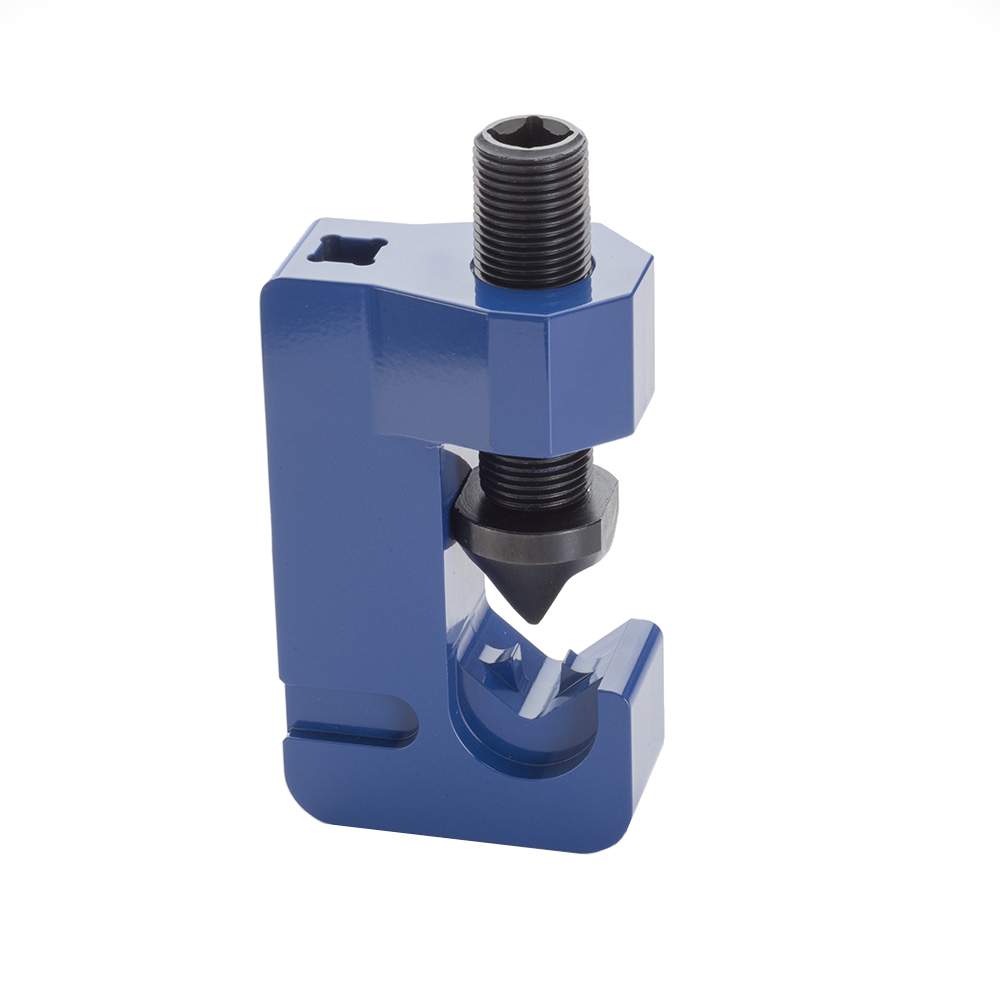
On the topic of battery cable crispers, I sold these when I was selling tools and I used one myself because my tool trucks all had at least 8 batteries between the engine, house and computer system.
They work really well and can be clamped in a vise or you can use a breaker bar and a ratchet to crimp a cable on the vehicle. Makes a nice tight crimp.
 
OP
Z

zmotorsports

ALLIANCE MEMBER
Joined
Oct 20, 2009
Messages
21,410
Location
Northern Utah
Mike,
just re-read your shop thread and just had to try a bit to be “Just like Mike”!
These showed up today….
807FD519-D20A-43A9-8877-F8C47BB42F3A.jpeg
Such a simple idea to solve a common problem.
Thanks!

Very nice. That's quite a selection of guides there. I just have the basic SAE and Metric guides is all.

Thank you for following along and taking the time to go back through my thread again, that's a lot of reading. :beer:
 
OP
Z

zmotorsports

ALLIANCE MEMBER
Joined
Oct 20, 2009
Messages
21,410
Location
Northern Utah
I sure intend to get a welding cable lug crimper next time I over at Princess Auto. Nothing says quality work than proper length cables!

Thanks. Between dealing with batteries at work on electric fork trucks/pallet jacks and then at home with RV's I've built a lot of cables over the years and having the correct tools and supplies for the job was important to me so I invested in good quality tools and supplies.

Like you, when I see a properly crimped and laid out battery cable it screams that someone gives a **** and cares about their work. I am appalled at some of the RV battery trays that I see.
 
OP
Z

zmotorsports

ALLIANCE MEMBER
Joined
Oct 20, 2009
Messages
21,410
Location
Northern Utah
Last week while I was working on the coach and a couple other items in the shop, my son had come over a couple of the nights and was working on the chassis under his 2002 2500HD Duramax. Friday afternoon when I arrived home from work we swept up the shop floor, put the tires/wheels on, backed the truck outside and sprayed the POR15 cleaner on the chassis and pressure washed it off. Then we moved on to the Metal Prep, which with as much surface rust as he had going on may not have been necessary, but we only wanted to do this nasty job once and be done so we used it.

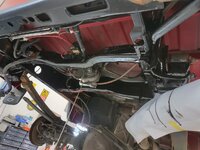
It may be kind of hard to see in the pictures but he used a DA with 80-grit sandpaper and hit the large flat surfaces then used a needle scaler and wire wheel around the cab/body mounts. He also, pulled the wire loom out of the way removing the plastic clips and then removed the e-brake cable clips to allow full coverage without interferences. Overall, the chassis was prepped quite well for applying the POR15, especially being a daily driver. My son really wanted to pull the cab and bed and spray the chassis but I talked him out of it due to the time it would require and I really didn't think it was necessary, this isn't a show truck, it's a daily driver with 285k miles on the clock. Being a daily driver, all of the prep work and brushing the POR15 on is still probably overkill, but much less time involved compared to what he wanted to do.

Here you can see just a small fraction of the **** he was able to get off the chassis.
lb1.jpg

lb2.jpg

After pulling the truck back into the shop and prepping for the painting process.
lb3.jpg

The light surface rust that started from the Metal Prep as well as a few of the areas that already had rust on them such as the 5th wheel hitch.
lb4.jpg

Stirring up the POR15 and ready to begin a long Saturday of painting.
lb5.jpg

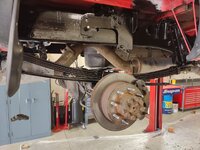
Cross-members were hit first. We worked from the center outward to avoid having it drip on us. My son focused on the crossmembers to start with while I started in the spare tire mounting area of the rear of the frame.
lb6.jpg

lb7.jpg

Once the cross-members and rear spare tire box were done we started at the rear spring hangers and worked forward, each taking a side.
lb8.jpg

lb9.jpg

lb10.jpg

Once we hit the front suspension area, the rear sections were starting to flow and take set so we went back and hit the rear forward again for a second coat.

Stay tuned for more pictures.....
 
OP
Z

zmotorsports

ALLIANCE MEMBER
Joined
Oct 20, 2009
Messages
21,410
Location
Northern Utah
Continuing on with the chassis paint.

Front suspension area coated. We also pulled the front brake line brackets loose from the frame to allow full coverage under them.
lb11.jpg

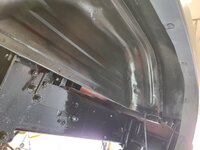
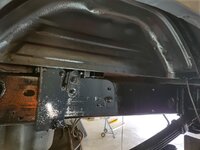
Once the chassis was covered with two coats of POR15, we took a break and grabbed a late lunch. After returning we thought we would continue on and move to painting the underside of the wheel wells. We had cleaned them previously and hit them with some sandpaper on a DA as well as the red Scotchbrite to scuff the surface and allow the textured truck bed coating to stick. After a final wipe with Wax & Grease remover we pulled the front inner fenders back and sprayed the small painted steel areas with truck bed coating. Then popped the retainers back into place and moved to the rear of the truck.
lb12.jpg

Same process with the rear fender wells. Sand/scuff, wipe with Wax & Grease Remover and spray with textured truck bed coating.
lb13.jpg

lb14.jpg

lb15.jpg

lb16.jpg

My poor shop is filthy.

Friday night and Saturday we had low 60-degree temps which were perfect for the prep work but yesterday we had rain and snow nearly all day. This probably worked out perfectly as the POR15 seems to cure better with moisture/humidity in the air so that should aid in curing.

Tonight I will clean up the mess and prepare to drop the fuel tank for the FASS installation.

Thanks for looking.
 
OP
Z

zmotorsports

ALLIANCE MEMBER
Joined
Oct 20, 2009
Messages
21,410
Location
Northern Utah
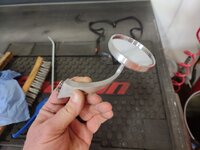
On another note, Friday night after lying under the truck pressure washing everything my son asked if I had a mirror in the shop as he said he could feel the drops of **** on his face. I told him that I couldn't remember what we did with the small mirror that was in our last shop. In our previous shop I had a small Billet Specialties mirror that I purchased when I was building our street rod. I bought one for each side but only ended up using one for the driver's side as that was all that was required for the safety inspection. The other mirror we had mounted to a cabinet over one of the work benches and had been there nearly the entire time we had our old shop. I guess my son remembered that because Saturday morning when he arrived to start the day's work on his truck he handed me the old Billet Specialties mirror that we had in our last shop.

Yesterday morning after the wife and I returned from breakfast I went out to the shop to check on the chassis as well as mounted the mirror to an overhead cabinet to keep the memories alive.

It's nothing fancy, just a small 2.5" billet aluminum mirror and mount that is about 28 years old.
mir1.jpg

mir2.jpg

Mounted to the side of the overhead cabinet next to my toolbox.
mir3.jpg

Thanks for looking.
 
To avoid these ads, REGISTER NOW!
Top Bottom