To avoid these ads, REGISTER NOW!

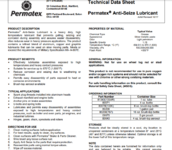
Anti-seize on Lug Studs?

To avoid these ads, REGISTER NOW!

corn chip

Well-known member
Joined
Jul 15, 2021
Messages
672
you can run em dry if you rotate your tires on a regular frequent basis , so theres no time for the lugs to corrode onto the stud.
problem is ,alot of people dont rotate the tires for years on end then the lugs seize and break the stud or wipe out the threads upon removal.
 

Tools4Me

Well-known member
Joined
Jun 22, 2021
Messages
546
I use a very light coating of regular grade anti-seize on all lug threads. As soon as I can tell it's there, that's enough. I rotate my tires regularly and don't encounter much road salt where I live, so lug seizing isn't my main reason for using it. I use it because you end up with more consistent contact pressure from lug to lug (after torquing the nuts) when you have anti-seize on the lug threads. Consistent contact pressure puts less stress on the wheel system as a whole and it also helps reduce brake rotor warping issues. I personally think many vehicles known for brake rotor warping are likely just very sensitive to lug overtorquing or unequal lug contact pressures. I have been able to make the problem almost disappear entirely on several vehicles I maintained by always using anti-seize, torquing the lugs in the proper order, and torquing lugs myself with a torque wrench instead of allowing a shop to do tire changes or rotations with an impact.

I reduce my final tightening torque by 10% to compensate for the regular grade anti-seize I use (It has a K factor of 0.18). I don't use copper (mine specs a 20% torque reduction factor) or nickel anti-seize (mine specs a 35% torque reduction factor) because of those higher torque reduction factors. The higher the torque reduction factor is, the greater the chance is for something to be damaged by overtorquing if you ever have to take your vehicle to a shop and an idiot tightens the heck out of your lugs with an impact wrench instead of torquing them properly.
 

Qualitytools

Well-known member
Joined
Apr 30, 2014
Messages
2,850
Location
SOCAL
You'll find there's no consensus...half the people do, half don't. It's usually split between people who live in the rust belt and those who live in southern states.
This is really how it is. Also if you do decide to use antisiez than make sure as mentioned above to adjust the torque specs for the studs or lugbolts.
 

PCustoms

Well-known member
Joined
Jul 23, 2011
Messages
22,627
Location
VT
I also use a very light coating of it, not only on the studs but on the hub in order to keep the brake drum, rotor, and wheel from seizing to it. I have been doing this for the past 35 years on dozens of vehicles with no ill effects.
This. Reduce the lug toque to compensate for wet vs. dry

Nice to be able to remove a tire when needed.
 
To avoid these ads, REGISTER NOW!

Mikeske

Well-known member
Joined
Apr 28, 2017
Messages
2,127
Location
Washington State
I never used any anti seize when I do a rotation but I also wire brush everything including the hub, inside the wheel but that also gives me the opportunity to completely wash the inside of the wheel to get all the brake dust off and inspect the wheel for damage. I do live in the part of the country that has not much of a rust problem.
 

M635_Guy

Well-known member
Joined
Dec 5, 2019
Messages
4,334
Location
NC
I never use antiseize on lugs. I use some on the facing/hub, but that's it. I scrub everything (threads/etc.) with a wire brush and generally keep things pretty clear.

I also live in central NC.
 

gmcgeo

Well-known member
Joined
Mar 11, 2019
Messages
3,701
I would think you are getting mild surface rust at best, since you are in NC unless you are running the beaches and driving in salt water.........

Dry fit
 

cannuck

Well-known member
Joined
Nov 30, 2021
Messages
4,612
Location
Rural SK
I also use a very light coating of it, not only on the studs but on the hub in order to keep the brake drum, rotor, and wheel from seizing to it. I have been doing this for the past 35 years on dozens of vehicles with no ill effects.
I leave most of them dry, but if I can feel them getting tight will use a very small amount. As to the hub: we have a lot of very high mileage vehicles and trailers with aluminum wheels and the damage from corrosion at the hub face is common and constant - especially for those that travel South and East in the winter. Some can become nearly impossible to remove for roadside tire repair. Years ago I started cleaning the hub faces up and spraying with a coat of zinc rich paint ("cold galvanizing" compound) and we no long see wheel pitting and they remove easily from the hub.
 

gmcgeo

Well-known member
Joined
Mar 11, 2019
Messages
3,701
Yes I do. Used to not till I started working on Subaru where the studs always freaking snap lol. Can’t tell you how many I replace on a weekly basis. But I use very little. Just a dab of it.
WOW, i have never needed to do this to any of my Subaru's. May i ask what models?
 

Terra Nova

Well-known member
Joined
Feb 26, 2012
Messages
4,193
Location
Michigan
I live in the rust belt and have never used it and never had an issue on a vehicle I've maintained. As mentioned, if you are adding a lubricant to a threaded joint be sure to lower the torque spec accordingly otherwise you may be yielding the fastener without realizing it. Now how much do you lower it?? That's the question, and one no one here can answer because it'll be different across all the platforms and lug designs out there.

Keep the center caps on and rotate the tires every great once in a while and you'll have no need to put anti-sieze on wheel studs IMHO.
 

M635_Guy

Well-known member
Joined
Dec 5, 2019
Messages
4,334
Location
NC
Yes I do. Used to not till I started working on Subaru where the studs always freaking snap lol. Can’t tell you how many I replace on a weekly basis. But I use very little. Just a dab of it.
In a commercial shop, I'd go with the "1 drop of oil" thing before I'd put antiseize on lugs when the product instructions specifically say don't do it. If there's ever a problem and some attorney gets that detail, you might get stuck with something that's not even your fault.

A wire brush and a couple quick twists with an oily rag should be plenty. But I'd want it to look dry at the end of whatever process.
 

Iridium rand

Well-known member
Joined
Sep 23, 2021
Messages
218
Way i see it can’t really hurt if you reduce the torque by x percent for whatever type you’re using, not a big deal in a shop environment but when stuck on the side of the road I would really prefer as close as you can get to guaranteed that they come off relatively easily. Not a fun situation where you’re starting to consider jumping on a tire iron
 

kelpaso1

MEMBER EMERITUS
Joined
Sep 28, 2009
Messages
3,962
Location
New Brunswick
I use it on studs here (because of the amount of salt they use here) even though it says not to. Some guys here say they use a drop of oil instead. What's the difference? You are still using a lube on the threads. I think the warning on the label is there for the lawyers. The biggest issue is to not get it on the taper of the nut and the taper of the hole. THAT is what holds the nut from loosening and where the most friction is when tightening.
 

javyLSU

Well-known member
Joined
Jan 2, 2019
Messages
1,542
Location
New Haven, CT
Never have, never will use them on wheel studs. Manufacturer torque specs are always given for clean, dry threads - so if you're applying some sort of schmoo to your threaded fasteners and you're "torquing to spec," you're doing it wrong. I live in New England, and I recognize that many people will do this to prevent corrosion and make removal of that fastener easier, but wheel studs are not a place where I want to deal with mis-torqued lug nuts, stretched, fatigued, and broken and studs, and dealing with (at best) the fun that comes with replacing a stud, or worst case having a wheel come off while driving and endangering others. If you're worried about not being able to get a lug nut off while stranded on the side of the road, head on over to Harbor Freight, buy a 25" breaker bar for $20 and keep it in your vehicle.
 
To avoid these ads, REGISTER NOW!
Top Bottom