To avoid these ads, REGISTER NOW!

Teeing into 3/4 copper water service line

Joined
Feb 21, 2021
Messages
5
Location
Northwest Missouri
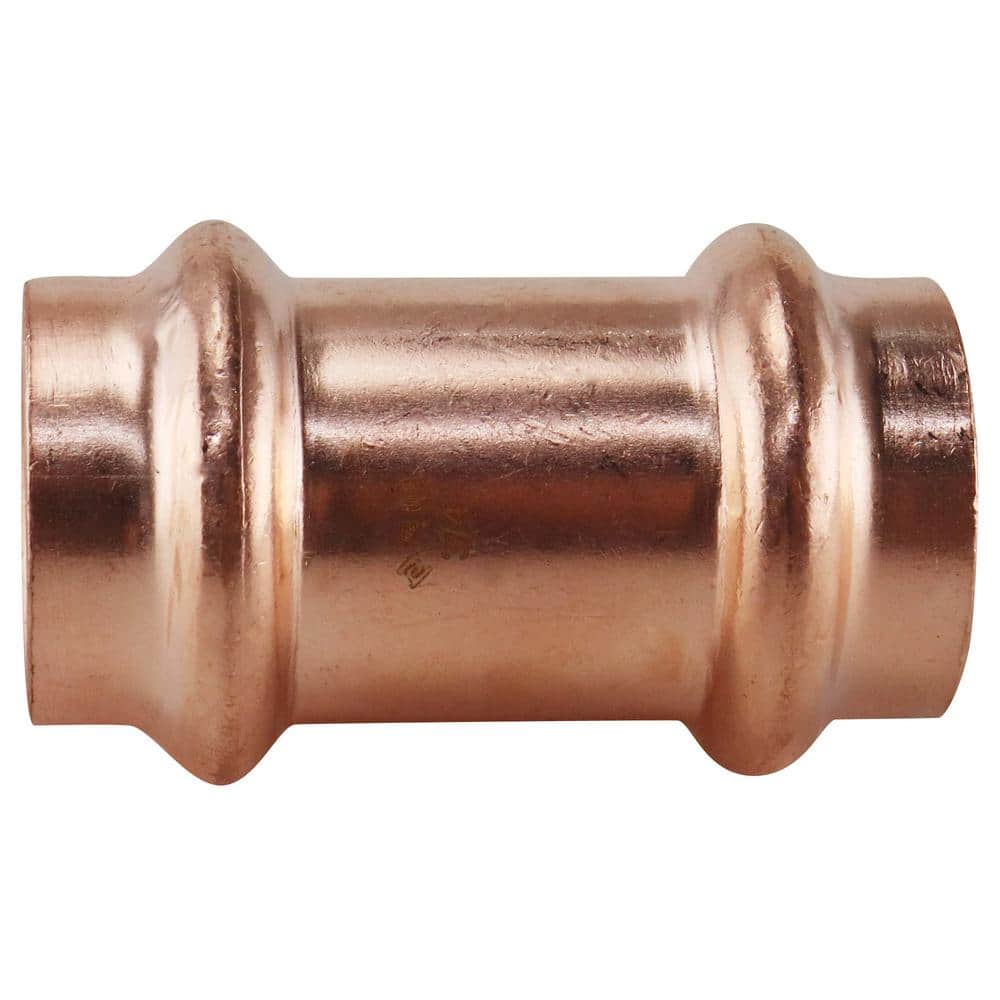
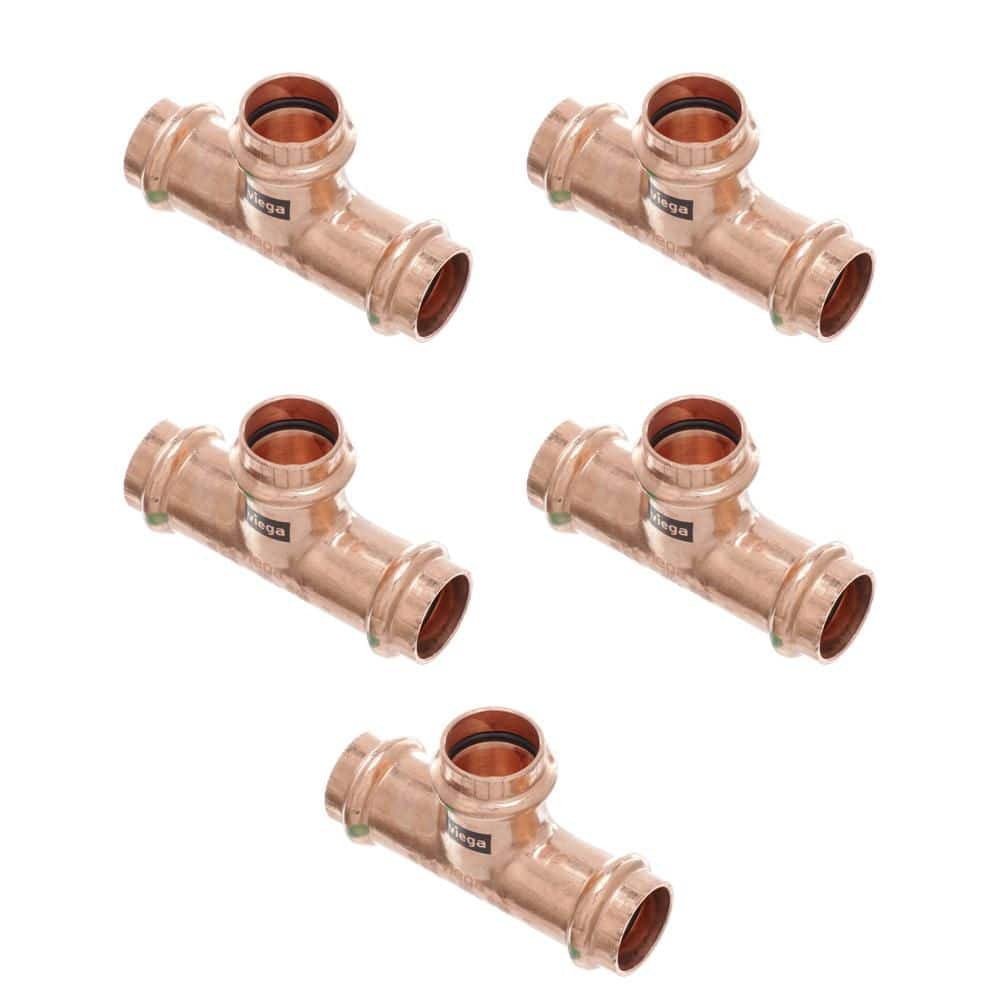
Hi everyone! I've been a member here for a while and found some great ideas and information. We have a new 40x50x16 post frame building and now it's time to run water and electric to it. I'm having a little trouble deciding how to tee into my water service line (from meter to house). From the tee, I'll attach a 3/4 ball valve and run 3/4 PEX from there. It's 3/4 copper and buried 30" deep in hard packed clay soil. My first thought was this pack joint tee Pack Joint Tee but the tubing is very solid in the soil, so I don't think I will be able to offset it laterally to slip the tee in place. I feel probably the best way would be with one of these cut in pack joint tees Cut In Tee but I'm not sure of the availability. Another option I have considered is using two 3/4 pack joint- 3/4 FIP fittings with a 3/4 MIP tee in the middle. Fitting, Tee. Any input is appreciated!
 
To avoid these ads, REGISTER NOW!

nadogail

Well-known member
Joined
Jan 23, 2009
Messages
32,008
Location
Coronado, CA
I have had very good results when I have used the Shark Byte flexible hoses with the slip on couplings. I make a loop with the excess hose and bury it. I have two water supply lines, on different properties mended this way. The most recent one was two years ago.
 

Git

Well-known member
Joined
May 18, 2008
Messages
6,894
Location
S Cal
Are you not able to get down in there an solder? I know you said it was hard packed clay but it would be worth digging out around it to have some space to work with

My first thought would be to cut out about a 4" section of the 3/4" copper. Than get a regular copper T and solder in two 'legs' in the straight part so that it would be a good fit to the missing section. Than you get a couple of these slip unions. They don't have 'stop' in the middle, so you just slide them on the existing pipe, insert your T section, slide the unions back over and solder in place.

T22-478.jpg
 

Zeke

Well-known member
Joined
Aug 13, 2009
Messages
17,176
Location
Long Beach CA, the sewer by the sea.
I think if you can get down in the hole enough to clean the pipe and wrench a fitting, you can use the slip solder unions mentioned above. The only problem might be evacuating all the water to solder. I know there are products, but you have a limited amount of time to get your joint soldered.
 

yatg

Well-known member
Joined
Aug 16, 2019
Messages
2,830
Location
Southern Oregon
If you can rent a propress tool, that might be an option.

There's also saddle tees for copper, but they are pricey.
 

fitter30

Well-known member
Joined
Jun 23, 2019
Messages
2,990
Location
Peace Valley,mo
Propress and other brands are below grade approved like viega. If it has to be inspected check with local plumbing inspector. There is no soldering but need the tool for crimping. Don't know if the tool it can be rented. If everything is ready to crimp only takes a few minutes and water can be dripping. I've crimped full port valves on with water on a had no problems other than a bath. The other way is a pipe freeze kit with two heads stops the water dripping makes it easier to solder.
 

rayra

Well-known member
Joined
Dec 1, 2014
Messages
4,724
Location
Escaped from Los Angeles
What's the geometry of your buildings and existing main, would it make any sense to instead modify either end of your existing main, tradeoff being easier working access vs the total run of your branching supply to the new structure?

I would think your t-placement ought to including some valving so you can shut off the branching line while keeping pressure on your main, to your residence.
 
OP
F
Joined
Feb 21, 2021
Messages
5
Location
Northwest Missouri
Thanks for the ideas so far! No inspections are required, but I definitely want to do this once and be done with it. I have thought about using a slip coupling soldered in with the first pack joint tee I linked. Not sure how well it would solder with the ground pulling the heat away and also the issue with residual water. The Propress fittings might work well. A tee and one slip coupling should do it. I'll have to see if I can find the tool to rent.
 

metlmunchr

Well-known member
Joined
Sep 10, 2011
Messages
1,278
Pack joints fittings are made for use on type K copper and not recommended for L or M. Underground water service lines should be K soft, but what is and what should be are often different so that needs to be verified before using that type fitting.

At 30" deep, you'll need a decent size hole to make any type connection reliably. At that point, you might as well use copper fittings and solder as mentioned above. The fittings previously mentioned that will allow you to slip the tee and a couple stubs on place are called no stop couplings. Unions are 3 piece fittings and not what you need for this job.

I've run more underground pipe than I care to remember, from 3/4 copper to 8 inch welded steel for condenser water. The most important thing to know is when you cover it you're as sure as possible that it's covered for good. Based on that experience and a few screw ups along the way, here's what I'd use. Not the cheapest solution, but the most reliable over the long term.

3/4 copper x 3/4 female pipe tee. Pipe thread on the branch. 3/4 x 12" brass ******. 3/4 bronze curb stop. (this is the same valve used on the water service at your meter)

Solder your stubs, 4 to 6 inch long, into the run of the tee on the bench. Make up the brass ******, curb stop, and pipe to PEX adapter on the bench as well. Then, when you make the joints in the ditch using the no stop couplings, the heat will be far enough away from the tee that it won't affect the dope on your screwed joints.

The purpose of the brass ****** is to distance the stop from the soldered joints such that you minimize the forces on the joints when you twist the stop open or closed. You can use a piece of 4" Pvc and a cap to make a valve box for future access and a standard meter key will operate the curb stop.

Ball valves don't do well underground. The handle is plated steel and begins to rust pretty quick and will break off rather than turning over time. I've repaired a couple of them that began to leak around the stem. I assume rust particles worked down around the stem and scratched the Teflon packing to cause the leak. These were Apollo valves and not some offshore cheapies, but, because ball valves are so trouble free in normal above ground applications, repair parts like the stem packing can be hard to get. Long term reliability underground is one of the reasons a 3/4 curb stop costs $50 while a 3/4 ball valve is $10.

Not sure why anyone would nix underground solder joints if they know how to make a good joint. Any water service line longer than a standard roll of soft copper will have one or more soldered joints and last for the life of the house.
 
Last edited:

FredWanaker

Well-known member
Joined
Mar 27, 2021
Messages
1,470
Location
NorCal
I'd have to see an aerial view to decide the best solution. Since we are adding water, I am assuming that sewer or septic is being added too. There is also electric and possibly gas, maybe cable. How are those being done and trenched?
 

tarmy

Well-known member
Joined
May 28, 2014
Messages
4,699
Location
Nor Cal
Are you not able to get down in there an solder? I know you said it was hard packed clay but it would be worth digging out around it to have some space to work with

My first thought would be to cut out about a 4" section of the 3/4" copper. Than get a regular copper T and solder in two 'legs' in the straight part so that it would be a good fit to the missing section. Than you get a couple of these slip unions. They don't have 'stop' in the middle, so you just slide them on the existing pipe, insert your T section, slide the unions back over and solder in place.

T22-478.jpg
This right here…

done this several times, even in soil…no issues in decades. The key, as always, is cleaning the areas to be soldered, wire brush the fittings, good flux and application to both parts of each joint and good heat placement with water rated solder…should be good for the life of the pipe.
 

Showkey

"MEMBER EMERITUS"
Joined
Aug 9, 2014
Messages
8,638
Location
Wausau WI
OP does the home havea basement or crawl space with utilities ?

If it does ? I would cut in to the water supply in that area. Junction with the joint of your choice solder or shark bite etc. Run the line from the home to the barn/shop with one continuous poly pipe with shut off in the home and shop. Buried at the required depth.
 
OP
F
Joined
Feb 21, 2021
Messages
5
Location
Northwest Missouri
Thanks metlmuncher! This seems like a good plan. I appreciate you taking the time to go into detail with the "how and why". I know I'm not the only one who will benefit from this post. I searched and searched for some solid info and just didn't come up with much (which I was surprised about since I know this can't be an uncommon situation that I'm looking for a solution to).
 

Renegade1LI

Well-known member
Joined
Mar 11, 2018
Messages
4,978
Location
long island ny
Solder is not allowed for underground use by most municipalities, a flared or pack type joint is whats usually required. It's always a good idea to follow code even if you're not getting it inspected, also use pipe rated for potable water service, you'll be glad you did.
 
To avoid these ads, REGISTER NOW!
OP
F
Joined
Feb 21, 2021
Messages
5
Location
Northwest Missouri
My water service comes into the house through the cement basement wall in the garage. It's a split foyer so the basement only 1/2 underground. The wall is 1/2 cement, 1/2 wood frame construction. I could possibly tee into the 3/4 line there but I would have to bore through the cement wall somewhere for the line to run back out to run to my building. Not a bad idea really and that had never crossed my mind. Some 2-2-2-4 MHF will be sharing the trench with the water line. Those are the only utilities I'll be running. It would be fairly easy to run some PEX from the water line inside the basement over to near where the electric service is, and bore through the wall below my breaker box. I have plenty 3/4 PEX....I bought 300' to run 150'.
 

FredWanaker

Well-known member
Joined
Mar 27, 2021
Messages
1,470
Location
NorCal
that would be mine too. In fact if I had twice as much line as needed, I might lay two runs if you have enough and label one as a spare in case the primary ever has a problem. might even consider laying a spare conduit in case you want to run anything else some day.
 

CraigStu

Well-known member
Joined
May 22, 2014
Messages
4,039
Location
Blacksburg, Va
connection inside the house would be my first choice
Me too. Working in the bottom of a hole 30 in deep for something this critical for me is a no go. Working in your basement makes everything so much easier and gets rid of all concerns about what will last best under ground too. So far I have just used my recently acquired hammer drill for some 5/16 bolts but it works so well that I suspect that drilling for you water pipe won't be that difficult. I like FredWanaker's idea of running an extra conduit or your extra pex. I would also consider running something larger diameter and be sure to put a pull string in it also.
 

acer66

Well-known member
Joined
Dec 4, 2010
Messages
4,418
Location
Western North Carolina
My water service comes into the house through the cement basement wall in the garage. It's a split foyer so the basement only 1/2 underground. The wall is 1/2 cement, 1/2 wood frame construction. I could possibly tee into the 3/4 line there but I would have to bore through the cement wall somewhere for the line to run back out to run to my building. Not a bad idea really and that had never crossed my mind. Some 2-2-2-4 MHF will be sharing the trench with the water line. Those are the only utilities I'll be running. It would be fairly easy to run some PEX from the water line inside the basement over to near where the electric service is, and bore through the wall below my breaker box. I have plenty 3/4 PEX....I bought 300' to run 150'.
Some AHJ may have restrictions on how to run water and power in the same trench if that is a concern.
When I did my garage the inspector wanted a minimum of 12” of space between the water and electric feed which made sense to me in case you need to fix one or like in your case install a connector.
 

MattN03

Well-known member
Joined
Nov 4, 2007
Messages
601
Location
KY
I ran water to my detached shop by teeing into the 3/4" PEX inside our basement. I drilled through the concrete wall with a Bosch Bulldog drill and concrete bits. Ran PVC grey conduit from inside the house, all the way to the shop 200' away and then ran the PEX inside the conduit. I have a LOT of rock on my property in central KY, so I wanted to add an extra layer of protection to the PEX and hopefully prevent any future leaks. I put a shut off valve inside the basement, along with a air compressor ****** so I can blow out the line before the winter (shop isn't heated/insulated). This has worked well since 2019, when we finished the shop.
 

tarmy

Well-known member
Joined
May 28, 2014
Messages
4,699
Location
Nor Cal
Someone wanna educate me why solder is not allowed underground in some jurisdiction…never heard of that. They don’t care here…
 
OP
F
Joined
Feb 21, 2021
Messages
5
Location
Northwest Missouri
I've had some time to think over all the ideas and I think teeing into the water line would be best in the garage where it enters the house. Easy access to work, accessible in the future if repairs are needed to my connections and biggest of all, not disturbing my trouble free underground water line to the house. Another big advantage is the underground part of my new water line running to the building will be a continuous run with no connections. I have 1 1/2" conduit under the slab in the new building to push the PEX in. It will come up through the floor 10' inside the outer wall and will be in an interior wall of a heated/cooled room.
 

Jim greengo

Well-known member
Joined
Sep 3, 2018
Messages
7,415
Location
Behind my house
How far is the building from the meter pit or the house?
If I was doing it I'd want the tee to be some place where you can see it,and I'd want a shut off where it could be isolated where you could shut it off without affecting the house if it needs to be worked on.
If you do decide to bury the tee,I'd either hard solder it or use flared fittings to attach it.
 

metlmunchr

Well-known member
Joined
Sep 10, 2011
Messages
1,278
Obviously, the Ford cut in tee the OP referenced is the ideal solution and by far the simplest to install. But it ain't currently available, and no one else makes a similar fitting. So, what's the OP to do? Just say screw it, I'll go without water since the code sez blah blah blah about underground solder joints? As with a lot of things in business, sometimes you have to improvise and not worry about the code.

People who've never been in the piping business can't fathom the fact that a lot of the codes were written when the only soft solder in common use was 50/50 and the average plumber didn't have a clue about how to make a silphos joint. Once written into the code, things tend to go on the theory that whatever was good enough for Grandpaw in 1945 is the only way to do it today.

I would use silphos to make the joints, but that's because I have $500 worth of Turbo Torch and B acetylene cylinder that I doubt the OP has, nor does he want to buy for one job. One thing I should have mentioned in the previous post is to use Stay Brite #8 solder and Stay Clean flux to make the joints, as it is strong, lead free, and easy to use without the requirement of a high temperature torch.

I ran into a situation a few years ago where an improperly cleaned joint had been made with some unknown soft solder on a 410A air conditioning system. Due to the location I had no faith in being able to adequately clean the soft solder out of the joint so I could make it with silphos. So I emailed Harris to find out if Stay Brite had adequate strength for the pressures involved with 410A refrigerant. One of their engineers responded that it would be fine, and included pics where they had done tensile tests on Stay Brite joints showing the product exceeded the strength of the tubing and would actually tear the tubing apart before the solder would fail. Harris is also a major producer of silphos, so it wasn't a case of them recommending their product over a competitor's product, but rather just a simple case of Yes, this product will work for that application. If it has enough strength to tear the tubing before the joint fails, there's no logical reason to assume it has inadequate strength to hold an underground water line together.

It's interesting that some people are afraid of a properly made solder joint underground while the same joint in a wall or above a ceiling can cause thousands of $$ of damage if it fails. The only thing an underground failure causes is some mud, work, and inconvenience.
 
  • Like
Reactions: Git
To avoid these ads, REGISTER NOW!
Top Bottom