

TXNinAZ
Well-known member
Figured there would be some interest in seeing a rarer Wilton rebuild. This C3 was not heavily used and when I found it, it was in good shape other than a broken foot on the base ring and a bad paint job. It sat for quite a while in my garage while I worked on many other things, but a friend needed a big vise for his fab shop and asked if I would restore it and sell it to him.
When I got it:

Tearing it down:

Didn't get a better picture of the broken ring, but here's what I started with:

Paint removed- this was mostly done with a needle scaler. The paint was very dry but still smeared when I used a wire wheel, so I stuck with the percussive removal method. Slow, but worked well.

Time to fix the base ring. I just used a slice of a 3" ductile iron round bar that I had from another project and just freehanded on the mill. This was about halfway through roughing out the shape:

I milled the broken area clean on the ring for the replacement piece:
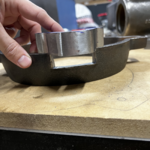
Decided it would be better to get the filler material away from the radius, so I milled the ring some more and milled the ends of the replacement piece to match. To make locating the replacement piece easier, I drilled and reamed it to .500" and then counterbored it to the finished size of .625" so I could mill the rest of the material out when I was done without having to precisely center up on the hole again.

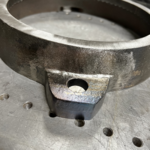
Welded and blended together with nickel 99 tig filler rod. Texture was reproduced by bouncing a carbide burr around in a random pattern, then hit with the needle scaler, then a wire brush.
After I milled the anvil and jaws to be all square and true with each other, I reassembled and found that there was an unacceptable amount of slop in the spindle. Back to the milling machine to bore it out:

Made a bronze bushing that pressed in with a .001" interference fit. This gave a nice, close fit on the spindle, and also gave a bronze thrust surface on the back of the spindle flange. Almost no movement in the spindle now, and can be spun home with no effort.

When I got it:
Tearing it down:
Didn't get a better picture of the broken ring, but here's what I started with:
Paint removed- this was mostly done with a needle scaler. The paint was very dry but still smeared when I used a wire wheel, so I stuck with the percussive removal method. Slow, but worked well.
Time to fix the base ring. I just used a slice of a 3" ductile iron round bar that I had from another project and just freehanded on the mill. This was about halfway through roughing out the shape:
I milled the broken area clean on the ring for the replacement piece:
Decided it would be better to get the filler material away from the radius, so I milled the ring some more and milled the ends of the replacement piece to match. To make locating the replacement piece easier, I drilled and reamed it to .500" and then counterbored it to the finished size of .625" so I could mill the rest of the material out when I was done without having to precisely center up on the hole again.
Welded and blended together with nickel 99 tig filler rod. Texture was reproduced by bouncing a carbide burr around in a random pattern, then hit with the needle scaler, then a wire brush.
After I milled the anvil and jaws to be all square and true with each other, I reassembled and found that there was an unacceptable amount of slop in the spindle. Back to the milling machine to bore it out:
Made a bronze bushing that pressed in with a .001" interference fit. This gave a nice, close fit on the spindle, and also gave a bronze thrust surface on the back of the spindle flange. Almost no movement in the spindle now, and can be spun home with no effort.


