HamAndEggs
Well-known member
I already have a surge protector in my main panel (Generac ATC) and one in my first electrical panel. Is spending the $75 each for Intermatic AG3000 surge protectors on my main AC and 2 mini splits worth the cost?

Surge protectors always spark debate. Imo, they are cheap enough that if they even have a chance at protecting equipment costing thousands, it's worth it.I already have a surge protector in my main panel (Generac ATC) and one in my first electrical panel. Is spending the $75 each for Intermatic AG3000 surge protectors on my main AC and 2 mini splits worth the cost?
Surge protectors always spark debate. Imo, they are cheap enough that if they even have a chance at protecting equipment costing thousands, it's worth it.
How far away from the panel are the compressors?
Disregard my comment about warranty. It's complete ********I wanted to see if any one have claimed those insurances without jumping through hoops
So don't plan on getting hit and you need nothing. This one trick insurance companies hate.Were I planning on getting hit by lighting, I would spend my money on a lightning rod before a surge protector...
Same as driving your car. Don't get hit and forget about paying for insurance.So don't plan on getting hit and you need nothing. This one trick insurance companies hate.
how do you get hit by lighting?Were I planning on getting hit by lighting, I would spend my money on a lightning rod before a surge protector...

huh? that makes no electrical sense.The words in that warranty are pretty standard. I dont think many people understand surges and the reason for surge devices very well.
I wonder how many people think that if they experience a nearby lightning strike that kills some of their household electronics, that they can file a claim with the surge device manufacturer. Obviously that kind of surge is going to exceed the specs on the surge device and void the warranty. It would be pretty hard for someone to claim that a surge that was big enough to destroy a surge protector was actually smaller than the max specs for the device. And if it was true that the surge was bigger than the device can handle, why would anyone expect the device manufacturer to pay up?
These types of devices are made to handle every day surges, like when the fridge kicks on, or when you're using the welder, or whatever moderate surge comes down the line. The effects of these types of surges are cumulative on your electronics.
Surge products can do that work very easily for long periods of time, so the manufacturer knows that he's safe to offer the warranty money.
Warranties are made in the marketing department, not in the engineering department. You shouldn't think that a warranty is any indication of how good a product performs or how well it's made. A warranty is a SALES tool.
CD
But lighting rods generally are notgrounding rods, plates or UFERs are already required by electrical code so....
whoops missed that. no such thing as LIGHTING rods.... now for lightning, thats what ground rods, plates, and UFERs are for.... did ya think they were for something else?But lighting rods generally are not
I'd say the right answer to this choice depends on your location. If you're a HAM radio operator in the lightning belt, then yeah, spend your money on lightning rods. But if you're in a typical residential home, a lightning rod is probably a waste of money. There's a reason that insurance companies don't normally give discounts to customers with them.Were I planning on getting hit by lighting, I would spend my money on a lightning rod before a surge protector...
Most modern refrigerators and air conditioners use VFDs on the compressors. Their rapid input current switching causes many surges per second, and yes, those can cause cumulative damage to motor windings (via insulation breakdown, as well as bearing spalling due to stray currents). There's a reason why many newer electric motors have "inverter duty" ratings now. Simply put, having an SPD near the source can greatly improve your device's longevity.huh? that makes no electrical sense.
when the fridge or welder kicks on, it creates a voltage sag aka brown out, not a surge. its a heavier momentary inductive load on the line so voltage drops due to increased amperage. neither would create a surge so that is a horrible example.
thats odd. i recently looked at several refrigerators and upright freezers in home depot. not one had a VFD. nor did any of the window air conditioners (2 ton/24K BTU) i looked at buying... in fact, i cant recall any of the appliances having a VFD... now my washer on the other hand has a VFD, but it does not cause any surges on the line...Most modern refrigerators and air conditioners use VFDs on the compressors. Their rapid input current switching causes many surges per second, and yes, those can cause cumulative damage to motor windings (via insulation breakdown, as well as bearing spalling due to stray currents). There's a reason why many newer electric motors have "inverter duty" ratings now. Simply put, having an SPD near the source can greatly improve your device's longevity.
In any event, in the event of a lighting strike, I would rather have a lighting rod on the roof, than a surge protector on my refrigerator. If the building burns down, the refrigerator would be the least of my worries.I'd say the right answer to this choice depends on your location. If you're a HAM radio operator in the lightning belt, then yeah, spend your money on lightning rods. But if you're in a typical residential home, a lightning rod is probably a waste of money. There's a reason that insurance companies don't normally give discounts to customers with them.
Having done the research and worked on a sizable commercial lightning rod install project, I can say that UL 96A and NFPA 780 are designed solely around protecting your building from being set on fire by lightning, with no regard to the electrical damage induced currents can produce within the building. IEC 62305 at least expects that a lightning protection system will only divert 50% of a lightning strike's energy, but that leaves your building's materials to handle the other 50%, and IEC requires surge protection for this exact reason. The takeaway is that if you install a lightning protection system coupled to your building (and not something like you find with NASA rockets or power substations where totally isolated towers are used) without surge protection, expect your electronics to be fried.
Most modern refrigerators and air conditioners use VFDs on the compressors. Their rapid input current switching causes many surges per second, and yes, those can cause cumulative damage to motor windings (via insulation breakdown, as well as bearing spalling due to stray currents). There's a reason why many newer electric motors have "inverter duty" ratings now. Simply put, having an SPD near the source can greatly improve your device's longevity.
In any event, in the event of a lighting strike, I would rather have a lighting rod on the roof, than a surge protector on my refrigerator. If the building burns down, the refrigerator would be the least of my worries.
You have equipment capable of measuring surges on the line? I've got several oscilloscopes, but nothing that can capture a surge, though I've been to labs that have such equipment.thats odd. i recently looked at several refrigerators and upright freezers in home depot. not one had a VFD. nor did any of the window air conditioners (2 ton/24K BTU) i looked at buying... in fact, i cant recall any of the appliances having a VFD... now my washer on the other hand has a VFD, but it does not cause any surges on the line...
yup my fluke meters will....You have equipment capable of measuring surges on the line? I've got several oscilloscopes, but nothing that can capture a surge, though I've been to labs that have such equipment.
Why do you think not one has a VFD? All LG refrigerators use their "linear compressor", and that's inverter driven. Samsung refrigerators use "digital compressors". What do you think that means? Did you see any refrigerators by Panasonic, GE, Haier, Electrolux or Sharp? Yeah, you saw VFD refrigerators.
Let me stop you right there. That's ALL BS. I have plenty of meters that measure inrush current. That is NOT a surge!yup my fluke meters will....
Wait where did i say anything about measuring in-rush current?Let me stop you right there. That's ALL BS. I have plenty of meters that measure inrush current. That is NOT a surge!
The Fluke MDA-550 will measure motor shaft voltage (via carbon brushes) caused by some of the VFD issues I mentioned above, but that $8500 meter will won't measure transients. The Fluke 1746 will count transient events but not characterize them for $7000 and up. The Fluke 435 II will capture transients, but their entry level meter that does this feature is $9500. Nice kit if you've got it:
If you've got $20k to burn, I'd recommend a Dranetz Xplorer 400.
Samsung "digital compressors" are not solid state. They use VFD to drive the compressor at 7 different speeds. EVERY single refrigerator you see that meets Energy Star requirements has a VFD board in order to do so! They all have for several years now. As for solid state cooling, nothing serious uses Peltier boards. The biggest things I've seen that use them are under-desk and car trunk coolers. Peltier cooling is terribly inefficient, due to heat conduction across the junctions.
Sounds like you're already protected. It also sounds like from the responses above that it does you little good if you have one and your equipment gets wrecked anyway. So I wouldn't bother.I already have a surge protector in my main panel (Generac ATC) and one in my first electrical panel. Is spending the $75 each for Intermatic AG3000 surge protectors on my main AC and 2 mini splits worth the cost?
Or better, a fireproof enclosure with an integrated surge-protector for the refrigerator...You clearly need a fireproof refrigerator.
Dranetz is good equipment but it is not cheap. Years ago I rented a power line monitor for a site that had multiple failures of our equipment. Utility said it wasn't their issue and said it was our fault. It was basically a programmable digital storage scope with UPS. I flew to the site, wired it in, set the trigger level to above normal line voltage and told them to ship it back to me in 3 weeks. I pulled the data and found multiple occurances of 660V peak ringing on the 230V at the equipment. About 1 kHz as I recall. It was some issue with a nearby utility power factor capacitor bank when they switched in or out. I sent out the waveforms and never heard from them again. It obviously was the utility. Not lightning though...Let me stop you right there. That's ALL BS. I have plenty of meters that measure inrush current. That is NOT a surge!
The Fluke MDA-550 will measure motor shaft voltage (via carbon brushes) caused by some of the VFD issues I mentioned above, but that $8500 meter will won't measure transients. The Fluke 1746 will count transient events but not characterize them for $7000 and up. The Fluke 435 II will capture transients, but their entry level meter that does this feature is $9500. Nice kit if you've got it:
If you've got $20k to burn, I'd recommend a Dranetz Xplorer 400.
Samsung "digital compressors" are not solid state. They use VFD to drive the compressor at 7 different speeds. EVERY single refrigerator you see that meets Energy Star requirements has a VFD board in order to do so! They all have for several years now. As for solid state cooling, nothing serious uses Peltier boards. The biggest things I've seen that use them are under-desk and car trunk coolers. Peltier cooling is terribly inefficient, due to heat conduction across the junctions.
That's what happens when you do a poor job of securing them to the ceiling...how do you get hit by lighting?
how do you get hit by lighting?
Was it high pressure sodium, halogen, or something else?The equipment we were setting up in Hamburg NY back in '81 got hit. Defiantly a ****-pucker moment...
It was a Reverchon Himalaya, not the one in the picture, but the same model. It was pouring down rain and we were about the only thing sticking up in the middle of the Erie County Fairgrounds.Was it high pressure sodium, halogen, or something else?
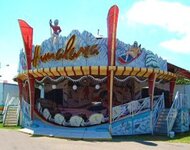
 www.slocable.com.cn
Lightning downleads can induce currents into nearby grounded conductive objects causing a potential rise in them. But you can construct a LPS that keeps the currents far enough (separation distance depends mostly on building height and intervening materials, but figure about 18" for a residential structure) away to not interfere much with building wiring."Were I planning on getting hit by lighting, I would spend my money on a lightning rod before a surge protector... "
There is a reason lightning rods are not used for a device with a connection to a home electric panel. Should a lightning hit be close to the protected item, but not closer to your home/panel, a high voltage potential will exist between the protected device and the home/panel, even with a lightning rod ground due to ground resistance, which causes the high voltage to take time to dissipate, so basically a lightning rod does nothing if you have a wire connection from the home; lightning rod or no lightning rod, it still takes time for the tremendous power to dissipate into the earth . Your more protected with a ground from the home's panel to outdoor devices.
As to surge protection save your money and buy MOVs from Ebay and wiring as in the link, very simple wiring. Find the biggest/cheapest MOV for the voltage used on Ebay. I use multiple MOVs (3 or 4 ) for each power/ground leg instead of just 1 per leg.....
Principle and Design of Surge Protector Circuit Breaker
The surge protector circuit breaker is actually what we usually call a surge protector device, also called a lightning surge protector. It is a kind of equipment or circuit that provides safety protection for various electrical equipment, instruments, and communication circuits. It is use...
Standard electrical theory and knowledge is of little use in understanding the effects in a house electrical system.
In short, the peak is so fast that the surge arrestor limits the terminal peak voltage to a rating decided by the rating of the arrestor,
20 "cable"meters away the travelling wave will give a very high reflective peak voltage when coming to a change in impedance, like an open switch, electric motor or such. The reflective voltage will be around twice pk/pk of the travelling peak voltage, which after even a few meters of cable will be substantially higher than the "arrestor clamping voltage"
No DVM, regardless of price, will capture the peaks which have rise times of µseconds. A fancy memory scope will, if a well designed HV probe is used.
Ola
Never assume this.I read that a few times and honestly I'm not really smart enough to understand the point.