To avoid these ads, REGISTER NOW!

Between 265 & 485 SQ/FT Nick's Two-Car Detached Vdub Garage

Workspaces sized between 265 and 485 squarefeet.

Denwood

Well-known member
Joined
Sep 22, 2014
Messages
4,186
Location
Thunder Bay, Ontario, Canada
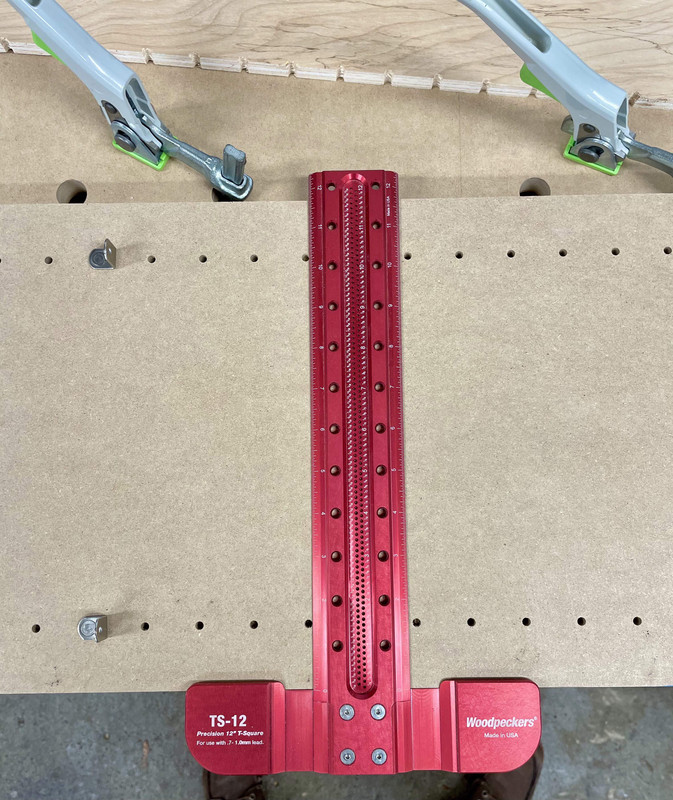
That TS-3 would be my favourite layout tool too...that's a nice piece.

Nick, in my teen years I worked at a local historical site as both a carpenter and cooper. So while interpreting history to visitors, we also practised the historical trades under the guidance of a master, participated in historical dramas, fired off canons etc. It was a great job with 300+ students working there each summer.

We worked with planes just like yours and learned to sharpen pretty much everything by hand with stones, mineral oil etc. The blade you showed is 100% recoverable and previous posters gave you good advice. One thing I learned during my summers in historical trades was that sharp tools are everything when it comes to working with wood. Your experience in the fine points (pun intended) will absolutely serve you well. The other thing we had the benefit of was very nice hard woods that were seasoned in some cases for years upstairs in the shops. Coopering was different in that we started off by splitting logs down and doing our staves etc. completely by hand. Those summer jobs paid only student wages but are the best work experiences I've had to date.

The treadle lathe in the carpenter shop (we used it primarily to make parts for an on-site naval ship reconstruction) was truly a pleasure to use. It was a bit of a workout, but the rotating mass was so high that it rivalled any powered tool I've used since. This post has quite a few pics of the cooper and carpenter shops: https://www.lumberjocks.com/topics/29151 You would have loved it...
 
Last edited:
To avoid these ads, REGISTER NOW!

jake28

Well-known member
Joined
Aug 28, 2018
Messages
482
Location
SF, CA
[mention]nicholam77 [/mention] everything [mention]bdbecker [/mention] said is spot on.


If you have a bench grinder available for use, a sharpie your friend. Cover the existing bevel and then start grinding, looking to make a consistent bevel all the way across that is square to the long axis of the blade.

You’re on the right track.
 
OP
N

nicholam77

Well-known member
Joined
Dec 18, 2016
Messages
2,655
Location
Minneapolis, MN
Hey mate.

I've done some plane restoration/tuning with the grumpy old men's woodworking group I'm in (called the Traditional Tools Group).

The blade needs to be re-ground on a bench grinder, without question, then honed on a stone.

The lever cap ought to be fine but the cap iron will need to be honed on a sharpening stone as well. The aim is not to make it sharp, but to make the part where it contacts the blade perfectly flat.

To tune up the "shoe," reassemble the whole plane and tension it all up as you would for normal use, but with the blade withdrawn, so it won't be damaged. Glue a ~1 metre length of the blue abrasive paper that's intended for stainless steel (or similar, but this is most effective, I'm told) onto a piece of framing timber and clamp it to your bench. Use the same movement you would when cutting with the plane to flatten the "sole" (underside/bearing surface) on the abrasive paper and do the sides of the shoe the same way.

If the pitting is raised, this ought to help remove it but even if it's still visible, it won't cause trouble in use.

I've now done 4 (I think) planes this way, under the guidance of the experienced members of the group, including one that was both neglected and abused, from my school workshop, and they all cut like a dream once done.

Thank you, this is very helpful!

Merry Christmas Nick!

If you don't have access to a bench grinder, you may be able to cut a guide block, attach some sandpaper to a flat surface, and given some time and elbow grease, you could probably save that blade. Basically what you'd do with a sharpening system, but just with a coarser paper at first to speed up the process. I'd start with a 60 or 80 grit paper and see how it goes.

For future reference, you could have let those parts soak in vinegar for a few days to really let the acid do its thing to the rust. You might try soaking the body again to see if it'll take care of those rust pockets (that's what it looks like to me at least) on the sides. Whenever you soak something in vinegar to remove rust, rinse the vinegar off with water, and then dunk the part in a baking soda bath for a few moments to neutralize any acid that may remain on the part, and then rinse with water again.

For rust protection, WD40 works okay, PB Blaster is better, but Boeshield T-9 is the bee's knees.

https://boeshield.com/

For the handles, I've had really good luck using Howard Restor-A-Finish to give new life to old finishes.

https://www.howardproducts.com/product/restor-a-finish/

It'd be worth giving it a shot before stripping off the existing finish. Make sure to also pick up a bottle of Feed-N-Wax if you do go this route. The finish may be a bit dull without it.

I'll be following along closely with your restoration - I'll have to double-check, but I think I picked up the same plane from the ReStore a few months ago and also need to go through it sometime.

I do not have a bench grinder, nor access to one, so I think I will try some coarse sandpaper and a guide like you said and see what happens. If it becomes too much work I'll probably get a replacement blade.

Thanks for all the tips. I've put the plane shoe back in the vinegar for the day to see if those dark spots loosen any more. Great tip on the baking soda bath, too, I was just rinsing with soap and water. I've watched about a million hand plane restoration videos but they never really show you all the tricks and steps and details.

I'll look into getting some of the Boesheild T-9.

Thanks for the links on the Restor-A-Finish. I think that is a good idea to start there, and I did not know of these products. Part of me thinks the wood would be prettier sanded down and oiled, but I don't want to completely change how it was given to me, so I think trying to touch it up first and see how that goes is a great plan.

That TS-3 would be my favourite layout tool too...that's a nice piece.

Nick, in my teen years I worked at a local historical site as both a carpenter and cooper. So while interpreting history to visitors, we also practised the historical trades under the guidance of a master, participated in historical dramas, fired off canons etc. It was a great job with 300+ students working there each summer.

We worked with planes just like yours and learned to sharpen pretty much everything by hand with stones, mineral oil etc. The blade you showed is 100% recoverable and previous posters gave you good advice. One thing I learned during my summers in historical trades was that sharp tools are everything when it comes to working with wood. Your experience in the fine points (pun intended) will absolutely serve you well. The other thing we had the benefit of was very nice hard woods that were seasoned in some cases for years upstairs in the shops. Coopering was different in that we started off by splitting logs down and doing our staves etc. completely by hand. Those summer jobs paid only student wages but are the best work experiences I've had to date.

The treadle lathe in the carpenter shop (we used it primarily to make parts for an on-site naval ship reconstruction) was truly a pleasure to use. It was a bit of a workout, but the rotating mass was so high that it rivalled any powered tool I've used since. This post has quite a few pics of the cooper and carpenter shops: https://www.lumberjocks.com/topics/29151 You would have loved it...

Wow, Dennis, that is awesome! I did not know you had that background. Myself I can't say the same... I barely know anything about hand tools but I do appreciate them! I think it's something I would really enjoy so maybe this will be the beginning...

[mention]nicholam77 [/mention] everything [mention]bdbecker [/mention] said is spot on.


If you have a bench grinder available for use, a sharpie your friend. Cover the existing bevel and then start grinding, looking to make a consistent bevel all the way across that is square to the long axis of the blade.

You’re on the right track.

Sadly I do not have a bench grinder, so I will see what I can do by hand if it's possible. Thanks for the sharpie tip.
 
OP
N

nicholam77

Well-known member
Joined
Dec 18, 2016
Messages
2,655
Location
Minneapolis, MN
To quickly interrupt the hand plane stuff, I have a lightning tool review to report.

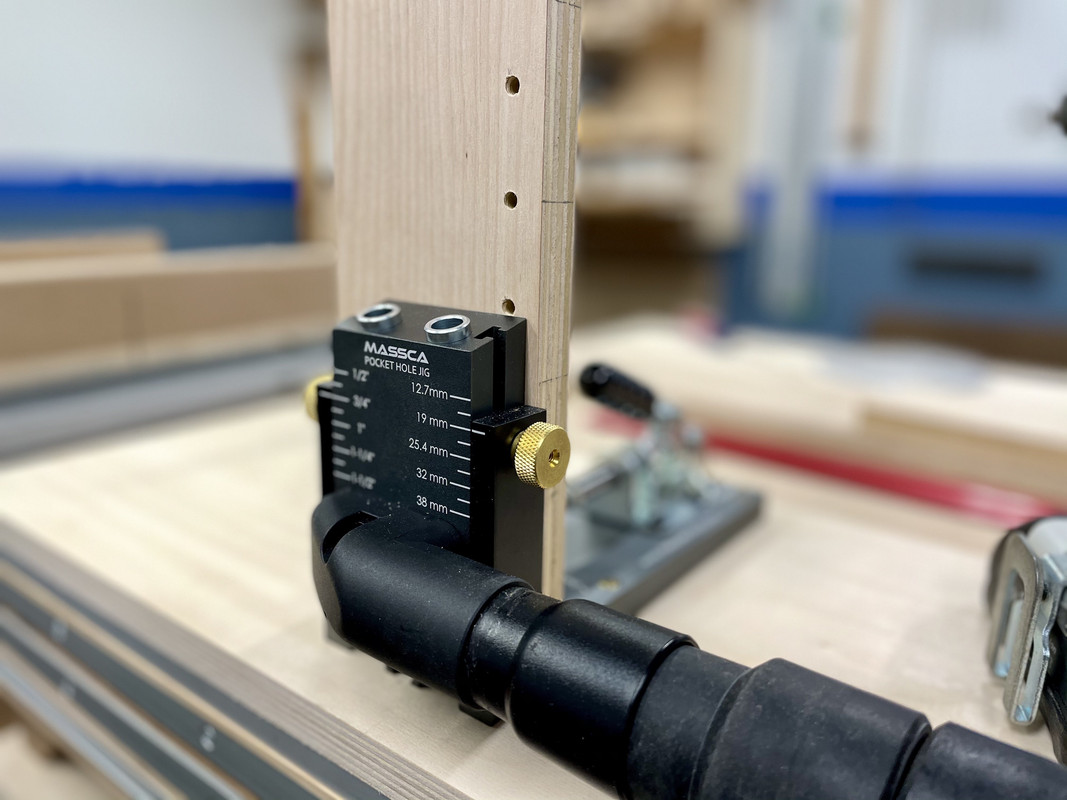
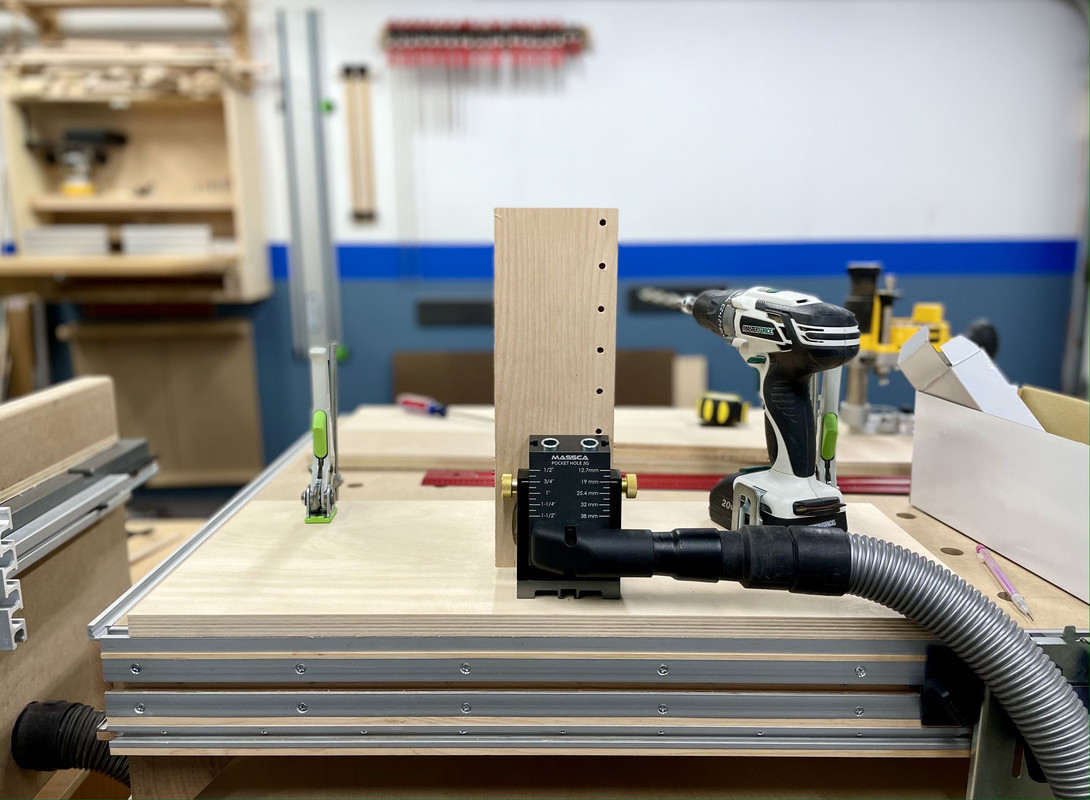
I tipped my parents off to that Massca Pocket Hole Jig sale and they got me one for Xmas (thanks Jake!).

I tested it out tonight on some dummy boards and it's great.

IMG-0913.jpg


So far I've just screwed it down to a 3/4" baltic birch plate, but will eventually add some wing supports and additional features.

IMG-0915.jpg


I lucked out and had a dust port adapter that worked with my Bosch 35mm hose, and the dust collection is excellent. It's something I really care about lately, and being able to drill pocket holes with NO dust is awesome.

The jig itself is heavy, nicely machined, easy to set up, and intuitive. So far I have no complaints and am completely happy I got this over the Kreg K4 or K5.

Lastly, if anyone else got one or is considering it... I did a little test with Kreg brand screws. They work just fine using the Massca jig and Massca bit. Additionally, I did a test using the Kreg bit with the Massca jig, and that worked just fine, too!

Nothing wrong with the Massca screws and bits, but I take comfort in knowing I can use the replacement screws and bits from Big Blue should the Massca ones ever become hard to procure, plus they are conveniently carried by the home centers near me.

Anyways, thought I would give an update since it was discussed awhile back... can't wait to try it on a real project but seems like it will be fantastic!

:beer:
 
OP
N

nicholam77

Well-known member
Joined
Dec 18, 2016
Messages
2,655
Location
Minneapolis, MN
I had to chuckle Nick. I got the K5 kit for Xmas.

Bret

Ha! Too funny!! :lol:

Bret, the K5 surely will be awesome as well. I've never used one and have nothing bad to say about it, except maybe the price... but hey, when it's an Xmas gift... that doesn't matter!

:lol_hitti

As you know I've extensively used my K3 and the fact that it's plastic has never been a concern for me.

Some things I like about the Kreg that the Massca doesn't have (out of the box)

- extension wings and storage (and the Massca jig height is not a common thickness like 1/2" or 3/4" so to have a sizeable support wing I'm going to have to figure out how to dimension some lumber). And probably store the bit etc in a different location than the jig, when I like to keep related stuff together as much as possible.

- workpieces stops. I'm OCD about pocket hole placement and like to reduce time spent laying out marks, I feel like I would love this feature and may have to incorporate something like that in a future support wing/fence build

- 3 drill guides. And I like the double right next to each other. Massca is spread farther apart. The option of two placed close together would be nice for skinny boards or extra strength without having to reposition

I think at the end of the day they are very similar and do very similar things, time will tell how they hold up.

:beer:
 
OP
N

nicholam77

Well-known member
Joined
Dec 18, 2016
Messages
2,655
Location
Minneapolis, MN
Another question for you hand plane guys / metal workers:

When sanding the plane shoe should I use lubricant, and if so, what? I saw someone do that in a video with WD40 on the sandpaper.

I've purchased a Rockler sharpening kit with adhesive-backed wet and dry sandpaper meant for sharpening chisels and plane irons and I tried sanding the plane shoe with 220-grit and WD40 on the glass plate that came with it. The sandpaper seemed to lose it's grit really quickly and the lubricant became black like the paper like it was rubbing off.

Is 220 grit too fine to start with? I read something about not going too coarse with metal since the scratches are harder to get out than wood, but it had me questioning the grit and the use of the lubricant.

Also, after an additional vinegar session of a full day, the black marks are still present and the sanding did not remove them.

Any pointers appreciated!
 
OP
N

nicholam77

Well-known member
Joined
Dec 18, 2016
Messages
2,655
Location
Minneapolis, MN
System 32 Shelf Pin Hole Jig

Here's a project I've been plugging away at for a bit and can post now.

Eventually I have plans to build some cabinets for my house. I've been slowly working towards this for awhile. One aspect I've been pondering for a long time is a shelf pin jig. My dad and I got the Rockler jig for his in-wall medicine cabinet I made, but it definitely wasn't perfect.

I'm fascinated by the Festool LR32 system and have watched a lot of videos on it. The more I realized about 32mm cabinets and how you can bore holes for shelves, drawer glides, and hinges, it just seemed up my alley. Of course the price, isn't.

There are a lot of shelf pin jigs out there at varying price points, but not many can also accurately drill drawer glide and hinge holes.

So my first inclination was to make a DIY LR32 clone. Another user on here, Bakafish, essentially did this with an incredible execution. I'm not ruling out something like this in the future, but I came to the conclusion it would take a lot of effort and time and precision I don't necessarily have with my tooling.

Ok, enough rambling. Here is the jig I am going to copy, which is simple, but I also think quite brilliant.

Dan Pattison Ultimate Shelf Pin Jig

If you want more detail on how it works and how to make it, watch the YouTube video hyperlinked above.

I started ripping some 1/2" plywood.

IMG-0924.jpg


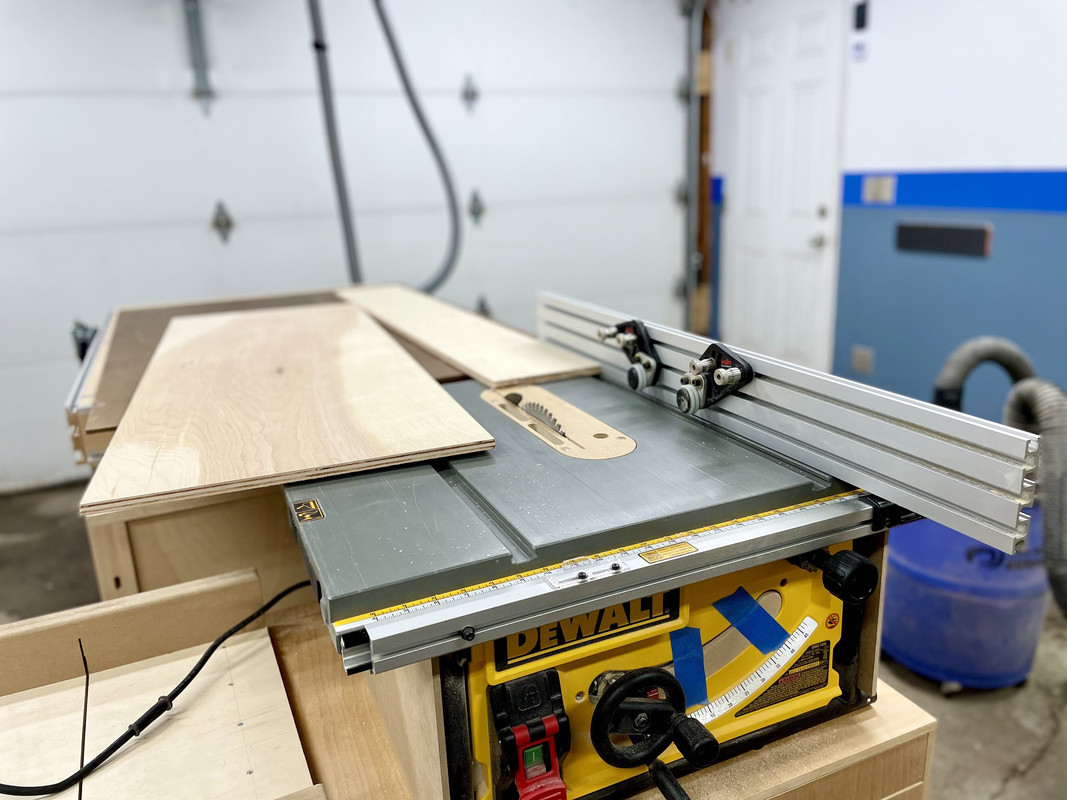
I only add this pic to comment on the new fence + JessEm guide setup. After using it a bit now, I can 100% recommend the longer fence. The stock guides... they definitely work, but can be difficult to set with the right amount of pressure. And they can't be used on super narrow rips, and I find them somewhat annoying to take on and off. But overall it's a nice thing to have in the arsenal.

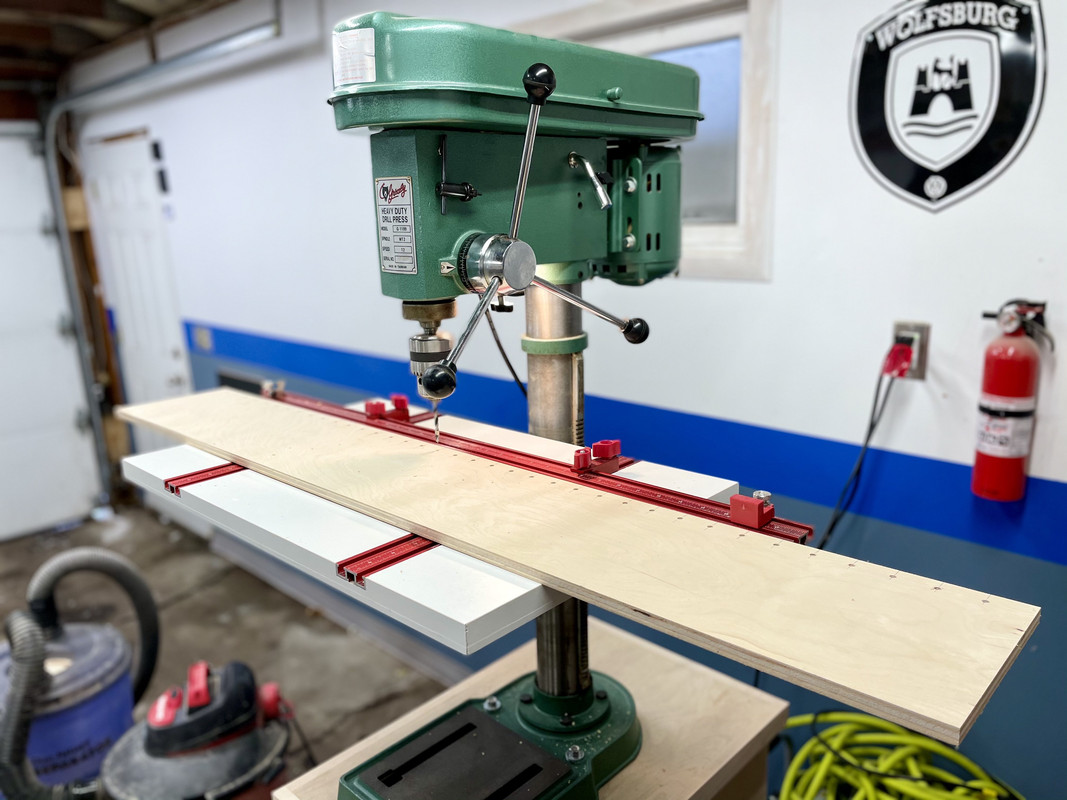
For the router base plate portion of the jig, I used the drill press to drill the baseplate holes. Having the drill press is super awesome for these jig-related projects where good accuracy is crucial.

IMG-0926.jpg


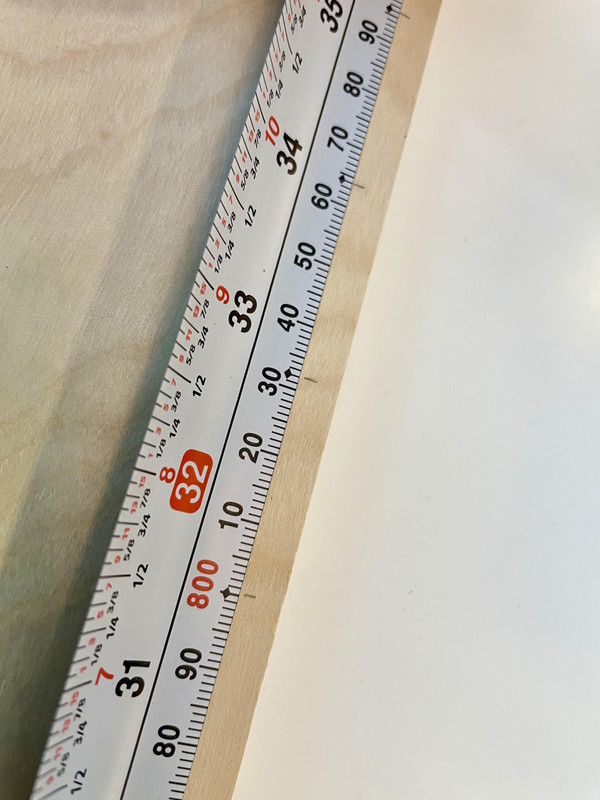
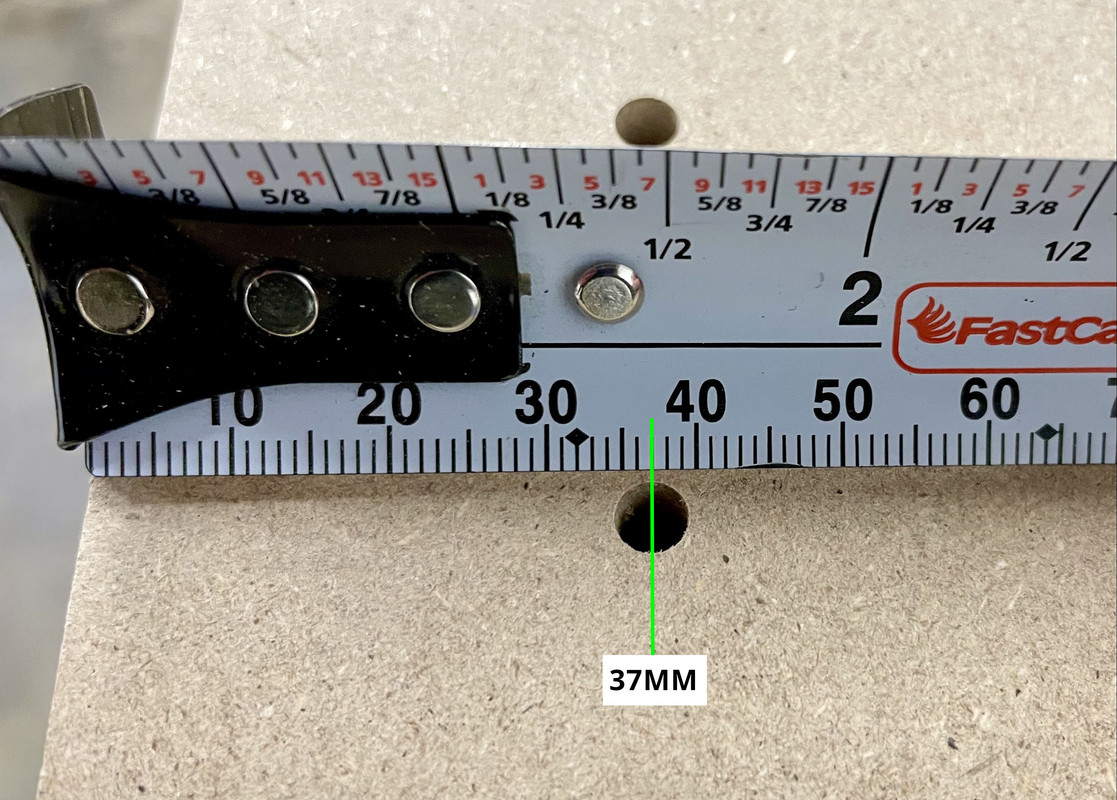
For the indexing board part of the jig, I had to lay out marks 32mm on center. Luckily my FastCap measuring tape has special little black diamonds every 32mm!! Made it easy.

IMG-0932.jpg


I thought about coming up with a different way to space the holes on the drill press with a repetitive indexing mechanism, but I figured if the mechanism was off the error would propagate, and in the end decided carefully laying out by hand would be more accurate.

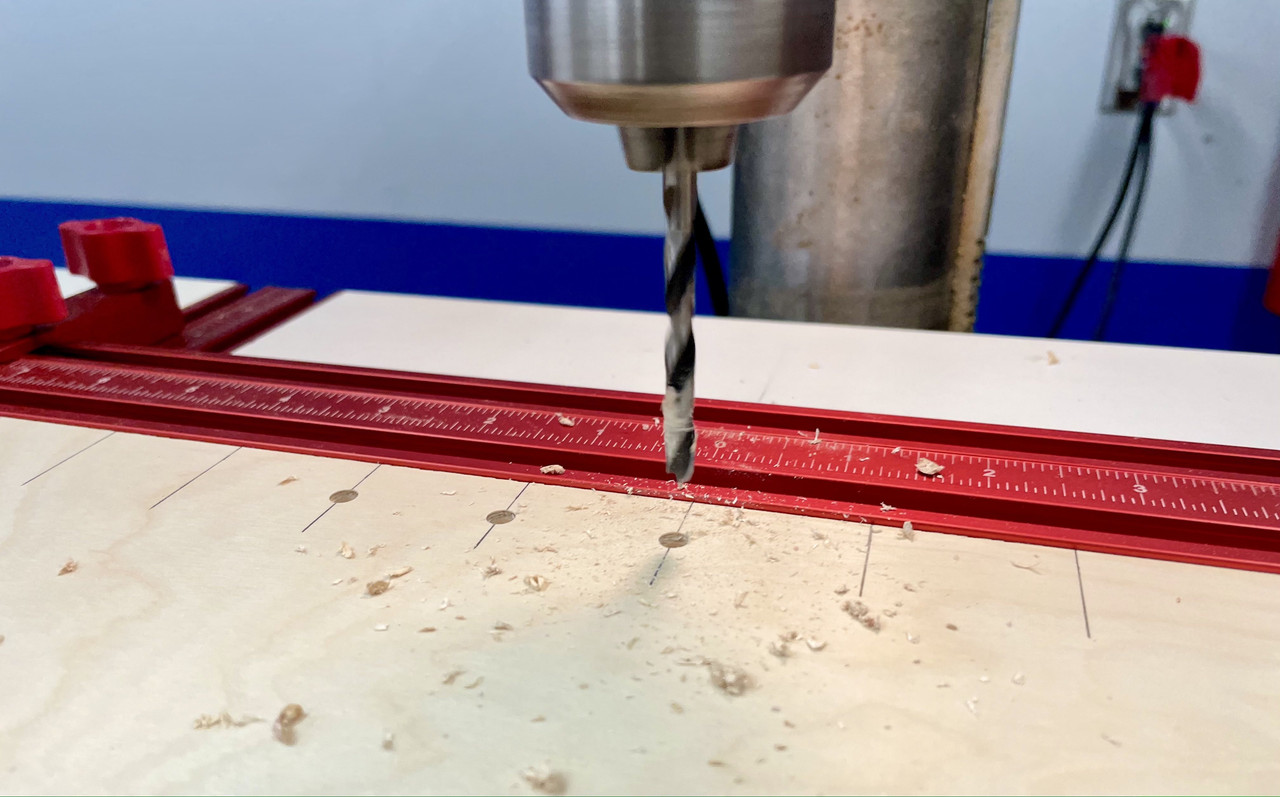
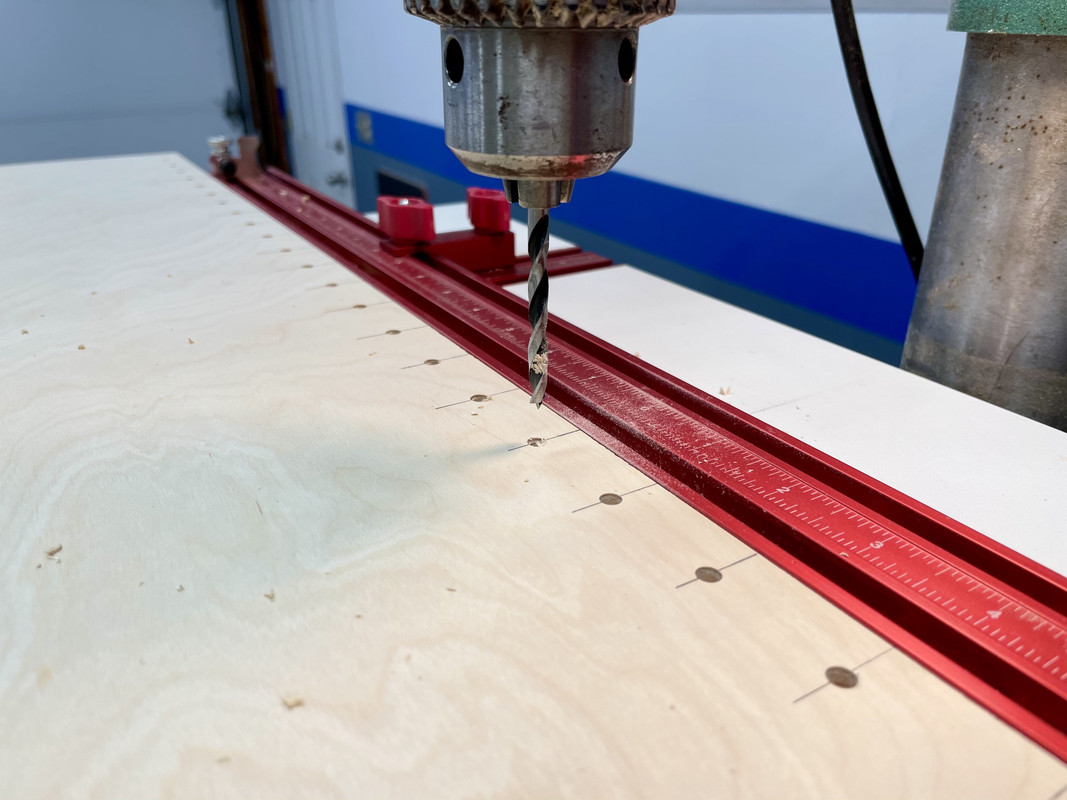
To drill the holes, I used the drill press and a 5mm brad point bit.

IMG-0936.jpg


IMG-0938.jpg


IMG-0937.jpg


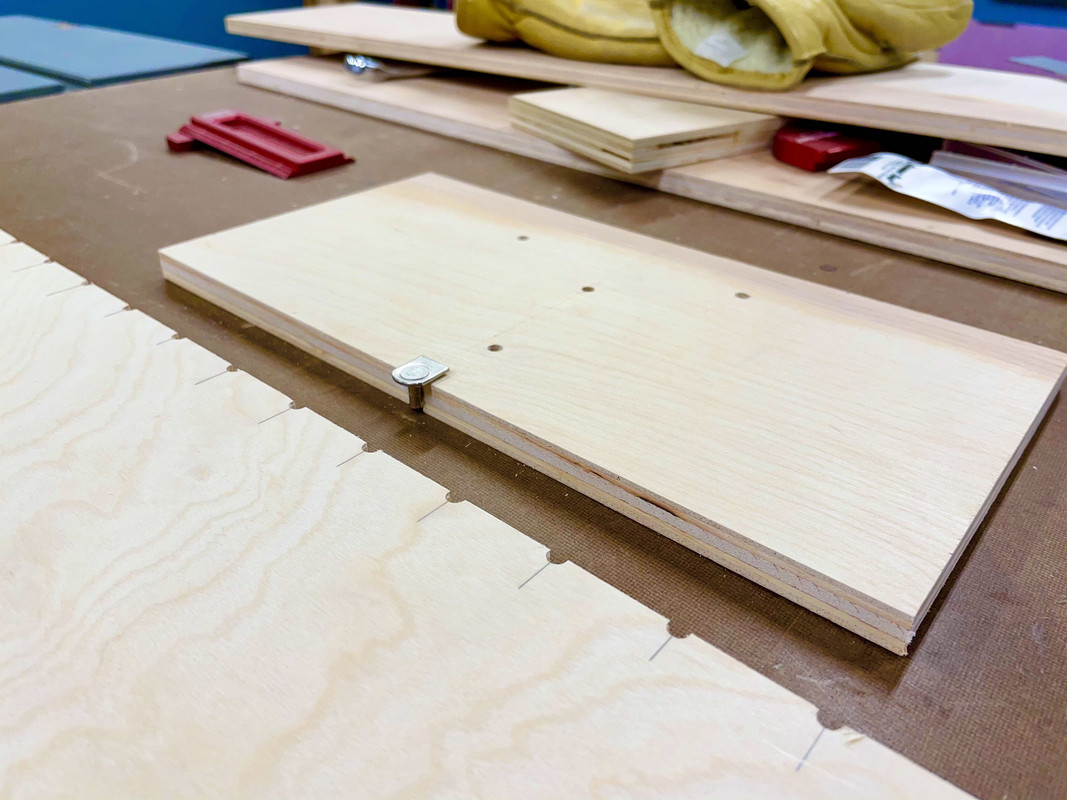
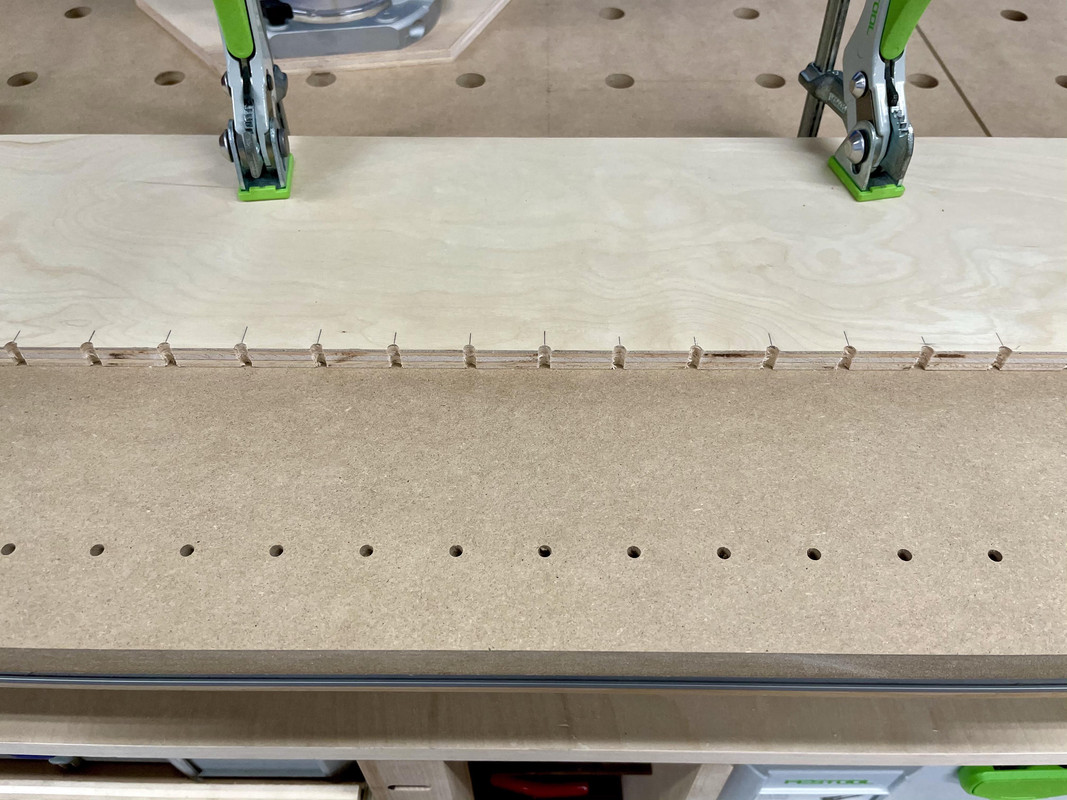
Then the baseplate and indexing board get ripped so half the 5mm holes are cut off. And a 5mm shelf pin is glued into the radius of the baseplate hole. I cut off the tab.

IMG-0929.jpg


IMG-0940.jpg


Last part was to make a few stop blocks out of MDF and plywood.

I really recommend you watch the Dan Pattison video as that very clearly shows how the jig works, but here is the basic idea:

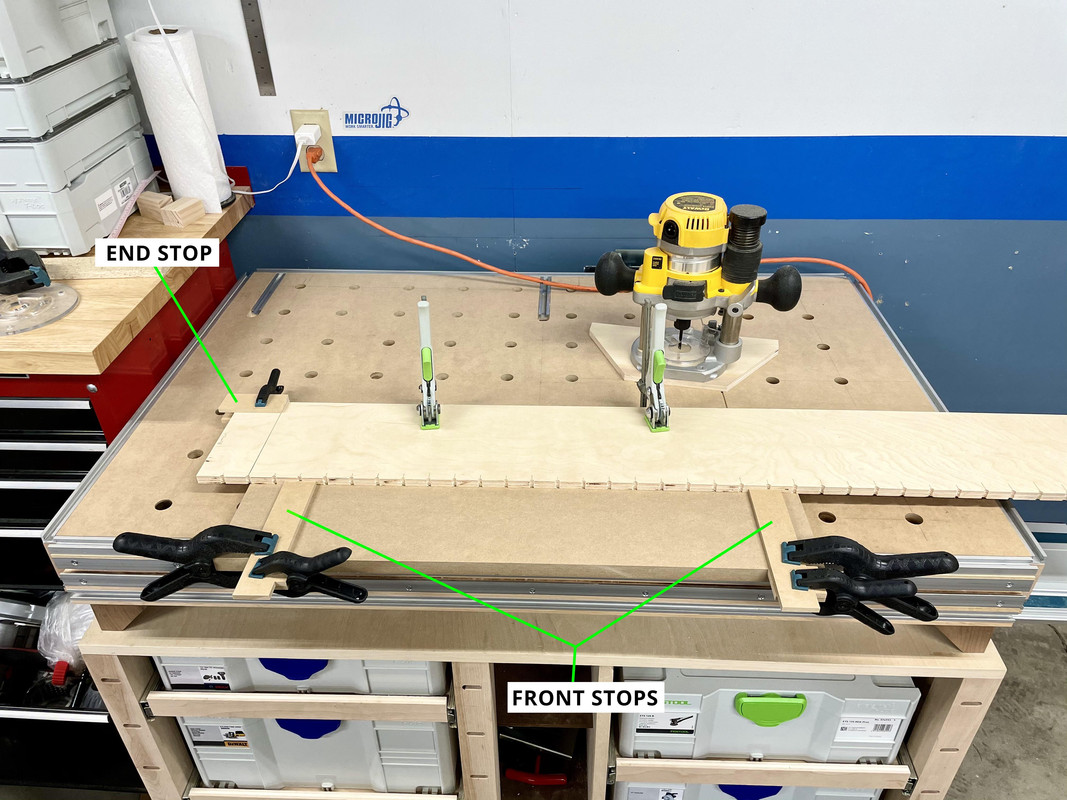
The indexing board is aligned on the cabinet side with two front stops and and end stop:

IMG-0942.jpg


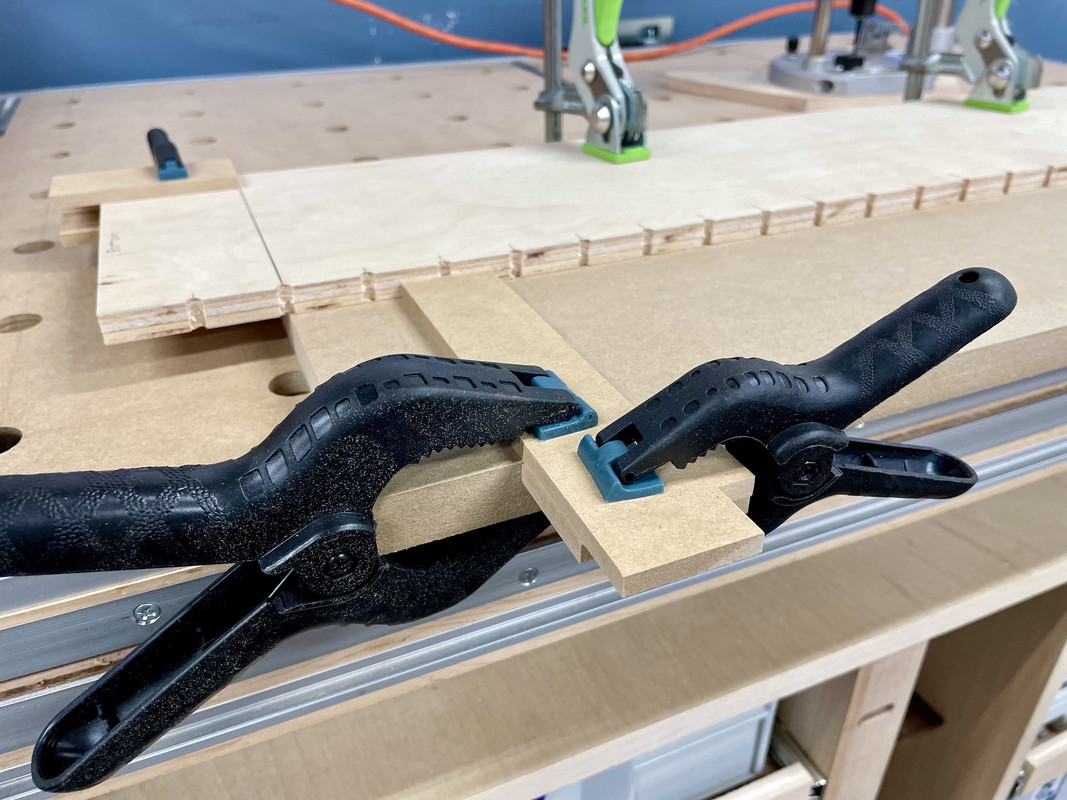
Front stop:

IMG-0943.jpg


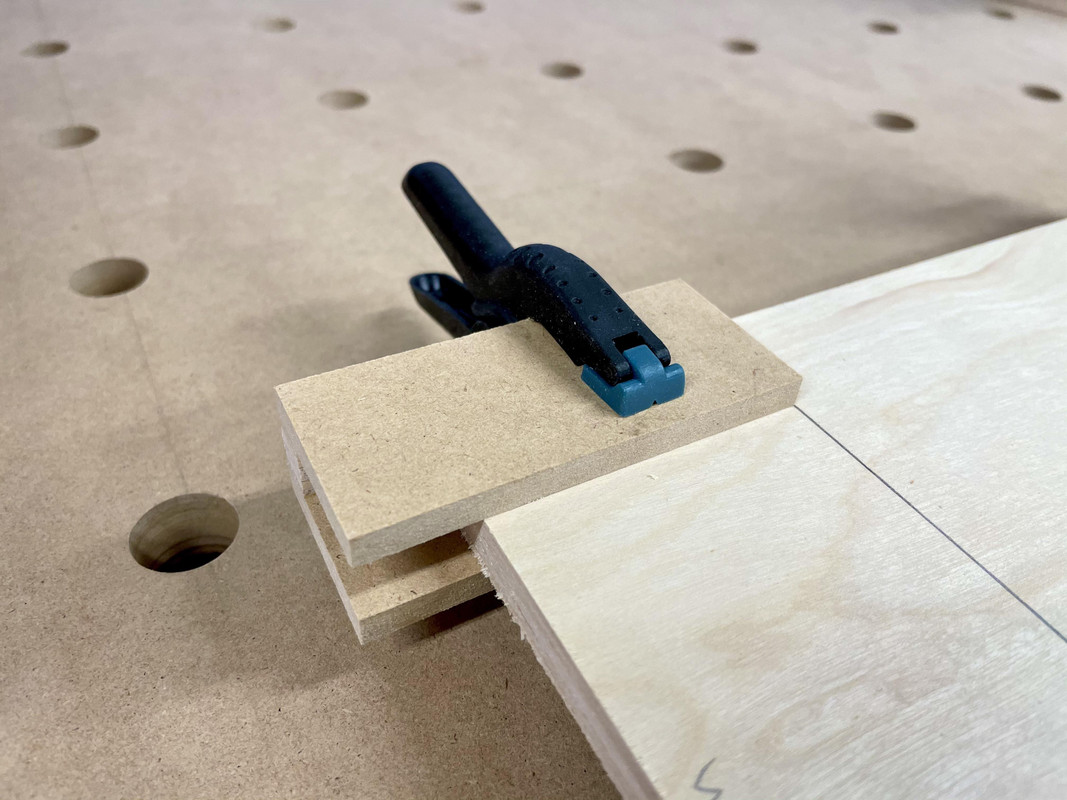
End stop:

IMG-0944.jpg


This ensures the router bit will plunge the holes 37mm back from the face edge of the cabinet, and begin 32mm (or a multiple of that) from the bottom edge of the cabinet.

Once positioned it is clamped down and the front stops can be removed, but not the end stop.

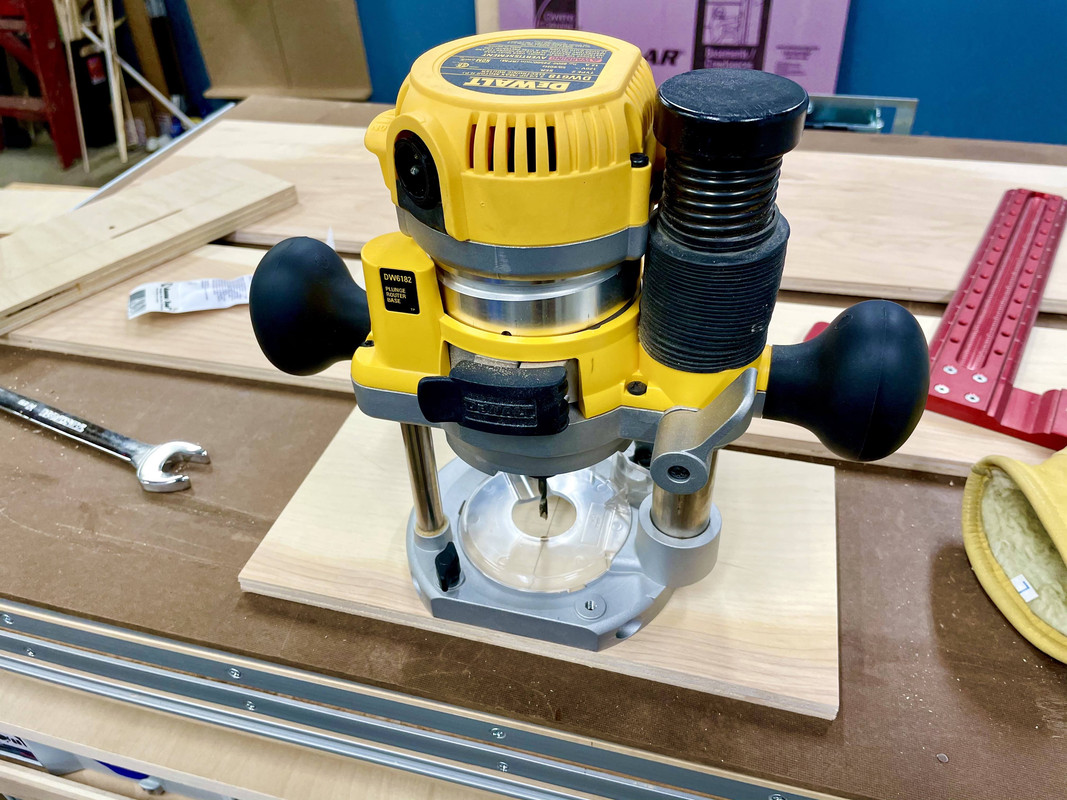
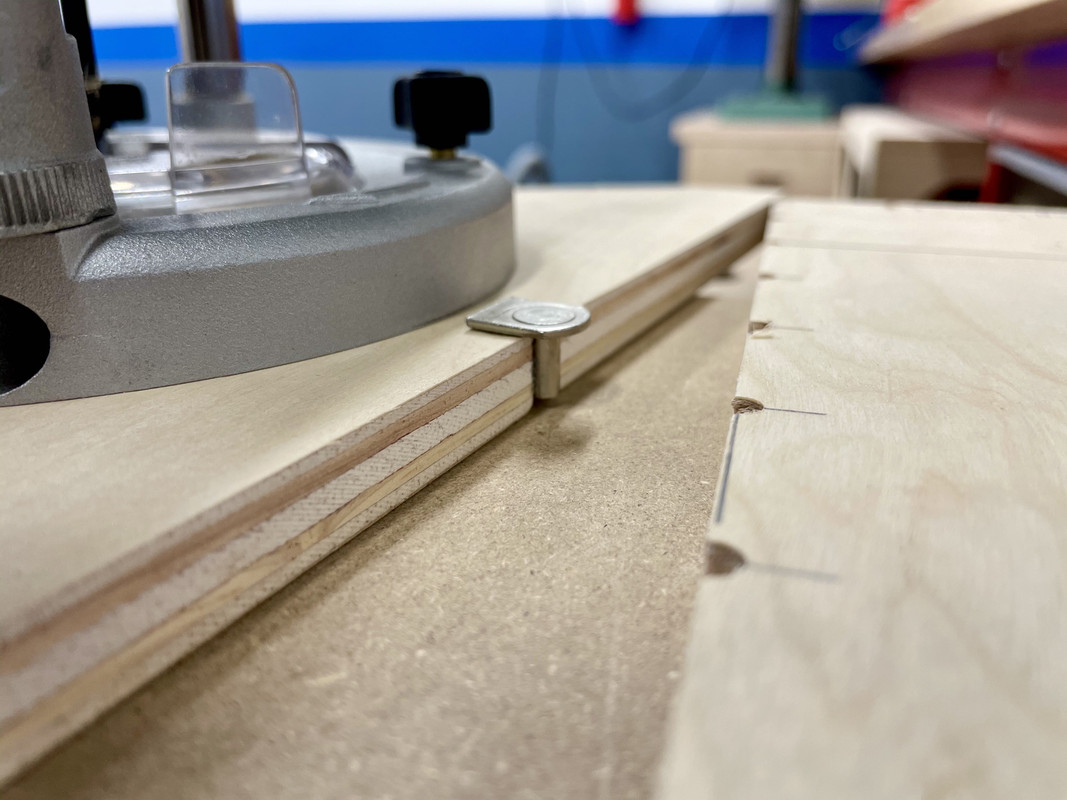
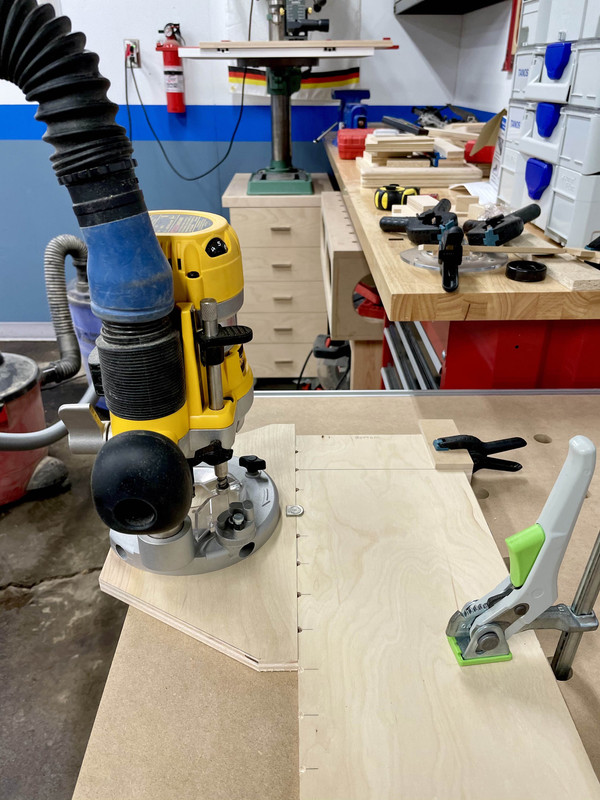
Then the router base plate indexes the half holes with it's half-protruding shelf pin:

IMG-0946.jpg


IMG-0945.jpg


With the MFT, the Festool quick clamps hold both the jig and the workpiece at the same time.

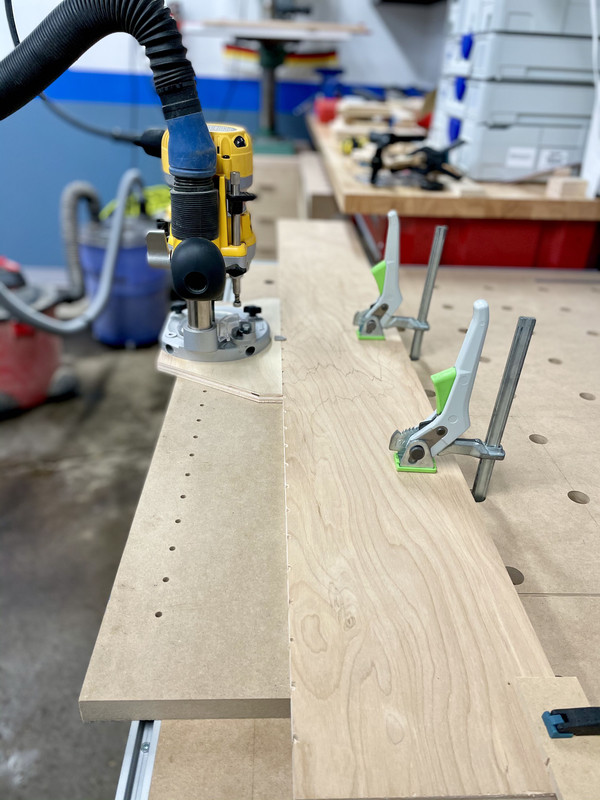
The router indexes securely in each position and it is super fast to locate the next hole. No plunger or lever to flick, no lifting it up, and you get to keep both hands on the router.

IMG-0948.jpg


Once the first row of hole is drilled, the cabinet side is flipped around and the indexing board is flipped over. It is repositioned with the front stops for the set back, and the end stop continues to reference off the bottom edge.

What's so brilliant about this, is unlike the Festool system, the holes in the indexing board do not need to be CNC precision perfect, because the jig always indexes the bottom of the cabinet, therefore any variances will be carried around equally.

IMG-0950.jpg


Drill the next row of holes and then take a little test:

IMG-0952.jpg


Proof the setback is exactly 37mm on center:

IMG-0954.jpg


I did this test in an MDF panel, but tear out with plywood or melamine should be non-existent because the baseplate effectively acts as a zero-clearance.

Oh, and did I mention it's dustless? With the DeWalt plunge base and vac attached it captured everything.

:D
 

Theodulf

Well-known member
Joined
Jul 2, 2017
Messages
410
Location
Goulburn, NSW, Australia
Another question for you hand plane guys / metal workers:

When sanding the plane shoe should I use lubricant, and if so, what? I saw someone do that in a video with WD40 on the sandpaper.

I've purchased a Rockler sharpening kit with adhesive-backed wet and dry sandpaper meant for sharpening chisels and plane irons and I tried sanding the plane shoe with 220-grit and WD40 on the glass plate that came with it. The sandpaper seemed to lose it's grit really quickly and the lubricant became black like the paper like it was rubbing off.

Is 220 grit too fine to start with? I read something about not going too coarse with metal since the scratches are harder to get out than wood, but it had me questioning the grit and the use of the lubricant.

Also, after an additional vinegar session of a full day, the black marks are still present and the sanding did not remove them.

Any pointers appreciated!

Hey mate.

My understanding is that your choice of whether to use a lubricant mainly depends on the paper choice. The blue paper that I was told is best is used without lubricant, but using a stiff bristled brush to brush the swarf off frequently. The job of the lubricant, when used, is to carry away the swarf and the detached abrasive media from the paper, so it doesn't clog up the paper.

The reason I was told the blue abrasive paper is the best is because it doesn't lose its effectiveness quickly, so I wouldn't be surprised if the paper you're using has become "used up" rather quickly.

220 grit should be adequate. As far as grits for metal go, that is quite coarse, but it doesn't need to have a high finish, just have a truly flat surface.

The surface of the cast iron will be quite hard, simply because it case hardens itself over time without any heat treatment, so expect it to need some elbow grease to cut through it. Having a long strip of abrasive paper helps because you've got enough room to get some shoulder in and push on it hard.
 

Mr. Roboto

Well-known member
Joined
Dec 11, 2012
Messages
2,160
Location
New Hampshire
Thanks man! Sorry I missed this... I went off the grid a bit and was doing just that! You're right, it's such a fun age! And same to you and your family, I hope you had a great Xmas as well!

:beer:

No Worries! We had a nice Christmas, our daughter is at a super fun age for it this year. It was a blast!

Just checking in guys, seems like it's a bit quiet around the forums, hopefully everyone is enjoying time with family and taking a break from projects :D

Quiet indeed, I've noticed it too! I've been doing a few small things around the house here and there, but nothing major to report. I just picked up a new project for the garage today though, gotta post that one up!
 
OP
N

nicholam77

Well-known member
Joined
Dec 18, 2016
Messages
2,655
Location
Minneapolis, MN
Hey mate.

My understanding is that your choice of whether to use a lubricant mainly depends on the paper choice. The blue paper that I was told is best is used without lubricant, but using a stiff bristled brush to brush the swarf off frequently. The job of the lubricant, when used, is to carry away the swarf and the detached abrasive media from the paper, so it doesn't clog up the paper.

[...]

Thanks Theodulf, your advice is again very helpful.

:beer:

Nick that's another great write up :thumbup:

Wishing you a safe start to the new year.

Cheers GB

Thanks GB! Wishing you the same!

No Worries! We had a nice Christmas, our daughter is at a super fun age for it this year. It was a blast!

Quiet indeed, I've noticed it too! I've been doing a few small things around the house here and there, but nothing major to report. I just picked up a new project for the garage today though, gotta post that one up!

Nice! Congrats on the Jeep, looks awesome!
 
OP
N

nicholam77

Well-known member
Joined
Dec 18, 2016
Messages
2,655
Location
Minneapolis, MN
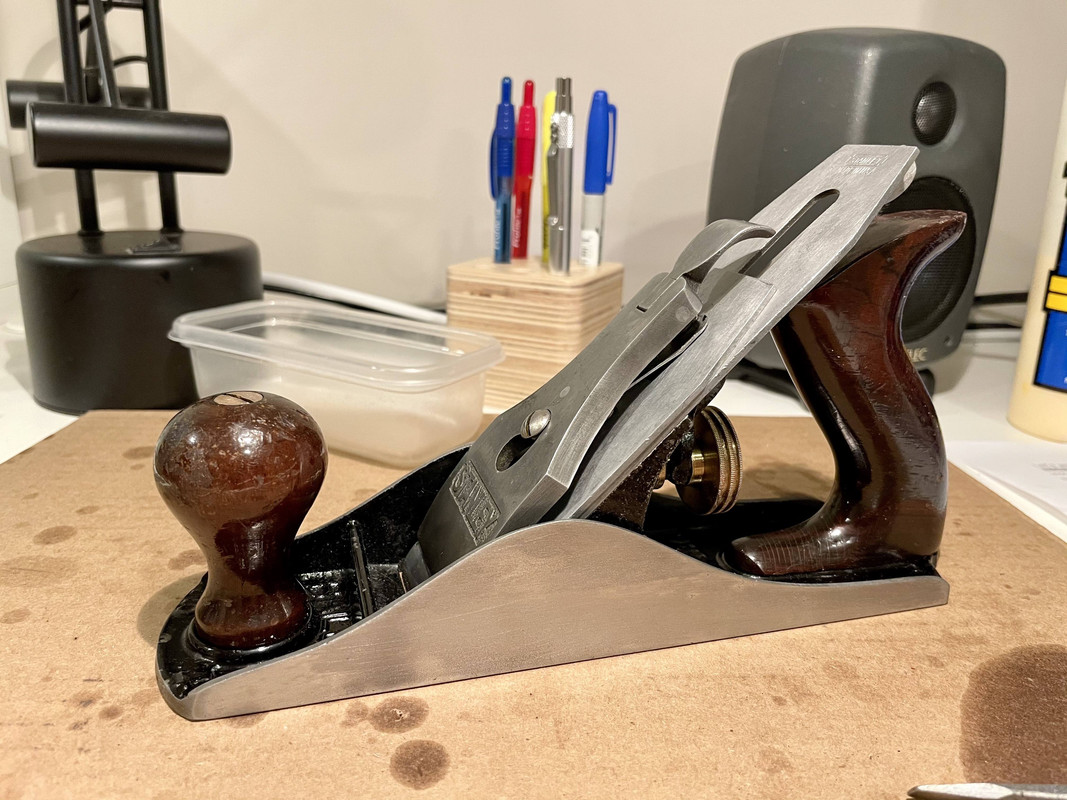
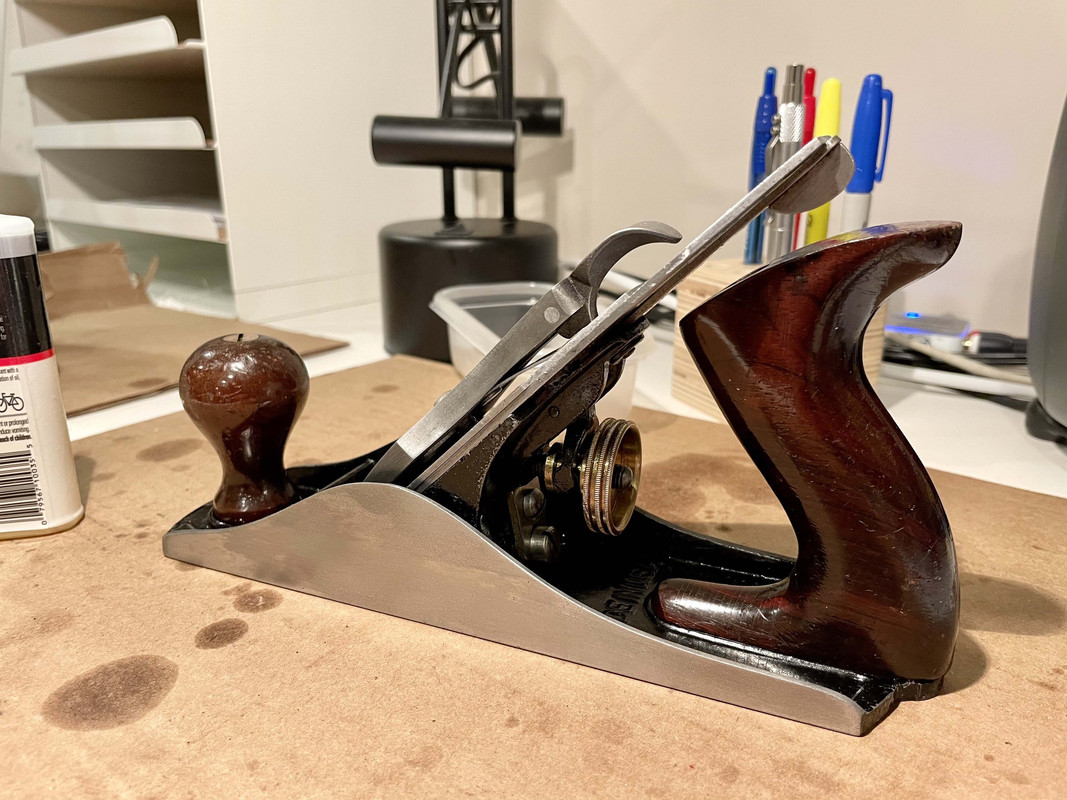
A little progress made. Per Theodulf's guidance I used dry paper and a lot more elbow grease and was able to clean up the sides and bottom pretty well:

IMG-0971.jpg


IMG-0970.jpg


IMG-0969.jpg


The right hand side (not pictured) still has some small pits that are recessed and I don't think I can easily get removed. Which is ok.

Current status is everything has been cleaned and rust removed. I'd like to give the lever cap, chip breaker, and screws and bits some more luster but not sure how without a buffer.

There are a few small chips in the japanning, need to figure out what to do there.

The iron and chip breaker still need to be flattened / honed, but my shoulders need a break from last night's session. :lol:

I have some Boeshield T9 on the way. Haven't ordered anything for the wood bits yet, still not sure what I want to do there. If it were a flea-market find I'd probably be inclined to take it to the max, since this restoration stuff is addictive, watching it transform, but since it's more of an heirloom inheritance piece for me I don't want to make any rash decisions I can't undo.

More when I have it...

:beer:
 

jonshonda

Well-known member
Joined
Jul 17, 2017
Messages
4,736
Location
Wisconsin
IMG-0971.jpg


I have some Boeshield T9 on the way.

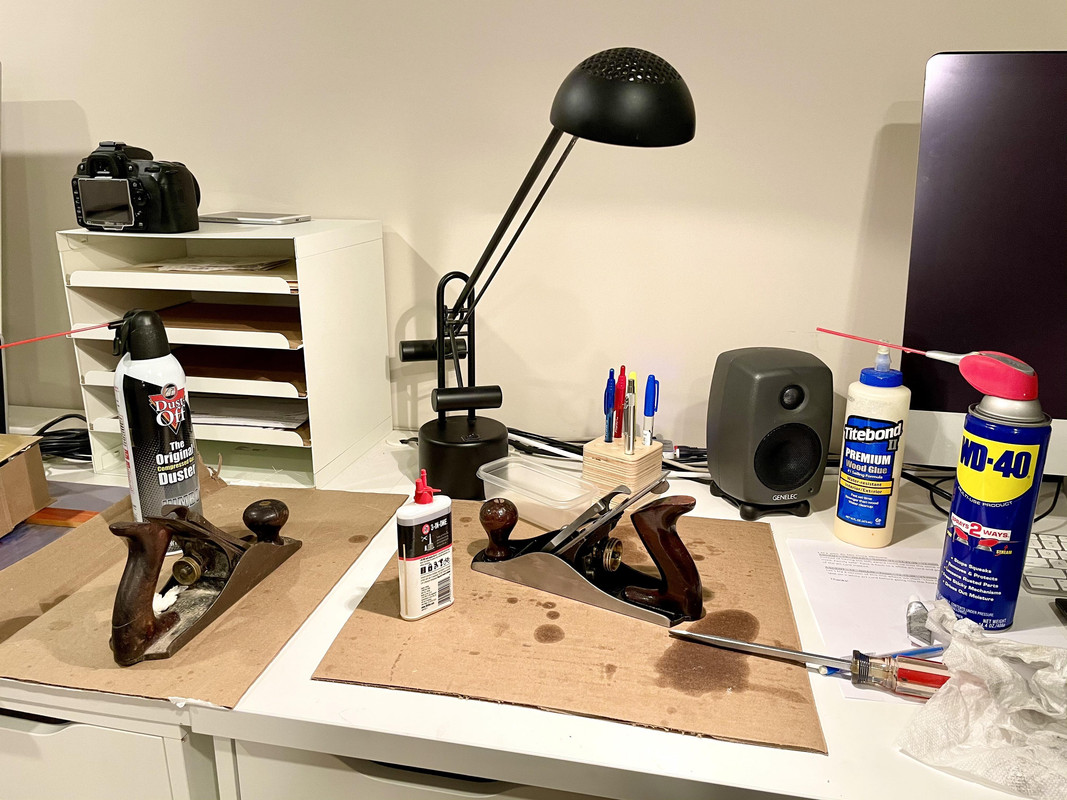
I had the same lamp in my bedroom when I was younger. If I remember correctly, it was a heavy sucker!!

And T9 is great stuff. But it needs to be stored indoors or in warm temps. And if it ever plugs, put it in a bowl in hot/warm water for a bit. The wax in the formula likes to gum up the intake tube.
 

Theodulf

Well-known member
Joined
Jul 2, 2017
Messages
410
Location
Goulburn, NSW, Australia
A little progress made. Per Theodulf's guidance I used dry paper and a lot more elbow grease and was able to clean up the sides and bottom pretty well:

IMG-0971.jpg


IMG-0970.jpg


IMG-0969.jpg


The right hand side (not pictured) still has some small pits that are recessed and I don't think I can easily get removed. Which is ok.

Current status is everything has been cleaned and rust removed. I'd like to give the lever cap, chip breaker, and screws and bits some more luster but not sure how without a buffer.

There are a few small chips in the japanning, need to figure out what to do there.

The iron and chip breaker still need to be flattened / honed, but my shoulders need a break from last night's session. :lol:

I have some Boeshield T9 on the way. Haven't ordered anything for the wood bits yet, still not sure what I want to do there. If it were a flea-market find I'd probably be inclined to take it to the max, since this restoration stuff is addictive, watching it transform, but since it's more of an heirloom inheritance piece for me I don't want to make any rash decisions I can't undo.

More when I have it...

:beer:

Looks good, man.

The majority of the lever caps I've seen here in Australia are chrome plated and I notice the lever caps on both planes you have pictured are not. Is that the norm, or an exception in your area?
 
OP
N

nicholam77

Well-known member
Joined
Dec 18, 2016
Messages
2,655
Location
Minneapolis, MN
I had the same lamp in my bedroom when I was younger. If I remember correctly, it was a heavy sucker!!

Ha! Yes, the base is quite a bit heavier than it looks!

I don't really know anything about this lamp, but I enjoy good lighting and I've had it for quite some time (got it from my dad after he replaced it with a different reading lamp he'd been after).

And T9 is great stuff. But it needs to be stored indoors or in warm temps. And if it ever plugs, put it in a bowl in hot/warm water for a bit. The wax in the formula likes to gum up the intake tube.

Thanks for the tip! I bring all my finishing/liquids inside during the winter. So it will be stored indoors.

Looks good, man.

The majority of the lever caps I've seen here in Australia are chrome plated and I notice the lever caps on both planes you have pictured are not. Is that the norm, or an exception in your area?

I'm not sure about this. From a cursory Google search it appears Stanley did nickel-plating and chrome-plating I think, but I'm not sure on the timing or why mine are bare. Although I do like the plain look.
 

loganb

ALLIANCE MEMBER
Joined
Dec 29, 2011
Messages
5,524
Location
Omaha, NE
Just got a chance to read thru your updates on the computer...that drill jig is nice work...should be much faster and help you blow through what's often a slow and time consuming part of a build like that. I don't have anything like that on the agenda...otherwise I may copy you!
 
OP
N

nicholam77

Well-known member
Joined
Dec 18, 2016
Messages
2,655
Location
Minneapolis, MN
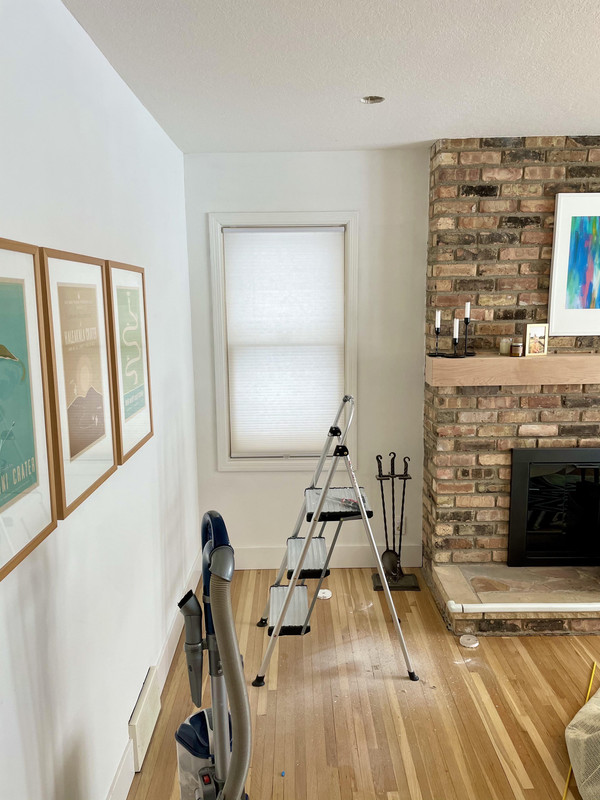
Living Room Recessed LED Lighting

Another catch-up project to post that I've been working on and off throughout December. Not garage-related, but you guys know the drill by now, this thread has turned into as much about the house projects as the garage. :dunno:

When we moved into our house, there were no lights in the living room, which is also the front entry room to the house. Ridiculous. What's more I didn't even notice this when buying the house. I know so much more now. :lol:

After living with 3 floor lamps tied together via Philips Hue for awhile, longtime readers may recall I went up in the crawl space and added an always-on overhead fixture for a Nelson Bubble Lamp pendant. This was grouped with the other Philips Hue lamps.

Problem is, it's still too dark at night. And in winter with the early sundown, it's been driving me nuts.

So I thought, I've been up in the horrible crawl space once, how hard could it be to add some recessed retrofit LEDs? Turns out... not hard... but a LOT more work than I thought. And a lot of time in freezing air with a respirator and a headlamp. :wtf:

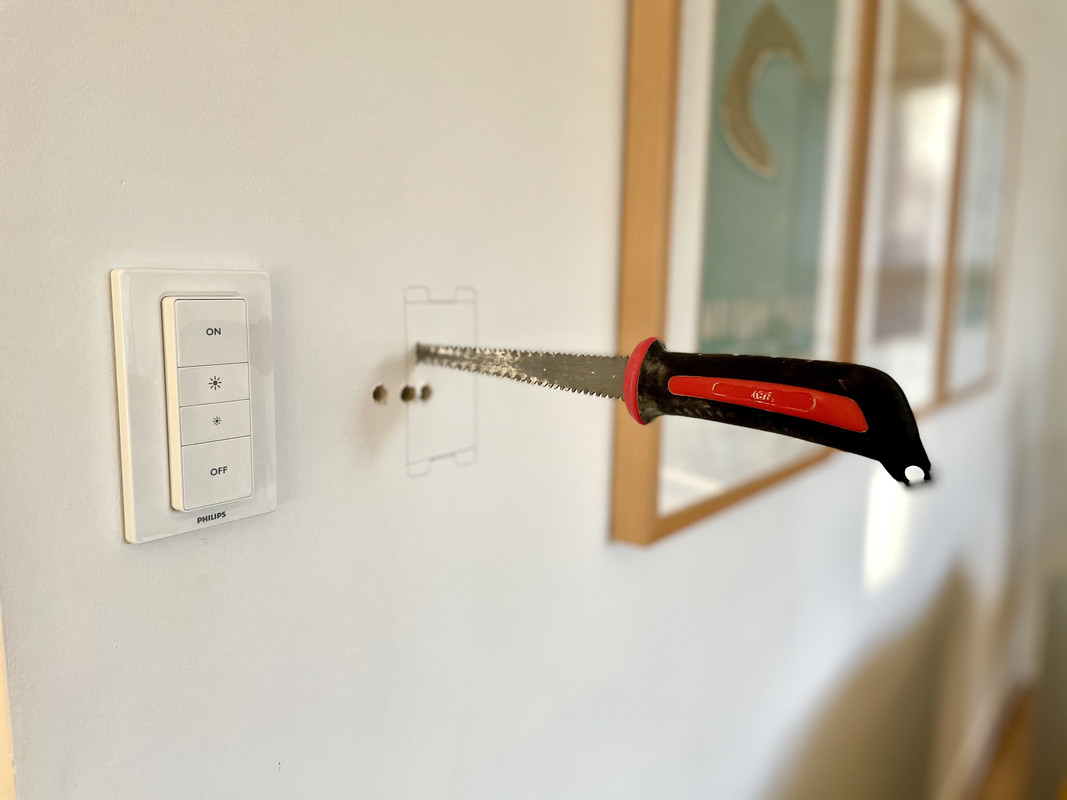
IMG-0686.jpg


In the pic above you can see I've used my stud finder, aka power drill, to locate a stud.

:lol_hitti

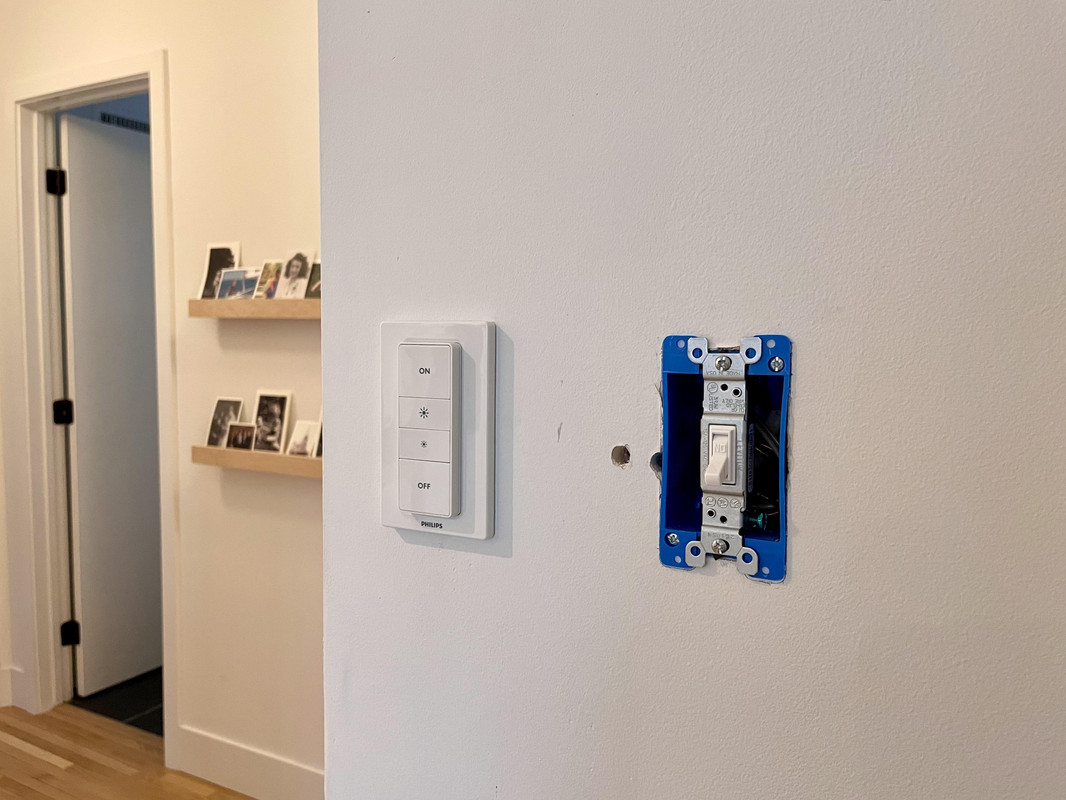
The plan was to run a loop down the wall for a physical switch. That worked out fairly uneventfully:

IMG-07602.jpg


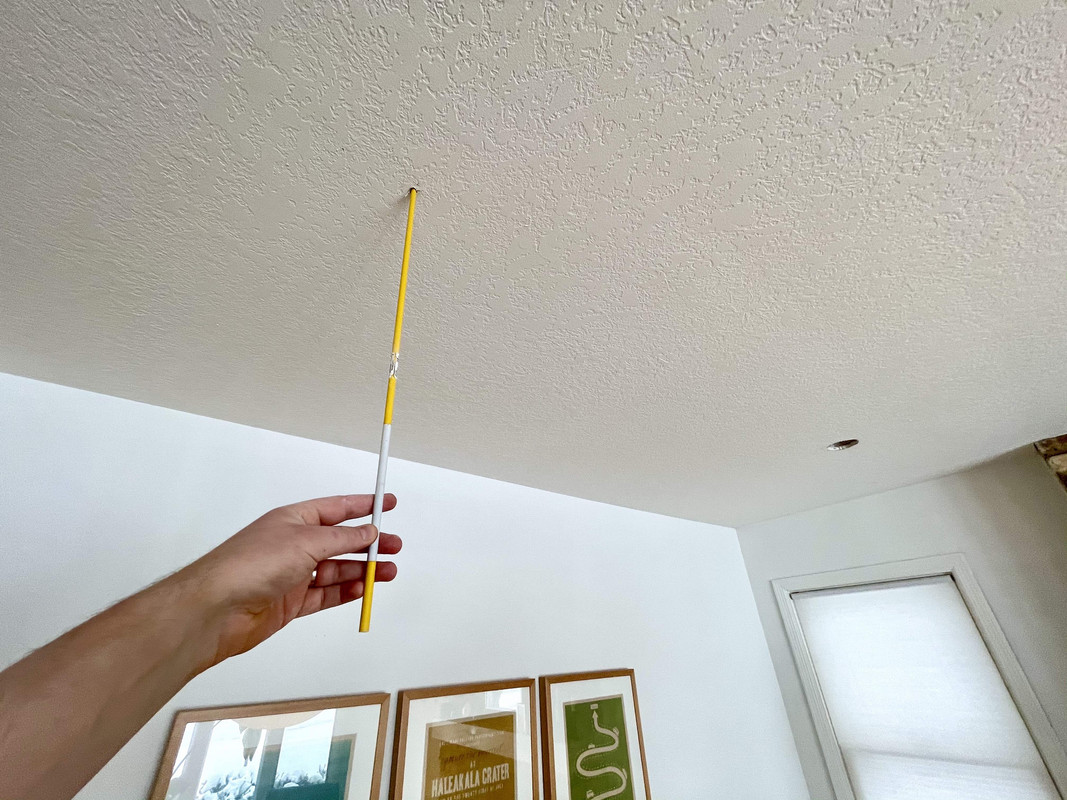
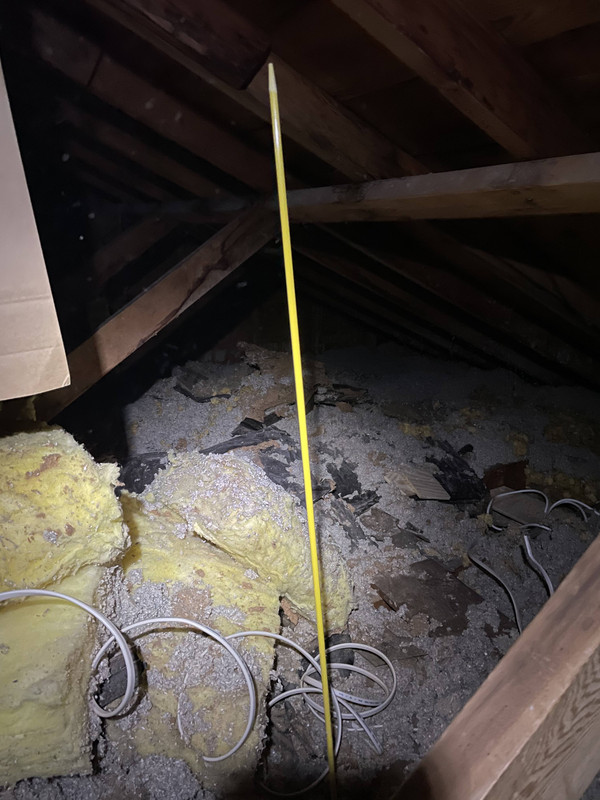
Next I marked out locations for the six 3" pot lights I wanted to put in, and drilled a 3/8" hole. The crawl space is covered in blown-in insulation and all sorts of horrible particulate, so to locate the holes / light locations, I poke a yard reflector stick up through the ceiling so I can easily find it on the other side and then clear the insulation around it.

IMG-0959.jpg


IMG-0960.jpg


That's just an in-progress pic. Wiring hasn't been completing or fastened yet.

Once located I can make sure there aren't joists in the way and can cut the larger holes for the fixtures:

IMG-0956.jpg


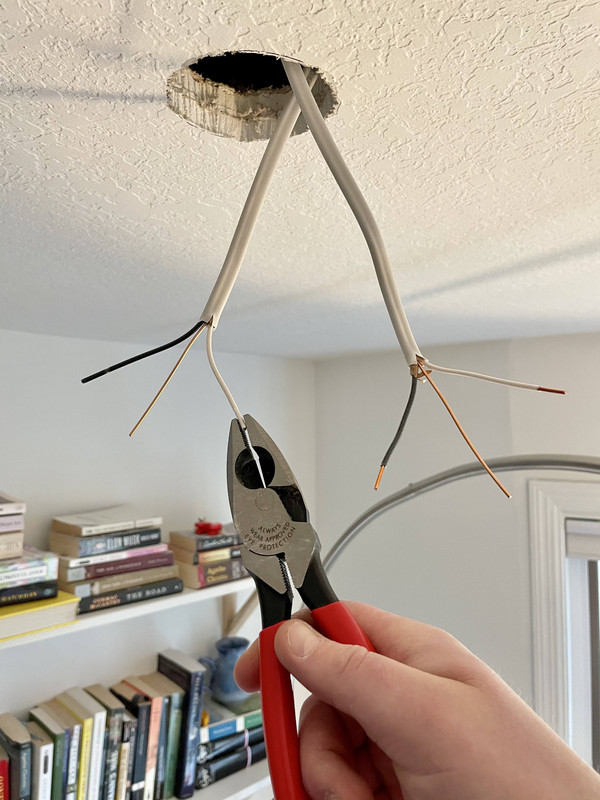
And pull wire and prep it for the fixture:

IMG-0758.jpg


My brother got me that Knipex electrical pliers a few years ago and I LOVE it. Ive used it a bunch and the cutter is so sharp and quality.

Make the connections, pop the lights in, and everything works!

IMG-1052.jpg


It makes a dramatic difference in fill lighting in the evenings. Now I can actually read a book in there.

Still haven't made those fireplace built-ins yet. Thought I would get to that this winter but at this point it's kind of a running joke to me. I am still, however, poking around on the design from time to time -- latest development is reversing the light and dark woods so the casework is light and the sliding doors are dark:

Screen-Shot-2020-12-27-at-2-44-11-PM-copy.jpg


That aside, the lights were a success and I need to get a Z-wave dimmer switch on order so I can incorporate them into to my smart home stuff.

Hope everyone had a great New Year.

:beer:
 

Arclitgold

Well-known member
Joined
Dec 20, 2017
Messages
317
Nice work! How does the Romex get fastened in the attic?


Sent from my iPhone using Tapatalk
 

topcok88

Well-known member
Joined
Jun 3, 2013
Messages
660
Nice job Nick! Can’t wait to see what you come up with for built-ins. I just closed out my building permit last Monday and an ordering material for the built-ins around mine. Gotta buy some more walnut for the tops to match my shelving/mantle and rest will be painted ply with face frames.81930bc71af04d65ccefff0044968351.jpg


Sent from my iPhone using Tapatalk
 

Attachments

  • 81930bc71af04d65ccefff0044968351.jpg
    81930bc71af04d65ccefff0044968351.jpg
    83.5 KB · Views: 0
To avoid these ads, REGISTER NOW!
OP
N

nicholam77

Well-known member
Joined
Dec 18, 2016
Messages
2,655
Location
Minneapolis, MN
Nice work! How does the Romex get fastened in the attic?

Thanks! I did my best to nail it to the rafters and joists. :)

Nice job Nick! Can’t wait to see what you come up with for built-ins. I just closed out my building permit last Monday and an ordering material for the built-ins around mine. Gotta buy some more walnut for the tops to match my shelving/mantle and rest will be painted ply with face frames.

[pic]

Thanks! My built-ins should be pretty dang close to what you see in that Sketchup. I've been taking real world measurements and adjusting the proportions this week, but design-wise that's the plan. I've been sitting on the design for well over a year now :D

Your fireplace project is looking great! Walnut tops and face frames will match the rest of it nicely. Shaker doors? Or open? Something else? Please feel free to post a finished pic or compare notes as you go. Yours will probably be more true built-ins than mine. I'm planning to scribe the back wall edge of the tops but the cabinets themselves will be frameless and have a 1/4" shadow gap left and right.


-------------------------------------


Not much else to report yet. But my parents have asked me to help them with a large pantry cabinet build. Floor-to-ceiling cabinets with shaker doors. So I've been doing a lot of research and planning on that. It's going to be the largest build I've ever done, and since it's for someone else I feel an extra obligation to make it professional and good quality. Also, after the medicine cabinet I did, they want some floating shelves for the same bathroom now, too. :lol:

My plan was to get to the aforementioned fireplace built-ins this winter, but I will have to see how quickly I can get through my parents' projects in my limited time.

:beer:
 
OP
N

nicholam77

Well-known member
Joined
Dec 18, 2016
Messages
2,655
Location
Minneapolis, MN
Small update. Don't worry, I have some big things on the horizon. :D

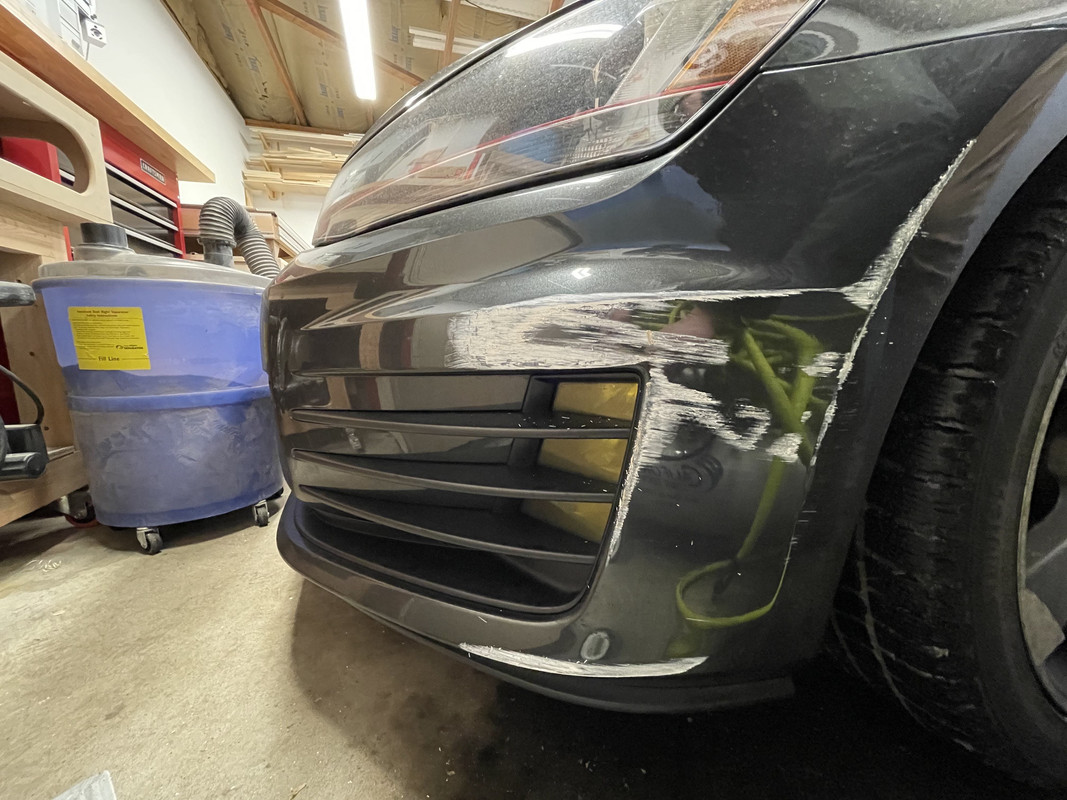
A few days ago I managed to drive my GTI into the side of my garage while pulling it in. No real rhyme or reason, I was watching and going slow and all that. Just barely scraped it and my stomach dropped out as you hear that crunch and everything goes into slow motion.

IMG-1126.jpg


It picked up a lot of white paint from the pine trim, but fortunately almost all of it cleaned off leaving some minor scratches. Frustrated at myself but could have been so much worse so I guess I should be happy.

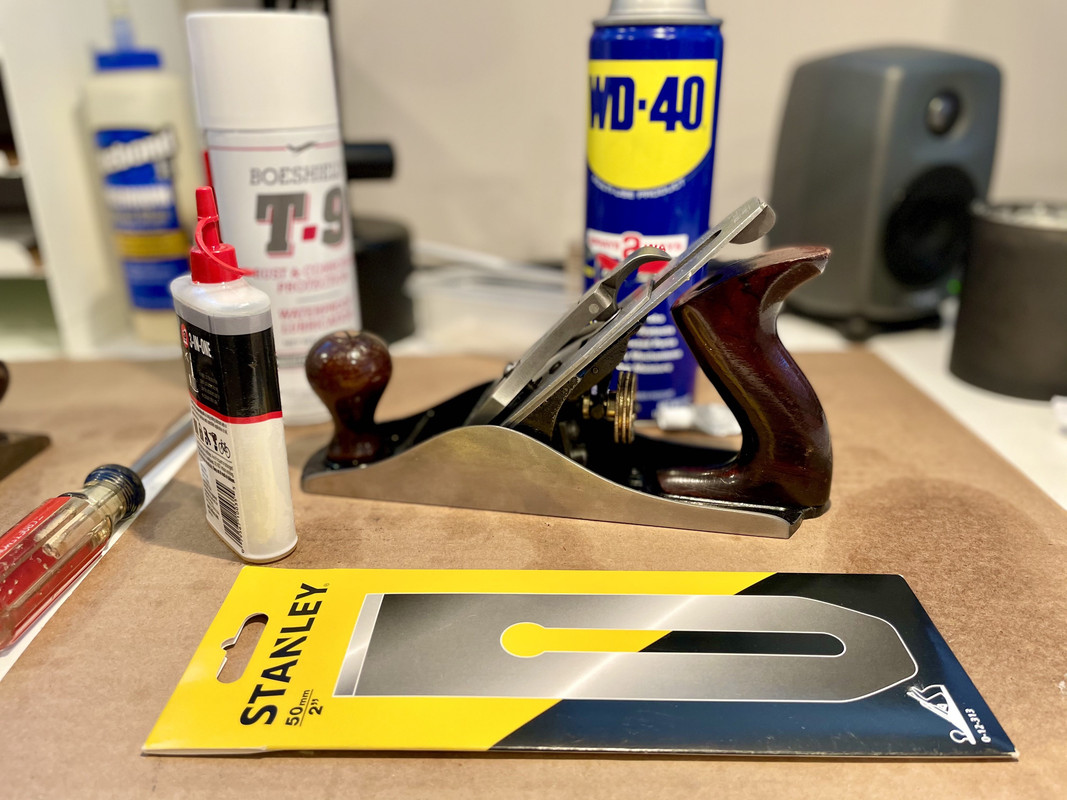
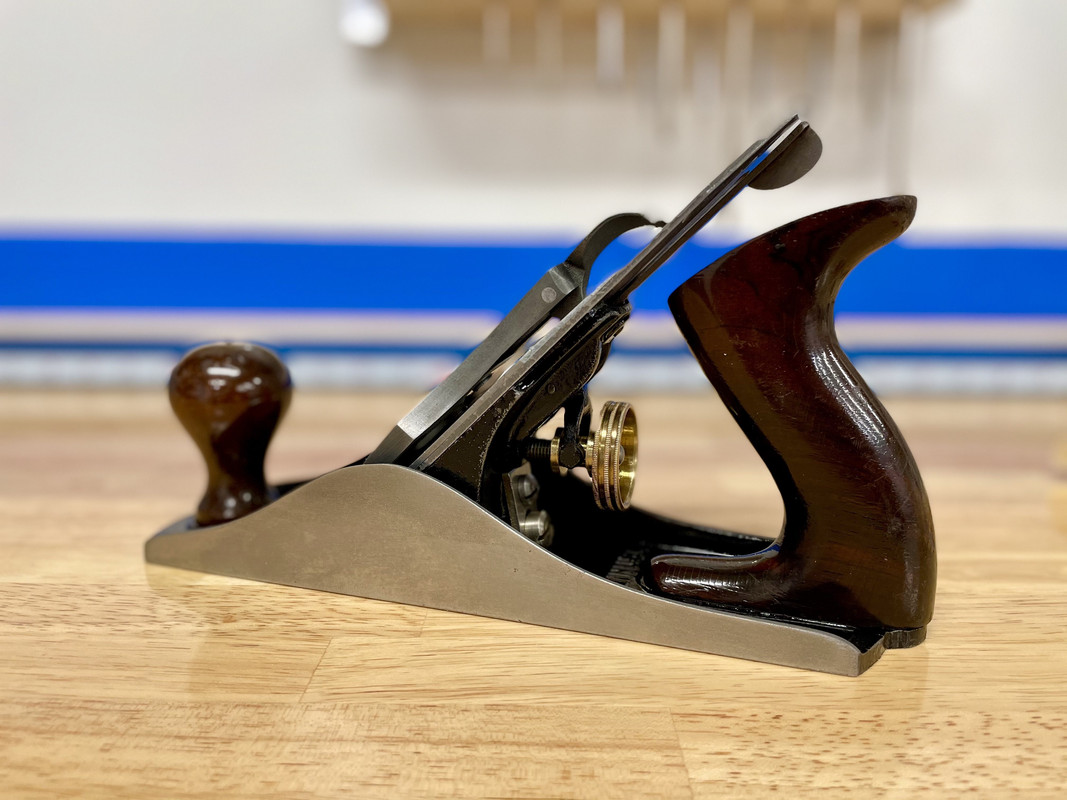
Sorry guys, I wussed out and bought a Stanley replacement iron for my passed down #4. I was unsure of myself with the sandpaper when doing the plane sole, so I think I might take the original blade to a place that can re-grind it for me. I felt like it was going to take forever and didn't want to mess it up.

IMG-1130.jpg


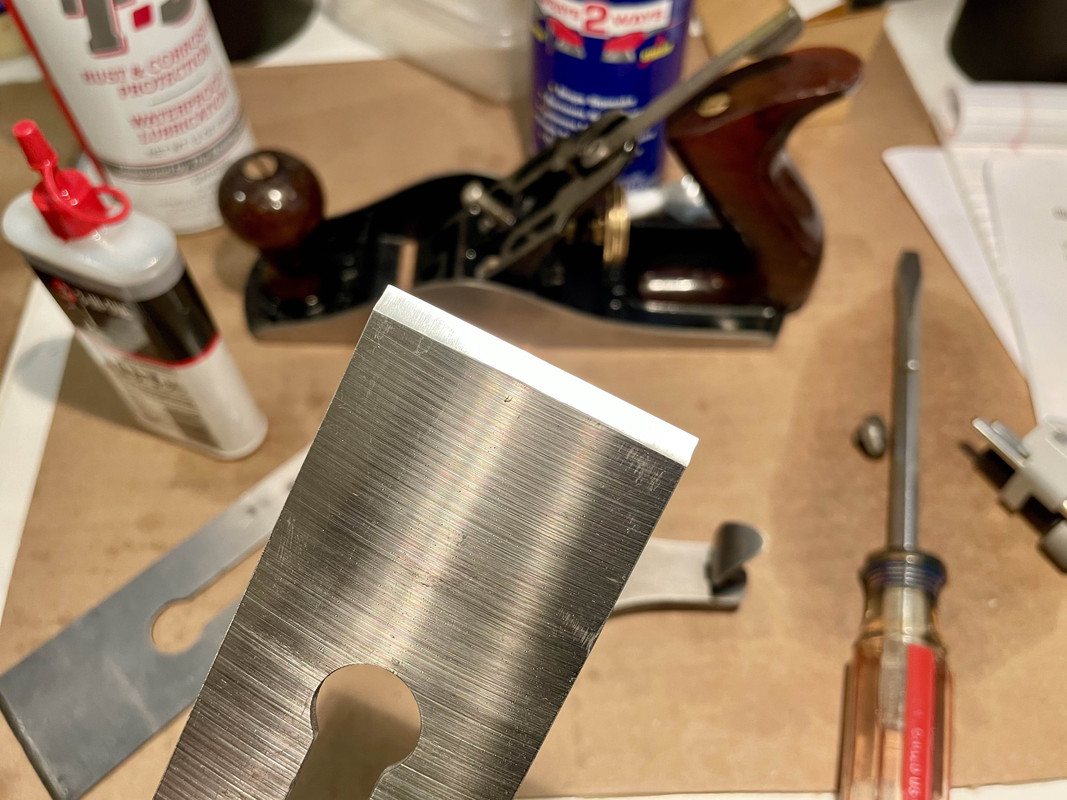
Anywho the replacement is an official Stanley part, about $15, surely Chinese steel and a tad thinner than the original. Looks like it was stamped out of a sheet, edges not so nice, not nicely finished. So I did some work today to prepare and sharpen it!

This is still kind of a mystery to me, the sharpening process, but essentially I have a glass plate and adhesive sandpaper and a honing guide from a Rockler kit. I followed these two videos:

Rex Kruger - True Beginner: Sandpaper Sharpening

Jonathan Katz-Moses - How To Get A Hand Plane Blade Scary Sharp In 90 Seconds

Even with a new blade I'm still unsure of how many passes I should be taking, how to get rid of the burr at the end (I don't have a leather strop), etc. The Rockler sandpaper seems to really lose it's grit after a little bit of use. Do I put a microbevel on or not? Etc.

Anyway it worked ok I think, I only went up to 1500 grit. It looks very shiny now.

IMG-1133.jpg


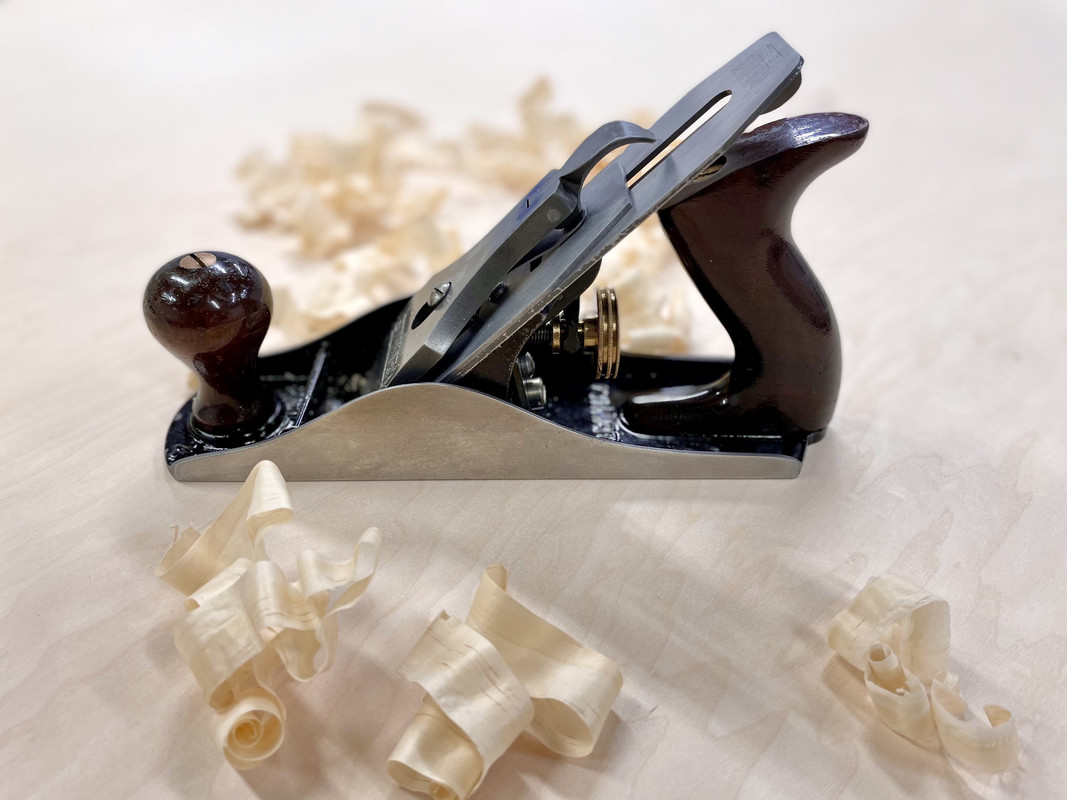
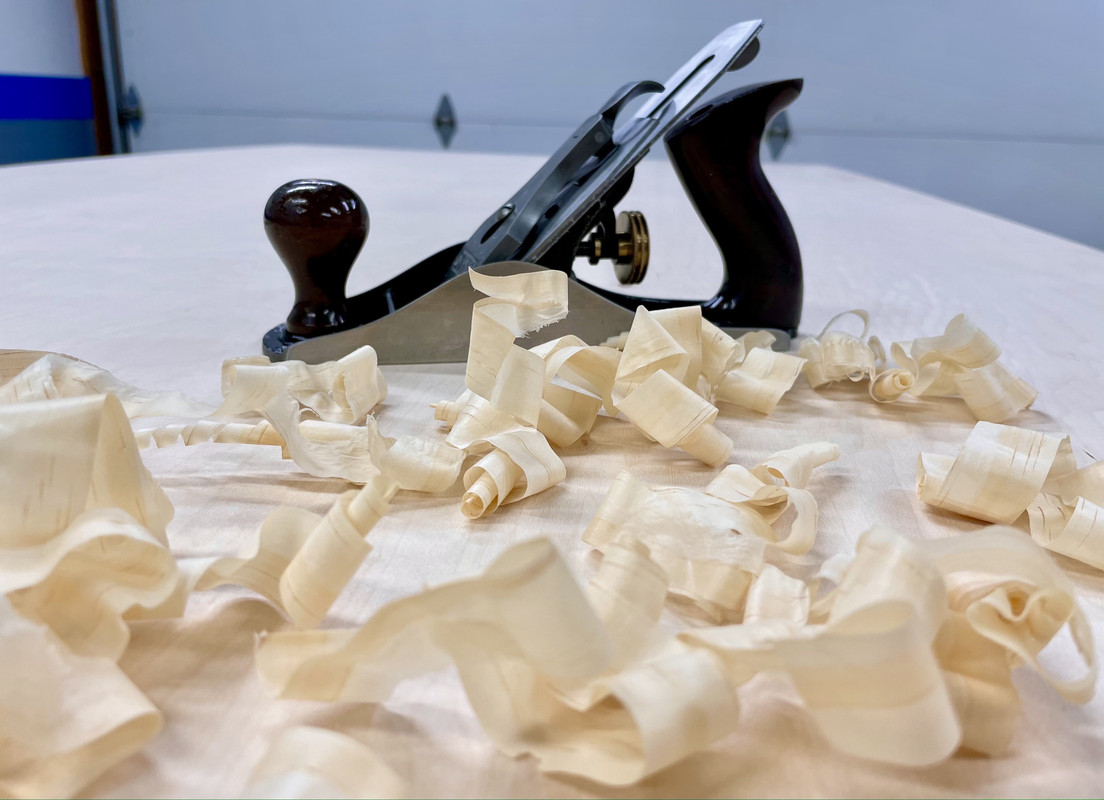
Did some tests, and it does work! Even a noob like me, not knowing hardly anything about how to use a plane, was able to get some fairly thin shavings after watching a plane setup video or two on YouTube.

IMG-1149.jpg


Gotta say, it is quite addictive!

IMG-1150.jpg


I don't know how often I will use it on projects, maybe if I do more hardwood stuff eventually. And I don't know how perfectly I did the camber and all that tuning and sharpening stuff. But I am very pleased with how it looks, and it is definitely a very special tool to me!

IMG-1146.jpg


:beer:
 

jake28

Well-known member
Joined
Aug 28, 2018
Messages
482
Location
SF, CA
Well done [mention]nicholam77 [/mention]
Per my previous post: don’t overthink it. The proof is in the shavings. Could the plane be sharper? Probably. But, if you can run a finger across the just-planed surface, and it’s smoother than anything you would have sanded to, you’re doing fine.

Planing can be fun. What I find addictive is the quiet in the garage. Getting a smooth surface without having to turn on an orbital or a power tool is a dream.
 

bj383ss

Well-known member
Joined
Sep 29, 2011
Messages
3,166
Location
TX
Nice job on the plane. Don't sweat the details. If you think learning precision with power tools was tough wait until you fall all the way into the hand tools skill set. I still barely have any myself but it can be very frustrating as things move much slower when you are removing wood.

But as others have said you will know when the blade needs to be sharpened you will feel it. If you can see through your shavings than you are sharp!

Bret
 

bdbecker

ALLIANCE MEMBER
Joined
Nov 18, 2015
Messages
5,557
Location
Iowa
...Even with a new blade I'm still unsure of how many passes I should be taking, how to get rid of the burr at the end (I don't have a leather strop), etc. The Rockler sandpaper seems to really lose it's grit after a little bit of use...

How familiar are you with sharpening in general? I only ask because I wonder if its not the paper itself, but that you have just sharpened as much as you can with the grit of paper you have on the plate. When I sharpen knives, I run the stone across the edge of the bade until it feels smooth. This doesn't mean my stone is shot, it just means its time to step up to the next grit. When I step up to the next grit, the blade will feel rough under the finer stone at first, but will eventually smooth out. Rinse and repeat with finer and finer grits.

As far as the number of passes to take at each grit, it all depends on how long it takes for it to smooth out. With knives, sometimes I can get there in a dozen passes, other times it takes much longer depending on the blade material and how hard I've used the knife since the last sharpening.

An old leather belt will work as strop if you've got one lying around.
 
OP
N

nicholam77

Well-known member
Joined
Dec 18, 2016
Messages
2,655
Location
Minneapolis, MN
Well done nicholam77
Per my previous post: don’t overthink it. The proof is in the shavings. Could the plane be sharper? Probably. But, if you can run a finger across the just-planed surface, and it’s smoother than anything you would have sanded to, you’re doing fine.

Planing can be fun. What I find addictive is the quiet in the garage. Getting a smooth surface without having to turn on an orbital or a power tool is a dream.

Yes, the surface it left was quite smooth. The test piece was pine and it felt much smoother than sanding, although I never go over 220 with the orbital sander.

I'm sure a large task like flattening a workbench by hand is less fun, but I certainly enjoyed taking a few quick shavings in a soft wood!

Looking good mate.

The only thing I have to add, is that I understand it's the done thing to round the corners of the blade a tiny bit.

I tried to add some camber to the blade by adding pressure left and right at the end of each grit. Taking a square to it... it's hard to tell how I did, and the cutting edge itself doesn't seem perfectly square to the side. I tried to correct this without luck, and assumed it can be compensated for to a degree with the lateral adjustment in the plane itself.

Nice! Great to give life to an old too so that it may be used again, and hopefully handed down to another generation.

Thanks man. Totally agree!

Nice job on the plane. Don't sweat the details. If you think learning precision with power tools was tough wait until you fall all the way into the hand tools skill set. I still barely have any myself but it can be very frustrating as things move much slower when you are removing wood.

But as others have said you will know when the blade needs to be sharpened you will feel it. If you can see through your shavings than you are sharp!

Bret

Thanks, Bret. I only had a few minutes to test it but I managed to get a few shavings that had some transparency. Dialing in the depth was tricky. I think if I went to a higher grit and was able to define the knife edge better I'd really be in business. I have no doubt hand tools are much harder to learn and require more skill to get results.

How familiar are you with sharpening in general? I only ask because I wonder if its not the paper itself, but that you have just sharpened as much as you can with the grit of paper you have on the plate. When I sharpen knives, I run the stone across the edge of the bade until it feels smooth. This doesn't mean my stone is shot, it just means its time to step up to the next grit. When I step up to the next grit, the blade will feel rough under the finer stone at first, but will eventually smooth out. Rinse and repeat with finer and finer grits.

As far as the number of passes to take at each grit, it all depends on how long it takes for it to smooth out. With knives, sometimes I can get there in a dozen passes, other times it takes much longer depending on the blade material and how hard I've used the knife since the last sharpening.

An old leather belt will work as strop if you've got one lying around.

I'm not familiar with sharpening at all. This is the first thing I've sharpened. :D

I was doing about 30 passes with the finer grits (400 and up). I guess what I mean about the paper is it seems even with just 30 strokes if I feel the part of the paper I've worked on, vs. the untouched area, the worked on area feels super smooth and soft. Like it's been used up. Maybe that's normal but if it wears out that fast that's pretty disappointing. Also I see most people use water or a lubricant on the wet-dry paper, so I did... but it kind of dried on it and made it even less abrasive. Should I be rinsing it off or something?

I think in the end I did ok but not having that muscle memory yet I was sort of wondering "am I doing this right?" the whole time.

Great idea on an old belt for some free leather.
 

bdbecker

ALLIANCE MEMBER
Joined
Nov 18, 2015
Messages
5,557
Location
Iowa
...I was doing about 30 passes with the finer grits (400 and up). I guess what I mean about the paper is it seems even with just 30 strokes if I feel the part of the paper I've worked on, vs. the untouched area, the worked on area feels super smooth and soft. Like it's been used up. Maybe that's normal but if it wears out that fast that's pretty disappointing. Also I see most people use water or a lubricant on the wet-dry paper, so I did... but it kind of dried on it and made it even less abrasive. Should I be rinsing it off or something?...

I am not that familiar with sharpening using paper so maybe that is just how it is. Hopefully someone with more experience will chime in. I believe Rockler uses Klingspor paper in the kit, right? That seems to be a well regarded brand, but you could always pick up some 3M paper and see if you notice anything different.
 
OP
N

nicholam77

Well-known member
Joined
Dec 18, 2016
Messages
2,655
Location
Minneapolis, MN
I am not that familiar with sharpening using paper so maybe that is just how it is. Hopefully someone with more experience will chime in. I believe Rockler uses Klingspor paper in the kit, right? That seems to be a well regarded brand, but you could always pick up some 3M paper and see if you notice anything different.

Yes, it says Kingspor on it. If it does wear out pretty quickly (after one sharpening session), I definitely see the case for water/diamond stones instead! Maybe I'll try the 3M after this is used up. I don't see myself having to sharpen very often since I don't have an immediate use for the plane, but it's good to know I guess.
 
OP
N

nicholam77

Well-known member
Joined
Dec 18, 2016
Messages
2,655
Location
Minneapolis, MN
Living Room Built Ins - part 1 - materials and ripping

I've done a thing. I don't know how I'm going to complete this adjacent to my parents' cabinet job, but I braved The Home Depot and got some ply for the built-ins. Finally.

IMG_1137.jpg


IMG_1139.jpg


Loading off the truck by myself is fairly easy.

IMG_1140.jpg


I stacked one sheet of 3/4 on the main cutting bench, and the rest on my old mini-Paulk cart.

I've covered my sheet good breakdown process before, with Cutlist Optimizer, etc, so I won't go into detail on that but I do want to highlight a few tool-related items.

First, I got a second 55" track for the Makita.

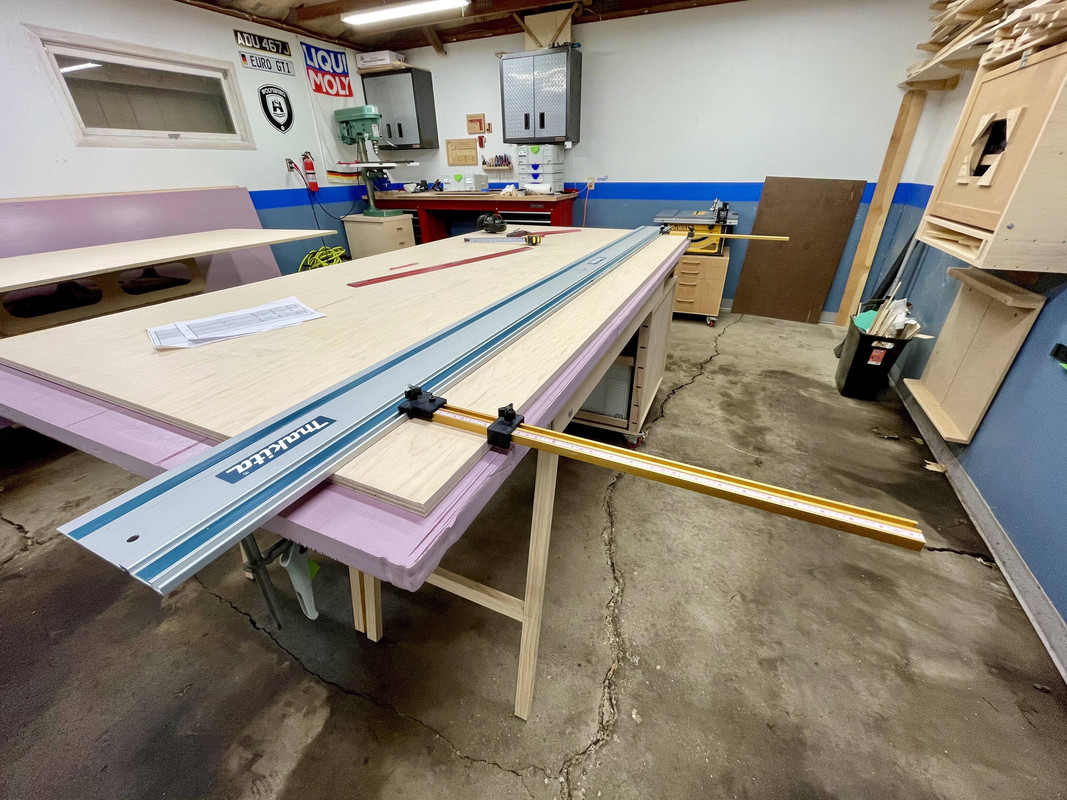
IMG_1154.jpg


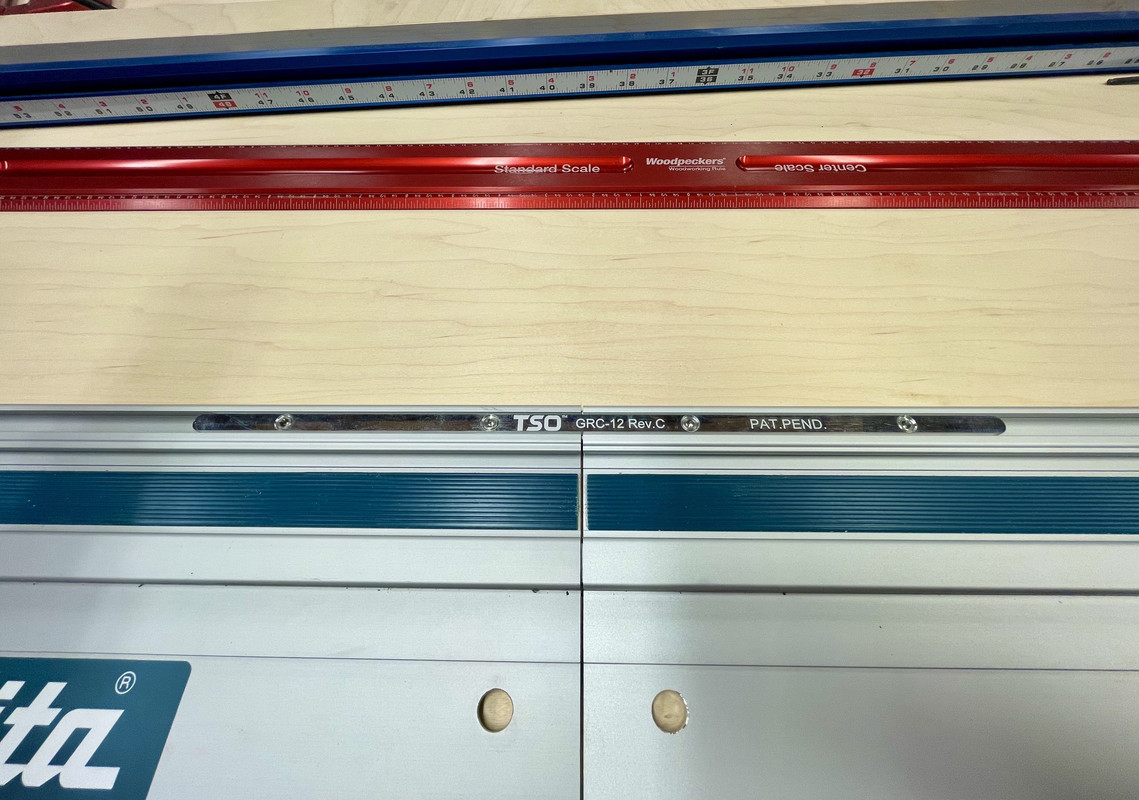
I debated what track connector to get (Makita has one, so do other 3rd parties), and eventually I decided the TSO Products connectors would be worth the premium because of their "keystone" feature, which is supposed to self-align the tracks without needing a straight edge or to fiddle with it.

IMG_1155.jpg


I only tried to connect them once, but I was quite disappointed. Didn't even come close to aligning them straight. So I tried to line them up with my 36" Woodpecker rule, which is not that long but something I have confidence is straight. This gave better results than the keystone alone. :mad:

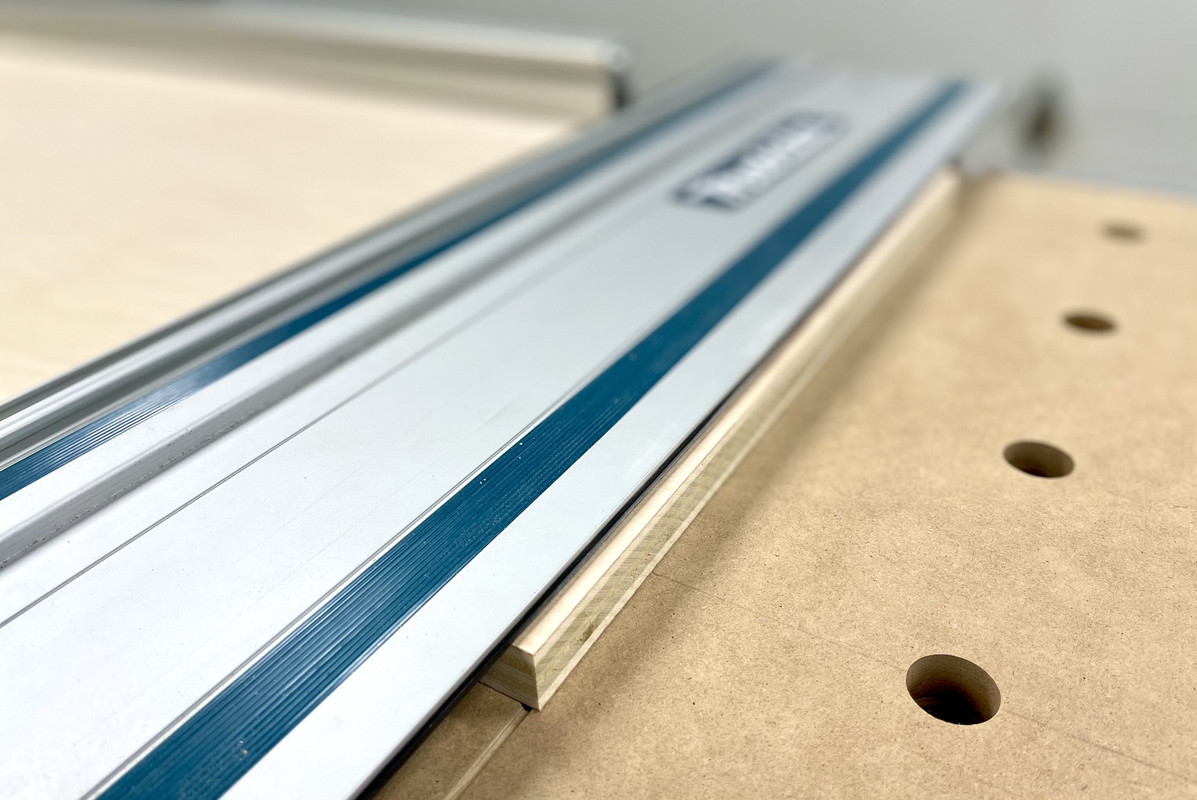
Further, the new 55" extrusion does not match the old one I had! I *think* the part the saw actually rides along is the same tolerances, but there are other features of the track that are definitely slightly different. Makita must have changed it's tooling or manufacturing some how. The aluminum is also a *slightly* different color/sheen. I don't think it will have huge impact on accuracy, at least I hope not, but it is disappointing all the same. These tracks are not cheap. They should be identical.

/rant

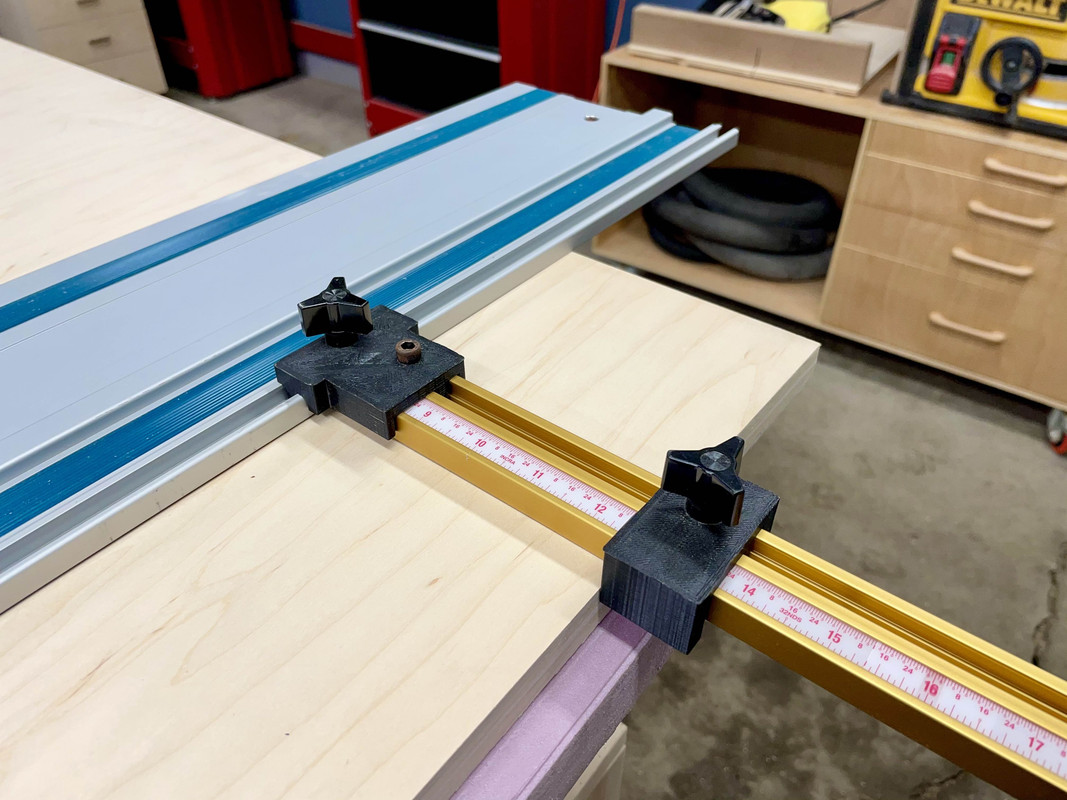
Already feeling nervous, I decided to throw another wild card into the mix and used my 3D-printed parallel guides: :dunno:

IMG_1156.jpg


IMG_1157.jpg


This is for you loganb :D

I have to say, I have NO qualms about these. It's a super economical way to do parallel guides and I am more concerned with connecting the tracks than how these perform.

If anyone is interested you can find them on Thingiverse here.

Measuring post-cut I was out about 1/32 in the middle. I'll take that over 8 ft.

I proceeded to make mostly rip cuts.

IMG_1167.jpg


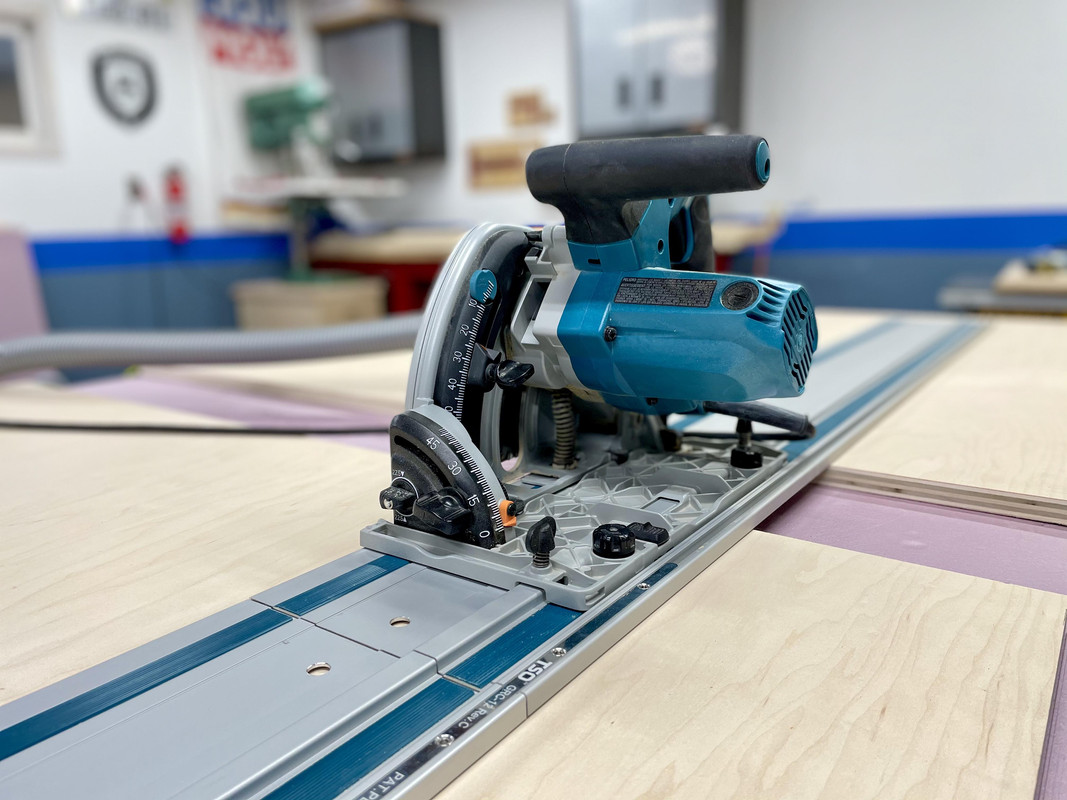
Glamour shot of the Mighty Track Saw:

IMG_1170.jpg


Apparently I have a reputation of over-glorifying it so I'm just going to continue doing that :lol:

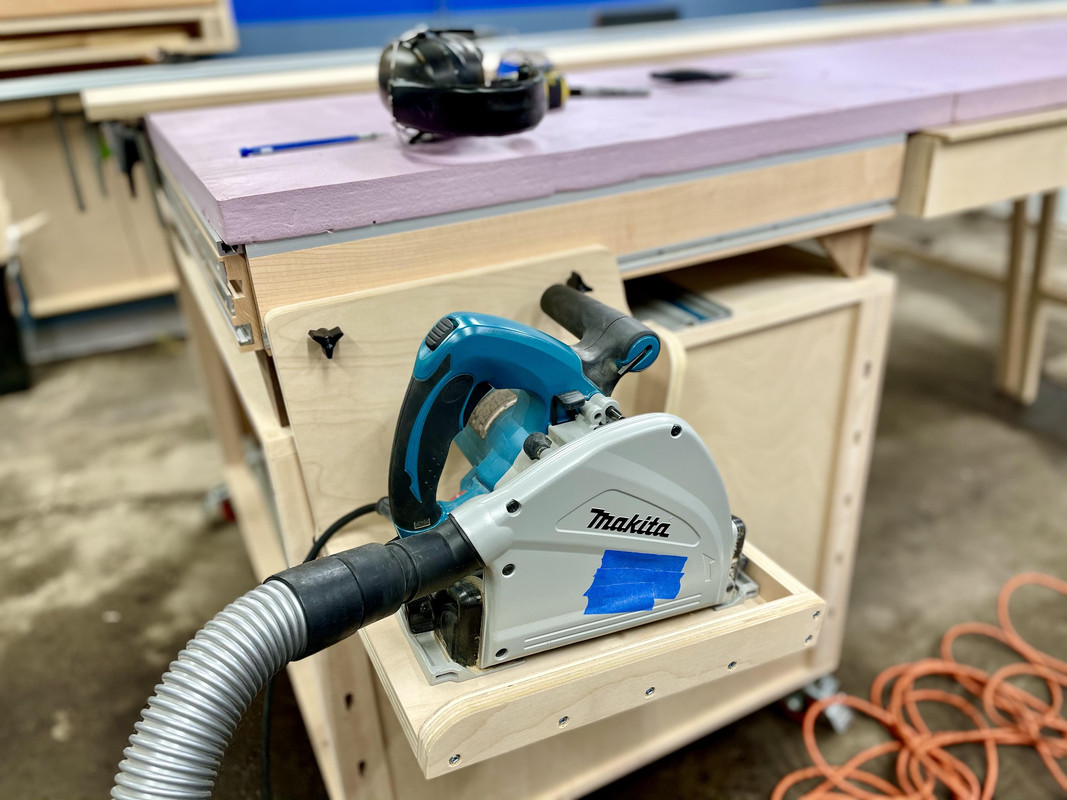
Holster is working a treat:

IMG_1159.jpg


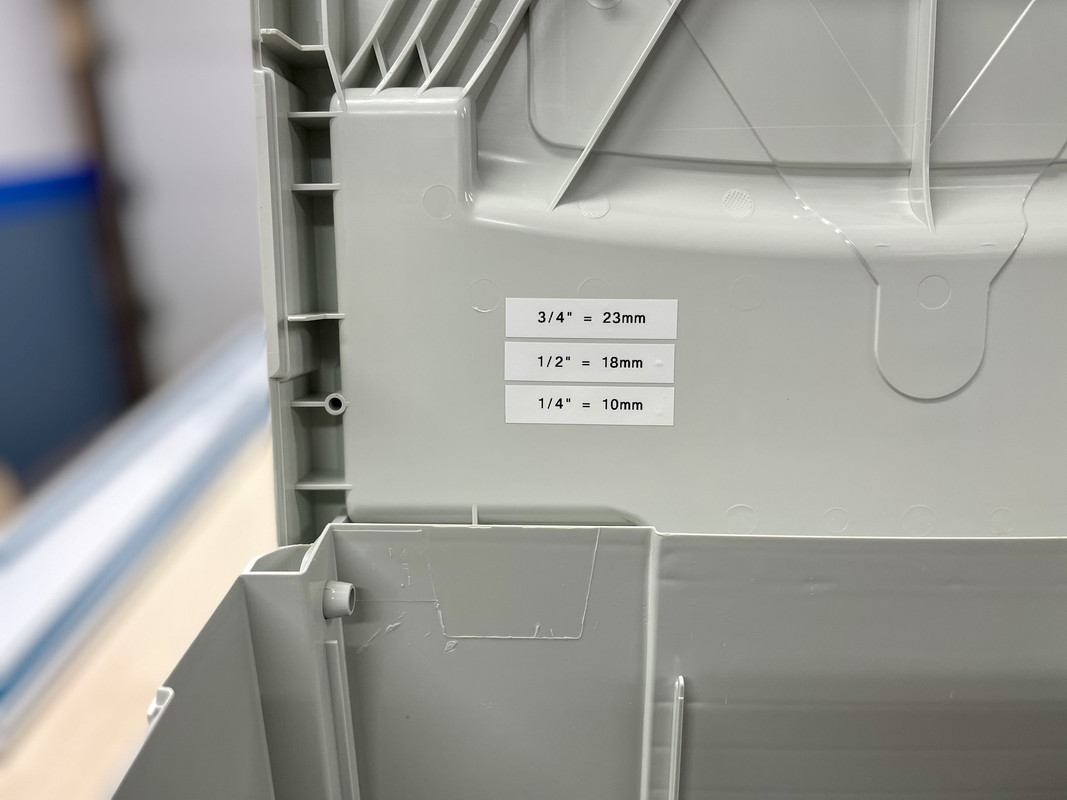
I had 2x 3/4 sheets to do, 1x 1/2, and one 5mm (~1/4). While adjusting the saw I added to my plunge-depth cheat sheet inside the Systainer case:

IMG_1172.jpg


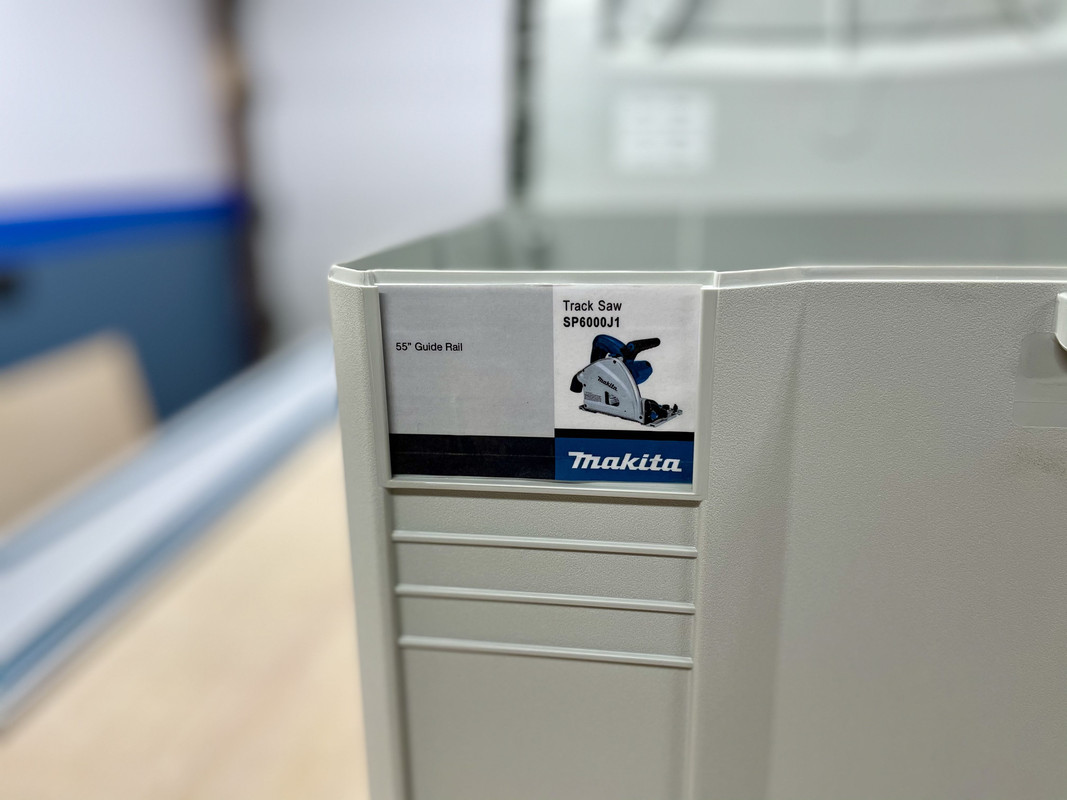
Oh and I made a label for it, too.

IMG_1171.jpg


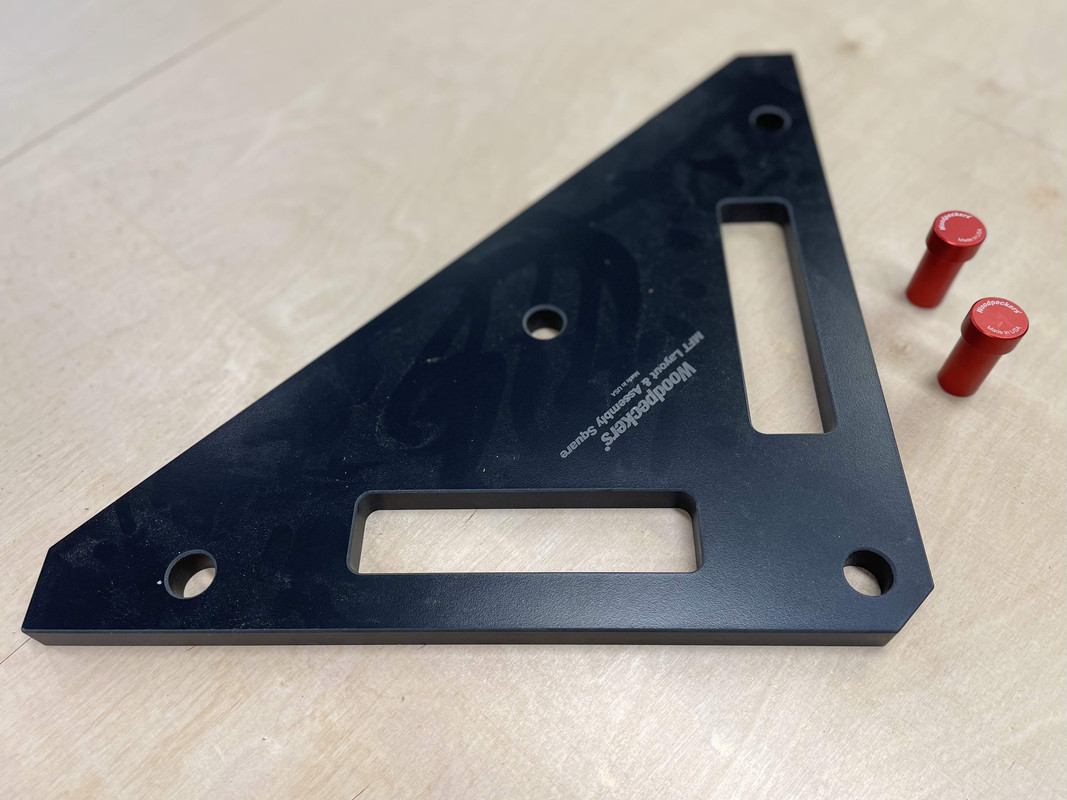
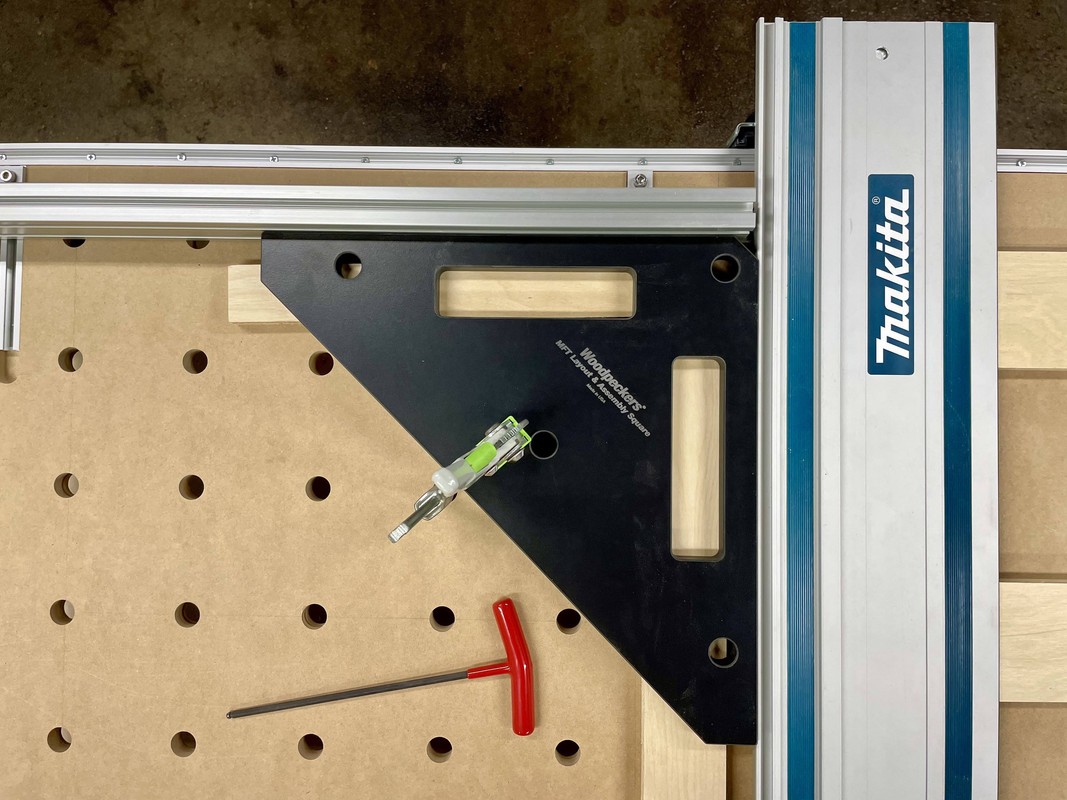
Not final cuts but I did a few crosscuts to get it more manageable. And to test another setup. You may recall I picked up a Woodpecker's MFT Layout Square awhile back to assist with squaring up my MFT fence. It's 18"x18" of solid 3/4 phenolic. It came with two bench dogs intended for use on an actual Festool MFT/3.

IMG_1176.jpg


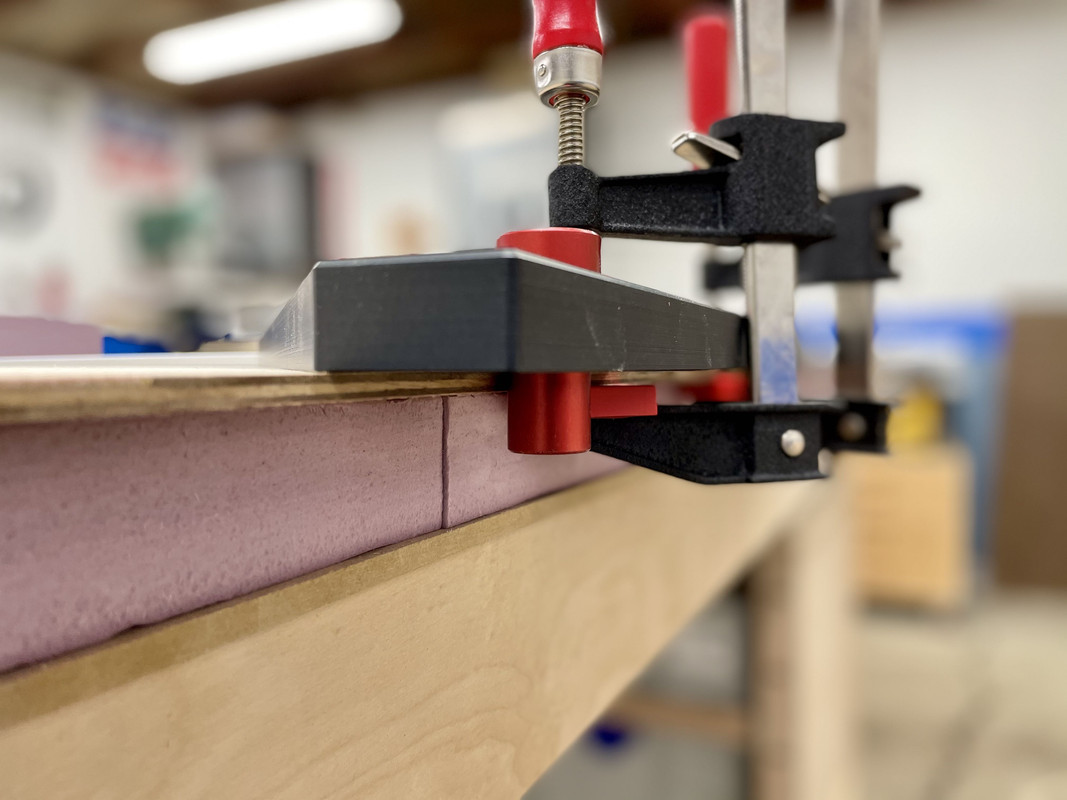
My workbench hole grid does not match the Festool pattern, but I had the idea to use the dogs to reference a sheet good edge instead:

IMG_1174.jpg


IMG_1173.jpg


This helps line up a 90 degree crosscut with great accuracy. In a "pencil test", I found the bench dog reference to produce perfectly parallel lines, so I think it works great! Something I already had and much cheaper than a rail square. Granted it is pretty big so use would be limited to larger sheet good breakdowns but I think it will work nicely for that.

All of the squaring and final crosscuts will be done with the MFT fence next.

That's all I have for now, hoping to keep the momentum going!
 

quadrcr87

Well-known member
Joined
Jul 5, 2013
Messages
1,036
Location
Travelers Rest, SC
The tracksaw setup is nice and its on my list to get in the future. In the meantime, Do you think using just a track section would work decent as a circular saw edge guide? I am thinking I could get the track now and add a saw later on. Without the weight of the track saw pushing down on it, I am curious how well I could hold it in place accurately.

I am struggling with the typical clamp on edge guides because the clamps prevent the sheet from laying flat on a piece of foam. I like that a track saw track grips and holds in place.
 

The J

Well-known member
Joined
Mar 4, 2010
Messages
152
The tracksaw setup is nice and its on my list to get in the future. In the meantime, Do you think using just a track section would work decent as a circular saw edge guide? I am thinking I could get the track now and add a saw later on. Without the weight of the track saw pushing down on it, I am curious how well I could hold it in place accurately.

I am struggling with the typical clamp on edge guides because the clamps prevent the sheet from laying flat on a piece of foam. I like that a track saw track grips and holds in place.


I would not buy a track unless you know what saw you’re getting, since not all tracks are compatible.

I’ve been borrowing the Festool track saw from a friend. I clamp the track to my workpiece on every cut just to make sure it doesn’t move if there is any resistance in a portion of the cut. I use the Irwin spring loaded clamps on the tracks and 3/4” materials. Easy to set up and you can clamp them on the edge of the track without being in the saw’s way.

You could add some thin foam tape to the bottom of your guide to help prevent slippage.

You may benefit from a circular saw guide (Family Handyman has a simple DIY) you can use for accurate cuts in the meantime.

I also have the Kreg crosscut and it’s just okay. Relies too much on butting up against a parallel reference edge but does the job for most cuts I needed to make. A good plywood edge guide clamped to my workpiece is still my preferred method when I don’t have access to the track saw since it’s stable.
 
OP
N

nicholam77

Well-known member
Joined
Dec 18, 2016
Messages
2,655
Location
Minneapolis, MN
The tracksaw setup is nice and its on my list to get in the future. In the meantime, Do you think using just a track section would work decent as a circular saw edge guide? I am thinking I could get the track now and add a saw later on. Without the weight of the track saw pushing down on it, I am curious how well I could hold it in place accurately.

I am struggling with the typical clamp on edge guides because the clamps prevent the sheet from laying flat on a piece of foam. I like that a track saw track grips and holds in place.

Like The J said it's not 100% necessary but advisable to clamp the track saw rail down, too. The clamps secure underneath. So that may not solve your problem with the clamping. I tend to clamp whenever I am able. You can use it without clamps if you're careful, but they are extra insurance.

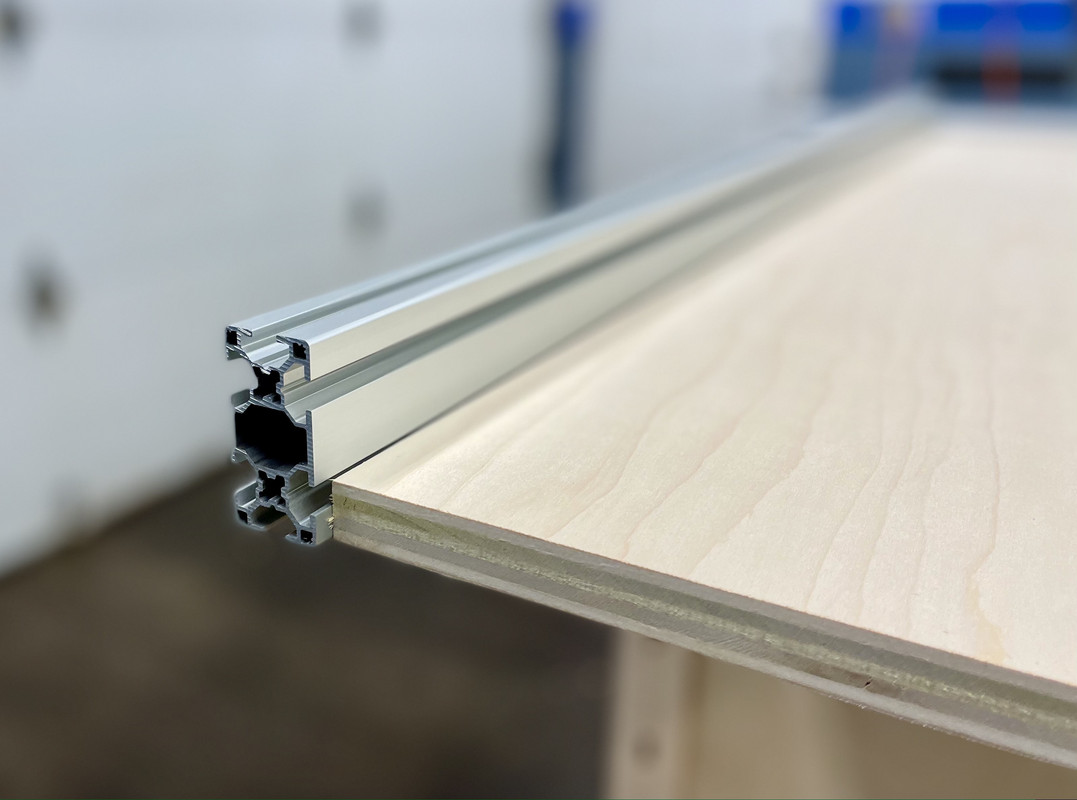
I would not buy a track saw rail just to **** a circular saw up against. Reason being as you stated, I don't think it would stay in place very well without the downward pressure (or clamps). And there are cheaper straight edges out there (DIY plywood, aluminum extrusion like 8020 etc).

However, I do think you could use a standard circular saw ON a track saw rail if you made a base for it and have the capability to create an accurate groove. It reminds me of this Youtube video.

In addition to being a straight guide, a huge benefit of a track saw rail is the splinter guard, which creates a zero-clearance on the top side of the cut (on one side) giving you a really nice cut in veneer products like plywood. The above solution would provide that benefit.

In fact I've considered doing this very thing with a cheaper battery powered circular saw (a Ryobi perhaps?) that would allow me to make some quick breakdowns in a Big Box store parking lot.

Here's another example that's more intricate.

Then again, you could make your own "rail", too. Like this.

As The J said, if you plan on getting a track saw at a later time, definitely do some research and decide what would be best for you. Not everything is compatible with all the aftermarket accessories out there.

Anyways I think there are a lot of good solutions out there short of a full track saw setup, it just depends on your other tooling/capabilities, how much time you want to put in, how much money you want to spend, etc.

I know I keep referring to The J's response, but I'm actually in agreement that as far as producing a straight cut, a track saw doesn't bring that much to the table over a long piece of quality plywood. Maybe ease of use and less chance slipping. But to me the reasons to get a track saw are:

1) the dust collection
2) ability to line up rail directly on pencil marks (zero clearance, no "measuring over")
3) splinter guard to reduce tear out
4) plunge cuts
5) range of accessories from squares to parallel guides to cutting table integration

Hope that helps!

:beer:
 

Bob Heine

ALLIANCE MEMBER
Joined
Oct 24, 2009
Messages
10,705
Location
Boca Raton, Florida
Nick, you and The J nailed it and all I can add is a photo of a track clamp. Unlike a typical woodwoirking clamp, the track clamps are out of the way of the saw, whether the end of the track is lined up with the end of the material being cut or not. More than once I have pushed or pulled a track out of alignment when reaching across a sheet of plywood. Hasn't happened since I started using these clamps. Lots of choices so you can match the clamp brand to your track brand.
attachment.php
 

Attachments

  • Track Saw Clamp.jpg
    Track Saw Clamp.jpg
    105.8 KB · Views: 419

Trapps

ALLIANCE MEMBER
Joined
Feb 10, 2017
Messages
2,002
Location
The Detroit Zoo
Nick, there is so much track saw goodness in here, thanks for detailing it so others (like me!) can learn! Your experience joining tracks is one of the reasons I chose the Blue version despite my saw running on Festool and Makita tracks. Bummer about the 'updated' track not being identical to the original. Same with Systainers and L-Boxxes. :(

...track clamp...
I've looked at the versions in my flavor of Blue tools and it's now moved to the top of my want list. Ahead of all the Woodpecker, Incra and Tiaga items I couldn't possibly live without for another day! Thanks!

One day I'll have to add up all the money I've spent as a result of Garage Journal inspiration. On second thought, scratch that idea :scared:

 

jonshonda

Well-known member
Joined
Jul 17, 2017
Messages
4,736
Location
Wisconsin
Looks like you are putting your tools to good use! Interesting that you noticed the evolution of the tracks. My guess would be the new ones have been revised to be easier to manufacture, which typically leads to a better quality product. I would be curious if Makita engineers had their way and didn't have to worry about cross compatibility, what would change and how the system would be improved.
 
OP
N

nicholam77

Well-known member
Joined
Dec 18, 2016
Messages
2,655
Location
Minneapolis, MN
Nick, there is so much track saw goodness in here, thanks for detailing it so others (like me!) can learn! Your experience joining tracks is one of the reasons I chose the Blue version despite my saw running on Festool and Makita tracks. Bummer about the 'updated' track not being identical to the original. Same with Systainers and L-Boxxes. :(

I've looked at the versions in my flavor of Blue tools and it's now moved to the top of my want list. Ahead of all the Woodpecker, Incra and Tiaga items I couldn't possibly live without for another day! Thanks!

One day I'll have to add up all the money I've spent as a result of Garage Journal inspiration. On second thought, scratch that idea :scared:

No problem! I finally feel like a have a "system" for plywood breakdown. Yes the track connector is frustrating and hopefully yours should be much better.

That sent a shiver up my spine.

And mine as well :scared:

Looks like you are putting your tools to good use! Interesting that you noticed the evolution of the tracks. My guess would be the new ones have been revised to be easier to manufacture, which typically leads to a better quality product. I would be curious if Makita engineers had their way and didn't have to worry about cross compatibility, what would change and how the system would be improved.

Idk why I had my doubts but I didn't even throw the box away until comparing them :)

I know Makita had some issues with straightness and warping in their earlier tracks, so maybe they changed the design at some point for better quality control.
 
OP
N

nicholam77

Well-known member
Joined
Dec 18, 2016
Messages
2,655
Location
Minneapolis, MN
Living Room Built Ins - part 2 - crosscutting

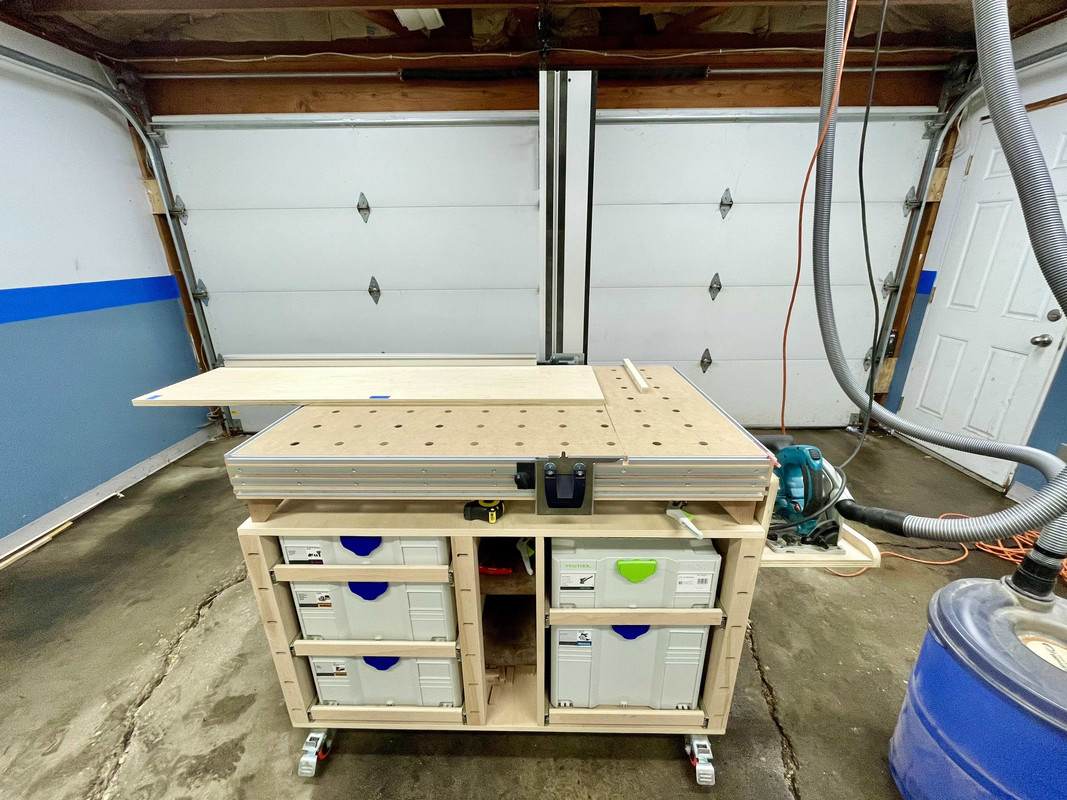
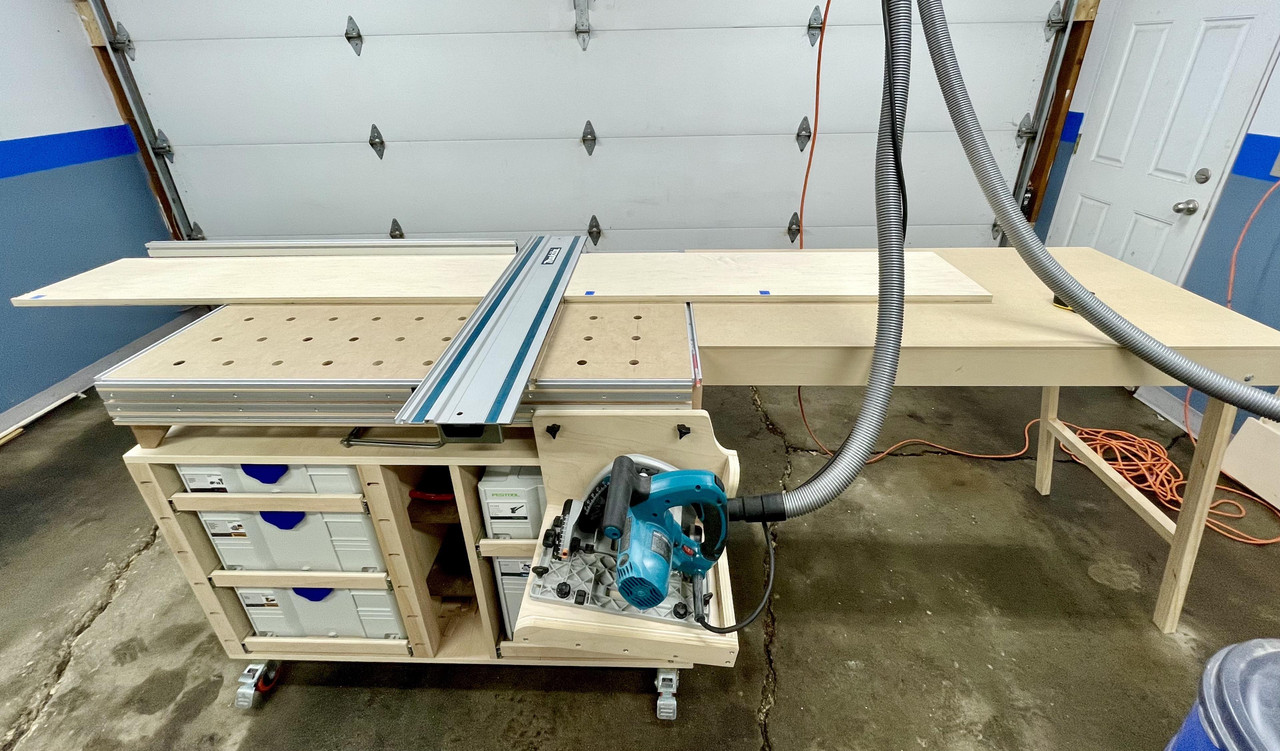
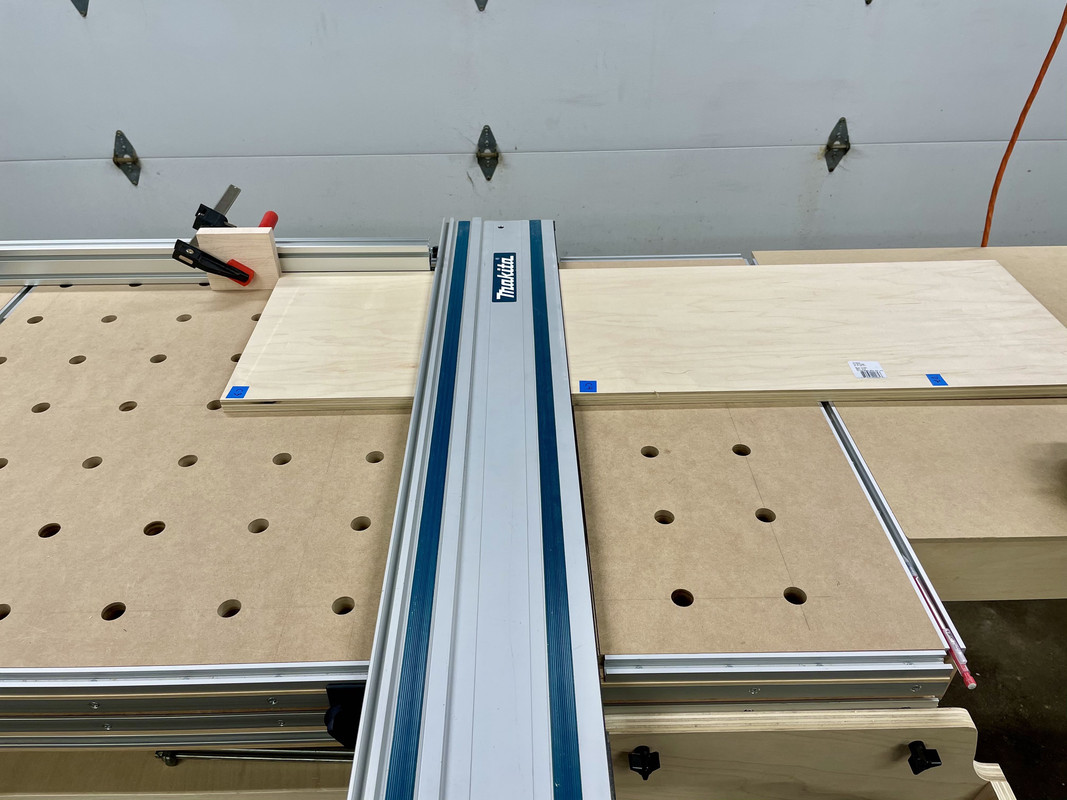
Yesterday I was able to finish dimensioning all the parts to final size, and square them up in that process. I used the MFT fence and rail supports for this.

Not sure I've touched on it before, but most "MFT" style tables rely on the dog hole pattern for square reference. By placing bench dogs in the 20mm holes, the track saw rail and the fence can be positioned a perfect 90 degrees in relation to one another. If, and that's a big if, your hole grid is perfectly orthogonal.

Mine... is not. It's close but not perfect. And I've found MDF has way too much flux with humidity to maintain a snug enough fit with the bench dogs.

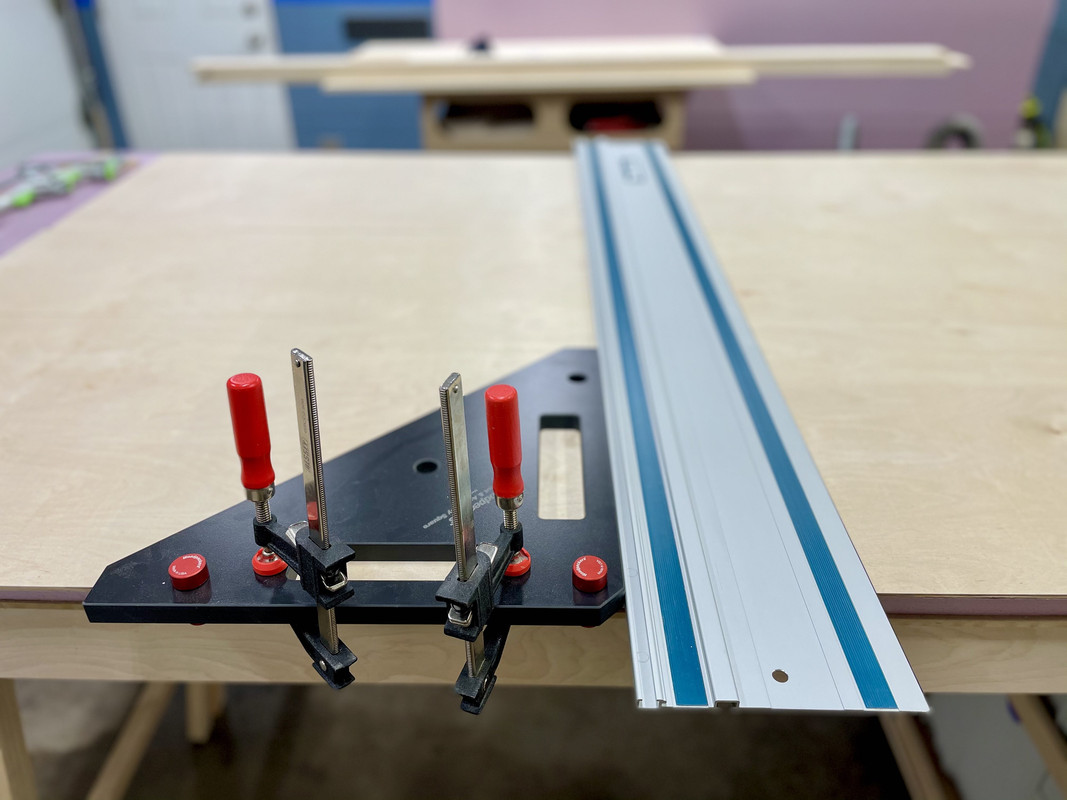
So when I thought about my bench, I decided on a squaring system that would not rely on the hole pattern. The rail is fixed in place (stays in same spot all the time), and the fence is adjustable. To square the fence (which must be done every time it's set up), I use the 18" Woodpecker MFT Square:

IMG_1192.jpg


Install rail. Push square against rail. Clamp square to table. Push fence against other edge of square. Tighten down fence. It's quick, ensures they are perfect 90, and forces a recalibration every time it's used so I know it wasn't bumped or anything. So far it's been giving excellent results.

So to square the pieces (which are intentionally left a bit long), I trim the end off one side to get a square edge:

IMG_1197.jpg


IMG_1195.jpg


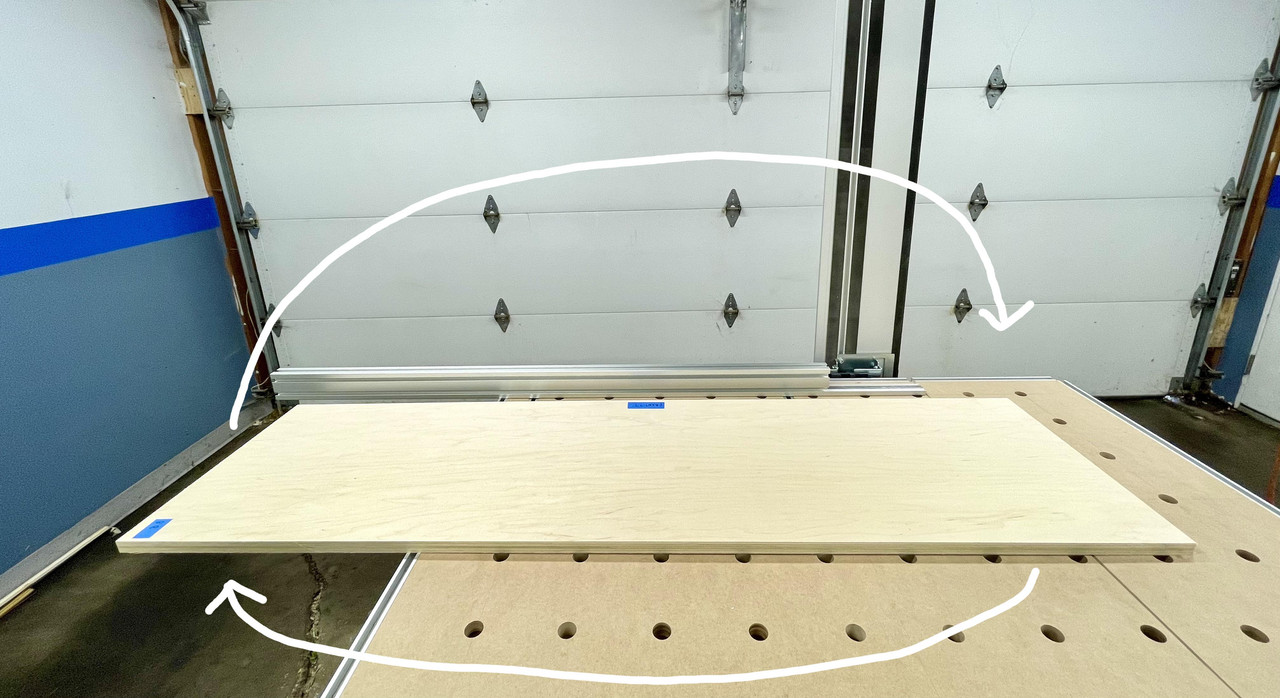
Then I flip the board over the long way so the same edge references the fence.

IMG_1198.jpg


Typically the edge I reference will be whatever is the "front" of the cabinet for example. This means one cut the workpiece will be face up, the second cut it will be face down. By doing it this way it ensures both sides are perfectly square to the front. If your rip cuts were perfectly parallel, this shouldn't matter, but it's extra insurance.

Flipping the piece over like that does not matter for tear out because the kerf protects the "bottom" and the splinter guard protects the "top", leaving a tear out free cut on both sides:

IMG_1202.jpg


For the longest pieces my fence was just too short to fit a stop block.

IMG_1194.jpg


For longer (8 ft) pieces I added an extension wing to support the offcuts:

IMG_1201.jpg


And was able to use a stop block for everything but the longest cuts:

IMG_1207.jpg


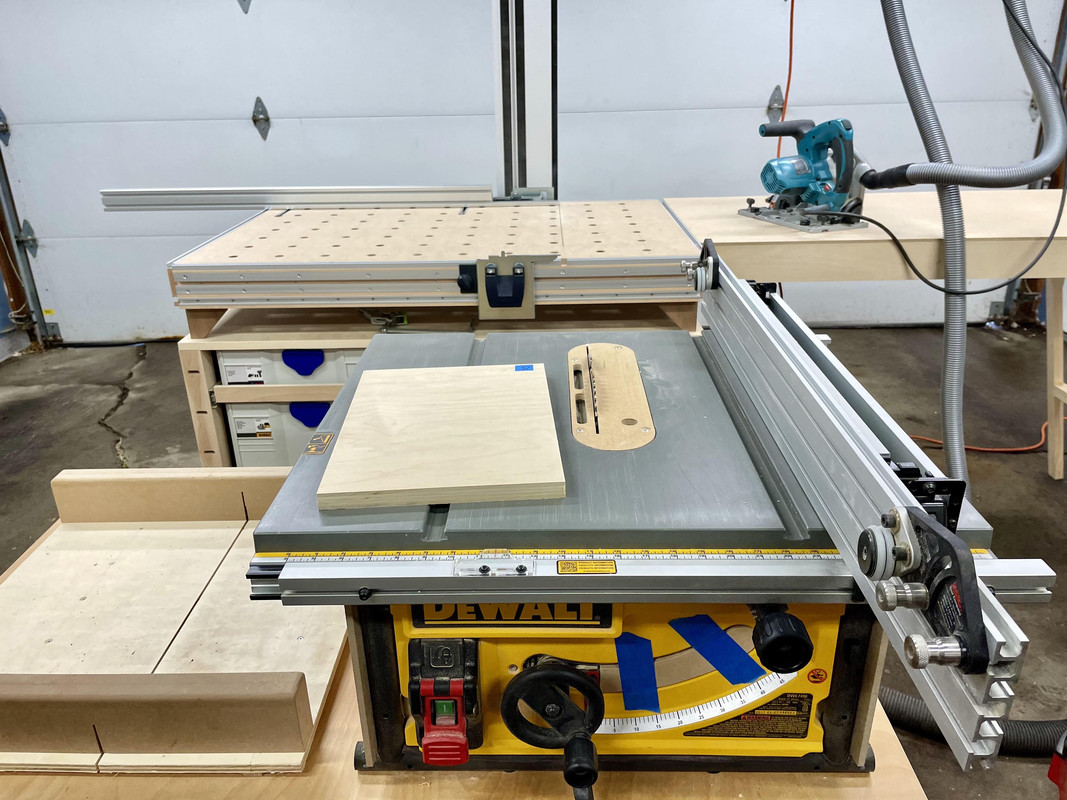
Only the very shortest dimension (7 1/2") I finished up on the table saw:

IMG_1208.jpg


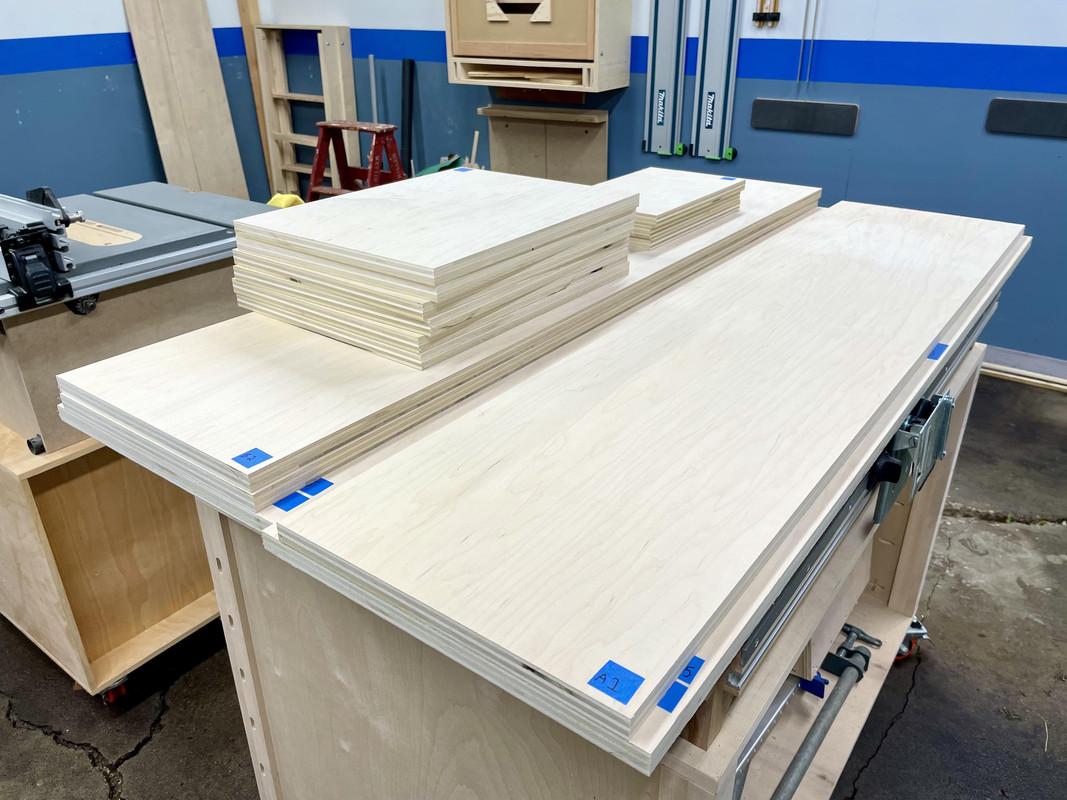
Didn't take me too long and all of these parts were dimensioned to final size almost exclusively with the track saw!

IMG_1210.jpg


Thanks for reading!

:beer:
 
To avoid these ads, REGISTER NOW!
Top Bottom