Private Lugnutz
Well-known member
The subject of refinishing WWII era toolboxes has come up a few times recently. By request, and instead of barraging either of those threads with photos, I am putting this on a separate thread. Maybe others can add their own procedures and materials. I'm always open for new ideas.
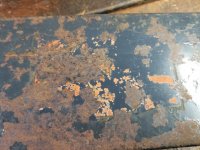
For starters, note that my strong preference as a collector is for preserving tools and toolboxes. To each his own, but I'm not a NOS or perfect restoration guy. Sometimes, though, even a tool or a toolbox is just too far gone in rust to preserve. But that doesn't mean the finished result has to look NOS/restored.
The look I go for when I have to refinish a toolbox is the same look I prefer on a Jeep - that of a weathered, well-used, but well-maintained combat veteran "barn find" - without the rust! (Ratrodders actually go so far as to apply a rust-promoting solution, which they then seal to prevent further oxidation!)
To achieve that aged worn original look, I use some common "painterly" techniques used in faux finishes by house painters and decoupage.
A note on WWII paint color. The formula for the "correct" OD green is a hotly debated topic in the Jeep community. There are a number of specs out there, and in my opinion, they're all "correct" and you can't go wrong, especially when you consider that GI's used gasoline to thin it in the field. 33070 and TM 9 Shade 8 are very close. I actually prefer 34087, which has a khaki faded look to it, where most 33070 or TM 9 Shade 8 vehicles go after 70+ years. But even though I have leftover 34087, I don't bother with a sprayer for a toolbox. And, it's way too flat. Vehicles and equipment were lusterless. Toolboxes were not. The spec was semi-gloss. So I use rattle cans. There is no perfect rattle can color out there for WWII paint, which has a hard to match yellow in it. Which is another reason why I think using techniques is best. All old toolboxes look correct regardless of their original color!
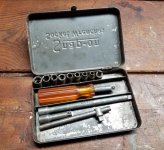
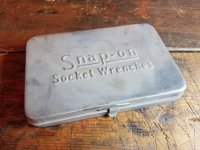
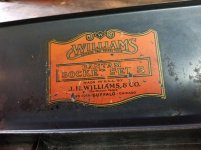
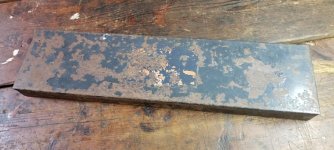
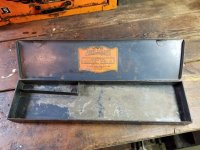
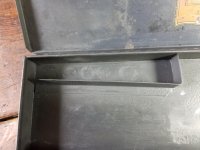
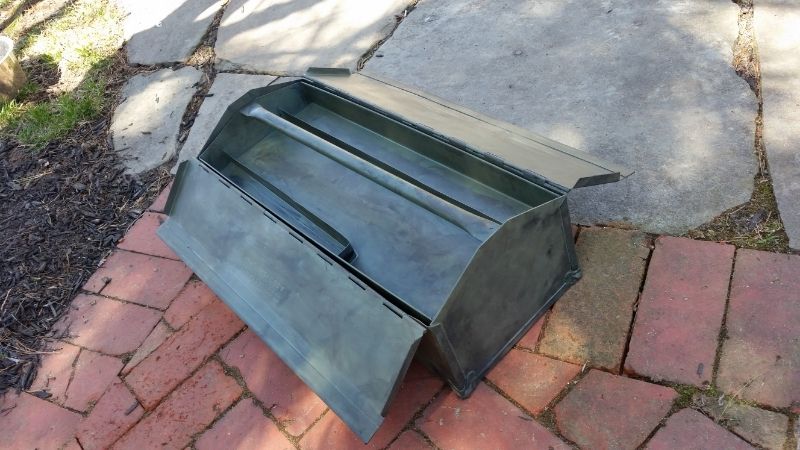
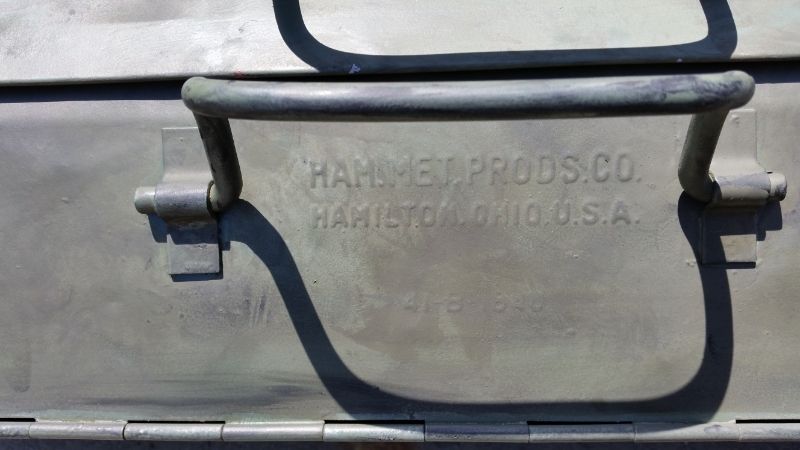
I'll show the boxes first, then discuss materials and process.
For starters, note that my strong preference as a collector is for preserving tools and toolboxes. To each his own, but I'm not a NOS or perfect restoration guy. Sometimes, though, even a tool or a toolbox is just too far gone in rust to preserve. But that doesn't mean the finished result has to look NOS/restored.
The look I go for when I have to refinish a toolbox is the same look I prefer on a Jeep - that of a weathered, well-used, but well-maintained combat veteran "barn find" - without the rust!
(Ratrodders actually go so far as to apply a rust-promoting solution, which they then seal to prevent further oxidation!)To achieve that aged worn original look, I use some common "painterly" techniques used in faux finishes by house painters and decoupage.
A note on WWII paint color. The formula for the "correct" OD green is a hotly debated topic in the Jeep community. There are a number of specs out there, and in my opinion, they're all "correct" and you can't go wrong, especially when you consider that GI's used gasoline to thin it in the field. 33070 and TM 9 Shade 8 are very close. I actually prefer 34087, which has a khaki faded look to it, where most 33070 or TM 9 Shade 8 vehicles go after 70+ years. But even though I have leftover 34087, I don't bother with a sprayer for a toolbox. And, it's way too flat. Vehicles and equipment were lusterless. Toolboxes were not. The spec was semi-gloss. So I use rattle cans. There is no perfect rattle can color out there for WWII paint, which has a hard to match yellow in it. Which is another reason why I think using techniques is best. All old toolboxes look correct regardless of their original color!
I'll show the boxes first, then discuss materials and process.
Last edited:
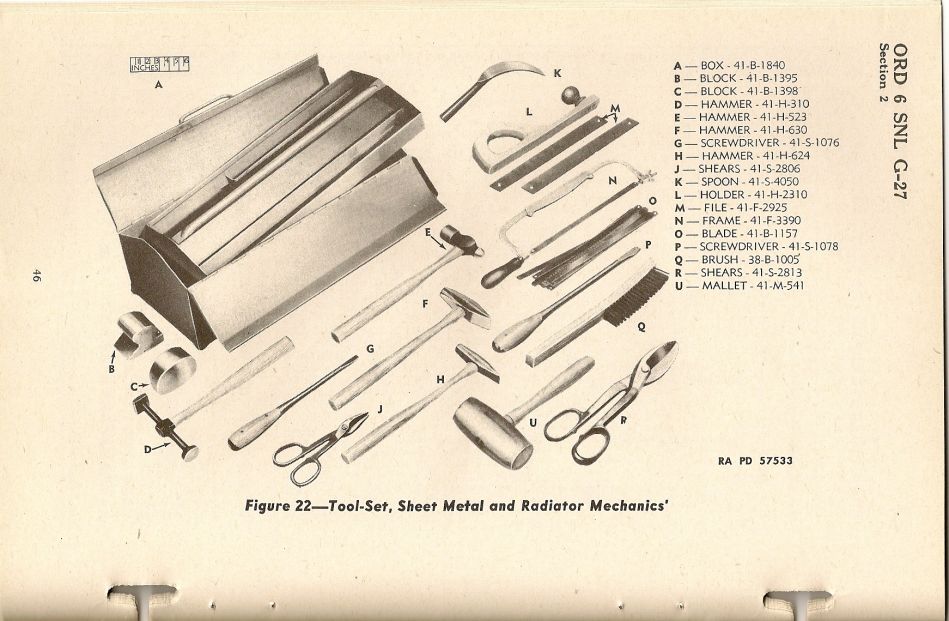
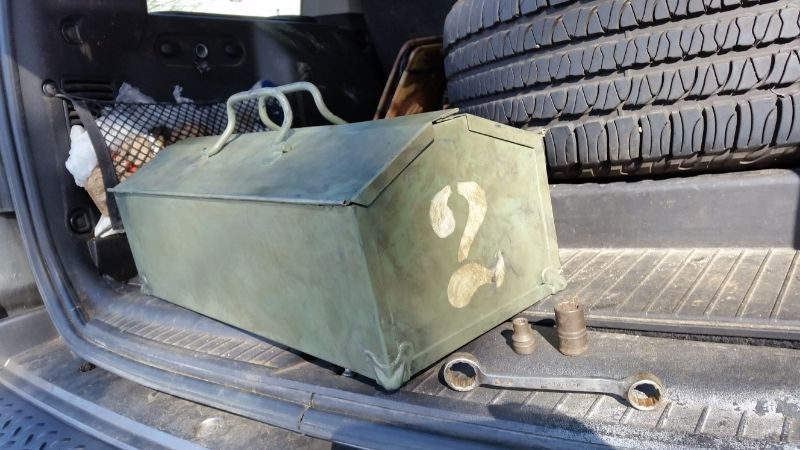
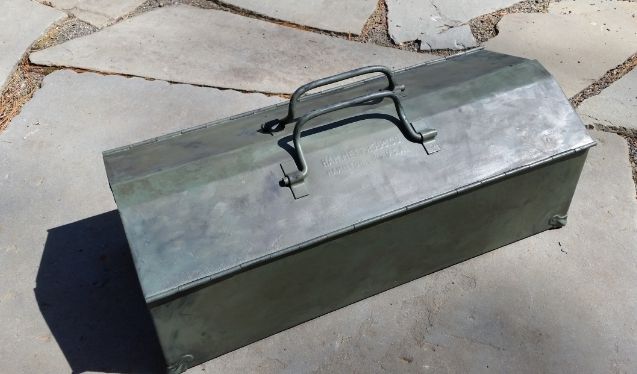
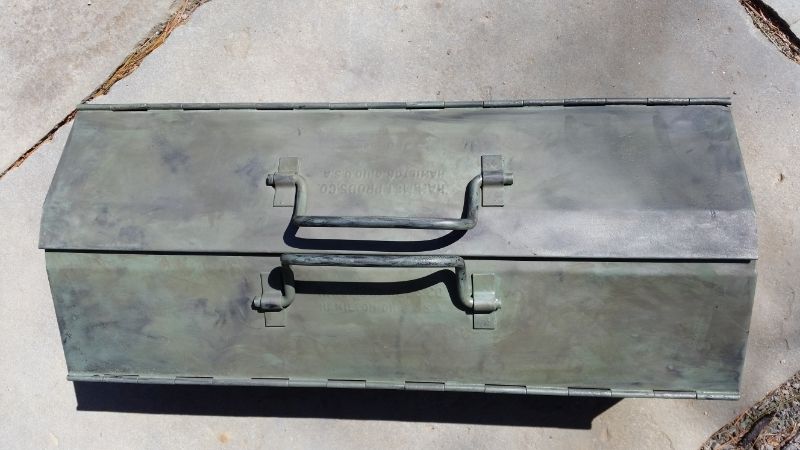
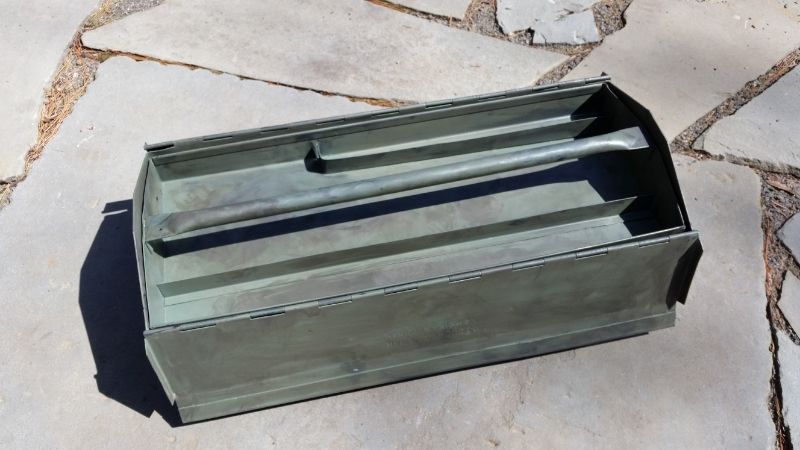
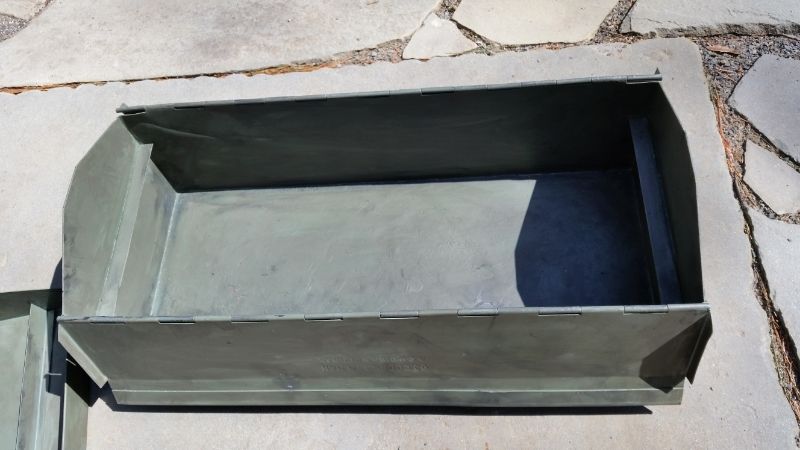
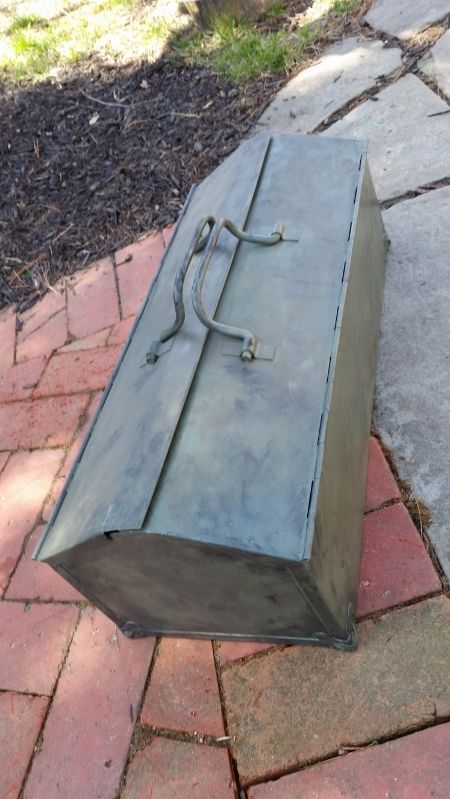
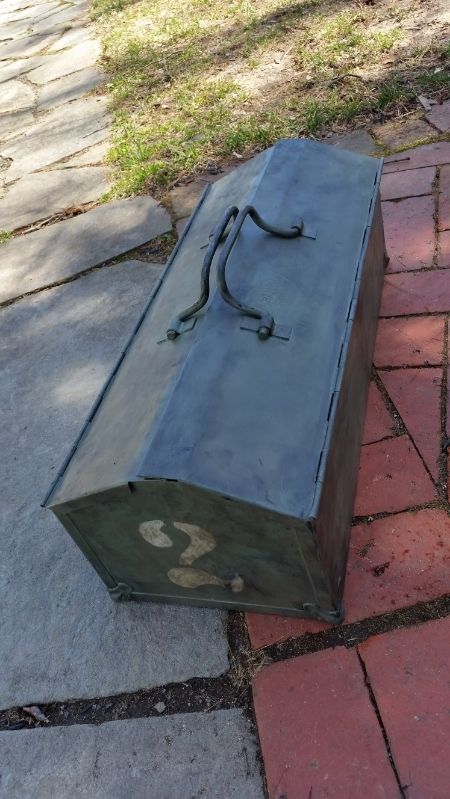


 I've never lined any box except machinists' chests, mainly because they came that way originally. Except for a quirky little Duro-Indestro ignition set I have that came with a cardboard lining showing the outlines of the tools, I've never collected any other carry type toolbox or socket set type of box that came with a lining, and I don't recall seeing any boxes advertised with a lining in catalogs. (I could be wrong about that last part!)