To avoid these ads, REGISTER NOW!

110 Outlets not working

To avoid these ads, REGISTER NOW!

zmaxmotorsports

Well-known member
Joined
Jan 11, 2013
Messages
11,948
Location
South of omaha
Doesn't the fact that I disconnected the load lines confirm the GFCI is bad?

Some gfci's wont reset without power going to them,you could always stick a regular outlet in there as a temp to test the other outlets.
Just remember which wires were line and which ones were load when you put a new gfi back in there.;)
 

Shiftless

Well-known member
Joined
Mar 9, 2014
Messages
14,474
Location
East Bay SFO
When you say that the voltage at the GFCI is zero, are you testing across the black and white wires leading into the device from the source? If so, I wouldn't be so fast to junk the old GFCI. No power there of course means something is wrong between your panel and the receptacle.
 

Shiftless

Well-known member
Joined
Mar 9, 2014
Messages
14,474
Location
East Bay SFO
Some gfci's wont reset without power going to them,you could always stick a regular outlet in there as a temp to test the other outlets.
Just remember which wires were line and which ones were load when you put a new gfi back in there.;)

Or wire nut together the two blacks and then the two whites. If that enables the downstream outlets to work, you definately had a bad GFCI. But first confirm that you have power coming in OK.
And as others have said, flip the breaker off before touching anything inside the box.
And maybe mark your 4 wires...incoming and outgoing...line and load... easy to get confused with all this excitement! :evil:
 
Last edited:

zmaxmotorsports

Well-known member
Joined
Jan 11, 2013
Messages
11,948
Location
South of omaha
Or wire nut together the two blacks and then the two whites. If that enables the downstream outlets to work, you definately had a bad GFCI. But first confirm that you have power coming in OK.
And as others have said, flip the breaker off before touching anything inside the box.
And maybe mark your 4 wires...incoming and outgoing...line and load... easy to get confused with all this excitement! :evil:
:thumbup::thumbup::thumbup:
That would work also,depends on whether he has wire nuts or an extra outlet on hand.
 
OP
D

DocPhilMD

Well-known member
Joined
Dec 28, 2015
Messages
157
Location
Mid Michigan
Ok. Tested with DMM again voltage on line and load side through the inlets is zero on both.

Next step is to bypass the GFCI by wiring together the downstream outlets and the panel correct?

I have a few wire nuts laying around. :)

Also noticed the light on the GFCI is out. Mean anything?
 

Attachments

  • IMG_20151230_073821799.jpg
    IMG_20151230_073821799.jpg
    128 KB · Views: 19
Last edited:

checkthisout

Well-known member
Joined
Sep 5, 2008
Messages
5,232
Ok. Tested with DMM again voltage on line and load side through the inlets is zero on both.

Next step is to bypass the GFCI by wiring together the downstream outlets and the panel correct?

I have a few wire nuts laying around. :)

Also noticed the light on the GFCI is out. Mean anything?

If you don't have voltage on the wires feeding the GFCI, then you have an issue between the GFCI and the breaker, IF the circuit is fed that way.

What else in the house doesn't work when you flip the breaker to that circuit off?

The light being off means the GFCI is in the tripped position or it's not getting incoming power.
 
OP
D

DocPhilMD

Well-known member
Joined
Dec 28, 2015
Messages
157
Location
Mid Michigan
If you don't have voltage on the wires feeding the GFCI, then you have an issue between the GFCI and the breaker, IF the circuit is fed that way.

What else in the house doesn't work when you flip the breaker to that circuit off?

The light being off means the GFCI is in the tripped position or it's not getting incoming power.

There are some light switches I believe. Nothing major. What should I be looking for?
 

machsnell

Well-known member
Joined
Jun 12, 2010
Messages
942
Location
Northern Virginia
I can't believe the voltage cops have corrected your title line with 110 in it yet.

Only thing beyond that is to ask if it's OK to use pvc for your airlines.

Did you get your generator back feed figure out? I hope you didn't lose power on the next storm. Good luck lots of great advice here.

Sent from my SM-G900V using Tapatalk
 
OP
D

DocPhilMD

Well-known member
Joined
Dec 28, 2015
Messages
157
Location
Mid Michigan
I can't believe the voltage cops have corrected your title line with 110 in it yet.

Only thing beyond that is to ask if it's OK to use pvc for your airlines.

Did you get your generator back feed figure out? I hope you didn't lose power on the next storm. Good luck lots of great advice here.

Sent from my SM-G900V using Tapatalk


LOL. 120V. Sorry :)

Yeah so an update on my generator issue as well. I have decided to do the following after I tried pulling out the welder plug wiring last night.

1)Pull and cap the welder plug wiring and leave in place (already done). This wiring will be left if I decide to use that plug in the future. I will just need to move some breakers and make some tandem breakers.

2)Move the upper right breakers into the spot where the welder plug is thus freeing up the upper right spot

3)Install interlock kit and 30 amp breaker in the upper right

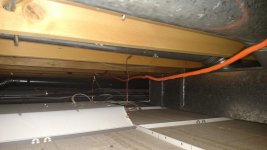
4)Run the 10/3 NMb with ground wire from the breaker to the back yard. Logistically, this is going to be very easy as the basement has a drop ceiling, panel is in the basement and I have a walkout basement. Total distance is about 20 feet all through drop ceiling so its very accessible.

5)Come out of the vinyl siding and run some plastic conduit down to the PB30 box. So the generator will need to be taken down the hill and into the backyard but this only will happen 1-2 x per year max if the power goes out so not an issue.

So, I basically have this issue figured out. I am waiting on my GFCI tester so I can get that issue solved here. So far this site has taught me a **** load of information and saved me about 400 bucks! Thanks guys!!!!!!!!

:beer::beer::beer::beer::beer::beer:
 

checkthisout

Well-known member
Joined
Sep 5, 2008
Messages
5,232
Isn't the inside of the conduit dry?

So would it be acceptable here?

Silicone over geocell?

I like geocel BC it's clear

You need UF-B or what I would I just call Gray Romex....the underground rated stuff with the gray jacket.

You can use whatever sealer you want so long as it's rated to bond with whatever materials it will be sealing.
 
OP
D

DocPhilMD

Well-known member
Joined
Dec 28, 2015
Messages
157
Location
Mid Michigan
You need UF-B or what I would I just call Gray Romex....the underground rated stuff with the gray jacket.

You can use whatever sealer you want so long as it's rated to bond with whatever materials it will be sealing.

Hold up a second. If the wire goes from the inside of the house directly into the PB30 box or through conduit into the box why would I need outdoor wire? It is not exposed to the elements at all. It is totally sealed and dry
 

checkthisout

Well-known member
Joined
Sep 5, 2008
Messages
5,232
Hold up a second. If the wire goes from the inside of the house directly into the PB30 box or through conduit into the box why would I need outdoor wire? It is not exposed to the elements at all. It is totally sealed and dry

It would probably be fine.

Think of it this way.

Code looks at wire in conduit the same way as it would look at the wire without conduit. If the conduit goes outside, the wire in the conduit needs to be rated for outdoor exposure.

FYI, conduit fills with water from condensation. It doesn't matter if water hits it or not.
 
Last edited:

checkthisout

Well-known member
Joined
Sep 5, 2008
Messages
5,232
You have typical newbie questions and approaches to things. Electrical and lot of trades are funny that way.

They seem easy (just drill holes and runs wires right?) but the devil is in the details and you only learn these minute details with years in the trade or an extremely strong penchant with organization and planning with a code book in hand.

Many many years ago (I was in 7th grade, about 13 years old at the time), my dad and I ran a feed out to his new hot tub. The nm-b 10-3 wire (white jacket romex) left the breaker panel in the garage, went outside in conduit about 10 feet then went under the crawlspace, over to the hot tub and then back out in conduit under the deck and out to the tub.

This was fine and lasted a long time. When they did a remodel 15 years later we went to remove that cable and the jacket where it ran in conduit under the deck was deteriorated in spots I.E. swollen and brittle with mildew growing on it.

The portion at the breaker panel which was protected by the eve was in much better shape but still had mildew growing in the wire jacket. All the conduit was thoroughly glued and sealed at install. I know because I did it myself.

But yeah lesson learned.
 

Zeke

Well-known member
Joined
Aug 13, 2009
Messages
17,176
Location
Long Beach CA, the sewer by the sea.
Ok. Tested with DMM again voltage on line and load side through the inlets is zero on both.

Next step is to bypass the GFCI by wiring together the downstream outlets and the panel correct?

I have a few wire nuts laying around. :)

Also noticed the light on the GFCI is out. Mean anything?

You are mistaken if you think the GFCI receptacle has one set of contact openings that are on the line side and the other on the load side. The contact openings on a duplex GRCI receptacle are both on the line side. Only those that are connected to the 'load' lugs by wired connections are on the load side and won't usually be in the same box. It is possible though, if you have a 2 gang box with 2 duplex receptacles. The second non GFCI could be on the load side.

That is not your situation from what I've read so far. What you have to do is shut off the power, all the power because you don't seem to have power to your GFCI. You can turn back on all known circuits but keep checking the GFCI just in case. Knowing that the GFCI circuit coming from the panel of other source, like an upstream outlet (which may be your problem).

Finally, i you find current between any black or colored wire in the GFCI box either to white or ground, label that. Then come back an tell us what's going on at that point.

Never trust any wire. You may find current on any wire and potential probably exists within your work area. That's one way of saying you could get shocked or electrocuted by the strangest of circumstances. So using your meter w/o touching ANY wire is the safest way to proceed.

Forget the plug in tester for now. It will show you a good outlet all the while that the connections for the next outlet are loose.
 

LS6 Tommy

Well-known member
Joined
Dec 27, 2013
Messages
26,162
Location
Northern NJ
A non contact voltage indicator is not for troubleshooting. It will show voltage even if there is no neutral, which sounds like it may be your problem. You need a plug in receptacle tester or a reasonable meter.

Tommy
 
To avoid these ads, REGISTER NOW!
OP
D

DocPhilMD

Well-known member
Joined
Dec 28, 2015
Messages
157
Location
Mid Michigan
You are mistaken if you think the GFCI receptacle has one set of contact openings that are on the line side and the other on the load side. The contact openings on a duplex GRCI receptacle are both on the line side. Only those that are connected to the 'load' lugs by wired connections are on the load side and won't usually be in the same box. It is possible though, if you have a 2 gang box with 2 duplex receptacles. The second non GFCI could be on the load side.

That is not your situation from what I've read so far. What you have to do is shut off the power, all the power because you don't seem to have power to your GFCI. You can turn back on all known circuits but keep checking the GFCI just in case. Knowing that the GFCI circuit coming from the panel of other source, like an upstream outlet (which may be your problem).

Finally, i you find current between any black or colored wire in the GFCI box either to white or ground, label that. Then come back an tell us what's going on at that point.

Never trust any wire. You may find current on any wire and potential probably exists within your work area. That's one way of saying you could get shocked or electrocuted by the strangest of circumstances. So using your meter w/o touching ANY wire is the safest way to proceed.

Forget the plug in tester for now. It will show you a good outlet all the while that the connections for the next outlet are loose.


Okay I am following to an extent.

Are you suggesting that I check the wiring on each of the 4 outlets with the power off?

Then, one by one, secure them, flip back on the power and check the GFCI again?

What about checking all the outlets with the plug in tester?
 
OP
D

DocPhilMD

Well-known member
Joined
Dec 28, 2015
Messages
157
Location
Mid Michigan
You have typical newbie questions and approaches to things. Electrical and lot of trades are funny that way.

They seem easy (just drill holes and runs wires right?) but the devil is in the details and you only learn these minute details with years in the trade or an extremely strong penchant with organization and planning with a code book in hand.

Many many years ago (I was in 7th grade, about 13 years old at the time), my dad and I ran a feed out to his new hot tub. The nm-b 10-3 wire (white jacket romex) left the breaker panel in the garage, went outside in conduit about 10 feet then went under the crawlspace, over to the hot tub and then back out in conduit under the deck and out to the tub.

This was fine and lasted a long time. When they did a remodel 15 years later we went to remove that cable and the jacket where it ran in conduit under the deck was deteriorated in spots I.E. swollen and brittle with mildew growing on it.

The portion at the breaker panel which was protected by the eve was in much better shape but still had mildew growing in the wire jacket. All the conduit was thoroughly glued and sealed at install. I know because I did it myself.

But yeah lesson learned.


I understand and fully admit that I am a newbie. I already have 10/3 NMb with ground and the wire will be totally indoors except where it exits the vinyl siding and goes into the PB 30 box. My wife won't even let me run a length of conduit (says it is ugly) so I have to fish the wire down from the drop ceiling (inside) and out into the box. So, at maximum, 3 inches of wire will be "outside". I can't possibly imagine that outdoor wire is needed for this BICBW

What do some others say?
 

Pwrgeek

Well-known member
Joined
Oct 18, 2015
Messages
288
Location
Texas USA
I understand and fully admit that I am a newbie. I already have 10/3 NMb with ground and the wire will be totally indoors except where it exits the vinyl siding and goes into the PB 30 box. My wife won't even let me run a length of conduit (says it is ugly) so I have to fish the wire down from the drop ceiling (inside) and out into the box. So, at maximum, 3 inches of wire will be "outside". I can't possibly imagine that outdoor wire is needed for this BICBW


What do some others say?


Unless it goes directly through the siding into the back of the PB30 it needs to be an outdoor rated wire. The jacket/insulation on NM-B is not UV resistant and will be degraded rather quickly if it is exposed to sunlight. What you can do since you already have the NM-B is get a short piece of UF-B and mount a junction box on the inside of the wall near where you are making the penetration to go outside.


Sent from my iPhone using Tapatalk
 
Last edited:

Zeke

Well-known member
Joined
Aug 13, 2009
Messages
17,176
Location
Long Beach CA, the sewer by the sea.
I understand and fully admit that I am a newbie. I already have 10/3 NMb with ground and the wire will be totally indoors except where it exits the vinyl siding and goes into the PB 30 box. My wife won't even let me run a length of conduit (says it is ugly) so I have to fish the wire down from the drop ceiling (inside) and out into the box. So, at maximum, 3 inches of wire will be "outside". I can't possibly imagine that outdoor wire is needed for this BICBW

What do some others say?

Code is code. If you want to expose 3" of wire you could be asking for trouble with an insurance inspector or someone from your AHJ from your city or county in the event you decide to do other work under a permit.

AFA your question on testing, I don't quite follow you even though I'm the one that gave you a procedure and a caution. Somewhere we are missing some communication.

You can test live and w/o sophisticated equipment there are not many alternatives. If I were doing this I'd do my best to locate the breaker that controls this circuit. Yes, maybe I'd use the plug in tester to find outlets on that circuit with all other general circuits off. You might be able to trust that some of your dedicated circuits are not involved, but realize that someone may have tapped into anything like even a washer circuit, etc. You never know. That's the thesis here, you never know.

So, if I surmise what we have here so far, you have a faulty connection somewhere before the GFCI in question. That can be easy to find or not so easy. The way to proceed is to try and isolate the circuit believed to power that device. Working downstream from the panel you would remove each device that is in that circuit. If you are lucky one of the devices has lost a connection.

As a complete mickey mouse test you could run an extension cord from a known good source over to the box where the GFCI is and power it up. If all the 4 outlets (receptacles in electrical parlance) work then you know you don't have a ground fault out that way.

Just be super careful because I sense you really are a neophyte in electrical matters. I admire your gumption in tackling this. We were all beginners at some point. And as a disclaimer, I am not a licensed electrician. I do a lot of electrical work and I study the codes constantly. But there are far more qualified persons on this BBS than me.
 

zmaxmotorsports

Well-known member
Joined
Jan 11, 2013
Messages
11,948
Location
South of omaha
Okay I am following to an extent.

Are you suggesting that I check the wiring on each of the 4 outlets with the power off?

Then, one by one, secure them, flip back on the power and check the GFCI again?

What about checking all the outlets with the plug in tester?

If they trip the breaker after bypassing the gfi Id start checking wiring inside each box,Starting with the closest one to the gfi location.
If the breaker doesnt trip after bypassing the gfi Id just stick the plug tester into each outlet and see what it tells you.
If everything checks out put a new gfi in and move on to your next project.;)
 

checkthisout

Well-known member
Joined
Sep 5, 2008
Messages
5,232
I understand and fully admit that I am a newbie. I already have 10/3 NMb with ground and the wire will be totally indoors except where it exits the vinyl siding and goes into the PB 30 box. My wife won't even let me run a length of conduit (says it is ugly) so I have to fish the wire down from the drop ceiling (inside) and out into the box. So, at maximum, 3 inches of wire will be "outside". I can't possibly imagine that outdoor wire is needed for this BICBW

What do some others say?

Think of it this way. As long as the INDOOR wiring terminates in a box affixed just outside of where it exits the structure, you're fine.

Consider how exterior lights are mounted. We don't use outdoor rated cabling to feed outside lights on structures but once it's in conduit and running on the outside of the structure, outdoor rated wiring is required.

As I said, it will probably be fine for many many many years, were just informing you of the nuances in the code and letting you know that it may create future permitting issues if you decide to go that direction.
 

checkthisout

Well-known member
Joined
Sep 5, 2008
Messages
5,232
Okay I am following to an extent.

Are you suggesting that I check the wiring on each of the 4 outlets with the power off?

Then, one by one, secure them, flip back on the power and check the GFCI again?

What about checking all the outlets with the plug in tester?

So lets recap here:

1) You don't have power at the GFCI outlet correct?

2) You know that the GFCI outlet is in the same circuit as the outdoor outlets and BEFORE them in the circuit correct?

Based on these two facts, just ignore the outside stuff. Pretend it doesn't exist.

You need to figure out why you aren't getting power the GFCI.


So, do this:

Figure what's in the circuit before GFCI. Make and draw a crude map of your house and the circuit and work your way backwards towards the breaker panel. This simply involves removing each item in the circuit and checking the wires for voltage. Check between the hot and neutral and the hot and ground in each device.

Report back.
 
OP
D

DocPhilMD

Well-known member
Joined
Dec 28, 2015
Messages
157
Location
Mid Michigan
So lets recap here:

1) You don't have power at the GFCI outlet correct?

2) You know that the GFCI outlet is in the same circuit as the outdoor outlets and BEFORE them in the circuit correct?

Based on these two facts, just ignore the outside stuff. Pretend it doesn't exist.

You need to figure out why you aren't getting power the GFCI.


So, do this:

Figure what's in the circuit before GFCI. Make and draw a crude map of your house and the circuit and work your way backwards towards the breaker panel. This simply involves removing each item in the circuit and checking the wires for voltage. Check between the hot and neutral and the hot and ground in each device.

Report back.


OK. I think I am getting this thread a bit mixed up and ahead of myself. I really do appreciate all the advice and everyone has been super helpful. I have also learned alot in the past few days.

For the generator issue, I think I have a good solution. I am going to fish the wire down the wall from the drop ceiling and attach the PB30 directly to the vinyl siding, caulk it and run through a stub of conduit inside the wall probably. Hopefully this solves the wire issue.

As for the GFCI, I am going to get the tester today. I will make a crude map with the testing results drawn on it and report back. We can go from there.

Thanks again.
 

checkthisout

Well-known member
Joined
Sep 5, 2008
Messages
5,232
OK. I think I am getting this thread a bit mixed up and ahead of myself. I really do appreciate all the advice and everyone has been super helpful. I have also learned alot in the past few days.

For the generator issue, I think I have a good solution. I am going to fish the wire down the wall from the drop ceiling and attach the PB30 directly to the vinyl siding, caulk it and run through a stub of conduit inside the wall probably. Hopefully this solves the wire issue.

As for the GFCI, I am going to get the tester today. I will make a crude map with the testing results drawn on it and report back. We can go from there.

Thanks again.

I think fishing the wire is an excellent solution. That means no conduit cluttering the outside of the house and no more expensive wire to purchase.

When the wire is fished it doesn't have to be retained by staples where it's inaccessible but will need some of retention at the generator inlet box I.E. a cable clamp. You'll drill your hole, fish your wire out through the hole, put it in the box through whatever type of clamp then install the box on the wall shoving the wire back in the hole in the process.
 
OP
D

DocPhilMD

Well-known member
Joined
Dec 28, 2015
Messages
157
Location
Mid Michigan
Finished the outlet thanks to all the great advice here! Thanks guys!!!

Got a generator on order to test out.

Will report back on GFCI issue tomorrow.
 

Attachments

  • IMG_20151231_180000574.jpg
    IMG_20151231_180000574.jpg
    154.8 KB · Views: 78
  • IMG_20151231_180006058.jpg
    IMG_20151231_180006058.jpg
    145.5 KB · Views: 66
  • IMG_20151231_192600408.jpg
    IMG_20151231_192600408.jpg
    145.1 KB · Views: 60
  • IMG_20151231_193445007.jpg
    IMG_20151231_193445007.jpg
    135.6 KB · Views: 64
  • IMG_20151231_223127664.jpg
    IMG_20151231_223127664.jpg
    135.7 KB · Views: 56

zmaxmotorsports

Well-known member
Joined
Jan 11, 2013
Messages
11,948
Location
South of omaha
It would probably be fine.

Think of it this way.

Code looks at wire in conduit the same way as it would look at the wire without conduit. If the conduit goes outside, the wire in the conduit needs to be rated for outdoor exposure.

FYI, conduit fills with water from condensation. It doesn't matter if water hits it or not.

How far is it from where the wire exits the house and box its going into?
 

zmaxmotorsports

Well-known member
Joined
Jan 11, 2013
Messages
11,948
Location
South of omaha
I understand and fully admit that I am a newbie. I already have 10/3 NMb with ground and the wire will be totally indoors except where it exits the vinyl siding and goes into the PB 30 box. My wife won't even let me run a length of conduit (says it is ugly) so I have to fish the wire down from the drop ceiling (inside) and out into the box. So, at maximum, 3 inches of wire will be "outside". I can't possibly imagine that outdoor wire is needed for this BICBW

What do some others say?

With 3" of wire I wouldnt worry too much,no differant than wire ran to an ac disconnect in my book.
You are talking about the 3" of wire going directly from the wall into the back of the box right?
Dont run the wire exposed with no physical protection.
 
Last edited:

zmaxmotorsports

Well-known member
Joined
Jan 11, 2013
Messages
11,948
Location
South of omaha
So lets recap here:

1) You don't have power at the GFCI outlet correct?

2) You know that the GFCI outlet is in the same circuit as the outdoor outlets and BEFORE them in the circuit correct?

Based on these two facts, just ignore the outside stuff. Pretend it doesn't exist.

You need to figure out why you aren't getting power the GFCI.


So, do this:

Figure what's in the circuit before GFCI. Make and draw a crude map of your house and the circuit and work your way backwards towards the breaker panel. This simply involves removing each item in the circuit and checking the wires for voltage. Check between the hot and neutral and the hot and ground in each device.

Report back.

:thumbup::thumbup::thumbup::thumbup::thumbup::thumbup:
 

NJ20

Active member
Joined
Dec 20, 2015
Messages
30
With 3" of wire I wouldnt worry too much,no differant than wire ran to an ac disconnect in my book.
You are talking about the 3" of wire going directly from the wall into the back of the box right?
Dont run the wire exposed with no physical protection.

+1 on this. As long as the NM cable is going directly into the receptacle box that bolts onto the house your fine. That box is approved for outdoor use.
 
OP
D

DocPhilMD

Well-known member
Joined
Dec 28, 2015
Messages
157
Location
Mid Michigan
+1 on this. As long as the NM cable is going directly into the receptacle box that bolts onto the house your fine. That box is approved for outdoor use.

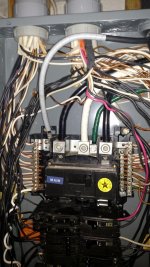
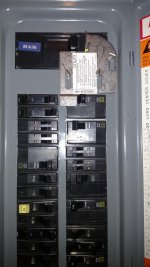
So I followed the advice of another member here and installed the new wiring how the old ones were (ground and neutral together).

I installed the red/black hots on the right side of the panel into the 30 amp breaker and the ground/neutral to the opposite side bar. Is that ok? Does it matter which side it is on? I forgot to ask him about this

I used the opposite side because there was an open screw from deleting the 60 amp breaker for the welder plug
 
Last edited:

checkthisout

Well-known member
Joined
Sep 5, 2008
Messages
5,232
Wylies, is it ok for all those wires to be stuffed into those conduits like that? I know the OP didn't do that but it looks a previous owner did the panel himself.
 
To avoid these ads, REGISTER NOW!
Top Bottom