
You are using an out of date browser. It may not display this or other websites correctly.
You should upgrade or use an alternative browser.
You should upgrade or use an alternative browser.
110 Outlets not working
- Thread starter DocPhilMD
- Start date
wyliesdiesels
Well-known member
Wylies, is it ok for all those wires to be stuffed into those conduits like that? I know the OP didn't do that but it looks a previous owner did the panel himself.
It depends on how long the conduit is. Under 24" its fine. NM-b wire is only subject to derating because of number of CCC when bundled and touching for a continous length of more than 24".
The outside hookup looks good,its the spaghetti inside the panel and coming out the top that scares me.
I realize most of it is pre existing of course.
The thought crossed my mind to bring that up but seeing that the OP is confused about his 2 threads, i didnt want to open another can of worms.

Last edited:
It depends on how long the conduit is. Under 24" its fine. NM-b wire is only subject to detating when bundled and touching for a continous length of more than 24".
The thought crossed my mind to bring that up but seeing that the OP is confused about his 2 threads, i didnt want to open another can of worms.
I'm glad you didn't! Those wires live there now anyways. That is their home haha. If my generator works, correctly when I plug it in, I'm done!!!!
See next post for detail about GFCI.
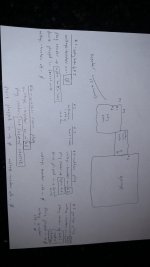
Okay boys. I finally got around to making a diagram. I find a couple things interesting.
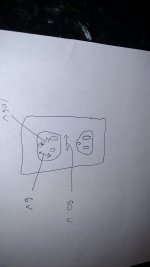
1)voltage at every other outlet is 60 other than the GFCI when the breaker is on.
2)two outlets (entry bath and outdoor) show "open hot" when tester is plugged in and the other two show "hot/neutral reverse".
Okay where do I go from here?
1)voltage at every other outlet is 60 other than the GFCI when the breaker is on.
2)two outlets (entry bath and outdoor) show "open hot" when tester is plugged in and the other two show "hot/neutral reverse".
Okay where do I go from here?
Attachments
Dustball
Well-known member
You're getting 60 volts with one meter lead on the hot and the other meter lead on the neutral?
Dustball
Well-known member
You have an open neutral somewhere.
Dustball
Well-known member
That's what I would do. Are all of those outlets in your sketch on one breaker?
That's what I would do. Are all of those outlets in your sketch on one breaker?
Yes, I confirmed that by checking voltage again with the DMM and they all went to zero with the breaker off.
Just for my own knowledge, why would the GFCI flip if there was an open neutral?
Just because it senses a difference in voltage in the circuit?
wyliesdiesels
Well-known member
When I get service calls like this i start pulling outlets out.
Ive had service calls for a lot of track homes where the electrician cheaped out and used the "backstabbed" push-in spring terminals.
One customer, who had half a dozen dead outlets, said aw shoot thats all it was after i was only there for 10mins and discovered a bad "backstabbed" connection.
Ive had service calls for a lot of track homes where the electrician cheaped out and used the "backstabbed" push-in spring terminals.
One customer, who had half a dozen dead outlets, said aw shoot thats all it was after i was only there for 10mins and discovered a bad "backstabbed" connection.
When I get service calls like this i start pulling outlets out.
Ive had service calls for a lot of track homes where the electrician cheaped out and used the "backstabbed" push-in spring terminals.
One customer, who had half a dozen dead outlets, said aw shoot thats all it was after i was only there for 10mins and discovered a bad "backstabbed" connection.
I'm gonna pull all of them just to be safe and make sure they aren't backstabbed. I did read that article that someone provided and it was very helpful. I will be sure to change them if they are backstabbed.
Thank you!!!!!!!
Once again, GJ comes through. I will update this thread with my progress. I'm gonna pull all the outlets tomorrow and update.
And yes I will be sure to flip the breaker off first

checkthisout
Well-known member
- Joined
- Sep 5, 2008
- Messages
- 5,232
Yes, I confirmed that by checking voltage again with the DMM and they all went to zero with the breaker off.
Just for my own knowledge, why would the GFCI flip if there was an open neutral?
Just because it senses a difference in voltage in the circuit?
No, it's measuring the difference between the current "leaving" the outlet through the hot terminal VS what's "returning" on the neutral.
If the difference exceeds a certain amount, it means the current is flowing into the ground somewhere and opens the circuit.
checkthisout
Well-known member
- Joined
- Sep 5, 2008
- Messages
- 5,232
Also, can you guys explain two things for me
1)does the GFCI flip because it senses a difference in current from the open neutral?
2)why is the voltage 60, 106, and 6 between the different leads?
I would like to understand why things are the way they are
Scratching my head on this. What readings do you get when you check a known good outlet somewhere else in the house? Pardon my question if you already made a post about it.
FYI, before using any electrical test equipment whether it's on a car or house or whatever, always check the test equipment first on a known good circuit to make sure any test lights are working and that meters are reading properly.
Dustball
Well-known member
Wikipedia says it better than I can-
A GFCI works by measuring the current leaving one side of a power source (the so-called "live" or "hot wire"), and comparing it to current returning on the other (the "neutral" side). If they are not equal, then some of the current must be leaking in an unwanted way, and the GFCI shuts the power off.
Since I am comfortable with electricity, what I would do is-
Turn the breaker off.
Pull the GFCI out and make sure the wires aren't touching anything.
Turn the breaker on.
Put my meter leads directly on the exposed hot and neutral wires on the line side and read the voltage coming from the panel.
If the volts is 120-ish, the wiring from the panel is fine and the GFCI is bad. If the volts is still 60, there's an open neutral between the panel and the GFCI. This is assuming the GFCI is the first device from the panel.
A GFCI works by measuring the current leaving one side of a power source (the so-called "live" or "hot wire"), and comparing it to current returning on the other (the "neutral" side). If they are not equal, then some of the current must be leaking in an unwanted way, and the GFCI shuts the power off.
Since I am comfortable with electricity, what I would do is-
Turn the breaker off.
Pull the GFCI out and make sure the wires aren't touching anything.
Turn the breaker on.
Put my meter leads directly on the exposed hot and neutral wires on the line side and read the voltage coming from the panel.
If the volts is 120-ish, the wiring from the panel is fine and the GFCI is bad. If the volts is still 60, there's an open neutral between the panel and the GFCI. This is assuming the GFCI is the first device from the panel.
wyliesdiesels
Well-known member
No, it's measuring the difference between the current "leaving" the outlet through the hot terminal VS what's "returning" on the neutral.
If the difference exceeds a certain amount, it means the current is flowing into the ground somewhere and opens the circuit.
For GFCI that protect life, the limit is 5ma.
And the leak wouldnt be flowing into the ground. The leak is flowing on an alternate pathway back to the panel and ultimately the source(transformer). It could be anything from an EGC/ground wire, metal conduit, metal siding, metal plumbing, etc.
The ground, despite popular misconception, is a poor conductor of electricity.
Scratching my head on this. What readings do you get when you check a known good outlet somewhere else in the house? Pardon my question if you already made a post about it.
FYI, before using any electrical test equipment whether it's on a car or house or whatever, always check the test equipment first on a known good circuit to make sure any test lights are working and that meters are reading properly.
On a good outlet the voltage between hot and ground and between hot and neutral is 120
checkthisout
Well-known member
- Joined
- Sep 5, 2008
- Messages
- 5,232
I'm gonna pull all of them just to be safe and make sure they aren't backstabbed. I did read that article that someone provided and it was very helpful. I will be sure to change them if they are backstabbed.
Thank you!!!!!!!
Once again, GJ comes through. I will update this thread with my progress. I'm gonna pull all the outlets tomorrow and update.
And yes I will be sure to flip the breaker off first
You don't need to pull all the outlets, you need to start upstream at the first device in the circuit I.E. a switch, an outlet or whatever and work your way down.
No need to tear all that apart when it could be a bad connection at the breaker panel or a chaffed or chewed wire between the panel and first device.
Is this circuit fed by the same breaker panel shown in your generator switch install?
Wikipedia says it better than I can-
Turn the breaker off.
Pull the GFCI out and make sure the wires aren't touching anything.
Turn the breaker on.
Put my meter leads directly on the exposed hot and neutral wires on the line side and read the voltage coming from the panel.
If the volts is 120-ish, the wiring from the panel is fine and the GFCI is bad. If the volts is still 60, there's an open neutral between the panel and the GFCI. This is assuming the GFCI is the first device from the panel.
No, the voltage at the GFCI is zero (probably because it is flipped). But I see your point. If you pull the GFCI and the voltage on the lines is 120 then the wiring from the breaker to the GFCI is good.
I'm not sure if the GFCI is the first in the circuit. I don't know how I would know that.
checkthisout
Well-known member
- Joined
- Sep 5, 2008
- Messages
- 5,232
For GFCI that protect life, the limit is 5ma.
And the leak wouldnt be flowing into the ground. The leak is flowing on an alternate pathway back to the panel and ultimately the source(transformer). It could be anything from an EGC/ground wire, metal conduit, metal siding, metal plumbing, etc.
The ground, despite popular misconception, is a poor conductor of electricity.
Agreed I just didn't want to get that "technical.
You don't need to pull all the outlets, you need to start upstream at the first device in the circuit I.E. a switch, an outlet or whatever and work your way down.
No need to tear all that apart when it could be a bad connection at the breaker panel or a chaffed or chewed wire between the panel and first device.
Is this circuit fed by the same breaker panel shown in your generator switch install?
Yes, it is. I actually had to move this breaker during the install so I know the connections of the hots are good.
I didn't check the ground or neutral but those would have to be good for the switches to work, no?
checkthisout
Well-known member
- Joined
- Sep 5, 2008
- Messages
- 5,232
No, the voltage at the GFCI is zero (probably because it is flipped). But I see your point. If you pull the GFCI and the voltage on the lines is 120 then the wiring from the breaker to the GFCI is good.
I'm not sure if the GFCI is the first in the circuit. I don't know how I would know that.
I thought that you had already pulled the GFCI out and measured the voltage at the wires coming into the box?
I must have misread an earlier post.
Dustball
Well-known member
No, the voltage at the GFCI is zero (probably because it is flipped). But I see your point. If you pull the GFCI and the voltage on the lines is 120 then the wiring from the breaker to the GFCI is good.
I'm not sure if the GFCI is the first in the circuit. I don't know how I would know that.
The voltage at the screw terminals/bare wire on the back of the GFCI is zero or the voltage reading through the front of the GFCI through the prong openings is zero? Checking voltage of the wires at back of the GFCI eliminates any internal issues of the GFCI.
checkthisout
Well-known member
- Joined
- Sep 5, 2008
- Messages
- 5,232
Yes, it is. I actually had to move this breaker during the install so I know the connections of the hots are good.
I didn't check the ground or neutral but those would have to be good for the switches to work, no?
Yes. So there is stuff in the circuit before the GFCI what works or doesn't work when you turn the breaker on and off?
Dustball
Well-known member
Yes, it is. I actually had to move this breaker during the install so I know the connections of the hots are good.
I didn't check the ground or neutral but those would have to be good for the switches to work, no?
Switches don't usually go through a GFCI. You probably have one cable leaving the panel for the lights and another cable leaving the panel for the GFCI/outlets.
Yes. So there is stuff in the circuit before the GFCI what works or doesn't work when you turn the breaker on and off?
Ok, so I haven't checked the voltage with the DMM on the wires connected to the GFCI. I was using that dumb non contact tester that I have sinced learned is junk (haha). So I haven't done that yet.
The voltage through the outlet at the GFCI is zero. I don't know what the voltage in the wires is.
Everything that is connected to the circuit is in the diagram. 4 plugs and 2 switches. I just don't know what comes first.
By the way, the switches work even when the outlets don't if the breaker is on. Mean anything?
wyliesdiesels
Well-known member
Ok i think i wasnt tracking closely rnough either.
First step is determining if u have 120v at the feed to the GFCI(should be wire on line side of GFCI).
If u do, then suspect the GFCI IF u have no output on the GFCI.
If instead u have no voltage or lowered voltage on the feed to the GFCI, then u need to check whatever is upstream of the GFCI. Do u have any other dead outlets inside the house or garage?
First step is determining if u have 120v at the feed to the GFCI(should be wire on line side of GFCI).
If u do, then suspect the GFCI IF u have no output on the GFCI.
If instead u have no voltage or lowered voltage on the feed to the GFCI, then u need to check whatever is upstream of the GFCI. Do u have any other dead outlets inside the house or garage?
Ok i think i wasnt tracking closely rnough either.
First step is determining if u have 120v at the feed to the GFCI(should be wire on line side of GFCI).
If u do, then suspect the GFCI IF u have no output on the GFCI.
If instead u have no voltage or lowered voltage on the feed to the GFCI, then u need to check whatever is upstream of the GFCI. Do u have any other dead outlets inside the house or garage?
No. Just those 4 outlets in the diagram
checkthisout
Well-known member
- Joined
- Sep 5, 2008
- Messages
- 5,232
Ok, so I haven't checked the voltage with the DMM on the wires connected to the GFCI. I was using that dumb non contact tester that I have sinced learned is junk (haha). So I haven't done that yet.
The voltage through the outlet at the GFCI is zero. I don't know what the voltage in the wires is.
Everything that is connected to the circuit is in the diagram. 4 plugs and 2 switches. I just don't know what comes first.
By the way, the switches work even when the outlets don't if the breaker is on. Mean anything?
I think you just have a bad GFCI.
Pull it out and check the voltage on the wires going into the terminals labled "line".
I think you just have a bad GFCI.
Pull it out and check the voltage on the wires going into the terminals labled "line".
Okay. That will be my first step tomorrow.
I think home depot has a kids building day tomorrow anyways. I will take the kids to build something and get a GFCI. Win win!
wyliesdiesels
Well-known member
Sweet!
checkthisout
Well-known member
- Joined
- Sep 5, 2008
- Messages
- 5,232
Okay. That will be my first step tomorrow.
I think home depot has a kids building day tomorrow anyways. I will take the kids to build something and get a GFCI. Win win!
Check it first!
About 10 years ago, I had a 3 pack of those Leviton GFCI's all go bad within 2 years. Annoying.
checkthisout
Well-known member
- Joined
- Sep 5, 2008
- Messages
- 5,232
Ok. Tested with DMM again voltage on line and load side through the inlets is zero on both.
Next step is to bypass the GFCI by wiring together the downstream outlets and the panel correct?
I have a few wire nuts laying around.
Also noticed the light on the GFCI is out. Mean anything?
Sorry for sending you on a possible wild goose chase.
When I read the above post I thought you had pulled the GFCI out and measured the voltage on the line side of the terminals.
OK so I think I figured out what is wrong.
I pulled the GFCI and I found that there are 4 wires coming in. 2 from the "line" and 2 from the "load".
However, I noticed that the hots from the line were in "line" and the neutrals were in "load". So it was miswired. I correct that and put the both hots and neutrals from line in line and tested. And sure enough, 120 V from line.
PLUS, the GFCI is bad.
So I think the GFCI is bad plus it was miswired and that would explain the weird voltage readings downstream correct?
I pulled the GFCI and I found that there are 4 wires coming in. 2 from the "line" and 2 from the "load".
However, I noticed that the hots from the line were in "line" and the neutrals were in "load". So it was miswired. I correct that and put the both hots and neutrals from line in line and tested. And sure enough, 120 V from line.
PLUS, the GFCI is bad.
So I think the GFCI is bad plus it was miswired and that would explain the weird voltage readings downstream correct?
checkthisout
Well-known member
- Joined
- Sep 5, 2008
- Messages
- 5,232
OK so I think I figured out what is wrong.
I pulled the GFCI and I found that there are 4 wires coming in. 2 from the "line" and 2 from the "load".
However, I noticed that the hots from the line were in "line" and the neutrals were in "load". So it was miswired. I correct that and put the both hots and neutrals from line in line and tested. And sure enough, 120 V from line.
PLUS, the GFCI is bad.
So I think the GFCI is bad plus it was miswired and that would explain the weird voltage readings downstream correct?
Did you try resetting the GFCI? Probably fried the internal circuitry having it hooked up that way.
Yes, I think you found the source of the goofy voltage reads since the circuit was being feed through the internal sensing components of the outlet rather than through the contacts.
Did you try resetting the GFCI? Probably fried the internal circuitry having it hooked up that way.
Yes, I think you found the source of the goofy voltage reads since the circuit was being feed through the internal sensing components of the outlet rather than through the contacts.
Yes, I did. The GFCI is toast. That was my thought as well. I can't imagine it is good for the GFCI to have it run that way.
This makes me wonder about the people that lived here before me.
Did the builder just hook up the electrical incorrectly and the homeowners were like...."meh, we just won't use those outlets". WTF?????
checkthisout
Well-known member
- Joined
- Sep 5, 2008
- Messages
- 5,232
Yes, I did. The GFCI is toast. That was my thought as well. I can't imagine it is good for the GFCI to have it run that way.
This makes me wonder about the people that lived here before me.
Did the builder just hook up the electrical incorrectly and the homeowners were like...."meh, we just won't use those outlets". WTF?????
Not to drag it out but you can't be sure the GFCI is bad unless you left the "load" terminals unhooked so that any downstream failures aren't keeping you from resetting GFCI.
Regardless, I would replace it but you still may have a problem downstream.
The wiring in and out of the panel you posted pictures of is a complete mess and I don't think it's code to have all that NM-B stuffed into conduit like that without severe derating.
It looks like a do-it-yourselfer job that was done without a good understanding of guidelines and codes and without good planning or workmanship.
What's the history of this house? How old is it? How did it come into your life?
Not to drag it out but you can't be sure the GFCI is bad unless you left the "load" terminals unhooked so that any downstream failures aren't keeping you from resetting GFCI.
Regardless, I would replace it but you still may have a problem downstream.
The wiring in and out of the panel you posted pictures of is a complete mess and I don't think it's code to have all that NM-B stuffed into conduit like that without severe derating.
It looks like a do-it-yourselfer job that was done without a good understanding of guidelines and codes and without good planning or workmanship.
What's the history of this house? How old is it? How did it come into your life?
Yeah, I'm gonna start there. I will replace the GFCI and see what happens. If everything is good, I'm done. If not, I will pull some other outlets starting with the one outside.
We are the second owners of the house. It is a nice lake house. Good condition and everything is holding up fine.
The builder was the brother of the original owner. He build it for her. Maybe electrical wasn't his strong suit or he hired a crappy electrician. Who knows.
It was built in 89.