To avoid these ads, REGISTER NOW!

2 post lift n cracking concrete

xxBotelloxx

Active member
Joined
Oct 31, 2014
Messages
43
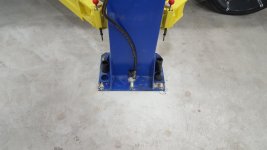
uploadfromtaptalk1444464323848.jpguploadfromtaptalk1444464366962.jpg
Shop was built in January, builder was told lift placement. Should I be worried?

Sent from my SM-G920T using Tapatalk
 
To avoid these ads, REGISTER NOW!

sean Buick 76

Well-known member
Joined
May 7, 2013
Messages
3,221
Location
Edmonton Alberta
I hate to say it but yes I would be very worried! You may be able to use some large steel plates to distribute the load onto a wider footprint.
 

Scud67

Well-known member
Joined
Mar 1, 2014
Messages
331
Location
Metrowest Boston MA
Looks like one of your anchor bolts didn't set right and pulled up the concrete there. That, along with the crack close to the post - I would get a plate to spread out the load. There are several on the market depending on what brand of lift you have. I know Atlas makes one for their lifts... The only other option would be to cut out a block of concrete, dig down 12" or so, set re-rod into the existing slab and pour new concrete.
 

readhead

Well-known member
Joined
Dec 8, 2012
Messages
6,177
Location
Durango, Co.
Removing concrete sounds easy but in this case it looks like a mono-pour for a metal building. Concrete could be very thick at this location. The spalling at the anchor looks like the anchor pulled up the concrete. If I had to guess it looks like the concrete may have cured a little to fast and was over finished which left a lot of bleed water on the surface. How long are the bolts? One fix if you feel uncomfortable with what you have would be to move the posts so the new holes are a minimum of 3" from the original holes and drill and epoxy for new anchor rods. Don't buy grade 2 all thread from the hardware store. Go to a fastener supply and get grade 5.
 

Milton Shaw

Well-known member
Joined
Feb 11, 2011
Messages
4,837
Yes I think you would be better off digging it out and replacing it. That concrete surface looks like it was screeded when it was too wet. There is so much pressure on those bolts with a truck or heavy car on them I would not take a chance. Put J bolt anchors(check strength ratings) in the new concrete for the assurance that it will never break out again.
 

lakeroadster

Well-known member
Joined
Jan 19, 2015
Messages
5,166
Location
Central Colorado
Would you post up some photos that show where these cracks are in relationship to the lift and what type of lift it is?

If it is just surface cracking I would suggest considering installation of threaded rods using an epoxy anchoring system.

Adhesive anchors are known to be more secure and reliable because the adhesive allows the stress/weight to be spread throughout the anchor instead of placing it all at the tip.
 
Last edited:

David C

Well-known member
Joined
Mar 10, 2014
Messages
157
Location
Northern California
It is typical for concrete to crack; the small cracks shown in the photos are not necessarily indication of a problem.

Generally, when there is differential settlement cracks emanate from the column base plate, often at 45 + - deg angles. When there is a failure due to pad footing bending, or punching shear, there would be cracks parallel to the base plate and closer to the actual point load. That said, even though it appears you don't have a problem based upon this criteria, it does not mean that you don't have a failure.

Of greater concern is the concrete around the anchor bolt. It is not apparent from the photos why this occurred, and it could be concrete finishing around the AB, or a more significant problem.

To evaluate your situation the following would be required to render any kind of opinion.

1. What is the actual footing and slab design (assuming there is a footing below the slab). What are the footing dimensions and what is the reinforcing. Same for the slab. Was the footing and slab installed in accordance with the design.

2. What was the mix design, how was the concrete placed? How much extra water was used for the concrete, particularly at the location of the AB's.

3. What type of anchor bolts were used. Cast in place? Post installed, what size, emb depth, mfg and type.

4.What is occurring at the location of the one AB. Remove the column and all loose concrete and see what, if anything is occurring at this location. More than a very little of soft concrete would be a cause for concern. (If there is no problem you should patch the removed concrete with a SIKA product.)

With that information you can get a professional opinion as to what problems you might have, if any. You can post this information on the forum if you want but no one with any expertise will likely provide advice. Other advice you can take as you wish as it is only your head.

Even though all of the lift manufacturers state you can install these columns on concrete slabs on grade I would advise othewise. If you do repair the concrete under the lift put in large pad footings, with reinforcing, under each column.
 

laser3kw

Well-known member
Joined
Nov 17, 2012
Messages
7,276
Location
northen IL
Good advise given ^^^^ by David C

But...
cut out a block of concrete, dig down 12" or so, set re-rod into the existing slab and pour new concrete.
If you choose to dig out the area, dig deep. When I had my pad poured I described to the contractor what I wanted and why. His response was if I needed support in those areas, it was easy to take a couple of scoops extra or dirt out and make it thick in those ares. Heck go 18" or 24", it's just a little more work.
 

Scud67

Well-known member
Joined
Mar 1, 2014
Messages
331
Location
Metrowest Boston MA
The stress is torsional on the pad under the post, not down pressure - you do not need to go very deep, just wide and you need to secure it to the existing pad by using re-rod. Most lift manufacturers don't require deep pad depths (most are 3 - 4 inches) but the strength of the concrete needs to be at least 3500 psi.
 

laser3kw

Well-known member
Joined
Nov 17, 2012
Messages
7,276
Location
northen IL
I understand about the stresses under the pad being torsional. My reference to a deeper pour was not to counter vertical load. The top few inches do ground the torsional component. The deeper pour act as a pier footing to isolate the stresses from the surrounding slab. Same idea as most metal frame buildings use.
From my investigation here and other forums, a usual number that comes up is a 3' x 3' square under the lift post anywhere from 12" to 18" - just because it easy to do when you do it. Not saying you have to. Personally, I would want anything less than 8" thick. But if the slab is already there and it is 4" or so, I would put a 3/8" thick plate under the lift post and at least increase the foot print by 2.5 times.
But that's just me, I tend to go with the idiom "when in doubt, make it stout":thumbup:
 

Daedalus

Well-known member
Joined
Sep 28, 2009
Messages
6,000
The root cause I think is that there is a gap between the plate and the concrete, which gives the concrete someplace to go. That whole joint is under tension all the time. A 3/4" bolt torqued up to 80 ft-lbs ~ 5000lbs of tension.

If it holds torque then I think you're OK, but I would shim out the gap.
 
OP
X

xxBotelloxx

Active member
Joined
Oct 31, 2014
Messages
43
How thick is the slab under the post? And is it reinforced? Any pre-pour pictures?
Well original plan was dead center where the cross is. The building ia 30x30 the builder added a I beam right above centerline for a trolly/hoist lift would have clearance issues there so it was moved back was told concrete is thick enough thru out slab. Most holes were right at 4 inches deep. Lift instructions said minimum of 4 inches

Sent from my SM-G920T using Tapatalk
 
OP
X

xxBotelloxx

Active member
Joined
Oct 31, 2014
Messages
43
The root cause I think is that there is a gap between the plate and the concrete, which gives the concrete someplace to go. That whole joint is under tension all the time. A 3/4" bolt torqued up to 80 ft-lbs ~ 5000lbs of tension.

If it holds torque then I think you're OK, but I would shim out the gap.
Don't believe there is a gap maybe due to angle on picture. I will go out n ck n see if I can get feeler gauge under it. If u look at picture close to wall u can see a shim I had to Install to get Column plumb. 3/4 anchors where included with my lift instructions state torque to 130 ft lbs which I did few weeks ago after seeing someone drop a truck.

Sent from my SM-G920T using Tapatalk
 
OP
X

xxBotelloxx

Active member
Joined
Oct 31, 2014
Messages
43
The root cause I think is that there is a gap between the plate and the concrete, which gives the concrete someplace to go. That whole joint is under tension all the time. A 3/4" bolt torqued up to 80 ft-lbs ~ 5000lbs of tension.

If it holds torque then I think you're OK, but I would shim out the gap.
Good eye there definitely is a gap. Not sure if it was always like that or due to shifting. Probably was like that but didn't give it alot of thought since it was square.


Sent from my SM-G920T using Tapatalk
 
To avoid these ads, REGISTER NOW!
OP
X

xxBotelloxx

Active member
Joined
Oct 31, 2014
Messages
43
Well I went to ck torque on them all were fairly close except the one it was loose and wouldn't tighten didn't try to much just couple degrees n concrete started lifting more.
Contractor coming out monday gonna see what they say5da3ad782f64a292804d2cd4454b949b.jpguploadfromtaptalk1444544799280.jpg

Sent from my SM-G920T using Tapatalk
 

Attachments

  • uploadfromtaptalk1444544799280.jpg
    uploadfromtaptalk1444544799280.jpg
    143 KB · Views: 165

Diesel Dan

Well-known member
Joined
Jul 21, 2013
Messages
2,459
Location
TN
I had some anchor bolts pull up farther than others before they "set up" but I don't they any popped the surface up like that. If it was mine I'd keep turning and see if it eventually holds torque.

When I moved my lift I tried to pull the AB out with an air impact, didn't happen. Even the ones that were sticking higher out of the floor because the took more turns to set up wouldn't come out.
 

ct03911

Well-known member
Joined
Jan 17, 2008
Messages
229
Location
Connecticut
Your issues may be somewhat different than mine with the anchor concern. I just have cracks.

I called Greg Smith who supplies Atlas lifts out of eight states. I will be ordering one of theirs in a few weeks and my floor has cracks.

Their input was simple.
Cut out a 4'x4'x12" pad and fill it with 3000 psi for a 10k lift.

No rebar, no wire, no 24" hole etc etc. Just cut the hole and pour it again.

I suppose they err on the safe side and maybe some could get away with installing over cracks etc.

My point is that you get a lot of advice on here and need to filter it like any forum. Do yourself a favor and call the manufacturer. Even if their recommendation is overkill, I like overkill.
 

motofool33

Well-known member
Joined
Feb 2, 2013
Messages
1,634
Location
Currently North of Houston
Well I went to ck torque on them all were fairly close except the one it was loose and wouldn't tighten didn't try to much just couple degrees n concrete started lifting more.
Contractor coming out monday gonna see what they say5da3ad782f64a292804d2cd4454b949b.jpguploadfromtaptalk1444544799280.jpg

Sent from my SM-G920T using Tapatalk

is it an optical illusion or is that bolt not perpendicular to the slab?
 
OP
X

xxBotelloxx

Active member
Joined
Oct 31, 2014
Messages
43
is it an optical illusion or is that bolt not perpendicular to the slab?
The bolt is loose has little wiggle to it. Think it would be fine with one bolt loose I've seen lifts with one bolt per column missing for years. Guess I will try n tighten it up seems like it may pull concrete up more

Sent from my SM-G920T using Tapatalk
 

David C

Well-known member
Joined
Mar 10, 2014
Messages
157
Location
Northern California
This is not true

The stress is torsional on the pad under the post, not down pressure

unless there is new science. The weight of the lift and elevated vehicle must be supported by a vertical reaction, regardless of the other forces.

I think the torsion that everyone is referring to would better be described as a bending moment, the result of non concentric forces on the column. Torsion would be twisting of the column; rotation about its long axis.

It is better to grout the base plate so that the column vertical and bending loads are spread out over the area of the base plate. If you don't grout, the baseplate only contacts the floor at the high points of the concrete. This can cause problems or failures which would take too long to explain. Without baseplate grouting and leveling one column could be higher than the other which could cause additional problems at the baseplate concrete connection.

If you install a pad footing I strongly recommend you do not follow this suggestion: No rebar, no wire, no 24" hole etc etc. Just cut the hole and pour it again.
Concrete has little strength in tension and bending moments in the slab footing result in tension in the concrete. The reinforcing will hold the concrete together when it cracks, as it does most of the time.

If the pad footing cracks through the 12" thickness you will lose the benefit of the portion that is not connected to the column. There is more to this but it would take way to much time to go into.

Steel reinforcing is cheap, put it in, put lots of it in. If this were my own garage and lift I would place some #3 ties around the bolt group. You can get some bolt group reinforcing ideas from Hilti and maybe Simpson. Horizontal bars through the bolt group will also increase the strength of the connection.

This is cause for concern Well I went to ck torque on them all were fairly close except the one it was loose and wouldn't tighten didn't try to much just couple degrees n concrete started lifting more.r. I would not use this lift as it appears, from your description, that the AB is slipping in the hole and thus not connected to the concrete.

If I read this correctly Most holes were right at 4 inches deep. Lift instructions said minimum of 4 inches ; you used post installed anchors. If your slab is 4" thick and you drilled competely through the slab you may have other problems. All post installed AB's, that are approved by the code, must have ESR testing reports on the installation methods. Punching through the slab for the AB, or even getting close to the bottom of the slab (or footing) with drilled holes, would be contrary to the ESR reports and not approved by building code. Sometimes the drill punches out the concrete on the back side of the slab to form a reverse cone. If this happens you do not have the required concrete thickness.

AB holes drilled completely through the concrete can allow moisture or even ground water to enter the hole and corrode the AB.

Yea, I know that the lift mfg's recommend that you use methods that would not be approved by your local building codes. My view is that they have not kept up with current codes and are at risk for making these recommendations.

If AB's have 4" required emb and you lose the top 1" of concrete, see your photo, you only have 3" of emb. not the 4" required. Lose an inch at the top, see photo, and inch at the bottom due to blow out, and you have 2" less concrete at the AB.

It appears that the AB in question is installed at an angle. If the contractor mislocated the hole, or the bit drifted, and he then enlarged the hole to get the AB to align with the base plate hole, the AB wedge might not set in the oversized hole. This is if you used a wedge anchor. Most codes require that post installed anchors get special inspection for these, and other, reasons.

This is your opportunity to take a good look at your installation and make revisions
 

lakeroadster

Well-known member
Joined
Jan 19, 2015
Messages
5,166
Location
Central Colorado
..... My point is that you get a lot of advice on here and need to filter it like any forum. Do yourself a favor and call the manufacturer.....

Great advice.

There's all kinds of things you could do, but what is required? The manufacturer knows best.

The loading the concrete encounters as a result of a 2 post automotive lift simply isn't very substantial.
_____
John
 
OP
X

xxBotelloxx

Active member
Joined
Oct 31, 2014
Messages
43
This is not true

The stress is torsional on the pad under the post, not down pressure

unless there is new science. The weight of the lift and elevated vehicle must be supported by a vertical reaction, regardless of the other forces.

I think the torsion that everyone is referring to would better be described as a bending moment, the result of non concentric forces on the column. Torsion would be twisting of the column; rotation about its long axis.

It is better to grout the base plate so that the column vertical and bending loads are spread out over the area of the base plate. If you don't grout, the baseplate only contacts the floor at the high points of the concrete. This can cause problems or failures which would take too long to explain. Without baseplate grouting and leveling one column could be higher than the other which could cause additional problems at the baseplate concrete connection.

If you install a pad footing I strongly recommend you do not follow this suggestion: No rebar, no wire, no 24" hole etc etc. Just cut the hole and pour it again.
Concrete has little strength in tension and bending moments in the slab footing result in tension in the concrete. The reinforcing will hold the concrete together when it cracks, as it does most of the time.

If the pad footing cracks through the 12" thickness you will lose the benefit of the portion that is not connected to the column. There is more to this but it would take way to much time to go into.

Steel reinforcing is cheap, put it in, put lots of it in. If this were my own garage and lift I would place some #3 ties around the bolt group. You can get some bolt group reinforcing ideas from Hilti and maybe Simpson. Horizontal bars through the bolt group will also increase the strength of the connection.

This is cause for concern Well I went to ck torque on them all were fairly close except the one it was loose and wouldn't tighten didn't try to much just couple degrees n concrete started lifting more.r. I would not use this lift as it appears, from your description, that the AB is slipping in the hole and thus not connected to the concrete.

If I read this correctly Most holes were right at 4 inches deep. Lift instructions said minimum of 4 inches ; you used post installed anchors. If your slab is 4" thick and you drilled competely through the slab you may have other problems. All post installed AB's, that are approved by the code, must have ESR testing reports on the installation methods. Punching through the slab for the AB, or even getting close to the bottom of the slab (or footing) with drilled holes, would be contrary to the ESR reports and not approved by building code. Sometimes the drill punches out the concrete on the back side of the slab to form a reverse cone. If this happens you do not have the required concrete thickness.

AB holes drilled completely through the concrete can allow moisture or even ground water to enter the hole and corrode the AB.

Yea, I know that the lift mfg's recommend that you use methods that would not be approved by your local building codes. My view is that they have not kept up with current codes and are at risk for making these recommendations.

If AB's have 4" required emb and you lose the top 1" of concrete, see your photo, you only have 3" of emb. not the 4" required. Lose an inch at the top, see photo, and inch at the bottom due to blow out, and you have 2" less concrete at the AB.

It appears that the AB in question is installed at an angle. If the contractor mislocated the hole, or the bit drifted, and he then enlarged the hole to get the AB to align with the base plate hole, the AB wedge might not set in the oversized hole. This is if you used a wedge anchor. Most codes require that post installed anchors get special inspection for these, and other, reasons.

This is your opportunity to take a good look at your installation and make revisions
The AB in question is in bad spot due to bracket holding fixture. The AB is loose and can wiggle. I honestly think it's broke more than 1 inch on top. As far as drilling I did it all myself none were elongated but maybe drilled at slight angle. Instructions did say to try n drill all the way thru slab so AB can be knocked so the way thru if needed

Sent from my SM-G920T using Tapatalk
 
OP
X

xxBotelloxx

Active member
Joined
Oct 31, 2014
Messages
43
This is not true

The stress is torsional on the pad under the post, not down pressure

unless there is new science. The weight of the lift and elevated vehicle must be supported by a vertical reaction, regardless of the other forces.

I think the torsion that everyone is referring to would better be described as a bending moment, the result of non concentric forces on the column. Torsion would be twisting of the column; rotation about its long axis.

It is better to grout the base plate so that the column vertical and bending loads are spread out over the area of the base plate. If you don't grout, the baseplate only contacts the floor at the high points of the concrete. This can cause problems or failures which would take too long to explain. Without baseplate grouting and leveling one column could be higher than the other which could cause additional problems at the baseplate concrete connection.

If you install a pad footing I strongly recommend you do not follow this suggestion: No rebar, no wire, no 24" hole etc etc. Just cut the hole and pour it again.
Concrete has little strength in tension and bending moments in the slab footing result in tension in the concrete. The reinforcing will hold the concrete together when it cracks, as it does most of the time.

If the pad footing cracks through the 12" thickness you will lose the benefit of the portion that is not connected to the column. There is more to this but it would take way to much time to go into.

Steel reinforcing is cheap, put it in, put lots of it in. If this were my own garage and lift I would place some #3 ties around the bolt group. You can get some bolt group reinforcing ideas from Hilti and maybe Simpson. Horizontal bars through the bolt group will also increase the strength of the connection.

This is cause for concern Well I went to ck torque on them all were fairly close except the one it was loose and wouldn't tighten didn't try to much just couple degrees n concrete started lifting more.r. I would not use this lift as it appears, from your description, that the AB is slipping in the hole and thus not connected to the concrete.

If I read this correctly Most holes were right at 4 inches deep. Lift instructions said minimum of 4 inches ; you used post installed anchors. If your slab is 4" thick and you drilled competely through the slab you may have other problems. All post installed AB's, that are approved by the code, must have ESR testing reports on the installation methods. Punching through the slab for the AB, or even getting close to the bottom of the slab (or footing) with drilled holes, would be contrary to the ESR reports and not approved by building code. Sometimes the drill punches out the concrete on the back side of the slab to form a reverse cone. If this happens you do not have the required concrete thickness.

AB holes drilled completely through the concrete can allow moisture or even ground water to enter the hole and corrode the AB.

Yea, I know that the lift mfg's recommend that you use methods that would not be approved by your local building codes. My view is that they have not kept up with current codes and are at risk for making these recommendations.

If AB's have 4" required emb and you lose the top 1" of concrete, see your photo, you only have 3" of emb. not the 4" required. Lose an inch at the top, see photo, and inch at the bottom due to blow out, and you have 2" less concrete at the AB.

It appears that the AB in question is installed at an angle. If the contractor mislocated the hole, or the bit drifted, and he then enlarged the hole to get the AB to align with the base plate hole, the AB wedge might not set in the oversized hole. This is if you used a wedge anchor. Most codes require that post installed anchors get special inspection for these, and other, reasons.

This is your opportunity to take a good look at your installation and make revisions
Kind of lost on bolt group mounting and grouting lift any more information on this? I'm a mechanic and been working in shops 20 years now haven't seen a lift grouted to concrete it makes since tho

Sent from my SM-G920T using Tapatalk
 

laser3kw

Well-known member
Joined
Nov 17, 2012
Messages
7,276
Location
northen IL
If I read this correctly Most holes were right at 4 inches deep. Lift instructions said minimum of 4 inches ; you used post installed anchors. If your slab is 4" thick and you drilled competely through the slab you may have other problems. All post installed AB's, that are approved by the code, must have ESR testing reports on the installation methods. Punching through the slab for the AB, or even getting close to the bottom of the slab (or footing) with drilled holes, would be contrary to the ESR reports and not approved by building code. Sometimes the drill punches out the concrete on the back side of the slab to form a reverse cone. If this happens you do not have the required concrete thickness.
exactly why I wouldn't want anything less than 8" to start with. I was picturing that scenario when they talk about 4' long anchor bolts going into 4" thick concrete. If it's a new pour and you are planning a lift (and you should), take my contracts advice and go 12" thick (it's just a couple of scoops more when they are doing it).
 

Denwood

Well-known member
Joined
Sep 22, 2014
Messages
4,186
Location
Thunder Bay, Ontario, Canada
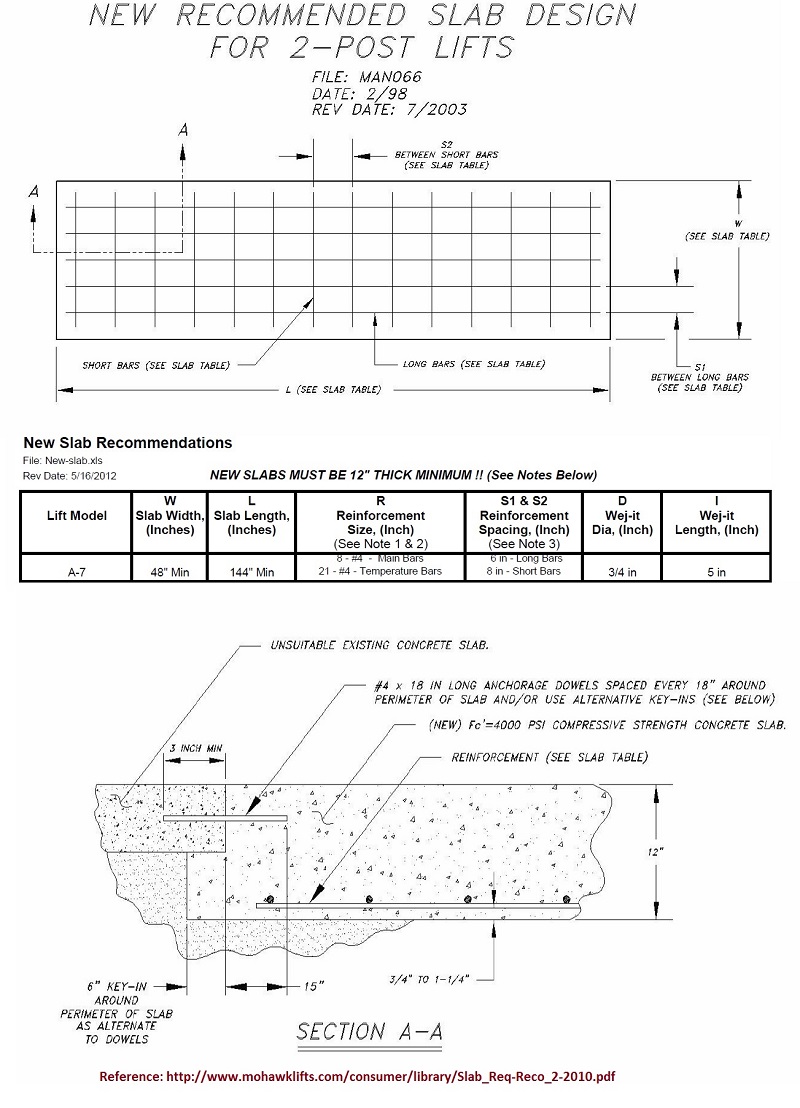
I found Mohawk's retro slab guide helpful. There's no recommendation in there even close to 4'x4', and they are specific on rebar requirements. Given the cost differential, error on the side of safety.

My retro slab pour ended up as a 4'x12' at about 14" thick with two layers of reinforcing steel.

Reference pdf document from Mohawk:

http://www.mohawklifts.com/library/manuals/Slab_Require_Recommend_11_07.pdf

mohawk_slab.jpg
 
Last edited:

David C

Well-known member
Joined
Mar 10, 2014
Messages
157
Location
Northern California
From above

My point is that you get a lot of advice on here and need to filter it like any forum. Do yourself a favor and call the manufacturer....

This is good advice with the following two caveats:
1. There is nothing in the mfg's instructions that suggest you should not make the installation stronger.
2.All lift mfg's will state in their installation instructions that you must comply with local codes.

Bendpak says it this way: I understand that the lifts are supplied with concrete
fasteners meeting the criteria of the American National
Standard “Automotive Lifts - Safety Requirements for
Construction, Testing, and Validation” ANSI/ALI ALCTV-
2011, and that I will be responsible for all charges related
to any special regional structural and/or seismic
anchoring requirements specified by any other agencies
and/or codes such as the Uniform Building Code (UBC)
and/or International Building Code (IBC)
.


Installation must comply with your local code.

Simpson strong tie wedge anchors, and all the other anchor mfgs of wedge anchors (post installed chemical anchors too)with ESR reports will be similar that the anchor bolt hole depth is less than the slab thickness. See ESR 1771http://http://www.icc-es.org/Reports/pdf_files/ESR-1771.pdf

See table 1 page 4 of the ESR report; other tables include some of the same information. Holes for wedge anchors may not punch through the slab. For 3/4" wedge anchors the minimum concrete thickness is 6-3/4"

The OP did not comply with Bendpaks requirements (the building code) for three reasons; his slab is not thick enough for 3/4" wedge anchors, he has an improper hole depth, and he did not get special inspection (see ESR 1771 page 3 section 4.4).

A possible reason the nut can't be tightened is that the wedge is below the bottom of the concrete. In any case there is a torque requirement for setting the wedges. If the bolt spins before the specified torque is acheived the AB installation has failed. The OP's wedge anchor, the one that is not tightened, does not comply with code, or Bendpak's requirements.

That the OP may have used another AB would probably not be sufficient to comply with code. All wedge anchor mfgs, that have produced ESR reports have similar criteria to the Simpson ESR report.

The wedge anchors bought from the bin at the hardware store; if they don't have an ESR report, they are not code compliant.

Though the OP claims that he complied with Bendpak's requirements by drilling through the concrete he violated their requirement to comply with codes. If the lift fails and falls he will be the responsible party. Don't even think that Benpak would let you win that argument in court.

OP, my intentions are not to pick on you but to motivate you to review your installation, and live long enough to get full use of your lift.

Re this question:Kind of lost on bolt group mounting and grouting lift any more information on this? I'm a mechanic and been working in shops 20 years now haven't seen a lift grouted to concrete it makes since tho Bendpak and all other lift mfgs require that the columns be plumb. With an uneven concrete surface this can not be accomplished without grout. (Use SIKA HSNS grout). I did not read the entire bendpak instructions but I would bet there are other requirements that suggest, if not categorically state, that the base plates be grouted. One way they could say this is they require the baseplate to bear evenly on the supporting surface.

There is a lot more to this than what I have said about anchor bolts and installation. I don't have the time to write it all out and explain it and no one would read it anyway. I don't want to argue, take it all as you wish. My sole intent is to educate a few people, that ones that are going to install a new lift, to give their installation serious thought. Be safe out there.
 

readhead

Well-known member
Joined
Dec 8, 2012
Messages
6,177
Location
Durango, Co.
As one who anchors steel to concrete everyday, that was well stated. When you pay liability insurance as I do proper installation is a must. Pull tests are routine for us and failure is very expensive. Obviously there are a lot of lifts out there working very well but I believe there are a lot of accidents waiting to happen.
There is so much information about anchoring to concrete that we should never see a failure. I agree with the last post that the manufactures provide only minimums and a way out should their be a failure.
 

jhelrey

Well-known member
Joined
Sep 15, 2010
Messages
7,249
Location
MN
I would be tempted to pull the nut and pound the anchor back down. Then re-tighten nut and see what happens. If they drilled all of the way through, you could always pound it through and then install a longer anchor.
 
OP
X

xxBotelloxx

Active member
Joined
Oct 31, 2014
Messages
43
I found Mohawk's retro slab guide helpful. There's no recommendation in there even close to 4'x4', and they are specific on rebar requirements. Given the cost differential, error on the side of safety.

My retro slab pour ended up as a 4'x12' at about 14" thick with two layers of reinforcing steel.

Reference pdf document from Mohawk:
http://www.mohawklifts.com/consumer/library/Slab_Req-Reco_2-2010.pdf

mohawk_slab.jpg
Any pics of how u did 2 layers of steel?

Sent from my SM-G920T using Tapatalk
 
OP
X

xxBotelloxx

Active member
Joined
Oct 31, 2014
Messages
43
From above

My point is that you get a lot of advice on here and need to filter it like any forum. Do yourself a favor and call the manufacturer....

This is good advice with the following two caveats:
1. There is nothing in the mfg's instructions that suggest you should not make the installation stronger.
2.All lift mfg's will state in their installation instructions that you must comply with local codes.

Bendpak says it this way: I understand that the lifts are supplied with concrete
fasteners meeting the criteria of the American National
Standard “Automotive Lifts - Safety Requirements for
Construction, Testing, and Validation” ANSI/ALI ALCTV-
2011, and that I will be responsible for all charges related
to any special regional structural and/or seismic
anchoring requirements specified by any other agencies
and/or codes such as the Uniform Building Code (UBC)
and/or International Building Code (IBC)
.


Installation must comply with your local code.

Simpson strong tie wedge anchors, and all the other anchor mfgs of wedge anchors (post installed chemical anchors too)with ESR reports will be similar that the anchor bolt hole depth is less than the slab thickness. See ESR 1771http://http://www.icc-es.org/Reports/pdf_files/ESR-1771.pdf

See table 1 page 4 of the ESR report; other tables include some of the same information. Holes for wedge anchors may not punch through the slab. For 3/4" wedge anchors the minimum concrete thickness is 6-3/4"

The OP did not comply with Bendpaks requirements (the building code) for three reasons; his slab is not thick enough for 3/4" wedge anchors, he has an improper hole depth, and he did not get special inspection (see ESR 1771 page 3 section 4.4).

A possible reason the nut can't be tightened is that the wedge is below the bottom of the concrete. In any case there is a torque requirement for setting the wedges. If the bolt spins before the specified torque is acheived the AB installation has failed. The OP's wedge anchor, the one that is not tightened, does not comply with code, or Bendpak's requirements.

That the OP may have used another AB would probably not be sufficient to comply with code. All wedge anchor mfgs, that have produced ESR reports have similar criteria to the Simpson ESR report.

The wedge anchors bought from the bin at the hardware store; if they don't have an ESR report, they are not code compliant.

Though the OP claims that he complied with Bendpak's requirements by drilling through the concrete he violated their requirement to comply with codes. If the lift fails and falls he will be the responsible party. Don't even think that Benpak would let you win that argument in court.

OP, my intentions are not to pick on you but to motivate you to review your installation, and live long enough to get full use of your lift.

Re this question:Kind of lost on bolt group mounting and grouting lift any more information on this? I'm a mechanic and been working in shops 20 years now haven't seen a lift grouted to concrete it makes since tho Bendpak and all other lift mfgs require that the columns be plumb. With an uneven concrete surface this can not be accomplished without grout. (Use SIKA HSNS grout). I did not read the entire bendpak instructions but I would bet there are other requirements that suggest, if not categorically state, that the base plates be grouted. One way they could say this is they require the baseplate to bear evenly on the supporting surface.

There is a lot more to this than what I have said about anchor bolts and installation. I don't have the time to write it all out and explain it and no one would read it anyway. I don't want to argue, take it all as you wish. My sole intent is to educate a few people, that ones that are going to install a new lift, to give their installation serious thought. Be safe out there.
I didn't really try n crank down on the AB with fear of doing more damage. The pic may not show but when I tried to pull out the piece of busted concrete it felt deep

Sent from my SM-G920T using Tapatalk
 

wssix99

Well-known member
Joined
Mar 2, 2011
Messages
5,160
Location
Chicago, IL
Is that a post pensioned slab? If so, you should have your engineer of record look at things.

If not, do you have a plan that shows the reinforcing/slab plan for the floor?
 
OP
X

xxBotelloxx

Active member
Joined
Oct 31, 2014
Messages
43
Is that a post pensioned slab? If so, you should have your engineer of record look at things.

If not, do you have a plan that shows the reinforcing/slab plan for the floor?
To be honest all I know is the contractor was informed I would be installing a lift, he had to follow criteria from city inspector. I've had lifts installed in buildings I've rented I've also worked in older and newer shops with lifts and never had this issue.

How long should concrete setup/cure before installing lift? I have dated pics I can find to see about how long it was. All anchor bolts torqued fine on installation.
Used supplied 3/4 wedge anchor bolts. Drill bit was marked at 4 inches some went thru most didn't though

Sent from my SM-G920T using Tapatalk
 

Denwood

Well-known member
Joined
Sep 22, 2014
Messages
4,186
Location
Thunder Bay, Ontario, Canada
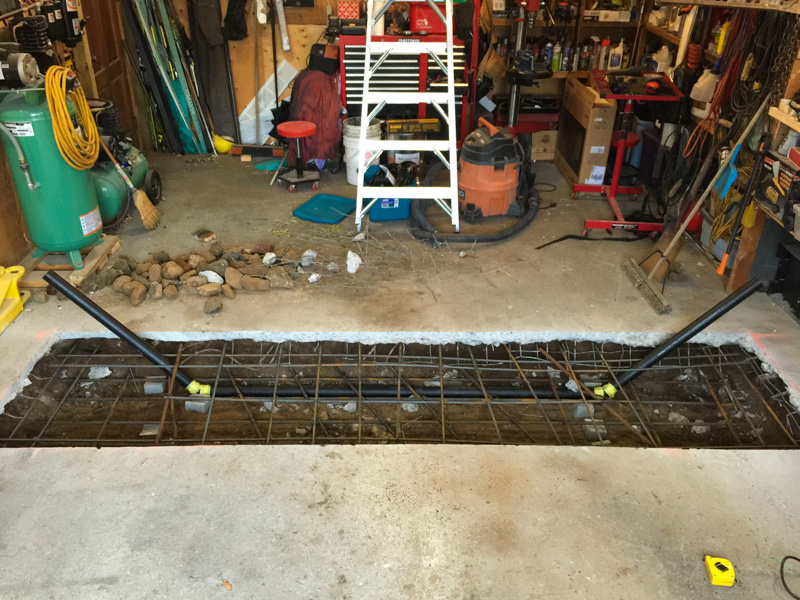
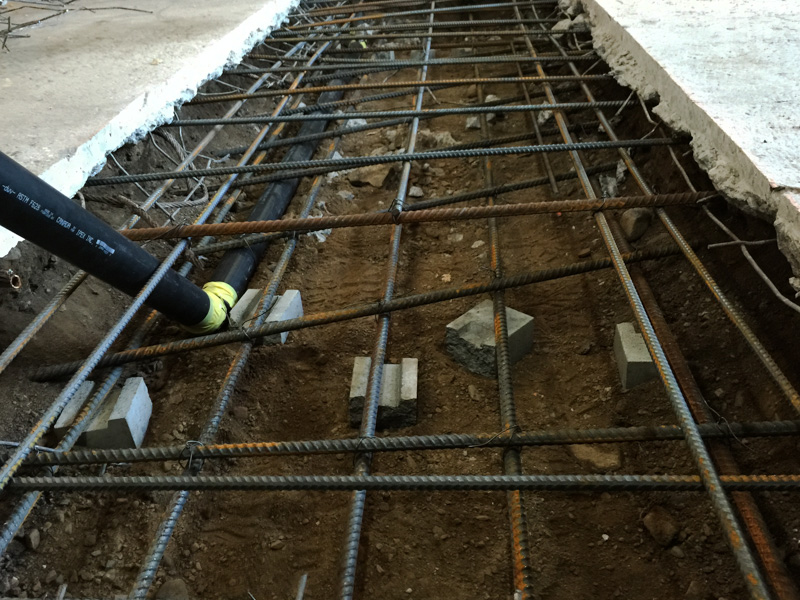
**, like this...rebar is at two "elevations in the slab. This slab spec I used for for a 7000lb Mohawk asym. So you'd need to reference the pdf I linked to.

rebar2.jpg


rebar1.jpg


I used the Mohawk guide combined with a spec provided by the engineer at the local rebar supplier. I used epoxy anchors due to all the issues folks have had with the wedge type. The black ABS was to route hydraulic lines under.


final2.jpg
 
Last edited:
To avoid these ads, REGISTER NOW!
Top Bottom