

You are using an out of date browser. It may not display this or other websites correctly.
You should upgrade or use an alternative browser.
You should upgrade or use an alternative browser.
2018 Garage Sale Thread
- Thread starter Private Lugnutz
- Start date
- Status
- Not open for further replies.


Picked up a few items at my new favorite used tool store. I needed some caliper dividers for a project at work, and bought a few other items as well.
The large caliper divider is a Lufkin, the medium is a Starrett, and the small is a J. Stevens and Co., which Google tells me means it was made no later than 1886.
The 0-1" micrometer is by Central Tools. I need to get a micrometer wrench to adjust the zero, which is just a hair off.
Not pictured is a nice Plumb 24 oz ball peen that needs to have the handle reseated or replaced.
The large caliper divider is a Lufkin, the medium is a Starrett, and the small is a J. Stevens and Co., which Google tells me means it was made no later than 1886.
The 0-1" micrometer is by Central Tools. I need to get a micrometer wrench to adjust the zero, which is just a hair off.
Not pictured is a nice Plumb 24 oz ball peen that needs to have the handle reseated or replaced.
Attachments

dekleijn
Member
Hello all, picked up a couple of the CRAFT spanners a while ago and I cannot find any information on them at all.
Just wondering if anyone had seen them before and has some information about them.
Thanks in advance and my apologies for the picture
Sent from my SM-G950F using Tapatalk
Just wondering if anyone had seen them before and has some information about them.
Thanks in advance and my apologies for the picture
Sent from my SM-G950F using Tapatalk
Attachments

justin.d.richards.9
Well-known member
- Joined
- Dec 23, 2015
- Messages
- 51
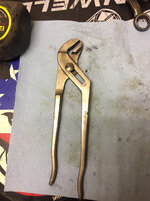
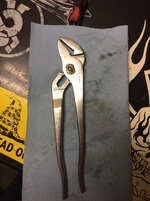
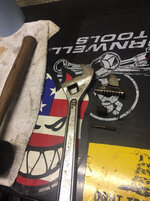
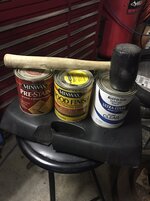
A little OfferUp score. Just happened to be on at the right time.. The handle of the torque wrench is what caught my attention.. Everything that's USA made is sorted down below.. I did miss a 13mm Snap On Wrench that I found later on.. Something is up with the torque wrench but I'm not sure what. Took it apart as far as I could but didn't see anything.. Tore the ratchet down and cleaned and greased it.. The proto adjustable wrench is in the process of cleaning.. Sanded down the rubber mallet and gave it a little stain.. Cleaning the vise grips right now as well. Cleaned up both adjustable pliers already also... $15





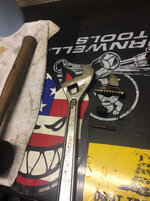
Also scored these for $60.. 1-6" Tumico tubular outside micrometer set and this Mitutoyo 0-6" outside micrometer set with standards.. The coating are on the ones still that have never been used.. Couldn't pass it up when he offered it to me for $20.


Sent from my iPhone using Tapatalk
Also scored these for $60.. 1-6" Tumico tubular outside micrometer set and this Mitutoyo 0-6" outside micrometer set with standards.. The coating are on the ones still that have never been used.. Couldn't pass it up when he offered it to me for $20.
Sent from my iPhone using Tapatalk
Attachments
-
 3d9984112a84213eb4d22f942190cc6b.jpg807.8 KB · Views: 0
 -
 197a5f92f024cc6f899b3aa331975fce.jpg851 KB · Views: 0
 -
 ad74b80bd7098858a3769f42ea3e0afd.jpg852.2 KB · Views: 0
 -
 04652a5e60ee974727b65459f82297fe.jpg1.3 MB · Views: 0
 -
 2f8b3377a62da83bf3d4059e3c85d726.jpg874.2 KB · Views: 0
 -
 ab5157ffe076fe61de06e65d5bb5e5c6.jpg960.6 KB · Views: 0
 -
 858a56c60c401274c128e581a6ed6c52.jpg880 KB · Views: 0
 -
 028f7a7160411690a8e06b94b7f576f4.jpg871.9 KB · Views: 0
 -
 2981f901d63812cb7c1de301faa4817a.jpg778.5 KB · Views: 0
 -
 a3415611a0d7c889112c2fa7fba0fb92.jpg1.1 MB · Views: 0
 -
 101bb9e8f1bcbd055645fcc71d4db000.jpg872.9 KB · Views: 0
 -
 882315f97b0a364e2ef0bc88addbaffc.jpg628.8 KB · Views: 0
 -
 2d6e293b3e7059ca31a714d66fc6e9af.jpg840.5 KB · Views: 0
 -
 0dda4a4a9b2f0d9dd2ce7786d535b1bf.jpg841.1 KB · Views: 0
 -
 036ec6e56318e5a4a807972b35e7cee5.jpg845.6 KB · Views: 0
 -
 b0f0b49ec5957b3a4b4c3f42ed0d9a42.jpg743.2 KB · Views: 0
 -
 135f92db243e6d1ef9c833e54fca5d9d.jpg836.6 KB · Views: 0
 -
 9e53f1fdf82c4a49dc749722bc91bee1.jpg819.3 KB · Views: 0
 -
 dd49635b3972e9ceb9c4ad3f8f103deb.jpg878.6 KB · Views: 0
 -
 2bad629896b8b18dd71d81f69980bf9c.jpg812.7 KB · Views: 0
d42jeep
Well-known member
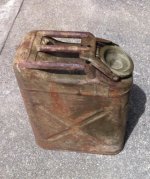
They have a lever action cap/lid, like British/German gas cans, instead of a screw cap.
I can buy modern versions of this style of gas can in 5, 10 or 20 litre sizes and in red, green or black (leaded, unleaded, diesel) colors. Also available are flexible spouts in 3 colors to fit the lever cam action fitting on these cans. I can also buy gas cans in 5 or 10 litre sizes in 3 colors with flexible spouts and no pesky anti-spill valve ****.
B~
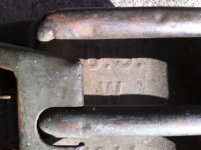
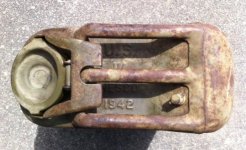
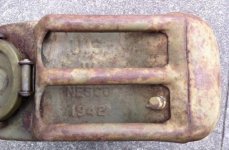
The lever cap WW2 cans are water cans and not for use with gasoline. They have a W stamped under the handles. Here are pictures of a couple of mine. They were made by several different manufacturers.
-Don
Attachments
-
 B603B602-E920-4FAA-9B17-67B54D381873.jpeg116.1 KB · Views: 35
 -
 F5D2EAF4-C881-41EA-8485-B96153B9326B.jpg47.5 KB · Views: 35
 -
 7A2D7154-99D6-4324-9B65-23537E64E340.jpg73.9 KB · Views: 35
 -
 4F3B55A4-1A5E-4145-A2D1-8CF3792CEB2D.jpg47 KB · Views: 35
 -
 CF172BB1-E288-4674-86E2-E9C9D57117F0.jpg65.2 KB · Views: 34
 -
 97C9025A-D62D-47E8-9559-FFC3B70AF7C1.jpg46 KB · Views: 35
 -
 2EA68548-25AB-41A3-976A-4439802096E2.jpg72.2 KB · Views: 38
Last edited:
OP
Private Lugnutz
Well-known member
On the string of confusing USMC "jerry" can questions/comments....
Five (5) gallon gas/water containers used by the United States Marine Corps in 1942, 1943, and 1944 were all made by CONCO. Some of them have USMC embossed on the sides, most do not. Most of them have the cam-lock type cap located in the center of the can, a design the Germans invented, and the British and Americans appropriated in turn. But there are definitely Marine Corps cans with the screw-on cap just like the cans used by the other branches. They are much rarer. Thought to be late war.
Flexible spouts (or "donkey dicks", in US Army parlance) with "USMC" stamped on them were made by U.S. Metal Corporation, as Don warned about some cans similarly marked on the bottom, not Marine Corps.
Five (5) gallon gas/water containers used by the United States Marine Corps in 1942, 1943, and 1944 were all made by CONCO. Some of them have USMC embossed on the sides, most do not. Most of them have the cam-lock type cap located in the center of the can, a design the Germans invented, and the British and Americans appropriated in turn. But there are definitely Marine Corps cans with the screw-on cap just like the cans used by the other branches. They are much rarer. Thought to be late war.
Flexible spouts (or "donkey dicks", in US Army parlance) with "USMC" stamped on them were made by U.S. Metal Corporation, as Don warned about some cans similarly marked on the bottom, not Marine Corps.
OP
Private Lugnutz
Well-known member
Don, we cross posted and I didn't see your last post on the subject. The Marines used them for both. Nice cans!
d42jeep
Well-known member
Don, we cross posted and I didn't see your last post on the subject. The Marines used them for both. Nice cans!
We do have a habit of cross posting, don’t we?
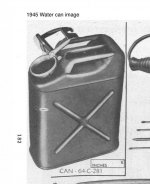
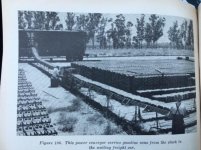
 Here are a couple of interesting photos plus a picture of my NOS WW2 spout.
-Don
Attachments

OP
Private Lugnutz
Well-known member
The strange part is we're on different coasts!We do have a habit of cross posting, don’t we?

Sweet. I don't remember seeing that NOS spout before.
I've always wondered how/why the Marines got away with being nonstandard, if it was inadvertent (a simple function of the sole supplier's design) or deliberate (because they thought it was more expedient, more conducive for a littoral terrain, etc). I might ask Roy (jerrykan at G503).
Boofer
Well-known member
Justin you scored all of that, micrometers included, for $15???
You ****!!!
You ****!!!
M_George
Well-known member
The strange part is we're on different coasts!
Sweet. I don't remember seeing that NOS spout before.
I've always wondered how/why the Marines got away with being nonstandard, if it was inadvertent (a simple function of the sole supplier's design) or deliberate (because they thought it was more expedient, more conducive for a littoral terrain, etc). I might ask Roy (jerrykan at G503).
We used a spout like in the Army signal corps that back in the early 70's to fill the generators used to power our equipment.
OP
Private Lugnutz
Well-known member
Similar flexible spouts are still in use.
A hunting buddy of mine has been getting into birding lately, and was somewhat disgusted when an “expert birder” in the party denied my buddy’s identification of an eastern phoebe, despite evident tail-bobbing, and insisted it was some other eye-ring-lacking flycatcher, an eastern wood pewee, I think. I said, too bad it wasn’t calling, to settle the disagreement (because “phoebe” and “pewee” sound soooo different when a small brown bird is saying them).
Now, I kind of wish United Shoe Machinery Corporation had been in the jerry-can manufacturing business, too. Just to add a similarly entertaining layer of complexity to this discussion
Now, I kind of wish United Shoe Machinery Corporation had been in the jerry-can manufacturing business, too. Just to add a similarly entertaining layer of complexity to this discussion
Last edited:
Username already in use
Well-known member
Similar flexible spouts are still in use.
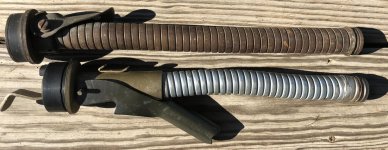
Speaking of flexible 'donkey ****' spouts. Here's a couple of mine. The top in the image is your standard wartime USGI. The one below is a French invention that works with both the cam lock as well as the screw type cans.
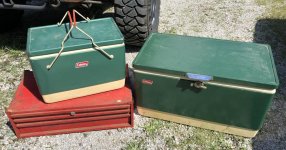
And then, to get this thread back on track, my haul of goodies from yesterday's flea. The SnapOn mid box is a #429 and dates to '74 (no key), a pair of coleman coolers, a small one that I've not seen before and the larger chest with the accessories still inside. $30 for the Snap-On mid box and $15 for both coolers.
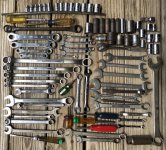
The rest of the goods are your typical hard tool line fare. Lots of SK for my tool board posted over in the vintage tool forum along with a handful of Wright, Thorsen, Husky, a complete rail of MAC metric 3/8" drive sockets from 6mm to 19mm, some Bluegrass, TRUTH, Plomb, PowrKraft.. on and on.

Attachments
Do you mean the Marines used the cam-cans for water or fuel indiscriminately? Did they have a means of marking the established contents? Or is there a procedure for thoroughly removing the previous contents?The Marines used them for both.
Does Don’s statement mean other branches did not?
I do not possess a jeep, but I see these cans frequently, and have been hesitant to consider them, because, well, they very nearly could have had ANYTHING in them.
Last edited:
Username already in use
Well-known member
Water cans were used for water, always. There is no process short of re-lining the interior of the can that will get the fuel contamination out.
Marines used the wide mouth cans for water, but they used a couple of types of cans for fuel. Both the standard screw type late in the war as Lugz said, but also the cam type. To my knowledge, the Marines were the only US service brand to adopt the use of the cam style fuel can. The X expansion mark on the sides of the can and the center location for the cam opening is the dead giveaway for these 'Marine expeditionary cans'.
Marines used the wide mouth cans for water, but they used a couple of types of cans for fuel. Both the standard screw type late in the war as Lugz said, but also the cam type. To my knowledge, the Marines were the only US service brand to adopt the use of the cam style fuel can. The X expansion mark on the sides of the can and the center location for the cam opening is the dead giveaway for these 'Marine expeditionary cans'.
M_George
Well-known member
In the US Army, we used a different type of can, made of plastic for water and was clearly marked as "potable". Gas was stored in the metal cans marked as either diesel or mogas.
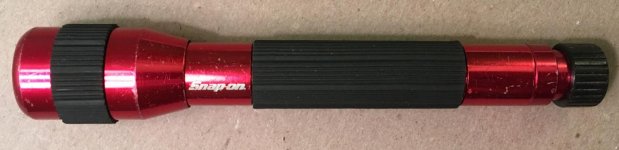
This was in my haul yesterday, but I’m having a little difficulty tracking it down. It says Snap-on, 16319613, and Made in USA. Internet search indicates it may be a plus-size track suit in black, or possibly have something to do with otorhinolarynology. But I think it is a 2AA flashlight. Maybe Maglite OEM? Wondering if parts might be interchangeable, or if a 3rd-party LED upgrade kit might work? Anybody have one? Opinions?
Update: I found a replacement Xenon bulb in the endcap I saved when I did a LED upgrade on a mini Maglite last year. It fit, lit and did not immediately burn out. After I got that working (the clicker wasn’t working reliably) I swapped the original lamp back in and it seems brighter, though not LED-bright. Interestingly, the Maglite endcap does NOT fit in this tube, despite having the same threads, I guess because of a difference in a plastic insulator. The end-mounted clicker has chip missing, and the reflector is missing an abundance of silver. Somewhere I’ve got another Maglite with corroded batteries jammed so bad they won’t come out. Maybe that reflector could swap. Or maybe I flew into a rage and tossed it in the trash. Yeah probably, but now I found the old reflector from the upgraded Maglite. It doesn't fit. Maybe if I carve the fins, but maybe not, so not going to try it.
Update: I found a replacement Xenon bulb in the endcap I saved when I did a LED upgrade on a mini Maglite last year. It fit, lit and did not immediately burn out. After I got that working (the clicker wasn’t working reliably) I swapped the original lamp back in and it seems brighter, though not LED-bright. Interestingly, the Maglite endcap does NOT fit in this tube, despite having the same threads, I guess because of a difference in a plastic insulator. The end-mounted clicker has chip missing, and the reflector is missing an abundance of silver. Somewhere I’ve got another Maglite with corroded batteries jammed so bad they won’t come out. Maybe that reflector could swap. Or maybe I flew into a rage and tossed it in the trash. Yeah probably, but now I found the old reflector from the upgraded Maglite. It doesn't fit. Maybe if I carve the fins, but maybe not, so not going to try it.
Attachments
Last edited:
M_George
Well-known member
There's another company Streamlite located in Norristown Pa that makes flashlights similar to that one.
OP
Private Lugnutz
Well-known member
Haha. Yeah, that's another "USMC" that often trips up the unwary.Now, I kind of wish United Shoe Machinery Corporation had been in the jerry-can manufacturing business, too. Just to add a similarly entertaining layer of complexity to this discussion
Unaiu posted a good summary. I would only add this bit for clarity in terms of my reply to Don. Cans with a wide cam-lever lock mouth and cap marked with a "W" were used for water by other branches (QMC, USN, etc), but the Marines used the cans with the smaller cam-lever lock cap type for both gas and water, and the water cans were marked WATER, usually in white paint on the outside, and lined with something yellow in color that made them suitable for potable water.Do you mean the Marines used the cam-cans for water or fuel indiscriminately? Did they have a means of marking the established contents? Or is there a procedure for thoroughly removing the previous contents?
Does Don’s statement mean other branches did not?
Same during my service in the 80's. We were only talking about WWII.In the US Army, we used a different type of can, made of plastic for water and was clearly marked as "potable". Gas was stored in the metal cans marked as either diesel or mogas.
cbacres
Well-known member
Hit the one flea early today, it opens at 6, so that meant using a flashlight.
One seller was unloading a bigger uhaul, hardly had much out, just the first tote and it was hitting gold for me.

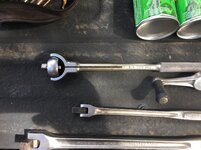
First time I’ve ever even seen the CM ratcheting T, much less able to buy!
Also a SK roto head rat, a 3/8” and 1/2” CM breaker.
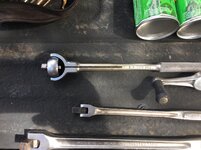
Seller was telling me he had mechanics and woodworking shop in truck.
I ask how much for the four items.... he came back st $2 for each breaker, $ 3for SK rat, and another $3 for the t ratchet.


So I took this haul back to truck and got a second flashlight and went back and let him use!
The totes were being attacked by 5 people as they came out of the truck, but didn’t really see much more in hand tools.
Pick up some bilingual brake clean and some drill bits.

A exhaust fan with variable speed control, including the Dollie that it sitting on.

Cart will be nice as I’m tearing apart shop and moving stuff.

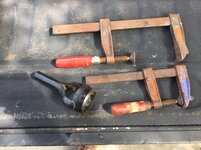
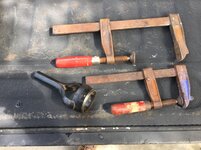
Got the below from another seller, figured I’d give the first one time to unload some more.
2 USA clamps and a USA 1-1/2” hole punch.

It was a great trip, had to rush out as I was meeting wife for breakfast.
The t ratchet was worth the trip.
Sent from my iPhone using Tapatalk
One seller was unloading a bigger uhaul, hardly had much out, just the first tote and it was hitting gold for me.
First time I’ve ever even seen the CM ratcheting T, much less able to buy!
Also a SK roto head rat, a 3/8” and 1/2” CM breaker.
Seller was telling me he had mechanics and woodworking shop in truck.
I ask how much for the four items.... he came back st $2 for each breaker, $ 3for SK rat, and another $3 for the t ratchet.
So I took this haul back to truck and got a second flashlight and went back and let him use!
The totes were being attacked by 5 people as they came out of the truck, but didn’t really see much more in hand tools.
Pick up some bilingual brake clean and some drill bits.
A exhaust fan with variable speed control, including the Dollie that it sitting on.
Cart will be nice as I’m tearing apart shop and moving stuff.
Got the below from another seller, figured I’d give the first one time to unload some more.
2 USA clamps and a USA 1-1/2” hole punch.
It was a great trip, had to rush out as I was meeting wife for breakfast.
The t ratchet was worth the trip.
Sent from my iPhone using Tapatalk
Attachments
-
 feb872155e0b3d06c431a6c18ca260c5.jpg615.9 KB · Views: 0
 -
 7c4432a19231c78b73196f36eae425ec.jpg943.4 KB · Views: 0
 -
 b7d39543bbe598632f1dc1a5b30c6ab2.jpg989.3 KB · Views: 0
 -
 af8e0e530038573fe81b3a70e386dc56.jpg623.3 KB · Views: 0
 -
 fb4aa3ac246c1eb4248406d30a918c57.jpg224.3 KB · Views: 0
 -
 4c42b6a150f7dab5ffd9d6384b230c9d.jpg323.2 KB · Views: 0
 -
 eb06a8edd00725ac92144ec9a5922f07.jpg186.4 KB · Views: 0
 -
 a788e32382c54af1a53e20ef5c6b6f24.jpg589.4 KB · Views: 0
 -
 9f5d7f805d5f6717955feba662f76615.jpg598.8 KB · Views: 0
Last edited:
cbacres
Well-known member
A little OfferUp score. Just happened to be on at the right time.. The handle of the torque wrench is what caught my attention.. Everything that's USA made is sorted down below.. I did miss a 13mm Snap On Wrench that I found later on.. Something is up with the torque wrench but I'm not sure what. Took it apart as far as I could but didn't see anything.. Tore the ratchet down and cleaned and greased it.. The proto adjustable wrench is in the process of cleaning.. Sanded down the rubber mallet and gave it a little stain.. Cleaning the vise grips right now as well. Cleaned up both adjustable pliers already also... $15
Also scored these for $60.. 1-6" Tumico tubular outside micrometer set and this Mitutoyo 0-6" outside micrometer set with standards.. The coating are on the ones still that have never been used.. Couldn't pass it up when he offered it to me for $20.
Sent from my iPhone using Tapatalk


That's a you **** for that's stash.
You can send the Tourqe wrench to SO, I think it's $65 and they'll calibrate it. It might of include repair also, but don't remeber for sure.
Attachments
-
 ab5157ffe076fe61de06e65d5bb5e5c6.jpg154.1 KB · Views: 0
 -
 a3415611a0d7c889112c2fa7fba0fb92.jpg216.8 KB · Views: 0
 -
 2bad629896b8b18dd71d81f69980bf9c.jpg119.9 KB · Views: 0
 -
 028f7a7160411690a8e06b94b7f576f4.jpg156.5 KB · Views: 0
 -
 882315f97b0a364e2ef0bc88addbaffc.jpg324.5 KB · Views: 0
 -
 2d6e293b3e7059ca31a714d66fc6e9af.jpg129.1 KB · Views: 0
 -
 0dda4a4a9b2f0d9dd2ce7786d535b1bf.jpg141.3 KB · Views: 0
 -
 036ec6e56318e5a4a807972b35e7cee5.jpg140.5 KB · Views: 0
 -
 858a56c60c401274c128e581a6ed6c52.jpg149.9 KB · Views: 0
 -
 04652a5e60ee974727b65459f82297fe.jpg271.5 KB · Views: 0
 -
 2f8b3377a62da83bf3d4059e3c85d726.jpg147.4 KB · Views: 0
 -
 ad74b80bd7098858a3769f42ea3e0afd.jpg140.2 KB · Views: 0
 -
 197a5f92f024cc6f899b3aa331975fce.jpg144 KB · Views: 0
 -
 3d9984112a84213eb4d22f942190cc6b.jpg127.7 KB · Views: 0
 -
 2981f901d63812cb7c1de301faa4817a.jpg117.1 KB · Views: 0
 -
 101bb9e8f1bcbd055645fcc71d4db000.jpg144.5 KB · Views: 0
 -
 dd49635b3972e9ceb9c4ad3f8f103deb.jpg143 KB · Views: 0
 -
 9e53f1fdf82c4a49dc749722bc91bee1.jpg129.3 KB · Views: 0
 -
 135f92db243e6d1ef9c833e54fca5d9d.jpg134.7 KB · Views: 0
 -
 b0f0b49ec5957b3a4b4c3f42ed0d9a42.jpg111.5 KB · Views: 0
OP
Private Lugnutz
Well-known member
Score! Game, Set, Match!First time I’ve ever even seen the CM ratcheting T, much less able to buy!
dodge610
Well-known member


I revisited the garage sale that I posted pics of a few weeks ago. and this was my latest finds. Almost don’t dare post prices but here goes anyways. $20 for the Snap On box and all contents as shown and $25 for everything else. I know what you’re gonna say....over paid for the other stuff but definitely not the box.
Attachments


Last edited:
Catfishdan
Well-known member
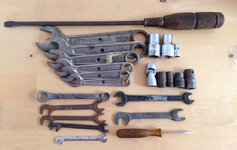
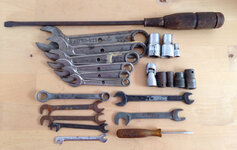
Flea finds. Everybody had good prices today!
- plomb dbe, sockets, screwdriver, and ignition wrenches. More on those in the plomb thread.
- triumph whitworth doe
- Williams offset
-metric and whitworth =v= sockets
- awesome metal flake 50th anniversary snap on pocket screwdriver.
- complete auto-kit no. 100 set, missing the tapered pin.

Sent from my iPhone using Tapatalk
- plomb dbe, sockets, screwdriver, and ignition wrenches. More on those in the plomb thread.
- triumph whitworth doe
- Williams offset
-metric and whitworth =v= sockets
- awesome metal flake 50th anniversary snap on pocket screwdriver.
- complete auto-kit no. 100 set, missing the tapered pin.
Sent from my iPhone using Tapatalk
Attachments

cbacres
Well-known member
Nice spinner ratchet!!
Sent from my LGMP260 using Tapatalk
Holy ****!
I had to do a double take.
Great to hear from you nines!

3baygarage
Well-known member
You **** on the spinner ratchet!
Guys, the best part is CB texted me a picture of it while I was heading out to the same flea, lol. Would have been gone by the time I got there after 9! One of these days I will have that satisfying moment of finding one in the wild for a quarter. No, make that a nickel.
Lots of great hauls guys.
Justin-you **** too!
Guys, the best part is CB texted me a picture of it while I was heading out to the same flea, lol. Would have been gone by the time I got there after 9! One of these days I will have that satisfying moment of finding one in the wild for a quarter. No, make that a nickel.
Lots of great hauls guys.
Justin-you **** too!
Cooter Brown
Well-known member
- Joined
- Feb 6, 2017
- Messages
- 317
davethorik
Well-known member
Not much today. 2 stops, 2 too's. Humidity too high to be outdoors, lol.
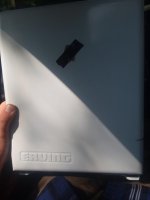
Got this Erving wall mount steel locking paper towel dispenser for 50 cents.
Only other thing is this Master Mechanic USA 1/4 drive set for $5.
Not every day you seen a non-QR RHFT in 1/4 drive, let alone in a set with a 1/4 spinner with female drive in handle (not 1 continuous shank- there is an insert in end of handle like old Plomb). Only 3 largest sockets have detents (3/8, 7/16, 1/2). Extensions have a hole drilled thru 1 side to act as a detent. Spinner handle doesn't have a detent on female side.
Got this Erving wall mount steel locking paper towel dispenser for 50 cents.
Only other thing is this Master Mechanic USA 1/4 drive set for $5.
Not every day you seen a non-QR RHFT in 1/4 drive, let alone in a set with a 1/4 spinner with female drive in handle (not 1 continuous shank- there is an insert in end of handle like old Plomb). Only 3 largest sockets have detents (3/8, 7/16, 1/2). Extensions have a hole drilled thru 1 side to act as a detent. Spinner handle doesn't have a detent on female side.
Attachments


Found a few items today.
Arcturus mfg. co. 11/16 x 9/16 (never heard of this one)
Easco 3/8"
W&B 22 1/8 x 1/4 bolt size I reckon.
Eberhard mfg. co 7342B
Keyes pliers- Bridgeport mfg co.
P.S.W. monkey wrench
S&H #50-6 (hardly used)
Mac P3A pliers
Williams pin spanner #418
 DSCF2075 by wvwheaties, on Flickr
Pliers? Page 661 Y inside upsidedown triangle. I have no idea on these.
Farm wrench 2155
Mossberg #293
Billings #803 1 7/16"
Cadillac 1 7/16"
 DSCF2080 by wvwheaties, on Flickr
 DSCF2081 by wvwheaties, on Flickr
and 2 3" spring clamps.
 DSCF2077 by wvwheaties, on Flickr
 DSCF2076 by wvwheaties, on Flickr
https://www.flickr.com/photos/mvwcnews/31876531273
←
Arcturus mfg. co. 11/16 x 9/16 (never heard of this one)
Easco 3/8"
W&B 22 1/8 x 1/4 bolt size I reckon.
Eberhard mfg. co 7342B
Keyes pliers- Bridgeport mfg co.
P.S.W. monkey wrench
S&H #50-6 (hardly used)
Mac P3A pliers
Williams pin spanner #418
DSCF2075 by wvwheaties, on FlickrPliers? Page 661 Y inside upsidedown triangle. I have no idea on these.
Farm wrench 2155
Mossberg #293
Billings #803 1 7/16"
Cadillac 1 7/16"
DSCF2080 by wvwheaties, on Flickr
DSCF2081 by wvwheaties, on Flickrand 2 3" spring clamps.
DSCF2077 by wvwheaties, on Flickr
DSCF2076 by wvwheaties, on Flickrhttps://www.flickr.com/photos/mvwcnews/31876531273
←
Last edited:
3baygarage
Well-known member
Sweet find Dave! You **** too.
I had a $5 socket set find today as well. Pics to come.
Edit:
Heelspur, cool Caddy wrench. I saw a curved DOE a while back but it was twisted. That should clean up nice.
I had a $5 socket set find today as well. Pics to come.
Edit:
Heelspur, cool Caddy wrench. I saw a curved DOE a while back but it was twisted. That should clean up nice.
Last edited:
OP
Private Lugnutz
Well-known member
Arcturus popped up during WWII in Santa Monica, Calif. They had a few small contracts for wrenches with the US Army Ordnance Dept in 1944 and 1945. Your wrench (9/16 x 11/16) probably has a Federal Stock Number - 41-W-1005-5 - forged into it. I have never seen a tool other than a DOE wrench with 'Arcturus' on it, and never a DOE wrench in anything but Jeep/GMTK sizes.Arcturus mfg. co. 11/16 x 9/16 (never heard of this one)
trijeff
Well-known member
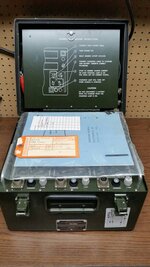
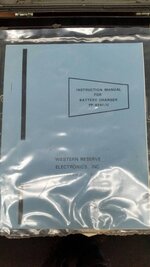
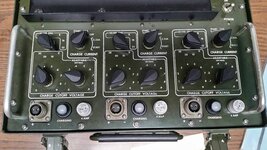
Haven't seen one of these Marines battery chargers before but couldn't pass at $10. Things a beast ... about 38 pounds.
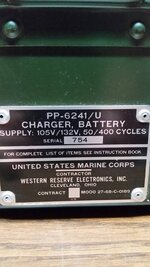

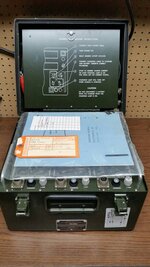


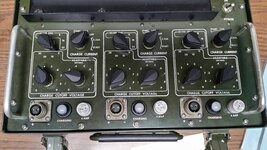

Sent from my SM-G900T using Tapatalk
Sent from my SM-G900T using Tapatalk
Attachments
-
 3f4fcc0dee49d167637a4739eac1ba55.jpg94.1 KB · Views: 0
 -
 7642e5e6fb0b89be6c3a90bffaba5cd4.jpg82.6 KB · Views: 0
 -
 c57beb3e50ed17840b2bf90fa83d2953.jpg101.5 KB · Views: 0
 -
 07be3d9140af847c8df1a8406e0db5c8.jpg125.7 KB · Views: 0
 -
 02c02b580115b8d2544f0d043e1e8246.jpg94.1 KB · Views: 0
 -
 694f4902ea893684343cd5f0095c0b3a.jpg80.6 KB · Views: 0
 -
 cbb93048302d92771a58fa0c2372050e.jpg146.5 KB · Views: 0
 -
 9b1de902ed0a1fbd26be9066e452813e.jpg145.8 KB · Views: 0
 -
 4aaaa9939d9608b77f9e9305513397a8.jpg155.5 KB · Views: 0
Not much today. 2 stops, 2 too's. Humidity too high to be outdoors, lol.
Got this Erving wall mount steel locking paper towel dispenser for 50 cents.
Only other thing is this Master Mechanic USA 1/4 drive set for $5.
Not every day you seen a non-QR RHFT in 1/4 drive, let alone in a set with a 1/4 spinner with female drive in handle (not 1 continuous shank- there is an insert in end of handle like old Plomb). Only 3 largest sockets have detents (3/8, 7/16, 1/2). Extensions have a hole drilled thru 1 side to act as a detent. Spinner handle doesn't have a detent on female side.
I think Sears still had the patent rights to the QR. The Easco RHFT's I have don't have a QR. The Craftsman QR guts go right in any of these RHFT's and are what allowed the "fake" Craftsman flex handle RHFT a few years ag to be sold for big bucks. An Easco RHFT flex handle ratchet, Craftsman "breaker bar" handle and the QR Craftsman RHFT guts and you could put together what appeared to be the original rare Craftsman flex handle RHFT. The give away is the handle did not have the proper numbers on it. One of the guys doing it was on GJ and got banned from here.
It does have the stock # on it. Saw on a Jeep forum they only made 4 or 5 different sizes.Arcturus popped up during WWII in Santa Monica, Calif. They had a few small contracts for wrenches with the US Army Ordnance Dept in 1944 and 1945. Your wrench (9/16 x 11/16) probably has a Federal Stock Number - 41-W-1005-5 - forged into it. I have never seen a tool other than a DOE wrench with 'Arcturus' on it, and never a DOE wrench in anything but Jeep/GMTK sizes.
davethorik
Well-known member
I think Sears still had the patent rights to the QR. The Easco RHFT's I have don't have a QR. The Craftsman QR guts go right in any of these RHFT's and are what allowed the "fake" Craftsman flex handle RHFT a few years ag to be sold for big bucks. An Easco RHFT flex handle ratchet, Craftsman "breaker bar" handle and the QR Craftsman RHFT guts and you could put together what appeared to be the original rare Craftsman flex handle RHFT. The give away is the handle did not have the proper numbers on it. One of the guys doing it was on GJ and got banned from here.
I have bought 2 Allen RHFT new in sealed plastic from Cripe and they are both QR. Just recently bought a NOS Easco 3/8 flex RHFT and it is QR. I used to have a KD 3/8 flex RHFT and it was QR, and used to have an Easco 1/2 RHFT that was QR. I've never owned a non-QR til now, but have seen a few. Almost seems regional.
I have seen MM, some Easco but not common, and I have seen a 3rd type IIRC Napa, all that were non-QR.
Bill Ramsey
Well-known member
I've been looking for a 2 bay commercial stainless sink for a while with the plan to make one side a parts washer and use the other as a standard sink...Each bay is 18"x18" by 12" deep. Kinda small for a parts washer, but it'll work just fine for 90% of my needs. Now I just have to find a suitable pump and build the thing.
I've been looking to do that exact same thing, so I hope you'll document your build here.
- Status
- Not open for further replies.