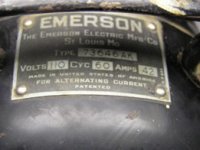
You got proven wrong, now you're changing the argument. Your statement was that 110/220 weren't ever a thing.
You are 100% incorrect. I said 110 and 220 AC were not a thing, and they never were. Nobody has or had outlets for that in their house. Whatever random ******** DC voltages came before that are not relevant. They were never standard, they didn't last very long, and they were never adopted by any standards agency. They were also all over the map in voltage, and probably varied hugely throughout the day. Nobody here is talking about DC, even the people that think they have 220v outlets.
By the time somebody realized "hey, we can't have different voltages all over the place", it was standardized to 120v and 240 AC. It was never standardized in any other voltage. And again, this was a long, long, long time ago. Too long ago for any person to have picked up this terminology "in the biz".
Nobody here was ever talking about DC besides you.
Language changes, and people who run around talking like it's 100 years ago are idiots. The biggest problem with this 110/220 thing is most people don't know what electricity is. So they use those numbers they incorrectly heard somebody else say and it continues. And you confuse people that do not know 220 and 240 are the same thing. In order to use that terminology you need to understand the history behind it and why it isn't today. Kind of like how you need to know the rules of english before you can use poetic license.
Now, please continue your pointless argument about numbers nobody cares about. You can be wrong all day, you can make up your fake language, but do not refer to me as incorrect when I know what I am talking about.
As for the RMS voltage, again, that is not the
STANDARD, and, it can only be measured with certain meters. It's not what your appliances are rated for. If somebody tells you they have a 170v outlet, you automatically know they don't know what electricity is.
Words are important, especially technical terminology when you are trying to figure out how to fix something and asking other english speaking people for their advice. If you use the wrong words, you get the wrong advice. If you speak like this in a technical job you get fired.
Everybody: Let's do a little test. Go to your power company's website and look up the residential rate schedule. It should be easy to find. It will also outline voltages provided. None will say 110 or 220.

 If you are ignoring the element of time and only looking at individual moments in time, you'd go by the peak voltage, not RMS. RMS is inherently dependent on being measured over time and doesn't make sense without the aspect of time.