To avoid these ads, REGISTER NOW!

220 vs 240 outlet questions

To avoid these ads, REGISTER NOW!

TRWham

Well-known member
Joined
Aug 11, 2017
Messages
1,961
Location
East Cobb County, Georgia
As long as we're being supercilious, perhaps we should insist on calling it 120 V RMS AC. The voltage is only briefly equal to 120 V twice per cycle, and -120V twice per cycle. It is also equal to +-110V the same number of times, and 115V, and 117V and so on...

Anyone want to discuss outlet vs receptacle? How about cable vs wire? If misuse of technical language were a crime, many of us would be locked up ten times an hour for colloquialism in the first degree.
 

alfredeneuman

Well-known member
Joined
Mar 3, 2011
Messages
4,580
Location
Fullerton, CA
The voltage is only briefly equal to 120 V twice per cycle, and -120V twice per cycle. It is also equal to +-110V the same number of times, and 115V, and 117V and so on...
It's also equal to 0 volts for the same time as well, as are all AC voltages.
Shall we just do away with measurements altogether?
Terminology is important
 

American Locomotive

Well-known member
Joined
Jan 8, 2017
Messages
10,959
Location
Rhode Island
According to a Quora search>
"According to ANSI C84.1, in effect since 1954, voltage is normalized around 120V"
It's mentioned in the 1962 NEC, and there was not a 1967 NEC (1968)
Remember that NRC and ANSI don't directly decide what mains voltage should be, especially since different juristictions are all on different versions. The 1962 NEC was the first to require 120v rated outlet. You are correct that c84.1-1954 was the first to ANSI standard to standardize on 120v - but once again, ANSI isn't a government organization - POCOs, municipalities, states, etc.. have to adopt those standards on their own. It likely took a long time before everyone was on board. So I will concede the source I read for 1967 was likely wrong. However ANSI C84.1 actually talks about how prior to 1954 there were various lower voltage standards.

What it was, not what it is. A weird old standard from when people didn't even remotely understand electricity. And working there doesn't mean much...my dad was a truck driver, he thinks it makes him a diesel mechanic. Truth is he doesn't know how to open the hood...

110 and 220 are simply incorrect terminology. As to the question that was originally asked, they are the same thing as 120/240.

I guess you can call your dog a horse if you want to. Doesn't make it any less incorrect. Language is important.
You got proven wrong, now you're changing the argument. Your statement was that 110/220 weren't ever a thing. For ~40+ years and well into the 20th century 110/220 were the only thing we had. I never argued that 110/220 still exist either.

Since 110/220 existed as recently as ~65 years ago, people needed a way to identify them - and that was with the "110/220" nomenclature. As line voltage crept up to 115/230, they still called it 110 because that's what they already had been called for 30 years prior. Even after 120v was codified in the 50s and 60s, the 110/220 nomenclature still persevered.

Language constantly evolves. Many people have decided their term for low voltage residential outlets is 110, and that's what they are sticking with. A huge portion of this country uses the term "coke" to describe any soft drink. That's their term for it, and you're certainly not going to tell them they are wrong for saying it, despite what Mariam-Webster says.

So same thing here. The code-warriors and modern sparkies love to thump their chest and scream "220 aND 110 VoLTs aREn't A tHinG" in every single thread that pops up here. Really they just need to say the following statement:

"Long ago 110v/220v where the mains voltages in the U.S., and as a result many people still call residential voltages these names, even though modern line voltages have gradually risen to a nominal 120v/240v. It's just an old term for the same thing".
 
Last edited:

TuxThePenguin

Well-known member
Joined
Jul 8, 2020
Messages
633
Location
MA
As long as we're being supercilious, perhaps we should insist on calling it 120 V RMS AC. The voltage is only briefly equal to 120 V twice per cycle, and -120V twice per cycle. It is also equal to +-110V the same number of times, and 115V, and 117V and so on...

It gets up to 170v :) If you are ignoring the element of time and only looking at individual moments in time, you'd go by the peak voltage, not RMS. RMS is inherently dependent on being measured over time and doesn't make sense without the aspect of time.

That said, I think it's annoying that a lot of online stores I go on have item filters of "110v" "115v" "120v" and all this other stuff because different manufacturers are using different voltage labels - even though there is no obvious benefit to labeling your product as "110v" and there is no benefit to saying "110v" - yes, it saves a syllable, but it's like 100ms saved when speaking, which is pretty insignificant.
 
Last edited:

Darkness

Banned
Joined
Jul 10, 2020
Messages
19
Location
North Carolina
You got proven wrong, now you're changing the argument. Your statement was that 110/220 weren't ever a thing.

You are 100% incorrect. I said 110 and 220 AC were not a thing, and they never were. Nobody has or had outlets for that in their house. Whatever random ******** DC voltages came before that are not relevant. They were never standard, they didn't last very long, and they were never adopted by any standards agency. They were also all over the map in voltage, and probably varied hugely throughout the day. Nobody here is talking about DC, even the people that think they have 220v outlets.

By the time somebody realized "hey, we can't have different voltages all over the place", it was standardized to 120v and 240 AC. It was never standardized in any other voltage. And again, this was a long, long, long time ago. Too long ago for any person to have picked up this terminology "in the biz".

Nobody here was ever talking about DC besides you.

Language changes, and people who run around talking like it's 100 years ago are idiots. The biggest problem with this 110/220 thing is most people don't know what electricity is. So they use those numbers they incorrectly heard somebody else say and it continues. And you confuse people that do not know 220 and 240 are the same thing. In order to use that terminology you need to understand the history behind it and why it isn't today. Kind of like how you need to know the rules of english before you can use poetic license.

Now, please continue your pointless argument about numbers nobody cares about. You can be wrong all day, you can make up your fake language, but do not refer to me as incorrect when I know what I am talking about.

As for the RMS voltage, again, that is not the STANDARD, and, it can only be measured with certain meters. It's not what your appliances are rated for. If somebody tells you they have a 170v outlet, you automatically know they don't know what electricity is.

Words are important, especially technical terminology when you are trying to figure out how to fix something and asking other english speaking people for their advice. If you use the wrong words, you get the wrong advice. If you speak like this in a technical job you get fired.

Everybody: Let's do a little test. Go to your power company's website and look up the residential rate schedule. It should be easy to find. It will also outline voltages provided. None will say 110 or 220.
 
Last edited:

American Locomotive

Well-known member
Joined
Jan 8, 2017
Messages
10,959
Location
Rhode Island
You are 100% incorrect. I said 110 and 220 AC were not a thing, and they never were. Nobody has or had outlets for that in their house. Whatever random ******** DC voltages came before that are not relevant. They were never standard, they didn't last very long, and they were never adopted by any standards agency. They were also all over the map in voltage, and probably varied hugely throughout the day. Nobody here is talking about DC, even the people that think they have 220v outlets.
The first AC mains systems duplicated DC voltages exactly to maintain compatibility with existing DC light bulbs and heating equipment. They even used the same bulb sockets and outlets (Hubbell parallel blade introduced in 1912) they do today, albeit "pre-NEMA".

The "standard" was 110/220 volts DC or AC until at least 1938, at which point things seemed to transition to 115/230. That's 56 years of 110v being the norm from Edison's first 110v power system in 1882. Basically the same amount of time 120v has been the standard.

Here's a 1921 GE Catalog:
attachment.php


Notice it has AC on the left, and DC on the right? Notice how the 60 cycle AC voltages match up perfectly with the DC voltages? That's not a coincidence, and is why I mentioned DC. Early AC systems were designed to mimic DC voltages to maintain light-bulb and other device compatibility.

Here's a 1920's GE Fan:
attachment.php


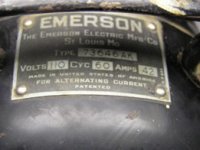
Here's a 1938 Emerson Fan (the '39 and newer models were rated at 115vAC):
attachment.php


110v was the standard, for both AC and DC for over 50 years in this country. In those 50 years, the terminology became ingrained in the minds of millions of people, who passed that terminology onto their children, and so on. Has absolutely nothing to do about "being in the biz".
 

Attachments

  • fan.jpg
    fan.jpg
    84 KB · Views: 194
  • Fan3.JPG
    Fan3.JPG
    42.6 KB · Views: 184
  • PC040087_tb.JPG
    PC040087_tb.JPG
    17.2 KB · Views: 182
Last edited:

Wakefield

Well-known member
Joined
Aug 26, 2010
Messages
5,132
Location
Arlington VA (but would like to get out to country
I believe actual line voltage varies,sometimes when power demand is high the utility might deliberately lower the voltage,is that called a "brownout"?
A certain air conditioner compressor was rated at a higher voltage but it was supposed to have been able to tolerate 208 volts
too little voltage supposedly made them run hot or even stall down under load (should trip the thermal protectors but if that happened over and over perhaps the thing would eventually fail (the thermal protector fail to reset or even the windings in the compressor burn out or short out to each other
 

TRWham

Well-known member
Joined
Aug 11, 2017
Messages
1,961
Location
East Cobb County, Georgia
...
As for the RMS voltage, again, that is not the STANDARD, and, it can only be measured with certain meters. It's not what your appliances are rated for. If somebody tells you they have a 170v outlet, you automatically know they don't know what electricity is.
...

You have it completely reversed so my point blew right past you. The 120 V standard IS the root mean square (RMS) value, we just leave out the notation in daily use. Any standard average responding meter displays the RMS value based on the assumption it is seeing a true sinusoidal waveform but, in any case, true RMS meters are hardly rare or exotic for those applications where one is needed (i.e. ugly waveforms).
 
Last edited:

MrSurly

Well-known member
Joined
Jan 15, 2014
Messages
1,671
Location
East Texas
Wait, we haven't yet covered the 130V light bulbs!
My grandpa (born in the 1800s) told me to be sure to always buy the 130V light bulbs cause they were "made with heavier filaments and last longer".
 

rlitman

Well-known member
Joined
Oct 18, 2010
Messages
24,609
Location
Long Island
Wait, we haven't yet covered the 130V light bulbs!
My grandpa (born in the 1800s) told me to be sure to always buy the 130V light bulbs cause they were "made with heavier filaments and last longer".

That's actually true, but there's a tradeoff. The lumens per watt drop off precipitously as you dim incandescent bulbs. Your 130V bulb running on 120V may be using 92% of the rated power, but it may only be delivering 60% of the rated light output. On the other hand, it will also likely survive 2000 hours of life, rather than the normal 1000 hours.
 

alfredeneuman

Well-known member
Joined
Mar 3, 2011
Messages
4,580
Location
Fullerton, CA
I believe actual line voltage varies,sometimes when power demand is high the utility might deliberately lower the voltage,is that called a "brownout"?
It's against the law for a utility to intentionally lower it's voltage.
It's a given that voltage drops for a certain conductor proportionately with the load. When this happens it's called a brownout
 

wyliesdiesels

Well-known member
Joined
Aug 14, 2012
Messages
20,020
Location
Modesto, CA
I believe actual line voltage varies, sometimes when power demand is high the utility might deliberately lower the voltage, is that called a "brownout"?
A certain air conditioner compressor was rated at a higher voltage but it was supposed to have been able to tolerate 208 volts
too little voltage supposedly made them run hot or even stall down under load (should trip the thermal protectors but if that happened over and over perhaps the thing would eventually fail (the thermal protector fail to reset or even the windings in the compressor burn out or short out to each other

no PoCos do not intentionally lower the voltage when demand goes up. That would actually be counter-productive and create a chain reaction problem for them. you see, as voltage drops, current draw goes up. so if they intentionally lowered the voltage as demand is going up, demand would go up even more and create bigger issues for them.... like overheated equipment due to increased current draw....

PoCos actually have voltage and current sensors/monitors that interface with the substation auto transformers. The taps are automatically changed on the transformer as the load goes up and down to compensate and keep voltage drop to a minimum....
 

rlitman

Well-known member
Joined
Oct 18, 2010
Messages
24,609
Location
Long Island
...That would actually be counter-productive and create a chain reaction problem for them. you see, as voltage drops, current draw goes up. so if they intentionally lowered the voltage as demand is going up, demand would go up even more and create bigger issues for them.... like overheated equipment due to increased current draw...

That's not really true. For resistive elements, as voltage drops, so does current. For motors, while current may increase with decreasing voltage, wattage still drops, albeit not quite as much as voltage drops.
 

TuxThePenguin

Well-known member
Joined
Jul 8, 2020
Messages
633
Location
MA
That's not really true. For resistive elements, as voltage drops, so does current. For motors, while current may increase with decreasing voltage, wattage still drops, albeit not quite as much as voltage drops.

It's true and it's also not true. With resistive loads, you're right. But there are loads that do what he said. With motors, it actually depends on the type of motor. Some types like induction motors are constant power and will do what he said. Other types of motors draw power proportionally to their input voltage.

With small electronics, most switching power supplies (which are generally classified as what is called an active (or dynamic) load) will do what he says as well. Linear power supplies generally don't unless there is some sort of additional circuitry meant to do some sort of compensation. SMPS are pretty common these days. Active loads will sometimes have limits set so that the device turns off if the input voltage drops too low or goes too high (they can also do current limiting on the input).

Some threads on these boards seem to really focus on specific types of loads on a circuit and don't generalize enough, but what he said isn't incorrect. It's just "only partially correct"

By the way, if a device decreases its impedance in order to raise current to respond to a drop in input voltage, then it's going to drop additional voltage in your wiring. Power is I^2 * R and your current is going up, well your wiring is also dissipating more power and also you're dropping more voltage in your wiring because your wire now has a higher proportion of the entire circuit impedance as compared to having a higher impedance load.

Depending on what you have on a circuit, it's definitely possible for low voltage to cause a runaway sort of condition which could end up frying some circuits, or tripping a breaker, or something.
 
Last edited:
To avoid these ads, REGISTER NOW!

rlitman

Well-known member
Joined
Oct 18, 2010
Messages
24,609
Location
Long Island
It's true and it's also not true. With resistive loads, you're right. But there are loads that do what he said. With motors, it actually depends on the type of motor. Some types like induction motors are constant power and will do what he said. Other types of motors draw power proportionally to their input voltage.

With small electronics, most switching power supplies (which are generally classified as what is called an active (or dynamic) load) will do what he says as well. Linear power supplies generally don't unless there is some sort of additional circuitry meant to do some sort of compensation. SMPS are pretty common these days.

Some threads on these boards seem to really focus on specific types of loads on a circuit and don't generalize enough, but what he said isn't incorrect. It's just "only partially correct"

Power output from induction motors drops off dramatically with decreasing voltage. Power input also drops, but not as quickly. The difference between the two is lost to heating. So, decreasing voltage to an induction motor will cause increased heating, but will also decrease grid load at the same time. Of course, it risks stalling that motor as well as damaging it through heat.

As for switch mode power supplies, those do not really care much about input voltage. I have plenty of laptop supplies that say 90-265VAC, 50-60Hz input. But in terms of grid load, that makes up only a tiny percentage (which is easily seen by power companies by looking at the current harmonics). Grid operators are well aware that decreasing grid voltage decreases load, and that such tactics can be used to avoid total blackouts in certain (very limited, and emergency only) situations.

Here's an example as stated by GE, so we can stop this BS right here:
https://www.gepowerconversion.com/inspire/showing-brownouts-way-out
"3) Deliberately induced brownouts

Sometimes power companies intentionally drop voltage in certain areas if they sense that a disruption will cause serious problems."
 
Last edited:

snorky18

Well-known member
Joined
Oct 1, 2007
Messages
1,170
Location
Southeast Tennessee
It's a nominal thing.

If you were a farmer at the end of the transmission system in 1950, the "nominal" 240 voltage to your house may have dropped to 220 volts due to voltage drop, and so your 120 volts may instead read 110 volts.

But today, most everything is usually 120 when it starts, unless you're experiencing high power demand and the voltage drop that can result from it. I've seen it drop to <108 volts in a crowded campground in the summertime when everyone's A/C is running. At our house, I've never seen anything outside of 117-123 Volts.
 

sz0k30

Well-known member
Joined
Feb 12, 2014
Messages
884
Location
SE Michigan
WOW! 3 pages of this? At my house I usually run between 114.9 & 115.1 so it depends on whether I round up or round down.
 
Last edited:

TuxThePenguin

Well-known member
Joined
Jul 8, 2020
Messages
633
Location
MA
WOW! 3 pages of this? At my house I usually run between 114.9 & 115.1 so it depends on whether I round up or round down.

Neither 114.9 nor 115.1 are nominal or standardized voltages. Would you walk into Home Depot and ask for a 114.9v appliance? :/

People standardize on language so we can be on the same page when we talk about things.
 

u2slow

Well-known member
Joined
Nov 20, 2011
Messages
3,590
Location
BC
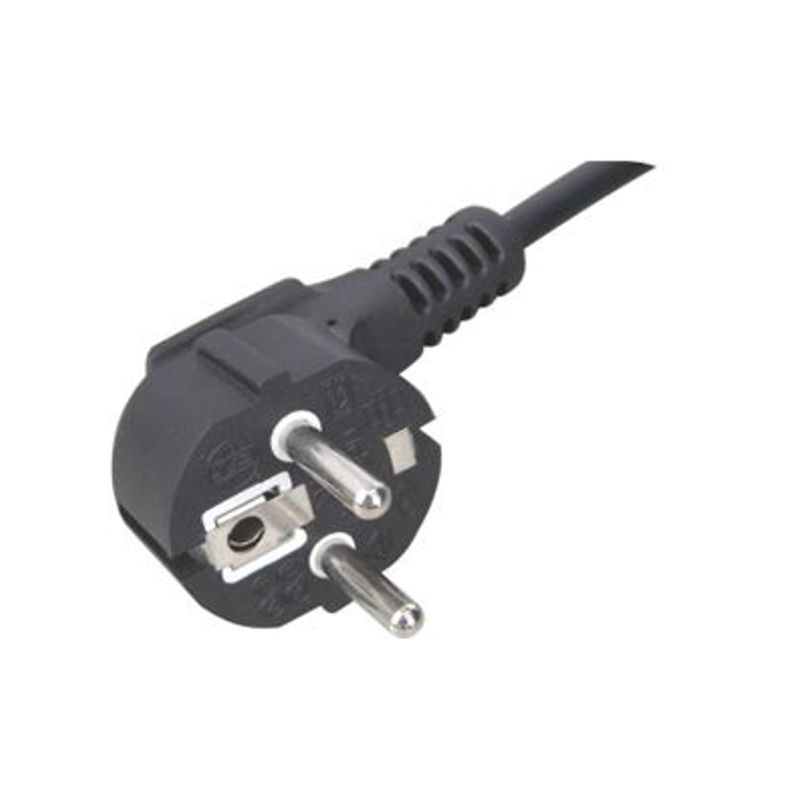
This is a standard 220V plug. You will find it on european 50Hz systems:
1639-099-3.jpg


I'm fortunate enough to have many voltages at work. Forces me to be sharp about what I'm dealing with.
- 120, 208, 240, 480, 600V (60Hz AC)
- 220, 380V (50Hz AC)
- 12, 24, 32 VDC

Whats increasingly nice about modern electronics and LED lighting is many will take a whole range of input power... usually from 100-250/277VAC at 50 or 60Hz. Reason being they're all converting it to a lower DC voltage anyway.
 

TRWham

Well-known member
Joined
Aug 11, 2017
Messages
1,961
Location
East Cobb County, Georgia
Ever been to or built equipment for Brazil? I have- they have 120 and 127/1/60, 220/1/60, 220/3/60 and 380/3/60. Japan is half 60 Hz and half 50 Hz. Never say never.
 

TuxThePenguin

Well-known member
Joined
Jul 8, 2020
Messages
633
Location
MA
Who builds a 127v electric system and goes "yep, that's perfect"!?!?!?

augh

at least make it 128, a nice power of 2!

edit: oops I failed my math test
 
Last edited:

toplessHO

Well-known member
Joined
Oct 20, 2014
Messages
14,041
Location
central florida
Ive been around long enough to remember 110v
and I may in the same paragraph call it 110,120


Get over it.
everyone knows what voltage someone is talking about.
Motors were rated at 200v so there wasnt confusion if they could be used on 208v or not.

Theres more,we always called the high voltage of 12470 as 13K
who cares
 
Last edited:

nadogail

Well-known member
Joined
Jan 23, 2009
Messages
31,961
Location
Coronado, CA
Just as all facial tissue is called Kleenex or all electric refrigerators were referred to as Frigidares. We are sloppy in our speech.
 

rburke65

Well-known member
Joined
Nov 10, 2007
Messages
12,349
Location
Canfield, Ohio
I can’t understand why folks get so jacked out of shape over 120 and 220. You people need to get a life and move on.
 
To avoid these ads, REGISTER NOW!
Top Bottom