To avoid these ads, REGISTER NOW!

60A Subpanel Feed Questions

Matt Matt

Well-known member
Joined
May 11, 2017
Messages
523
Location
Ontario
I love this thread! It’s been absolutely informative. Ddang has pretty much hit the ball out of the park with awesome information. Two ground rods should meet your inspectors needs. I do not install these, but I generally find them about 8-10 feet apart.

In some larger installs I’ve seen up to 10 ground rods. Sometimes if the building has copper plumbing, you can usually latch onto it.

One of my shops is in almost the same situation as yours. The buildings are fed through 2 inch conduit and are 8 feet apart. I just used a pneumatic chisel to drive into the ground. I am just using bare ground wire to rods. I was a little bit **** and I put up two more lightning rods attached to each peak wired to the ground rods. I had one building lost to lightning 20 years ago. I’m so ****, I have a 21 foot stainless steel chimney that is sent right into a ground rods
 
Last edited:
To avoid these ads, REGISTER NOW!

mm08822

Well-known member
Joined
Jan 13, 2012
Messages
5,866
Location
NJ
I love this thread! It’s been absolutely informative. Ddang has pretty much hit the ball out of the park with awesome information. Two ground rods should meet your inspectors needs. I do not install these, but I generally find them about 8-10 feet apart.

In some larger installs I’ve seen up to 10 ground rods. Sometimes if the building has copper plumbing, you can usually latch onto it.

If the building has metallic pipe it must be bonded to the ground at the service. If there is a water meter present, you have to bond across it. Water pipe doesn't count as a grounding electrode anymore.
 

Matt Matt

Well-known member
Joined
May 11, 2017
Messages
523
Location
Ontario
If the building has metallic pipe it must be bonded to the ground at the service. If there is a water meter present, you have to bond across it. Water pipe doesn't count as a grounding electrode anymore.

Most water metres need to be installed inside the building to prevent freezing. The latching point is always before the metre distribution.

I have one older out building that has 30 feet of copper Half inch pipe that has electrical run to it and it is a pump building. At the time it only needed the ground clamp down onto the copper pipe leaving the main building. Maybe things have changed.
 

Matt Matt

Well-known member
Joined
May 11, 2017
Messages
523
Location
Ontario
If the building has metallic pipe it must be bonded to the ground at the service. If there is a water meter present, you have to bond across it. Water pipe doesn't count as a grounding electrode anymore.

I also own a fairly new build home (2012)that has absolutely no ground rods. All the grounding from the panel is sent into the copper feedline before the meter. It is also double Tide to the iron natural gas pipeline fed into the building. If you want pictures I’m in this building for the next 10 days.
 
Last edited:

mm08822

Well-known member
Joined
Jan 13, 2012
Messages
5,866
Location
NJ
Re: 60A Subpanel Feed Question

I also own a fairly new build home (2012)that has absolutely no ground rods. All the grounding from the panel is sent into the copper feedline before the meter. It is also double Tide to the iron natural gas pipeline fed into the building. If you want pictures I’m in this building for the next 10 days.

You are on the CEC and we on one NEC code cycle or another. Former NEC cycles permitted use of the water line as as grounding electrode. Since most water distribution is now done by plastic, they no longer count on it as a dependable grounding electrode.
As a result other electrodes can be used including the two ground rod method that everyone speaks of.

We have to bond the metallic water lines and gas lines within the home for safety of the occupants. This does not count as a grounding electrode for us.
 

Innovate1

Well-known member
Joined
Jul 28, 2014
Messages
4,278
Location
Illinois near St. Louis, Missouri
When I wired my current house about 15 years ago I bonded the gas and water lines to ground at the panel. They were very close and easy to do. The plumber questioned bonding the gas line and the safety of it as a bad idea. He acted like he had never seen it before. Inspectors never said anything about it so they must have been fine with it. I also have 2 ground rods although I think only 1 was required the the AHJ at the time.
 

ddawg16

Well-known member
Joined
Jul 11, 2008
Messages
21,005
Location
S. California
I'll do you one better. Created a 3D drawing that will show you what's going on in my place. Here's an overview showing the entire run from the top down:


And here's a 3-Dimensional view of the area showing how the wires would be run:


Fantastic job (Sketchup or Fusion 360?)

That drawing explains a lot

One question.....any reason you can't go up? If you can go up from that panel into your attic....then just dog leg over to that wall and go straight down. That will eliminate half your 90's.

And another thought....covering the area between the house and garage?
You could then run the conduit straight over and down. That would be super clean.
 
OP
T

TurboEuro88

Well-known member
Joined
Feb 18, 2013
Messages
152
Location
Mentor, OH
Solidworks ;-) It was a quick 1-hour throw-it-together job but serves its purpose well enough.

I do have attic access to the main portion of my house (single story), but strangely can't get over to the portion above this area. The way the roof sheathing was laid, it basically covers the only way to get over there. Crawl space is plenty easily accessible and has a lot more room to work around in than you think, though. More or less the path of least resistance. However, I'll do more investigation this weekend just to make sure I don't have some way of getting in the attic above this space.

Unless I were to move or completely remove the mandoor on the side of the garage, there's not a whole lot I can do about extending the deck to cover the conduit going straight across. There's a set of small steps down from my deck that reaches a concrete slab in front of the man door for the garage (see this picture). While I am going to remove these steps for the purposes of running the new conduit, they'll have to go back as I would otherwise have no way to reach the man door from the house/driveway. Sure, I could move the man door to the other side of the garage but that would be considerably more expensive than it's worth, you know?

It's not perfect... wish it were a simpler run but this is what I am up against and with everyone's help so far I think I've come up with about as good of a plan as there could be.
 
Last edited:

jsigrist

Active member
Joined
Dec 11, 2005
Messages
29
Location
Zanesville, Ohio
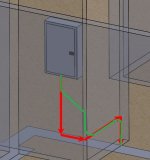
To run the conduit from your inside breaker panel can you use two 45 degree bends to offset to the adjacent wall? You would then use two 90 degree bends in the same plane to get to the crawl space. See the green indication in the attached image.

Jeff
 

Attachments

  • conduit_offset.jpg
    conduit_offset.jpg
    82.7 KB · Views: 27
OP
T

TurboEuro88

Well-known member
Joined
Feb 18, 2013
Messages
152
Location
Mentor, OH
I won't know exactly what I can/can't do in that corner until I get the drywall in that area pulled away. That will give me a true sense of how the studs are set in that corner and determine my options for making that bend. That's a really good idea, though.
 
Last edited:
OP
T

TurboEuro88

Well-known member
Joined
Feb 18, 2013
Messages
152
Location
Mentor, OH
Thought I'd give an update...

Just as I was able to set off on the job myself, my parents were nice enough to get me in contact with a local electrician they knew well to have him come out and quote the job for me. He's a great guy with 40-some years of experience in the area. We had a great conversation this past weekend and have settled into the job's particulars.

The long and short of it is this: He's confident the job is easy (as I'm sure it is for a man of his experience) and he's more than happy to have me help out as much as he needs. Turns out the question re: the studwall corner is easily resolved by use of a flexible PVC conduit that will mate up to standard PVC conduit in the crawl space. This will make things a HELL of a lot easier now. He also recommended installing a 60A main shutoff in the sub panel in addition to the 60A dual-pole breaker in my main panel box as a means of having easy access to shutdown the garage should anything happen electrically. While the main box isn't that far away, it'll be very convenient being able to shut down the sub panel from either end.

Hopefully in a couple weeks this will all be done so I can start on all the other fun :)
 

sberry

Banned
Joined
Jun 18, 2005
Messages
35,747
Location
Brethren, Michigan
It used to be required to use the water line if it had 10ft of buried pipe leaving the building, it was the primary electrode and the rods were supplementary. You can tell the plumma that the steel gas line MUST be bonded to the electric,,, electric is not being grounded to it but its being grounded to the electric.
 
OP
T

TurboEuro88

Well-known member
Joined
Feb 18, 2013
Messages
152
Location
Mentor, OH
It used to be required to use the water line if it had 10ft of buried pipe leaving the building, it was the primary electrode and the rods were supplementary. You can tell the plumma that the steel gas line MUST be bonded to the electric,,, electric is not being grounded to it but its being grounded to the electric.

Not too sure I understand what you're talking about exactly. Could you explain?
 

wyliesdiesels

Well-known member
Joined
Aug 14, 2012
Messages
19,991
Location
Modesto, CA
Thought I'd give an update...

Just as I was able to set off on the job myself, my parents were nice enough to get me in contact with a local electrician they knew well to have him come out and quote the job for me. He's a great guy with 40-some years of experience in the area. We had a great conversation this past weekend and have settled into the job's particulars.

The long and short of it is this: He's confident the job is easy (as I'm sure it is for a man of his experience) and he's more than happy to have me help out as much as he needs. Turns out the question re: the studwall corner is easily resolved by use of a flexible PVC conduit that will mate up to standard PVC conduit in the crawl space. This will make things a HELL of a lot easier now. He also recommended installing a 60A main shutoff in the sub panel in addition to the 60A dual-pole breaker in my main panel box as a means of having easy access to shutdown the garage should anything happen electrically. While the main box isn't that far away, it'll be very convenient being able to shut down the sub panel from either end.

Hopefully in a couple weeks this will all be done so I can start on all the other fun :)

Code requires a disconnect in the detached structure if there will be more than 6 breaker handles, regardless of distance.

It used to be required to use the water line if it had 10ft of buried pipe leaving the building, it was the primary electrode and the rods were supplementary. You can tell the plumma that the steel gas line MUST be bonded to the electric,,, electric is not being grounded to it but its being grounded to the electric.

what does this have to do with Ops situation?
 

sberry

Banned
Joined
Jun 18, 2005
Messages
35,747
Location
Brethren, Michigan
It was discussed elsewhere in this thread. If there was 10 ft or more of buried water line t was considered to be the primary electrode, must be used. As I recall may have even required number 4 for 200 service, rods take 6.
 
OP
T

TurboEuro88

Well-known member
Joined
Feb 18, 2013
Messages
152
Location
Mentor, OH
Code requires a disconnect in the detached structure if there will be more than 6 breaker handles, regardless of distance.

Ah good to know! For right now I should be at or just below 6 handles in the sub panel, but I know I'll add on to it in the future. At the very least it'll be convenient to have, but also future-proof things a bit.
 

sberry

Banned
Joined
Jun 18, 2005
Messages
35,747
Location
Brethren, Michigan
No extra ground rods or plates would be needed since the bonding conductor comes from the main panel. As an aside - I don't undertand why the American code calls for rods at the garage it doesn't make much sense.
This would be for 2 reasons. 1 is minor step potentials, there are often leaks from underground wires, some stray currents on ground etc and this should be splained by minds greater than my own but basically to reduce the potential difference between these and ground or cement floor you are standing on (one reason they went to uffer in foundation) and the second is lightning strike. Way better to have it delivered to earth at that point than have it carried via wire back to the main service.
 
OP
T

TurboEuro88

Well-known member
Joined
Feb 18, 2013
Messages
152
Location
Mentor, OH
Figured I would crosspost this over here for those curious.

Electrician scheduled for this coming Saturday so I started opening up the wall. Much to my somewhat chagrin I discovered that the way the walls in this corner were constructed weren't exactly as you'd expect. Somewhat of a good thing for running the flex conduit for the wire, but is going to pose some challenges when it comes time to mount the replacement drywall. The diagram I made shows better what I am dealing with. I have half a mind to tear all the drywall down in this corner and re-stud everything... but thats a lot more work. Need to get creative, it seems.


alfredeneuman

Well-known member
Joined
Mar 3, 2011
Messages
4,580
Location
Fullerton, CA
Thought I'd give an update...

...a local electrician they knew well to have him come out and quote the job for me. He's a great guy with 40-some years of experience in the area. We had a great conversation this past weekend and have settled into the job's particulars.
The long and short of it is this: He's confident the job is easy (as I'm sure it is for a man of his experience)

Did he mention the lack of workspace in front of the main panel?
It's required to be 36" deep X 30" wide space free of any obstructions.
 
To avoid these ads, REGISTER NOW!

wyliesdiesels

Well-known member
Joined
Aug 14, 2012
Messages
19,991
Location
Modesto, CA
Figured I would crosspost this over here for those curious.

Electrician scheduled for this coming Saturday so I started opening up the wall. Much to my somewhat chagrin I discovered that the way the walls in this corner were constructed weren't exactly as you'd expect. Somewhat of a good thing for running the flex conduit for the wire, but is going to pose some challenges when it comes time to mount the replacement drywall. The diagram I made shows better what I am dealing with. I have half a mind to tear all the drywall down in this corner and re-stud everything... but thats a lot more work. Need to get creative, it seems.


whats with the romex clamp sitting on the staple?
 
OP
T

TurboEuro88

Well-known member
Joined
Feb 18, 2013
Messages
152
Location
Mentor, OH
It honestly looks like whomever installed the 12/2 wire forgot it was there when wiring it into the panel. No idea why, as there's a romex clamp on the panel box for that very line. It'll be one of the many things I'll be fixing.

Re: the panel box, it faces the other side of the wall and has no obstructions. What I have shown is technically the backside of the panel.
 
OP
T

TurboEuro88

Well-known member
Joined
Feb 18, 2013
Messages
152
Location
Mentor, OH
I would open the corner and do it right. Looks like there is no support for the drywall on the back wall.

It is/was supported... somewhat. The drywall on the part I've opened actually continues into the corner to a 2x2 false stud-looking thing that it's mounted to. It's not very well done, if done right at all. The more I think about this, the more I am starting to think fixing the studs in the corner is the only real path forward.
 

Innovate1

Well-known member
Joined
Jul 28, 2014
Messages
4,278
Location
Illinois near St. Louis, Missouri
Seems like a short piece of metal L on the corner could be used to support the drywall to be added. Had to do that in one corner here that was cracking and when I opened it up I discovered there was no support very similar to yours. Slip it behind the other drywall and put in some screws to hold it in place. Then screw the replacement drywall to it.
 
OP
T

TurboEuro88

Well-known member
Joined
Feb 18, 2013
Messages
152
Location
Mentor, OH
Figured I'd update this thread with how things have gone. Subpanel installed and energized finally as of yesterday! Only took us about 4-ish hours to do, but it was a tough 4 hours working in the cold and having to crawl through my house's crawlspace to connect the pvc to the carflex conduit. Happy to have it done, though. Hoping to have most/all of the garage re-wired and ready for inspection by this time next month. Appreciate all the responses everyone provided and happy to have this item out of the way.


Last edited:

pattenp

Well-known member
Joined
Jun 4, 2008
Messages
10,175
Location
Virginia - USA
The conduit doesn't look deep enough in the picture; is it at least 18"? Or are you putting concrete over it?
 
OP
T

TurboEuro88

Well-known member
Joined
Feb 18, 2013
Messages
152
Location
Mentor, OH
Stone, concrete, and stairs coming off the deck will be going over the outdoor portion of the conduit. Ground rods not needed, but if the inspector insists, I'll add them.
 
OP
T

TurboEuro88

Well-known member
Joined
Feb 18, 2013
Messages
152
Location
Mentor, OH
I understand and appreciate the input. I have deferred to the expertise and recommendation of the certified professional electrician that works in my area that helped with the install and said they wouldn't be needed given my specific circumstances.
 

Norcal

Well-known member
Joined
Mar 16, 2008
Messages
13,752
I understand and appreciate the input. I have deferred to the expertise and recommendation of the certified professional electrician that works in my area that helped with the install and said they wouldn't be needed given my specific circumstances.

Tell your “electrician” to dig out his code book ‘cause he is wrong.
 

mike93lx

ALLIANCE MEMBER
Joined
Dec 9, 2013
Messages
37,403
Location
Richmond, VA
Even if it passes inspection, that doesn't make it right. Just means both the electrician and inspector are wrong
 
OP
T

TurboEuro88

Well-known member
Joined
Feb 18, 2013
Messages
152
Location
Mentor, OH
Is there a diagram (example or otherwise) that explains this, should they both be wrong in what they've told me? I understand the "read the NEC code", but to a layman like myself it's about as understandable as reading a legal document. A good visual would be very helpful. I understand and appreciate the concern and don't mean to come across wrongly - I simply defer to professions I've spoken with in person since the internet can often steer you wrong when you don't realize it.
 

alfredeneuman

Well-known member
Joined
Mar 3, 2011
Messages
4,580
Location
Fullerton, CA
How is it you'll accept a drawing posted on the internet and not the advice of multiple people.
If folks post BS here, there is always someone to call it
 
To avoid these ads, REGISTER NOW!
Top Bottom