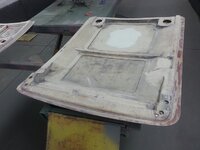
Rick
Thanks for being brave enough to express your concerns
I need all the help that I can get
This is my first fiberglass project and my first attempt at working with this stuff
I don't have any release agent but planned on wrapping the mold in a plastic wrap prior to putting any matting on it.
will this work?
where do I find release agents? how many different products are there?
I'm an old bodyman from the 1960s and 70s when we just beat the metal into submission then covered it with bondo and never messed with the glass!!
Thanks for the help and concern
Don
Okay, I'd be happy to help if you'd like - I'll PM you my email and phone number. But here's a brief version of what I was thinking you could do. If there's anybody on here who's rebuilt Vettes before, they'd probably be a better source of advice for you, especially about how to do it faster.
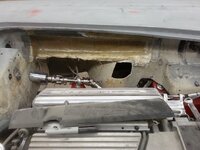
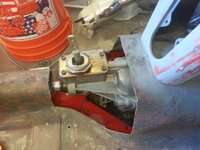
I think your idea about shaping the foam is a good one, and you could definitely layup a rough fiberglass shape on top of that. (I'd use wax paper over the foam instead of plastic wrap.) But then you'll have to do a lot of bondo and shaping work to the surface of the glass mat before its ready for paint. Basically a quick glass job followed by a lot of bodywork. (I know that's your area, so that's definitely a workable plan. But I think you'll be happier with the results of a better glass job in the end.)
I'm thinking you could do the bondo work to the foam instead, and then use it to make a mold. That's how sailboat hulls are fixed all the time. Once you have the foam in the perfect shape that you want, you sand it smooth and spray it with a liquid
mold release (available in the fiberglass section of any marine store).
Then you start making a mold on top of the foam shape. You can make it out of resin, fiberglass or
rtv mold rubber (or even plaster of paris if you want) - basically anything that's smooth and will hold its shape. You should probably reinforce it with fiberglass on the back of the mold so it keeps its shape when you remove the foam.
Then you layup the glass for the tunnel itself. I'd start by spraying the inside of the mold with several layers of gelcoat (just like spraying paint, only thicker - I'd recommend using a special
gelcoat dump gun so you don't ruin any of your paint guns).
Then you just layup the
fiberglass cloth inside the gelcoat. (Edit: MP&C's suggestion to use
chopped strand mat was a good one, and it's easier to bend it into the corners of your mold.) You can make the inside of this layup as rough and ugly as you want, because it will be in the tunnel - it just has to be strong (so woven cloth is best for the inside layers). The gelcoat is how I'd do a sailboat hull repair, and it would give you a super smooth surface on the outside of your tunnel, but you can skip that step if you'd prefer to just use bondo and paint to finish off the tunnel.
Anyway, that's it in a nutshell. I'm sure there are faster ways to do the job, but this is the standard way to do boat repair on curved surfaces. It takes a little more time to make the mold, but the final product ends up really smooth - I think you'll love how it turns out. Also, your background will give you a real advantage with the learning curve on this method and you should pick it up very quickly.