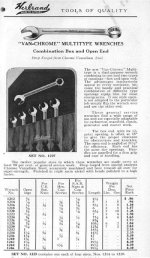
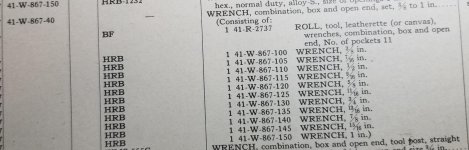
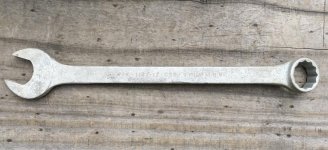
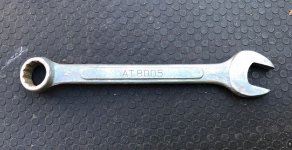
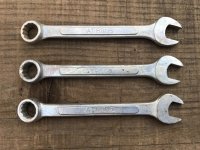
One factor in the spread of combination wrenches was the improvement in strength of steels used to make the wrenches. Combinations became practical only after better steels became available.
I believe that this enabled designers to make devices that had less accessible fasteners. This degraded access was enabled by the widespread adoption of detachable socket wrench sets, which allowed fasteners to be recessed behind obstructions. Not only that, but as sockets developed further, they became thinner-walled, requiring less space around the fastener head in any recess.
As a result, the socket wrench became the desired tool, and the end (open- or box-) was relegated to holding the opposite end of a fastener that used a nut. Box ends can access a tighter spot and require less space around the fastener head than open-end wrenches. Thus, the open-end became less utilized, but never completely obsoleted. In my observation, combination wrenches displaced double-open-end wrenches more than double-box-end wrenches.
The DBE can apply more torque than a DOE for two reasons. First, it applies the torque over all the points of the hex, and second, the length of the wrench can be greater due to the greater torque capacity of the box design. I was taught early in my mechanical training to always use a box or socket if possible.
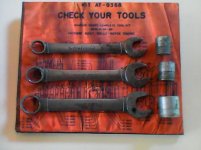
In practice, one rarely would be in a situation where one only had one set of combination wrenches. They would more likely be teamed with a set of DBE wrenches, and possibly a set of DOE wrenches. In my case, I never owned DOE wrenches, since I had DBE, combos, and sockets. The exception for this was obstruction and tubing wrenches, which are a special case.