So when there is a question about window install, the first step should be the instructions from the manufacturer in question. There are a lot of common practices and some industry standards, but at the end of the day the manufacturer is the one standing behind the warranty and if you don't install it as they say and problems arise down the road, you can be at risk if you didn't install per their instructions. A very significant % of window and door issues are due to the installation not being done correctly....plus they're not cheap so you want to be confident that everything is right!
So for Andersen, you can get printed instructions that are customized for your application below:
Use the Andersen Installation Guide Configurator to find instructions for installing windows and doors
www.andersenwindows.com
I've attached what I expect is the proper instructions for this project based on the details shared above regarding product and project
And look what's on Pg 4

Ok, so shim's must be important....let's scroll thru and see where they're required to be "properly shimmed"
Pg 11, Image 16 calls for shims under the jambs, inset 1/4" from each side
Note that on Image 17 they call for a "backbed" sealant bed to be placed on the sheathing/weather barrier prior to the window being set into the opening. This particular call out varies on mfg and also by weather barrier system being used, again when in question refer to the installation instructions from each manufacturer
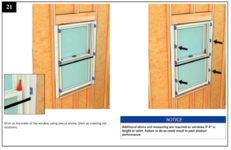
Now getting to the meat of it....Image 19 and 21 are what you're needing:
Step 19 calls out where you need to shim for your 2 and 3 wide units that you may have, insuring you have shims under all jambs/mullions
21 shown above calls out the requirements for where shims at the jambs should be for hung units. If units are taller than 5'4" you should add the additional shim locations at the "middle" of each sash stile...not that it's not necessarily bad to do that on shorter units, but not as important. As mentioned above, hung windows rely on weatherstrip contact between frame and sash to seal the air/water out. Those weatherstrips push against the jamb and will bow it outwards if not properly shimmed. When that jamb bows outwards, the pressure of the weaterstrip against the sash isn't as designed, which will generally negatively impact performance...air leakage goes up, operating force may be off...sashes may "sag" or "droop" when opened...lots of things happen
Note that at this point, properly shimmed is relative and you're still only working with a window with (1) fastener attaching it to the building per prior steps so you need to be careful when operating, but the sash to frame reveal should be equal and consistent from side to side, both when sash are closed as well as when open. Operate both sashes several times and see how it looks. If you have a laser you can use that to shoot a beam on the jamb and see both if it's straight(not bowed) as well as plumb and then if it's moving around as you operate a sash.
Completing the fastening of the windows isn't done till step 25 on their document...aka AFTER it's fully shimmed, square and level. Getting things square, plumb and shimmed can be fast or slow...it's all dependent on the quality of the rough opening. If sill is level, jambs are plumb and the opening is both square and the right size...this goes quickly. If you have to compensate for framing issues...this gets more challenging but it's critical for a quality installation.
So some other things to watch for....based on the lack of shims I'm not expecting all the other things were done right either....
To properly shim...the windows need the fasteners into the nail fin removed...which if they're flashed and sealed properly will be "fun". Trying to shim while fully anchored isn't effective because the anchors are preventing the frame jambs from moving as desired
Note the fastener chart on Pg 2....especially the spacing call out. Common error is not putting in the required fasteners....it says "every hole" so it should be done as documented.
The flashing sequence for sealing the window flange to the weather barrier is important for proper "watershed" or "shingle" style water management....review it and see how it looks compared to what's there...not saying what's there is wrong...but a lot of installs get this wrong
Also note image 33 where it details the interior air seal which is your low expansion foam. NOTE it's not supposed to fill that entire shim space! A 1" deep bead or as shown there roughly 1/3" of the frame depth is all that's required....more is not better! This is done for air seal, not insulation purposes and filling that space full of foam can prevent any incidental moisture that gets into that space from properly traveling to the sill area and then getting out at the sill. Again this is another common mistake as low expansion foam is fun and especially if using disposable can's(vs gun foam) if you don't use it all it goes in the trash. A more reliable(but more expensive and slower to do) air seal is their other shown option of backer rod and caulk as it's a superior air seal vs low expansion foam. You can also do caulk over foam
If this was my house...I'd make the builder get a different installer to basically pull and reset all openings and discuss what options exist for labor warranty on the install.
After you get a chance to review happy to answer other questions. The day job is as an engineer for a window/door manufacturer doing installation design/detailing "stuff", so I can probably lend better perspective and reasoning on "why" certain things are specified


